
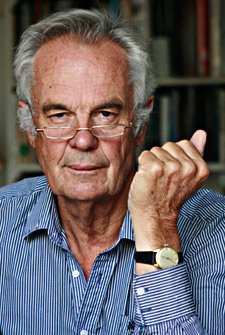
The Russians are coming…….to Israel and Palestine.

September 13th 2016.

By Jonathan Power

Russia announced last week that it has decided to go where angels fear to tread – into the whirlpool of negotiations between Palestine and Israel. Long a preserve of the Americans and the French, the attempt to bring peace between the two and to make a final settlement on boundaries has frustrated them for decades.

Can Russia do better?

Russia comes on the scene at a time when the script is perhaps about to be re-written in a radical way. After decades of negotiating around the premise that the only solution was a two-state arrangement with an independent Jewish state and an independent Palestinian state existing cheek by jowl, opinion in Palestine is shifting.

The talk now, especially among younger people like the businessman Tareq Abbas, the son of the President of Palestine, Mahmoud Abbas, is quite different than their parents. They are saying Palestinians should give up pursuing what the Israelis will never concede and should stop the endless, unproductive effort, to negotiate a two-state solution.

Instead, they should accept that Israel has the whip hand over both Israel and Palestine, in both the parts it occupies and the parts it allows the Palestinians themselves to govern, the rest of the West Bank and Gaza.

So the focus of the negotiations should be changed to concentrate on demanding civil rights within Israel – a Greater Israel containing Jews, Muslims and Christians. What the Palestinians need are full citizenship and civil rights, not least the vote, in one unified state.

Three years ago a poll by the Palestinian Centre for Policy and Survey Research found that 65% of Palestinians over the age of 50 still preferred the two-state solution, compared with 48% of those between the age of 18 and 28.

The mood is changing.

The process of a change of focus is well underway but is rarely commented on by outsiders. I would doubt that more than a thousand Russians are aware of it. Since 1966, when martial law was lifted in Israel, the situation of the Arab citizens within Israel has improved greatly.

In 1960 only 70 Arab students were studying at Israeli universities. Today there are more than 20,000, of whom two thirds are female. Around 10,000 Arab Israelis are studying abroad. There is now a growing Arab middle class and at the last election the Arab parties, standing as a unified, group, became the third placed winner of seats in the Knesset (parliament). So why not build on that?

According to Professor As’ad Ghanem of the University of Haifa, 66 of the 112 towns in Israel with more than 5,000 residents have virtually all-Arab populations. Thanks to high birth rates and a young population half of Israel’s Arab citizens are under 20, whereas only 30% of Jewish Israelis are. Some observers, including the US Secretary of State, John Kerry, predict that before that long Israel with become an apartheid state, with a minority population of Jews ruling over a majority Arab population.

The Israeli premier, Benjamin Netanyahu, has managed to dominate Israel’s internal date among Jewish voters in a way that hasn’t been done by a leader since David Ben-Gurion. For public consumption he talks of his willingness to negotiate the two-state solution. In practice he cleverly steers all negotiations away from such a deal.

A one-state push by a new Palestinian leadership could cause him grave difficulties, not easy even for him to surmount. No longer could he play the security card that gives political and military spine to his conviction. In a unitary state there would be no military threat to counter, either from West Bank Palestinians or the inhabitants of Gaza or from the armies of Arab neighbours.

Netanyahu would find himself being outmanoeuvred in a unitary state. The Arab parties’ voting strength inside Israel would shoot up.

If they could stay more unified than the disparate Jewish parties they would emerge as one of the two strongest parties. They would be strong enough to broker more liberal coalitions.

Ironically, if the Palestinians do decide to make a unitary state their objective they might well end up with a two-state solution as Netanyahu and the Jewish voters run to back such a deal for fear of this alternative.

Thus for Palestinians to focus on a one-state solution is a win-win tactic. There is only a slim chance that a campaign for a unitary state would succeed (although in South Africa it did succeed). If it did all well and good. If the campaign were bought off by a two-state offer from Israel, even better.

It is into this fast moving whirlpool of new ideas that the Russians step. Unlike the Americans and French they have no baggage. It’s a good time for a new interlocutor to arrive on the scene. We should all wish them luck.

Copyright: Jonathan Power

Foreign affairs columnist, film-maker and author

Share

Leave a Reply

Your email address will not be published. Required fields are marked *

Related Posts

A donors’ conference, co-sponsered by the Burundian government, the Belgian government and UNDP will be held in Brussels January 12-13, 2004. This PressInfo offers a perspective on its urgency. See also TFF’s new Burundi Forum. Imagine for a moment that politics is about goodness and generosity. Where could a few million dollars of government aid and a few civil society organisations – guaranteed – win the hearts of extremely poor millions who want peace and already work hard to achieve it after 10 years of war and genocide? The answer is Burundi, the heart-shaped country in the heart of Africa. Burundi makes a good story from Africa. But what does the world know about Burundi, its problems and struggles? Burundi’s tough reality Here are the basic facts. Burundi’s population is about 7 million and it is number 171 out of the 175 countries on the UNDP’s human development index. Their life...
Peace is promoted by constructive proposals and dialogue Four preceding PressInfos have expressed concern over — and criticised — the ongoing, militarisation of the EU. Some will say: but there are no alternatives. We believe that there are always alternatives, that democracies are characterised by alternatives and choice, and that openly discussed alternatives will improve the quality and legitimacy of society’s decision–making. In addition, it is an intellectual and moral challenge to not only criticise but also be constructive. If we only tell people that we think they are wrong, they are not likely to listen. However, if we say: what are your views on this set of ideas and steps? — we may sometimes engage them in dialogue and sow a seed. Most people in power circles live their daily lives in in a time frame and a social space where certain ideas, viewpoints and concepts are just not...
Photos © TFF 2000 Read PressInfo 90 “Lift the Sanctions and Bring More Aid to Yugoslavia” See Pictures from Belgrade © TFF 2000 Please reprint, copy, archive, quote or re-post this item, but please retain the source.

Recent Articles

Greenland – the world’s largest island, a continent of its own with only 57.000 inhabitants. I visited it for the first time in May 2005. I flew across the inland ice to Nuuk, the tiny capital with some 14.000 inhabitants. I was overwhelmed by the pride and kindness of everyone I met as well as by the unique natural beauty. Unfortunately, due to weather conditions during my ten-day stay I could get nowhere else but Nuuk. Fortunately, however, among those I met was Gitte Arvegaard, a Danish lawyer and negotiator employed by the local government, Greenland Home Rule. She turned out to be an enthusiastic photographer with a lot of pictures taken during various trips around Greenland. So this Greeland series is the result of our cooperative effort. We both hope you enjoy it and are stimulated to visit Greenland – about which you may read more here. Finally, if you want to...
 Jan Oberg’s storyof how he met Sir Paul Liverpool – where else to meet Paul McCartney? Paul’s old class mate and TFF Associate, Jonathan Power introduced me to Paul McCartney in Liverpool at an informal reception. It was held at what used to be their school, now the Liverpool Institute for Performing Arts and we were there to celebrate that Jonathan had written Amnesty International’s 40th Anniversary book. This happy event for “righting wrongs and writing songs” gave me an opportunity to meet Paul and tell him about TFF and get straight to the matter: would he consider making a donation in support of our work for peace? While I was probably the only one with such a wish that day, I was certainly not the only one who wanted to shake hands and talk with him. In the last minutes before Paul was to leave, Jonathan brought us together and we got about three...
1942James Paul McCartney is born in Liverpool on June 18th. 1956Paul writes his first song, I Lost My Little Girl. 1957Paul meets John Lennon at St. Peter’s Church Fete, Woolton, Liverpool. He joins his first group, The Quarrymen and performs in his first gig at The New Clubmoor Hall, Liverpool, on October 18th. 1960Formation of The Beatles, who play residencies in Hamburg and at The Cavern in Liverpool. 1961First Beatles recordings issued in Germany, as the backing group for Tony Sheridan. 1962The first Beatles Parlophone recording, Love Me Do, reaches number 17 in the British charts. 1963The birth of Beatlemania. Please Please Me gives the group their first British Number 1. She Loves You cements their success. Please Please Me and With The Beatles albums released. 1964First triumphant American tour. The Beatles perform at the Royal Command Performance and release their first film, A Hard Day’s Night. Their single I...

TFF on Substack

Discover more from TFF Transnational Foundation & Jan Oberg.

Most Popular

Greenland – the world’s largest island, a continent of its own with only 57.000 inhabitants. I visited it for the first time in May 2005. I flew across the inland ice to Nuuk, the tiny capital with some 14.000 inhabitants. I was overwhelmed by the pride and kindness of everyone I met as well as by the unique natural beauty. Unfortunately, due to weather conditions during my ten-day stay I could get nowhere else but Nuuk. Fortunately, however, among those I met was Gitte Arvegaard, a Danish lawyer and negotiator employed by the local government, Greenland Home Rule. She turned out to be an enthusiastic photographer with a lot of pictures taken during various trips around Greenland. So this Greeland series is the result of our cooperative effort. We both hope you enjoy it and are stimulated to visit Greenland – about which you may read more here. Finally, if you want to...
 Jan Oberg’s storyof how he met Sir Paul Liverpool – where else to meet Paul McCartney? Paul’s old class mate and TFF Associate, Jonathan Power introduced me to Paul McCartney in Liverpool at an informal reception. It was held at what used to be their school, now the Liverpool Institute for Performing Arts and we were there to celebrate that Jonathan had written Amnesty International’s 40th Anniversary book. This happy event for “righting wrongs and writing songs” gave me an opportunity to meet Paul and tell him about TFF and get straight to the matter: would he consider making a donation in support of our work for peace? While I was probably the only one with such a wish that day, I was certainly not the only one who wanted to shake hands and talk with him. In the last minutes before Paul was to leave, Jonathan brought us together and we got about three...
1942James Paul McCartney is born in Liverpool on June 18th. 1956Paul writes his first song, I Lost My Little Girl. 1957Paul meets John Lennon at St. Peter’s Church Fete, Woolton, Liverpool. He joins his first group, The Quarrymen and performs in his first gig at The New Clubmoor Hall, Liverpool, on October 18th. 1960Formation of The Beatles, who play residencies in Hamburg and at The Cavern in Liverpool. 1961First Beatles recordings issued in Germany, as the backing group for Tony Sheridan. 1962The first Beatles Parlophone recording, Love Me Do, reaches number 17 in the British charts. 1963The birth of Beatlemania. Please Please Me gives the group their first British Number 1. She Loves You cements their success. Please Please Me and With The Beatles albums released. 1964First triumphant American tour. The Beatles perform at the Royal Command Performance and release their first film, A Hard Day’s Night. Their single I...
Read More
Greenland – the world’s largest island, a continent of its own with only 57.000 inhabitants. I visited it for the first time in May 2005. I flew across the inland ice to Nuuk, the tiny capital with some 14.000 inhabitants. I was overwhelmed by the pride and kindness of everyone I met as well as by the unique natural beauty. Unfortunately, due to weather conditions during my ten-day stay I could get nowhere else but Nuuk. Fortunately, however, among those I met was Gitte Arvegaard, a Danish lawyer and negotiator employed by the local government, Greenland Home Rule. She turned out to be an enthusiastic photographer with a lot of pictures taken during various trips around Greenland. So this Greeland series is the result of our cooperative effort. We both hope you enjoy it and are stimulated to visit Greenland – about which you may read more here. Finally, if you want to...
p_mccartney_poem
 Jan Oberg’s storyof how he met Sir Paul Liverpool – where else to meet Paul McCartney? Paul’s old class mate and TFF Associate, Jonathan Power introduced me to Paul McCartney in Liverpool at an informal reception. It was held at what used to be their school, now the Liverpool Institute for Performing Arts and we were there to celebrate that Jonathan had written Amnesty International’s 40th Anniversary book. This happy event for “righting wrongs and writing songs” gave me an opportunity to meet Paul and tell him about TFF and get straight to the matter: would he consider making a donation in support of our work for peace? While I was probably the only one with such a wish that day, I was certainly not the only one who wanted to shake hands and talk with him. In the last minutes before Paul was to leave, Jonathan brought us together and we got about three...
Logo-Transnational
1942James Paul McCartney is born in Liverpool on June 18th. 1956Paul writes his first song, I Lost My Little Girl. 1957Paul meets John Lennon at St. Peter’s Church Fete, Woolton, Liverpool. He joins his first group, The Quarrymen and performs in his first gig at The New Clubmoor Hall, Liverpool, on October 18th. 1960Formation of The Beatles, who play residencies in Hamburg and at The Cavern in Liverpool. 1961First Beatles recordings issued in Germany, as the backing group for Tony Sheridan. 1962The first Beatles Parlophone recording, Love Me Do, reaches number 17 in the British charts. 1963The birth of Beatlemania. Please Please Me gives the group their first British Number 1. She Loves You cements their success. Please Please Me and With The Beatles albums released. 1964First triumphant American tour. The Beatles perform at the Royal Command Performance and release their first film, A Hard Day’s Night. Their single I...
Logo-Transnational
  Back to the series “Bujumbura, Burundi”
By JONATHAN POWER August 16, 2000 LONDON – Remember the summer of ’98? In the sweltering, torpid heat of a Roman august, charged with exhaust fumes, the international community gave its overwhelming approval to the establishment of an International Criminal Court that will enable those accused of “crimes against humanity” to be tried and, if convicted, sentenced. Only seven nations opposed or abstained from the motion, including Israel, China, India and the U.S.A. where the Pentagon had successfully waged bureaucratic guerrilla war to undermine the initially sympathetic stance of President Bill Clinton. Two years on we can now see what an epochal event that was. In a the stroke of 120 pens it changed the climate on political thuggery. After numerous half-starts and false starts ever since the Nuremberg and Tokyo trials that convicted the war criminals of the Second World War, the world at last had agreed en masse a common...
By Jonathan Power April 8th 2004 LONDON – There is a widely held opinion abroad that Brazil never had the chance of profoundly changing for the better- shedding its widespread poverty and dire income distribution- until Lula (President Luiz Inácio da Silva) came along last year. This is not entirely false, but neither is it entirely true. Brazil has long made a kind of progress- in the last century it was second only to Taiwan as the fastest growing economy in the world- but it has been appallingly uneven. Part of the story of contemporary Brazil is clear to the eye in this small village of 7,000 people in the arid north east, along with the Amazon the poorest part of this vast country. Twenty five years or so ago I used to come to Pilõezinhos regularly when I had a close friend living here, Valéria Rezende, a radical, grass roots-stirring...

