Libya

Showing 1-10 of 83 stories

Sort by
Categories

Year

Author / Contributor

Region

alireza-heydarifard-zKlFiUcqdZQ-unsplash
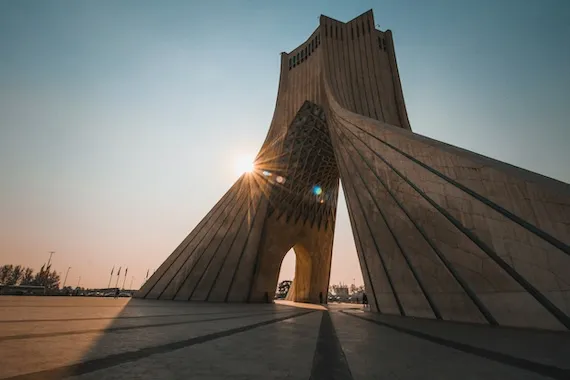
Farhang Jahanpour TFF Associate, former Board member February 11, 2026 Oxford (Special to Informed Comment; Feature) – Today, 11 February, marks the 47th anniversary of the victory of the Islamic Revolution in Iran, and coincidentally, it also marks the 15th anniversary of the ousting of Hosni Mubarak after 30 years of oppressive rule. There were some other uprisings during what came to be known as the Arab Spring, which resulted in the ousting of ruling dictators. Undeterred, Iranian leaders, after the terrible carnage in January this year, are making big plans to celebrate the anniversary of the 1979 Islamic Revolution. Many people optimistically assume that massive popular revolutions against dictators will automatically result in the establishment of democratic governments. Unfortunately, the aftermath of the Iranian revolution and the massive uprisings by Arab masses during the so-called Arab Spring have led to the establishment of even worse regimes. Far from resulting in...
Mourningkilled
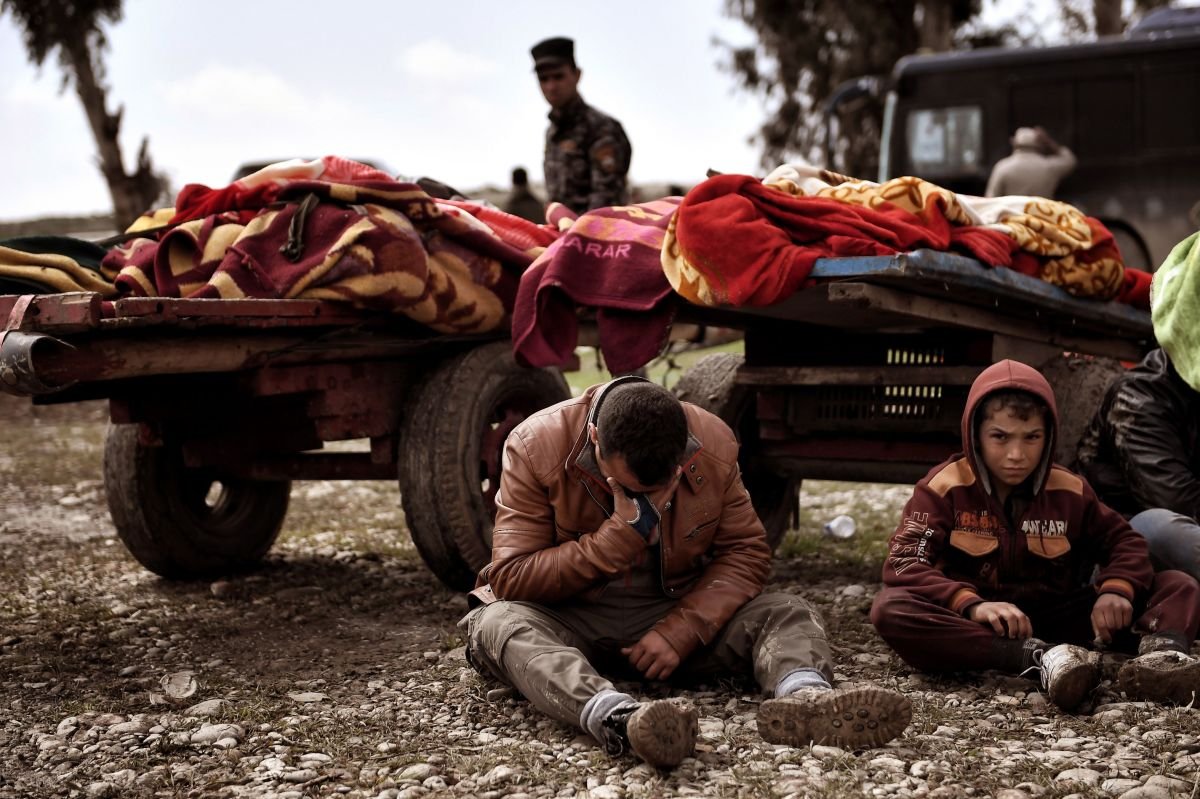
Relatives mourn as bodies of Iraqi residents of west Mosul killed in an airstrike are placed and covered with blankets on carts on March 17th, 2017. Photo: Aris Messinis/AFP/Getty Images Imogen Piper & Joe Dyke October 31, 2021 Airwars tally offers assessment of the direct civilian impact of 20 years of US strikes Originally posted on Airwars homepage on September 6, 2021 You often find a similar refrain in US media reporting of the cost of two decades of the so-called ‘War on Terror.’ The trope goes something like this: “more than 7,000 US service people have died in wars since 9/11,” an article or news report will say. In the next line it will usually, though not always, try to reflect the civilian toll – but almost exclusively in generalities. Tens, or even hundreds, of thousands. Ahead of the 20th anniversary of the 9/11 terrorist atrocities, and the subsequent launch of the...
mosul2_2.jpg
U.S. bombs and bullets have claimed at least hundreds of thousands of civilian lives this century. Here, a U.S. airstrike against Islamic State militants in densely-populated Mosul, Iraq on July 9, 2017 is shown. (Photo: Ahmad Al-Rubaye/AFP/Getty Images) March 29, 2021 Medea Benjamin, Nicolas J.S. Davies Unbeknownst to many Americans, the U.S. military and its allies are engaged in bombing and killing people in other countries on a daily basis.  On February 25th, President Biden ordered U.S. air forces to drop seven 500-pound bombs on Iraqi forces in Syria, reportedly killing 22 people. The U.S. airstrike has predictably failed to halt rocket attacks on deeply unpopular U.S. bases in Iraq, which the Iraqi National Assembly passed a resolution to close over a year ago.  The Western media reported the U.S. airstrike as an isolated and exceptional incident, and there has been significant blowback from the U.S. public, Congress and the world community, condemning the strikes...
bog-by-Edward
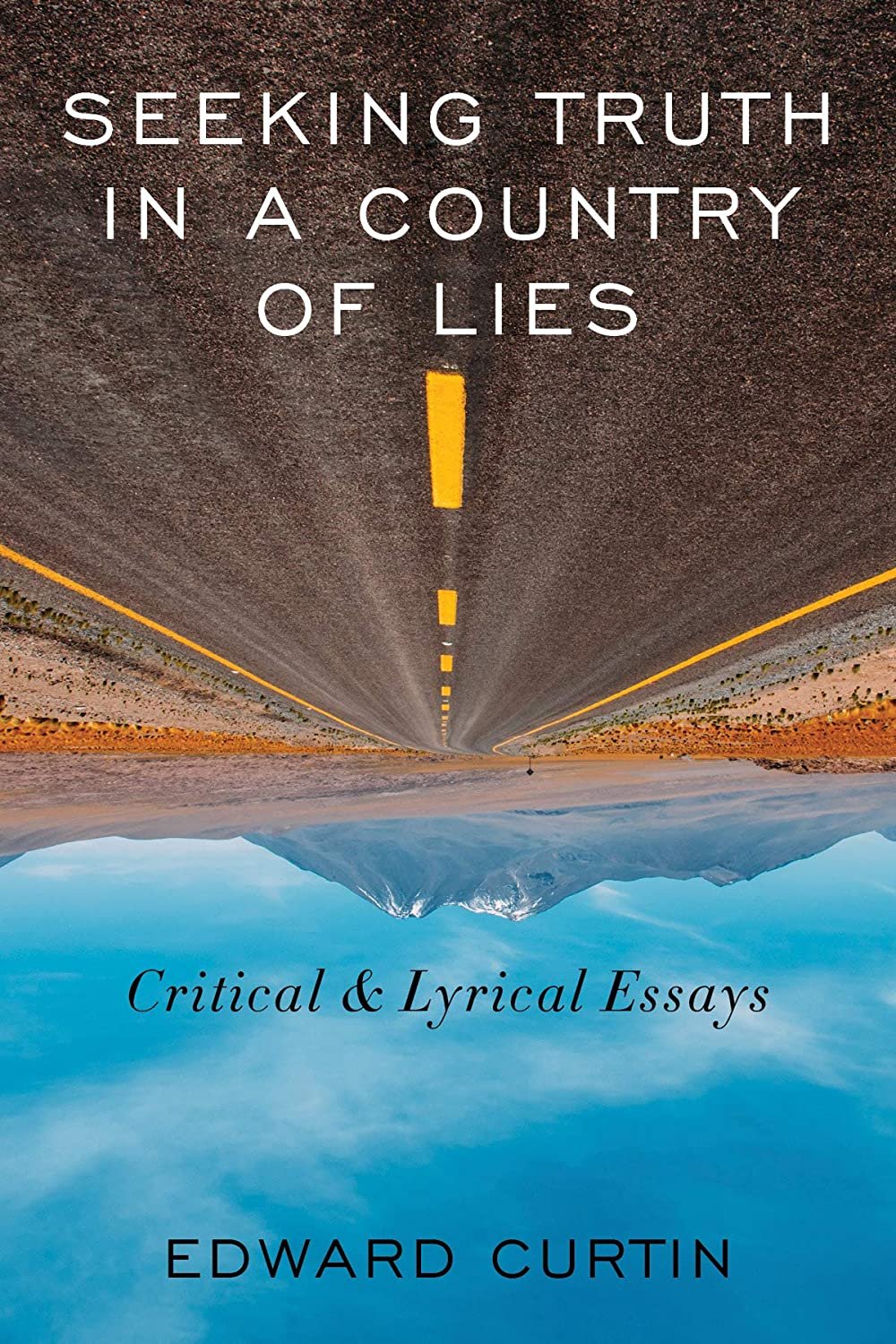
John Steppling October 7, 2020 Some books demand slower reading than others. Ed Curtin’s new book is such a case. But then this assemblage of essays, many published elsewhere, is a corrective to the growing intoxication with technology, with the surveillance and the policing it is being used for, and to what Jonathan Crary wrote about in 24/7, a world where an artificial speed (or hurriedness) is layered over daily life: “Sleep is an uncompromising interruption of the theft of time from us by capitalism.” A corrective to the de-humanizing assault of capitalism. Originally published at Off Guardian This is a book that draws attention to what Curtin references (via James Douglass) as the *unspeakable* — the US capitalist order of crimes, from assassination to the continuing assault on the poor and marginalized. It is appropriate that the first chapter begins with a quote from Harold Pinter’s Noble Prize speech....
Obama_Biden_and_Clinton_in_the_Oval_Office
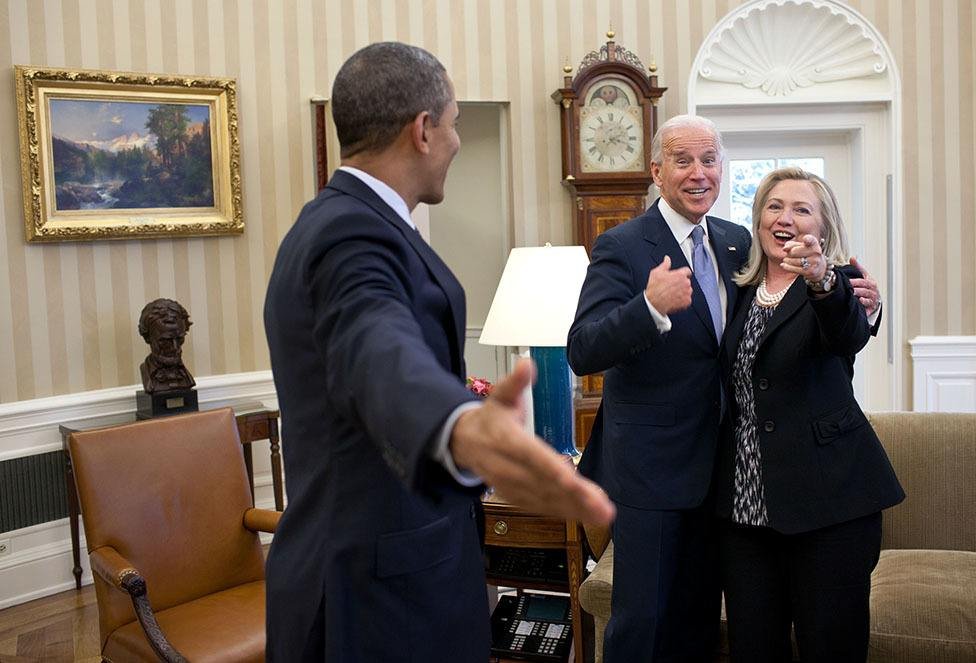
Photograph Source: Pete Souza, White House Official Photograph – CC BY 2.0 Eric Draitser September 15, 2020 The scorching desert sun streams through narrow slats in the tiny window. A mouse scurries across the cracked concrete floor, the scuttling of its tiny feet drowned out by the sound of distant voices speaking in Arabic. Their chatter is in a western Libyan dialect distinctive from the eastern dialect favored in Benghazi. Somewhere off in the distance, beyond the shimmering desert horizon, is Tripoli, the jewel of Africa now reduced to perpetual war. But here, in this cell in a dank old warehouse in Bani Walid, there are no smugglers, no rapists, no thieves or murderers. There are simply Africans captured by traffickers as they made their way from Nigeria, Cameroon, Chad, Eritrea, or other disparate parts of the continent seeking a life free of war and poverty, the rotten fruit of Anglo-American...

bofuq374gwgf
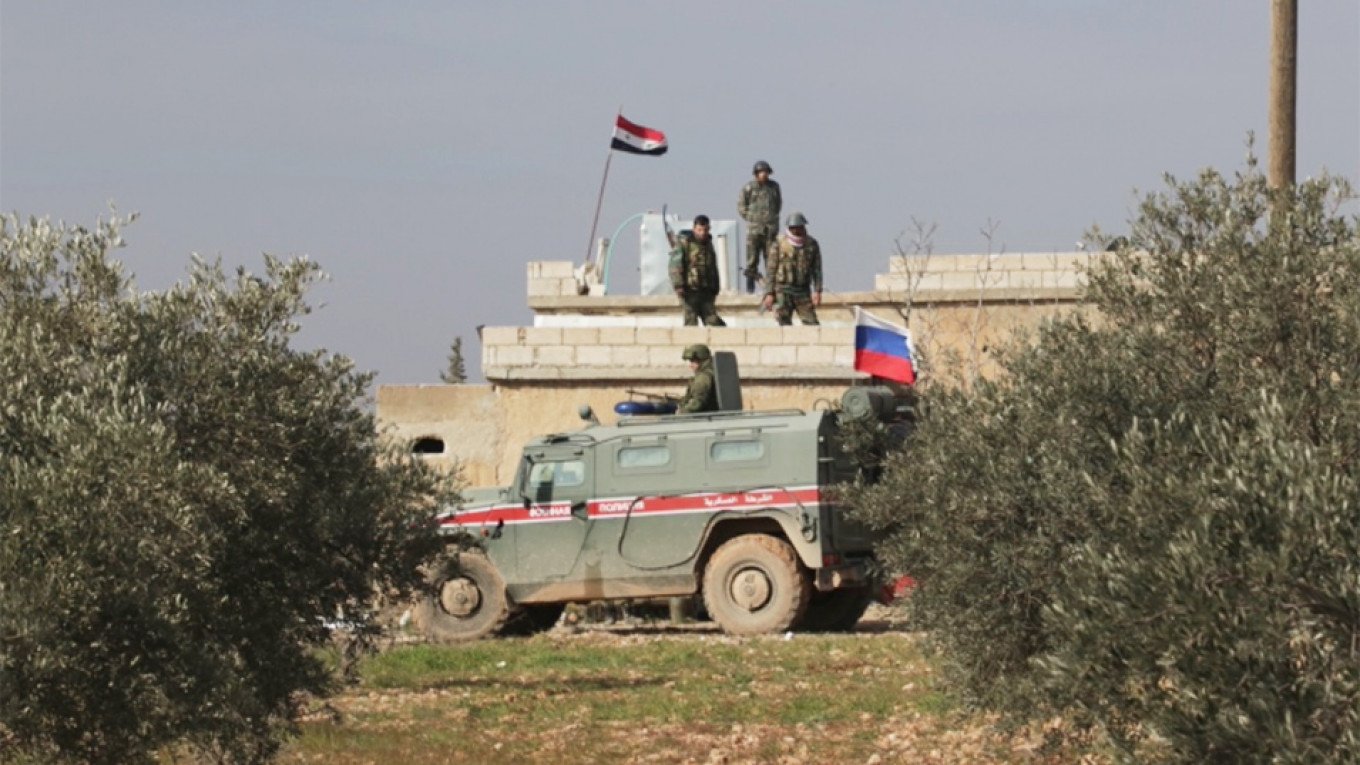
By Scott Ritter November 4, 2019 At a time when the credibility of the United States as either an unbiased actor or reliable ally lies in tatters, Russia has emerged as the one major power whose loyalty to its allies is unquestioned, and whose ability to serve as an honest broker between seemingly intractable opponents is unmatched. Originally posted on Truthdig.com on October 30, 2019 here If there is to be peace in Syria, it will be largely due to the patient efforts of Moscow employing deft negotiation, backed up as needed by military force, to shape conditions conducive for a political solution to a violent problem. If ever there was a primer for the art of diplomacy, the experience of Russia in Syria from 2011 to the present is it. Like the rest of the world, Russia was caught off guard by the so-called Arab Spring that swept through the Middle...
c8ddd0cb93fc674b1cb425fea6242d22
By Gordon M. Hahn October 1, 2019 Five or six years ago, when I was still working most intensively on issues related to jihadism in Russia and globally, I warned of the Caucasus Emirate-tied network running from Russia’s North Caucasus to ISIS in Syria and Iraq through Turkey, Azerbaijan and Georgia (with Tbilisi’s connivance) (see previous articles here and here). Originally posted on Gordon M. Hahn’s personal blog on September 29, 2019 here Somewhat more recently, I also had written about former US President Barak Obama’s Muslim Brotherhood (MB) strategy for bringing ‘Islamic democracy’ to the Muslim world and its dire consequences in Egypt, Libya, Syria and elsewhere in what came to be misnamed the ‘Arab Spring’.  America’s hopefully accidental but nevertheless resulting connivance with ISIS and Al Qai`da-tied groups (e.g., AQ-tied Jabhar al-Nusrah) was exacerbated by intentional connivance by one of Obama’s partners in creating the Arab winter: Turkish...
cropped-Counquest_of_Jeusalem_1099
By Dr. William R. Polk June 27, 2019 Exclusive: Many Americans and Westerners are baffled by the violent rage expressed by many Muslims, but the reasons for their anger are real, deriving from a “deep history” of anti-Islamic wars and colonial exploitation of the Middle East, as ex-U.S. diplomat William R. Polk describes. Originally published by Consortium News on August 15, 2015, here The issue of terrorist attacks on America has been so politically sensitive that most commentators have simply wrapped themselves in the flag and closed their eyes and ears. Yet, even in fairy tales, ostriches were never saved by burying their heads in the sand. It is not a good defensive posture and it wouldn’t be wise for real-life Americans to behave like make-believe ostriches. If we want to be safe rather than sorry in the dangerous world we now inhabit, we need to be clear-headed, logical and informed. Those...
NotIranToo_FR_4_72dpi_ForNet
    By Farhang Jahanpour September 20, 2018   On 20 March 2018, the former French President Nicolas Sarkozy was taken into police custody in Paris to be questioned over allegations that he received millions of Euros in illegal funding from Qadhafi for his presidential campaign. Investigators were examining claims that Qadhafi’s regime secretly gave Sarkozy €50 million overall for the 2007 campaign. Such a sum would be more than double the legal campaign funding limit and also violates French rules against foreign financing of elections. (See: “Former French President Nicolas Sarkozy in police custody over investigation into Gaddafi funding”, The Independent, 20 March 2018. Sarkozy entertained Qadhafi lavishly at the Elyse Palace, even allowing him to pitch his tent in the grounds of the palace. Yet, later on, Sarkozy was the cheerleader for the attack on Libya, which resulted in the brutal murder of Qadhafi and the destruction of...
NotIranToo_FR_4_72dpi_ForNet
  TFF launches a new educational series on regime change in the Middle East to help prevent a repetition on Iran – #NotIranToo   TFF is about to publish a series of articles on regime change in the Middle East over the last few decades. The series has a special focus on Iran because it is now abundantly clear that the U.S. under Trump’s formal administration – but perhaps more under the elites that make up the Deep State underlying it – seems bent on building up to at least a political, psychological and economic war on Iran and – in the worst of cases – also to some kind of military action too. The series consists of sections of Chapter 12 in a forthcoming book by eminent scholar and TFF Board member, Farhang Jahanpour, Oxford University. In a comprehensive preface, he explains his own intellectual path and journalistic work...
richard-falk-cropped-internal
This post is an assessment of the recent Syrian missile attack by the armed forces of the U.S., UK, and France from a variety of perspectives. It is a modified and expanded version of a text earlier published in The Wire  (Delhi) and Il Manifesto(Rome). I intend to write two further posts suggested by the controversy generated by the airstrikes of April 14, 2018, against sites associated with Syria’s alleged chemical weapons capabilities. These strikes raise questions of international law, domestic constitutional authorization for international uses of force, strategic logic, and moral imperatives and rationalizations. Each of these issues is capable of multiple interpretations raising further concerns about the appropriate location of the authority to decide given the nature of world order in the 21stcentury.  Preliminary reflections At this stage, it seems reasonable to wonder whether Syria was attacked because it didn’t use chemical weapons rather than because it did....
C-Span
The U.S. foreign policy elite still wants the Middle East for its oil and its strategic location. By Edward Hunt, January 19, 2018. Originally published by Foreign Policy In Focus here • In recent testimony before the Senate Armed Services Committee, four former U.S. diplomats provided remarkably candid commentary on recent U.S. involvement in the Middle East, revealing a number of the most closely guarded secrets of U.S. diplomacy. The four former diplomats emphasized the importance of the region’s oil, spoke critically about the weaknesses of U.S. strategy, made a number of crude comments about U.S. partners, displayed little concern about ongoing violence, and called for more “discipline” throughout the region. One of the former diplomats, James Jeffrey, criticized the Obama administration for withdrawing U.S. forces from Iraq in 2011 rather than going through with a secret deal to maintain a secret network of military bases in the country. Even...