Intro • Regime Change: Not Iran Too!


TFF launches a new educational series on regime change in the Middle East to help prevent a repetition on Iran – #NotIranToo


TFF is about to publish a series of articles on regime change in the Middle East over the last few decades. The series has a special focus on Iran because it is now abundantly clear that the U.S. under Trump’s formal administration – but perhaps more under the elites that make up the Deep State underlying it – seems bent on building up to at least a political, psychological and economic war on Iran and – in the worst of cases – also to some kind of military action too.

The series consists of sections of Chapter 12 in a forthcoming book by eminent scholar and TFF Board member, Farhang Jahanpour, Oxford University. In a comprehensive preface, he explains his own intellectual path and journalistic work with the BBC and his Iranian background.

The main point is that it is high time for the world to learn the lessons from all the other wars we have witnessed the last couple of decades – in Afghanistan, Iraq, Libya, Syria.

We must look at them in a broader intellectual framework – first, the historical relations between the Middle East and the West and , second, the militarist interventionism that has characterised Western countries and which is, most likely, coming to an end with the soon-to-come dissolution of the U.S. Empire (not the US as such) and its attempt to control – rather than visionarily – lead the world.

When I read professor Jahanpour’s detailed and extremely well-documented analysis of all these cases in their macro-historical perspectives, I began to appreciate that, while there are of course specificities to each conflict, there are also some common elements, concepts and policies that apply to them all albeit in different combinations.

Here is how I would list them:

• A colonial mentality or way of thinking bordering on racism.
There is a clear history-based colonial mentality behind them all – other countries and cultures should learn from “us” or be punished for not doing so;

• Motives stated to the public and real interests are completely separate.
The public is offered various noble motives as pretext – such as promoting freedom, democracy, women’s liberation, change of “regimes” or dictatorships” etc – for what is, in reality, cynical geo-political interests;

• Western mainstream media are basically on the interventionist side
Western mainstream media have conveyed the official motives and seemingly legitimate causes behind all the interventions to a much higher degree than they have attempted to conduct critical research and challenged the various governments’ assumptions – in short, they’ve been on the side of the interventionist forces more than, on the side of the objects of aggression and its victims;

• Extremely deficient analysis
If one takes the official policy legitimations at face value and assume that they are meant to be honest information, the assumptions and calculations the US and NATO governments did before launching their brutal wars on Middle Eastern countries have turned out to be woefully wrong, amateurish and full of wishful thinking. Or, hubris.

• Western decision-makers and media are obsessed with individuals at the top
The analysis show with abundant clarity that the conflict assessments invariably bordered on the absurdly primitive. It was assumed again and again that a) evil is gathered on “their” side and that “we” are the good side that has historically done nothing wrong; b) that evil is embodied in the top leader – being it Saddam Hussein, Mu’ammar Qadhafi or Bashar al-Assad – who, almost from one day to the next changes from having been allies of the U.S. to being its disobedient enemy deserving to be punished and c) if only we can get rid of that top figure and a few people around him, everything will change for the better. In no case this has been true and, also, will not be true if tried in the case of Iran.

• The incredible brutality of Western policies is conveniently hidden, neglected or forgotten
Today, few people seem aware of the millions of fellow citizens in the Middle East who have been killed, psychologically hurt and whose future has been destroyed. Whole countries and economies and cultural sites have been destroyed – and not only once but over and over in one country after the other. The focus, instead, is on what “the dictator” or “the regime” did which is serious crimes, yes, but without exception small compared with the brutality of the Western policies.

• The US and the West have done more to support than to defeat terrorism.
In reality, the US and some Western NATO allies – and friends such as Saudi Arabia and the Gulf States – have done much more to support, finance and arm terrorism than to defeat it. Indeed, ISIS in Iraq and Syria is a consequence of the US-led interventions and occupation policies and mismanagement in Iraq. Iran, Syria and Russia have done more to fight terrorism than the West – while the West, strangely, fight exactly those countries.

• Sanctions is a weapon of mass-destruction, not a soft tool
If applied over a longer time, sanctions lead to poverty and crime, undermine the middle class that can spearhead socio-political change and play into the hands of the hardliners and against the reformers. In short, they are invariably counterproductive from every reasonable, peaceful change perspective.

• It’s easy to start wars but very difficult to end them
Nothing new, you may say – but at least the US decision-makers have not learned that lesson yet since Vietnam – and still drag on with Korea 1953. For instance, Mikhail Gorbachev withdrew the Soviet troops from Afghanistan after 7 years; the US is still there since “10/7” – no, a date not brainwashed into people’s minds like 9/11 but meaning October 7, 2001 – i.e. now 17 years with no end in sight. In 2018, the Iraq quagmire continues in its 15th year.

The consequences of the CIA coup in Iran in 1953 are still with the Iranians and so is the aggression on Iran by Saddam Hussein who, at the time, had the full support of the US/West. Since the violence broke out in Syria in 2011, nothing good has been achieved – and nothing good will be achieved, except if you see some 15 US base facilities, US special troops and criminal occupation of parts of the sovereign state’s territory as something positive – i.e. one huge violation of human rights and international law. The US has stated long ago that it is going to remain in Syria, the war has no end. In summary, in none of all these cases has there been an exit strategy.

• We’ve been lied to every time in the past
The direct and indirect control exercised by the US and its allies over the minds and knowledge of citizens of the West is getting tighter and tighter. While it was possible in the 1970-1990s to criticize and problematize interventionist warfare in the mainstream discourse – media, research and politics – it is virtually impossible today, the Syria conflict and war being a prime example of the moral and intellectual decay – as we have documented here.

• All the wars have been lost on virtually all dimensions
Remember how it was assumed that the Iraqi people would greet the US troops as liberators? I had not been to Baghdad for more than 24 hours before I understood that that would not be the case. The war for the people’s hearts was lost before it commenced. The occupation administration was a disaster – incompetent and corrupt, did not live up to the provisions of international law and laid the ground for Islamic State.

Politically it was a predictable fiasco. Morally, who could possibly defend that around 1 million innocent people were killed by that war and 13 years of cruel sanctions? And in terms of international law, only criminals would argue that this war happened in accordance with the UN Charter and other international law provisions.

And there has been no exit from any of them. The Russians were intelligent enough to pull out of Afghanistan after 7 years. Now it’s 17 in Afghanistan and ongoing.

Much the same could be said about the other interventionist wars. With what comes out of the US concerning Syria these days, it seems that there is nobody in charge in Washington who has learned a single lesson.

They still think the US rules the world – and believe it can do so.

• •

These eleven points are based on my reading of professor Jahanpour’s analysis.

All you’ve got to do is to ask yourself: Why should anything be different in the case of Iran?

Right, it won’t. The warmongers of the world are not interested in learning lessons or doing things more benignly, they are interested in war as such and what it has to offer these small elites. (All these wars have been detrimental to the people in the West, the US in particular, and a major reason behind the decline of the US Empire).

That’s why we have called this series “Not Iran Too”. If it happens, the scenario will repeat itself.

Perhaps with one difference: Military action against Iran is likely to trigger larger changes and more chaos in the Middle East than the preceding wars and is likely also to weaken the US imperial power to an extent that will risk spelling the end of the U.S. Empire as we know it today.

In that sense, it will be a world order issue – and have consequences for the wider Middle East, Central Asia, the BRICS and SCO countries, on the Gulf Cooperation Council and on the largest and most positive infrastructure project on earth, the China-initiated Silk Belt and Road Initiative (BRI).

We have more than enough historical evidence on which to build a worldwide resistance now against a war on Iran.

We have ample opportunity to learn those lessons and not be fooled this time.

This series will help you understand what is at stake and why we must take action now at all levels and through all channels.

Saving Iran from a fate similar to the other countries analysed in this series should have started long ago rather than today – and tomorrow it may well be too late.

This is not about whether or not you like the leadership, culture, religion or whatever in Iran. And beware that, unless you’ve been there yourself, you simply do not know Iran because the general Western media image of it is painted by the brushes of fake and omissions and demonisation. And the nasty real background to the whole nuclear issue – although well-documented by TFF Associate and investigative journalist Gareth Porter – is still not generally known either.

What then is it about?

It is about 85 million goodhearted Iranians who are totally innocent in these irresponsible geo-political win/lose games and who do not, with any stretch of the imagination, deserve to become the victims of such games – as the millions of other innocent people in Afghanistan, Iraq, Libya, Syria, Palestine also never deserved to.


Share and use these hastags

#NotIranToo

#BuildTrustWithIran

#CooperateWithIranNow
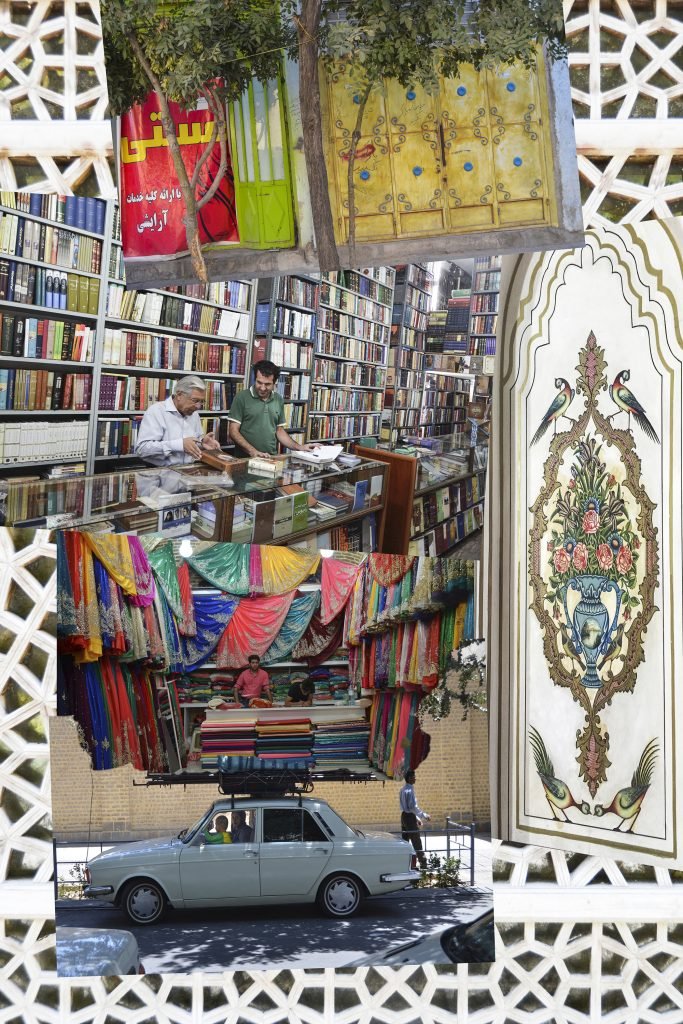


Jan Oberg, Iran Collage # 2 (2017) © Oberg PhotoGraphics


Peace & future researcher + ‌Art Photographer

Share

Leave a Reply

Your email address will not be published. Required fields are marked *

Related Posts

Jan Oberg May 15, 2026 Go to this Fox News page and scroll the whole way down: President Donald Trump tells the world that his meeting with President Xi Jinping yielded a lot of very concrete political and economic results – of course, only where the Chinese side, according to him, agreed with him. He does not mention the Taiwan issue, but Secretary of State, Marco Rubio, says that it did not feature prominently in their talks and that the US policy on Taiwan has not changed. Then go to China Daily – or Global Times – and you will see that for the Chinese it is framework, principles, structure of cooperation etc. that matters – all embedded in the overall idea of “constructive bilateral relationship of strategic stability.” Nowhere is any concrete agreement or deal – all that Trump refers to – mentioned. At the general level, this gives you insights into the very different social...
The MIMAC – Military-Industrial-Media-Academic Complex – drives the world’s rampant militarism and wars without end. Here is a short reflection of how it works against all interests of humanity. #5 deals with why there is no real enemy or threat images/analysis. It’s all ex-post constructions. And, btw, theTFF Peace Pulse is now on Rumble.
Jan Oberg, TFF director April 28, 2026 In this third TFF Peace Pulse, I make the important distinction between the violence and the conflict that violence is a symptom of. If you want peace, focus on the underlying conflict because that is the key to resolution, peacemaking, and a better future for the parties. The West is obsessed with violence, just look around you – and 90+ per cent of the public debate is about military issues and other violence – totally wasted for peace. These Peace Pulses will only be published here a few times. You will also not find them on YouTube and Vimeo because both platforms have blocked TFF and me; you know, peace is dangerous these days. Most TFF’s videos since 2007 are now on Rumble.

Recent Articles

Burundi – hopp om fred Burundi, var är det nu det ligger? Det är nånting med Hutsier och Tutuer – eller vad de nu heter – som mördar varandra med machete-knivar, nånting med fattigdom, korruption, militärdiktatur, nöd och elände? Det hopplösa, mörka Afrika i ett bananskal, eller hur? Tja. Jag har precis varit där. Det ligger naturligtvis någonting i det. Och det finns en del orsaker till att vi inte ser mycket om landet i massmedia. En av dem är att det inte försiggår något folkmord just nu, ingen naturkatastrofer, ingen kupp. Det finns ingen misslyckad FN-mission, USA och EU har få intressen, Madeleine Halfbright har inte sagt något om det nyss, NATO:s Solana ser inte bombningar i Burundi som viktiga för firandet av alliansens 50-årsdag i april. För en tid sedan då 50 människor mördades strömmade hundratals journalister med CNN i spetsen till Burundi…men för att snabbt försvinna till Kongo...
Burundi – håb forude Burundi, hvor er det nu det ligger? Det er noget med Hutsier og Tutuer – eller hvad de nu hedder – der laver folkemord med machete-knive på hinanden, noget med fattigdom, korruption, militærdiktatur, nød og elendighed? Det håbløse, mørke Afrika i en bananskal, ikke? Tjah. Jeg har lige været der. Der er selvfølgelig noget om snakken. Der er en del årsager til at man ikke hører særligt meget om livet i dette lille land. En af dem er at der ikke foregår noget folkemord for tiden, ingen naturkatastrofer, intet kup. Der er ingen mislykket FN-mission, USA og EU har ingen interesser, Madeleine Halfbright har ikke sagt noget om det, NATO’s Solana ser ikke bombinger i Burundi som afgørende forud for alliancens 50årsdag. For nogen tid siden da et halvt hundrede mennesker var blevet dræbt valfartede hundreder af journalister med CNN i spidsen dertil . . . men...
Rambouillet (Rambo-Yeah) og Rashid Vi skriver fredag den 19. januar. For få dage siden kom jeg hjem fra små tre uger i Skopje, Beograd og Kosovo. Min analyse og min intuition siger mig dét, jeg ikke vil høre: bombningerne nærmer sig. Det var 34. besøg siden 1991. Jeg er delvist uddannet i Dubrovnik, fra 1974. Jeg kan ikke slippe det. Det er altså også mit land, der atter trues af den kulturkreds, jeg tilhører. Radmila og Peca i Beograd, venner siden 1974, intellektuelle der har valgt ikke at forlade landet og netop har sagt nej til et ophold i udlandet. Datteren Anja på 9 skal vokse op hér. "Jeg rejste ned nu," siger jeg, "fordi der enten ville falde bomber eller blive en eller anden slags ‘forhandling’ og jeg vil være hér hvis I blir bombet, for jeg skammer mig over hvad Danmark og andre lande gør." Hun får tårer...

TFF on Substack

Discover more from TFF Transnational Foundation & Jan Oberg.

Most Popular

Burundi – hopp om fred Burundi, var är det nu det ligger? Det är nånting med Hutsier och Tutuer – eller vad de nu heter – som mördar varandra med machete-knivar, nånting med fattigdom, korruption, militärdiktatur, nöd och elände? Det hopplösa, mörka Afrika i ett bananskal, eller hur? Tja. Jag har precis varit där. Det ligger naturligtvis någonting i det. Och det finns en del orsaker till att vi inte ser mycket om landet i massmedia. En av dem är att det inte försiggår något folkmord just nu, ingen naturkatastrofer, ingen kupp. Det finns ingen misslyckad FN-mission, USA och EU har få intressen, Madeleine Halfbright har inte sagt något om det nyss, NATO:s Solana ser inte bombningar i Burundi som viktiga för firandet av alliansens 50-årsdag i april. För en tid sedan då 50 människor mördades strömmade hundratals journalister med CNN i spetsen till Burundi…men för att snabbt försvinna till Kongo...
Burundi – håb forude Burundi, hvor er det nu det ligger? Det er noget med Hutsier og Tutuer – eller hvad de nu hedder – der laver folkemord med machete-knive på hinanden, noget med fattigdom, korruption, militærdiktatur, nød og elendighed? Det håbløse, mørke Afrika i en bananskal, ikke? Tjah. Jeg har lige været der. Der er selvfølgelig noget om snakken. Der er en del årsager til at man ikke hører særligt meget om livet i dette lille land. En af dem er at der ikke foregår noget folkemord for tiden, ingen naturkatastrofer, intet kup. Der er ingen mislykket FN-mission, USA og EU har ingen interesser, Madeleine Halfbright har ikke sagt noget om det, NATO’s Solana ser ikke bombinger i Burundi som afgørende forud for alliancens 50årsdag. For nogen tid siden da et halvt hundrede mennesker var blevet dræbt valfartede hundreder af journalister med CNN i spidsen dertil . . . men...
Rambouillet (Rambo-Yeah) og Rashid Vi skriver fredag den 19. januar. For få dage siden kom jeg hjem fra små tre uger i Skopje, Beograd og Kosovo. Min analyse og min intuition siger mig dét, jeg ikke vil høre: bombningerne nærmer sig. Det var 34. besøg siden 1991. Jeg er delvist uddannet i Dubrovnik, fra 1974. Jeg kan ikke slippe det. Det er altså også mit land, der atter trues af den kulturkreds, jeg tilhører. Radmila og Peca i Beograd, venner siden 1974, intellektuelle der har valgt ikke at forlade landet og netop har sagt nej til et ophold i udlandet. Datteren Anja på 9 skal vokse op hér. "Jeg rejste ned nu," siger jeg, "fordi der enten ville falde bomber eller blive en eller anden slags ‘forhandling’ og jeg vil være hér hvis I blir bombet, for jeg skammer mig over hvad Danmark og andre lande gør." Hun får tårer...
Read More
Burundi – hopp om fred Burundi, var är det nu det ligger? Det är nånting med Hutsier och Tutuer – eller vad de nu heter – som mördar varandra med machete-knivar, nånting med fattigdom, korruption, militärdiktatur, nöd och elände? Det hopplösa, mörka Afrika i ett bananskal, eller hur? Tja. Jag har precis varit där. Det ligger naturligtvis någonting i det. Och det finns en del orsaker till att vi inte ser mycket om landet i massmedia. En av dem är att det inte försiggår något folkmord just nu, ingen naturkatastrofer, ingen kupp. Det finns ingen misslyckad FN-mission, USA och EU har få intressen, Madeleine Halfbright har inte sagt något om det nyss, NATO:s Solana ser inte bombningar i Burundi som viktiga för firandet av alliansens 50-årsdag i april. För en tid sedan då 50 människor mördades strömmade hundratals journalister med CNN i spetsen till Burundi…men för att snabbt försvinna till Kongo...
Burundi – håb forude Burundi, hvor er det nu det ligger? Det er noget med Hutsier og Tutuer – eller hvad de nu hedder – der laver folkemord med machete-knive på hinanden, noget med fattigdom, korruption, militærdiktatur, nød og elendighed? Det håbløse, mørke Afrika i en bananskal, ikke? Tjah. Jeg har lige været der. Der er selvfølgelig noget om snakken. Der er en del årsager til at man ikke hører særligt meget om livet i dette lille land. En af dem er at der ikke foregår noget folkemord for tiden, ingen naturkatastrofer, intet kup. Der er ingen mislykket FN-mission, USA og EU har ingen interesser, Madeleine Halfbright har ikke sagt noget om det, NATO’s Solana ser ikke bombinger i Burundi som afgørende forud for alliancens 50årsdag. For nogen tid siden da et halvt hundrede mennesker var blevet dræbt valfartede hundreder af journalister med CNN i spidsen dertil . . . men...
Rambouillet (Rambo-Yeah) og Rashid Vi skriver fredag den 19. januar. For få dage siden kom jeg hjem fra små tre uger i Skopje, Beograd og Kosovo. Min analyse og min intuition siger mig dét, jeg ikke vil høre: bombningerne nærmer sig. Det var 34. besøg siden 1991. Jeg er delvist uddannet i Dubrovnik, fra 1974. Jeg kan ikke slippe det. Det er altså også mit land, der atter trues af den kulturkreds, jeg tilhører. Radmila og Peca i Beograd, venner siden 1974, intellektuelle der har valgt ikke at forlade landet og netop har sagt nej til et ophold i udlandet. Datteren Anja på 9 skal vokse op hér. "Jeg rejste ned nu," siger jeg, "fordi der enten ville falde bomber eller blive en eller anden slags ‘forhandling’ og jeg vil være hér hvis I blir bombet, for jeg skammer mig over hvad Danmark og andre lande gør." Hun får tårer...
Konflikthåndtering – den ny kolde krig Det internationale såkaldte “samfund” er tilstede som fredsskabere i snart sagt hver eneste konflikt og krig med sine diplomater, soldater, genopbygningshjælp, monitorer, jurister, ambassadører, fredsbevarere, mæglere, politi, eksperter, forhandlere og med agenter, satelliter, hangarfartøjer og kampfly på alert. Fredsforstyrrende fraktioner skal bringes til det berømte forhandlingsbord omkring hvilket de under det internationale samfunds pres skal sige ja til fredsplaner, Den generelle, tidstypiske mediedækning af politiske konflikter og krige befæster mere eller mindre bevidst to dybt misvisende, men funktionelle, opfattelser. (A) Konflikter handler om gode versus mindre gode aktører og konfliktløsning er følgelig et spørgsmål om at straffe de onde og belønne de gode, ofrene. (B) Verden er opdelt i to parter, ja der er to verdener: På den ene side er der "fredsforstyrrerne" – slyngelstater, hitleristiske diktatorer, forfejlede stater, primitive og onde aktører, terrorister, folk der ikke forstår andet end store bogstaver og bomber...
Försoningens tid Att förlåta någon innebär att man accepterar den som handlat felaktigt och som ångrar det. Försoning är ett klarläggande och en accept av det som hänt, ett viljesmässigt beslut om att komma vidare och se framåt. Vi kan förlåta en annan människa hans eller hennes gärningar och därmed erbjuda en ny start. Vi försonas med fakta och med den skyldige och eventuellt också med att vi själva kan ha varit en medverkande orsak till att det gick som det gick. Förlåtelse och försoning handlar emellertid inte om att glömma. Ett par av mina kväkarvänner miste för några år sedan sin son och blivande svärdotter i en bilolycka, ett resultat av en annan bilists helt oansvariga manöver. Det var viktigt för dem att träffa den människa som förvållat dem så stor smärta. Straffet i sig var inte viktigt för dem utan de sade till honom: "vi kan förlåta Dig...
Ett expanderande NATO är konfliktbevarande Nato expanderar i en värld där de samlade militärutgifterna motsvarar årsinkomsten för jordens 49 procent fattigaste, skriver fredsforskaren Jan Øberg. Satsningen på Nato:s utvidgning går ut på att kämpa mot fiktiva hot och skapar exakt det man säger sig vilja undvika, ekonomisk kris, instabilitet och nya hot. Nato expanderar. De globala militära utgifterna har årligen fallit med några få procent. Men den nya teknologins slagkraft ökar. Kärnvapenindustrins forskare hotas inte av arbetslöshet. Enbart USA har en militär budget på drygt 250 miljarder dollar och världens samlade militärutgifter motsvarar årsinkomsten för de 49 procent fattigaste på klotet. Tyskland expanderar. En gång i tiden förstod man att ett förenat Tyskland måste vara neutralt. Men Gorbatjov, som gav Sovjetunionens och Warszawapaktens upplösning till Västvärlden i tron att han skulle få någonting i gengäld, serverade också ett förenat Tyskland till Nato på en silverbricka. Delvis kärnvapen-nedrustning följde liksom ryska...