Yemen

Showing 1-10 of 35 stories

Sort by
Categories

Year

Author / Contributor

Region

mosul2_2.jpg
U.S. bombs and bullets have claimed at least hundreds of thousands of civilian lives this century. Here, a U.S. airstrike against Islamic State militants in densely-populated Mosul, Iraq on July 9, 2017 is shown. (Photo: Ahmad Al-Rubaye/AFP/Getty Images) March 29, 2021 Medea Benjamin, Nicolas J.S. Davies Unbeknownst to many Americans, the U.S. military and its allies are engaged in bombing and killing people in other countries on a daily basis.  On February 25th, President Biden ordered U.S. air forces to drop seven 500-pound bombs on Iraqi forces in Syria, reportedly killing 22 people. The U.S. airstrike has predictably failed to halt rocket attacks on deeply unpopular U.S. bases in Iraq, which the Iraqi National Assembly passed a resolution to close over a year ago.  The Western media reported the U.S. airstrike as an isolated and exceptional incident, and there has been significant blowback from the U.S. public, Congress and the world community, condemning the strikes...
US-sanctions
Prefatory Note: The post below is a slightly modified version of an interview published in The Nation on September 25th, following the September 14th attack on Saudi oil facilities. It follows a pattern with respect to Iran of accusations, denials, and public uncertainties. This combination of elements, given the leadership in Washington and Tehran, one blustering, the other inflexible, can easily produce an unintended stumble into war. A second shorter interview is appended, conducted prior to the attacks by an Iranian journalist, M.J. Hassani of Tasnim News Agency. It illustrates the seeming rigidity of Iran’s Supreme Guide, considered as having the final word on government policy, exceeding that of the elected leadership. Originally posted on Richard Falk’s personal blog on October 1, 2019, here Daniel Falcone Introduction to the Interview: After accusations of Iranian drone attacks on Saudi oil facilities, Iranian officials and authorities indicated that “full-fledged war” with the United States could...

YemenWar
By Pepe Escobar October 1, 2019 “It is clear to us that Iran bears responsibility for this attack. There is no other plausible explanation. We support ongoing investigations to establish further details.” Originally posted on in the Asia Times on September 25, 2019 here The statement above was not written by Franz Kafka. In fact, it was written by a Kafka derivative: Brussels-based European bureaucracy. The Merkel-Macron-Johnson trio, representing Germany, France and the UK, seems to know what no “ongoing investigation” has unearthed: that Tehran was definitively responsible for the twin aerial strikes on Saudi oil installations. “There is no other plausible explanation” translates as the occultation of Yemen. Yemen only features as the pounding ground of a vicious Saudi war, de facto supported by Washington and London and conducted with US and UK weapons, which has generated a horrendous humanitarian crisis. So Iran is the culprit, no evidence provided, end of...
RichardFalk
The World Order Backdrop Arguably, even before the atom bomb was dropped on Hiroshima, there was a widespread sense that a state-centric form of world order was morally and functionally deficient in certain fundamental respects. Political actors were indifferent to the outbreaks of war, disease, and famine outside of their sovereign territory absent serious extraterritorial reverberations. At the same time lesser states were vulnerable to the manipulations and territorial/imperial ambitions of leading states that generated colonialism, interventions, and sustained an exploitative Europeanization of world order. Originally posted on Richard Falk’s blog Citizen Pilgrimage on September 5, 2019, here World War I with massive casualties, closely followed by the Russian Revolution, which posed a normative challenge to the capitalist/market– driven organization of national societies, led to some groping toward a new global order taking the institutional form of the League of Nations. It became soon obvious that the League, a project...
untitled-news
Photo: Shutterstock By Jim Lobe March 6, 2019 The ongoing war in Yemen, called the world’s “worst humanitarian disaster” by the United Nations and independent aid agencies since early last year, received a grand combined total of 20 minutes of coverage on the ABC, NBC, and CBS weekday evening news programs in 2018. That compared to a total of 71 minutes that the three major networks devoted to the British royal wedding and a combined total of 100 minutes dedicated to the rescue of a dozen young cave explorers from flooding in Thailand, according to the latest annual compilation by the authoritative Tyndall Report. Originally published at lobelog.com By contrast, the brutal murder of Washington Post columnist Jamal Khashoggi in the Saudi consulate in Istanbul in September received a total of 116 minutes of coverage by the three networks, making it one of the very few foreign-based stories to make...
000_1A55LN
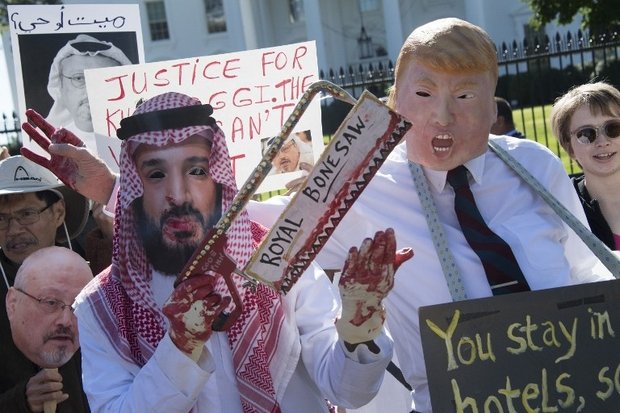
Photo: Demonstrators dressed as Saudi Crown Prince Mohammed bin Salman and US President Donald Trump protest outside the White House in Washington on 19 October 2018, demanding justice for missing Saudi journalist Jamal Khashoggi (AFP) (Photo credit: middleeasteye.net).   Tehran has repeatedly delivered on its promises, while Washington has fallen short and backed Riyadh’s disastrous regional adventures. November 22, 2018   By Seyed Hossein Mousavian In a recent op-ed in The New York Times, Thomas Friedman criticised former US President Barack Obama’s bet on Iran and President Donald Trump’s bet on Saudi Arabia, noting that both countries responded with their worst impulses. Friedman argues that the Iran nuclear deal was a bet worth making, but like many critics of the deal, he claims that it enabled Iran’s overreach in four Arab capitals: Baghdad, Damascus, Sanaa and Beirut. I believe he is wrong. In the Iran-US wrangling over the past three decades, Tehran...
jonathanpower
The evidence that has come out from the UN and NGOs makes clear, without any reservation or ambiguity, that on August 9th dozens of school children on a bus in Yemen were killed by a Saudi Arabian air-strike, and that American supplied weapons had been used, and probably British too. Criticism of Saudi Arabia and its partner in crime, the United Arab Republic, has been increasing over the last year. The US is not a partner in the actual fighting but, started by President Barack Obama and continued on a larger scale by President Donald Trump, the US doesn’t only provide weapons it has provided intelligence, warplane refueling and guidance technology for missiles and bombs. This is reminiscent of when the US supported Saddam Hussein’s war against Iran, some years before Saddam himself became the West’s opponent. Although Saddam used a weapon of mass destruction – chemicals – the US,...
Imagen-thumbnail-The-Transnational
Det er en gammel floskel at kalde sommerferien for agurketid. Der er ingen historier at skrive om for de danske journalister, når erhvervslivets ledere, debattørerne og politikerne på Christiansborg er på sommerferie. Agurketid kunne dog også ses som en mulighed for at skue udover landegrænsen, og måske man vil opdage en verden fyldt af historier, som mangler at blive fortalt. Hvis man generelt følger danske mediers dækning af de mest presserende konflikter, som foregår udenfor landets grænser, er det et stofområde, som jeg vil påstå er i en nedadgående kurve. Når det drejer sig om internationale konflikter og krige virker det faktisk som om det er blandt de lavest prioriteret samtaleemner på landets redaktioner. Det står i skarp kontrast til det faktum at Yemen er udpeget af Unicef som den største humanitære krise siden 2. verdenskrig.* Medierne har stort set ikke bragt artikler i juli måned om krisen i Yemen...
PressTV
/03/13/the-increasing-global-arms-trade-nato-not-russia-is-the-main-problem/”>See comment 5 here.  
famine
  January 27, 2018 Mass starvation killed more than three million people in Stalin-era Ukraine in the 1930s and more than 18 million in China during Mao Zedong’s Great Leap Forward in the late 1950s and early 1960s. Yet by the start of this century, famines like those were all but eliminated, Alex de Waal says in his new book, Mass Starvation: The History and Future of Famine. The number of people dying in famines around the world has dropped precipitously, particularly over the last thirty to fifty years. Via phys.org Those gains, though, are fragile, and could be starting to be reversed, says de Waal, who is the executive director of the World Peace Foundation and a research professor at the Fletcher School. For his book, he compiled the best available estimates of global famine deaths from 1870 to 2010, and used that data to analyze trends. Tufts Now...
3333-14
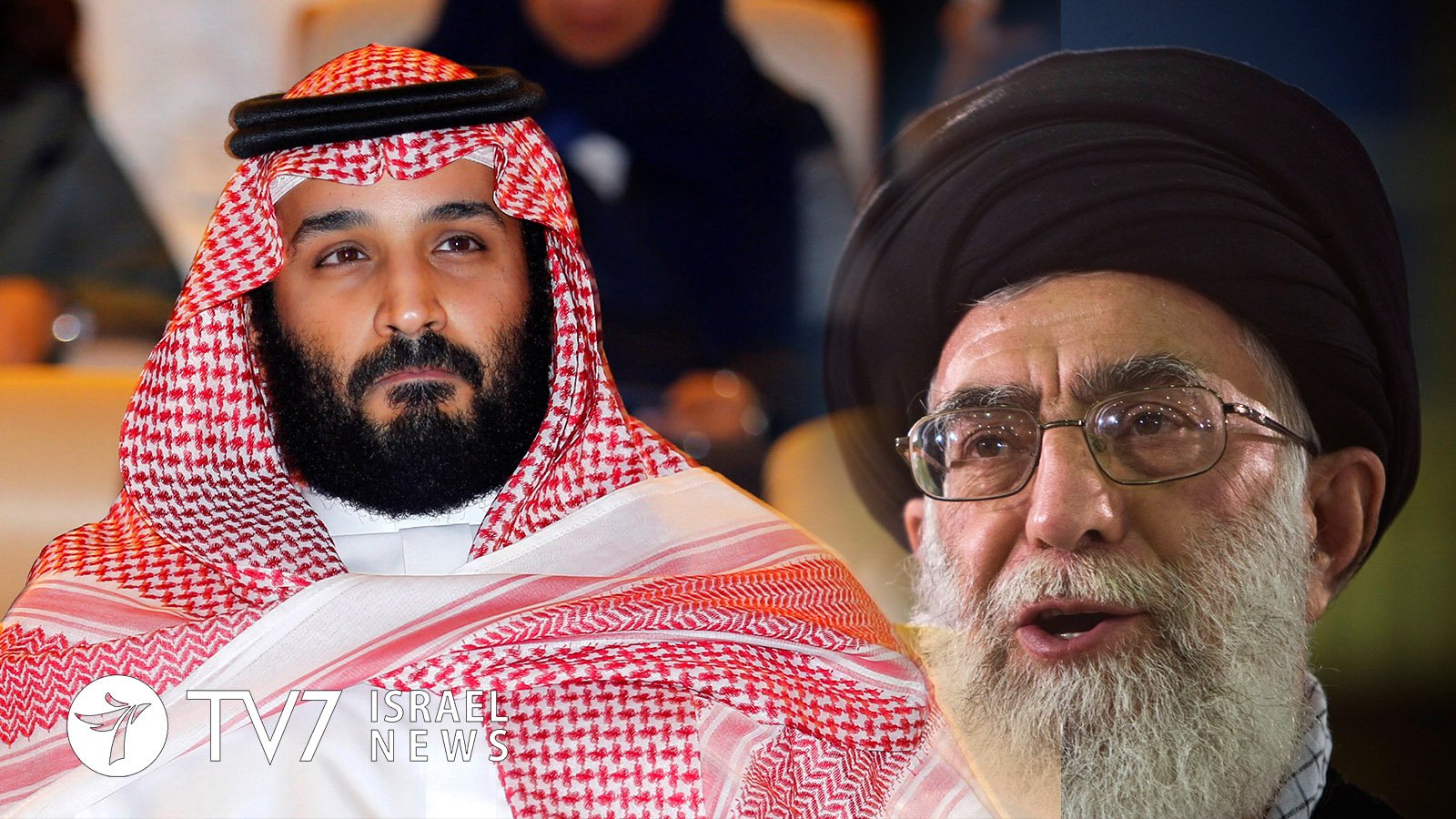
By Seyed Hossein Mousavian • Saudi Crown Prince Mohammad bin Salman (MBS) is steadily consolidating power in Riyadh and positioning himself to become the most powerful ruler in Saudi history. His rise has been accompanied with a ratcheting up of hostilities against Iran and even war rhetoric. As Saudi-Iran tensions increase, the lived experiences and leadership styles of the 78-year-old Iranian Supreme Leader Ayatollah Ali Khamenei and 32-year-old MBS will decide the future of peace and stability in the region. Via LobeLog Before Iran’s 1979 Islamic revolution, Ayatollah Khamenei was a political activist who opposed the dictatorship of the Shah and endured 15 years of prison, torture, and exile. He rose through the revolutionary ranks after the revolution and in 1981, was elected president. During the Iran-Iraq war (1980-1988)—which saw the United States and other global powers as well as regional Arab states support the aggressor Saddam Hussein—Ayatollah Khamenei played a key role in overseeing...
1
By Emile Nakhleh December 29, 2017 • President Trump’s new National Security Strategy and the negative reaction his announcement on Jerusalem has generated in the UN Security Council and General Assembly do not bode well for America’s relations with friendly Arab countries and the wider Islamic world. Arab peoples and media seem bewildered by the president’s recent decision to move the American embassy to Jerusalem, and baffled by the apparent lack of a coherent American policy toward the Arab world generally and the Israeli-Palestinian conflict specifically. Via LobeLog The inconsistency and discontinuity in the president’s varied positions and tweets on complex Middle Eastern issues do not present the region with a clear trajectory for Arab-American relations in the coming years. This risks leaving the region on a precarious path to nowhere. The view from the Middle East is that the lack of coherence in American policy toward critical war and...