
The transnational

It’s a matter of principles, courage, vision and pulling together – while the militarist world is falling apart… Peter Langille October 3, 2026 “Here, then, is the problem which we present to you, stark and dreadful and inescapable: Shall we put an end to the human race; or shall mankind renounce war?”The Bertrand Russell—Albert Einstein Manifesto, July 9, 1955 ⁕ The forecast for what’s ahead is worrisome. The sharp rise in armed conflicts over the past three years is adding to what was already the highest level in over seventy years. Genocides, which should be prevented are supported. A shared climate emergency that jeopardises survival is ignored. Diverse polls now suggest that people are war-weary, worried and interested in a more effective United Nations. And, there are viable policy options for a more secure world! Yet governments are doubling-down, betting on more war and investing heavily. If current trends persist, global military spending is projected to reach $6.6 trillion by 2035. Militarism will follow the money, deepening cultures of violence, poverty and extremes. Overall, the costs are staggering. As reported in the Global Peace Index 2026, “the economic impact of violence on the global economy in 2025 was US$21.8 trillion...

Johan Galtung 1930-2024October 2015 Published here on October 3, 2026 Let us focus on Civilization for conflict analysis and remedies. Major forms of disorder use violence; war is state organized violence. The most belligerent states are the United States of America and Israel, both with civilization roots. National Evangelism, the US Protestant Christian civilization– more national than evangelical–justifies US warfare as exceptionalism of a people chosen by God, with a manifest destiny to run the world. Orthodox Judaism justifies Israeli warfare to conquer and expand from Nile to Euphrates as a religious right and duty to the Eternal One. The third most belligerent country, the UK, no longer believes it is God-chosen but chosen by the USA; not quite the same but something. But the root cause of global disorder lies in the Occident–with Islam–seeing itself as the single, universal civilization valid for all at all times, all others being mistakes. Missionary activity, slavery, colonialism, exploitative trade, robbery capitalism, follow. The USA got from Judaism the idea of Chosen People-Promised Land. Yet Israel is actually the opposite of the USA: a land for Jews only, for 0.2% of humanity; not a world for everybody run by US hegemony. These anomalies...
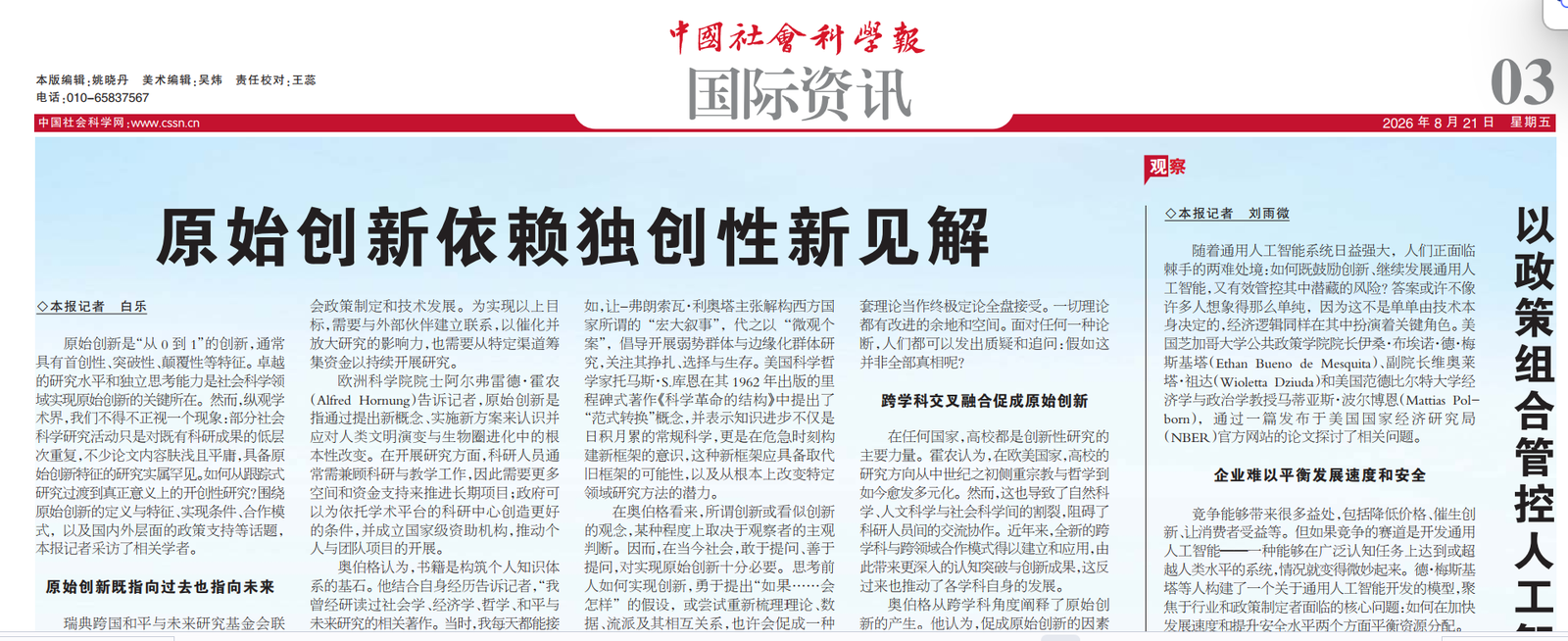
Jan ObergPhD, director, The Transnational Foundation for Peace and Future Research, TFFLund, Sweden October 2, 2026 This is my full original manuscript. The Chinese Academy of Social Science, CASS, makes two publications out if it. 1. China’s Five-year plan emphasized the capabilities of basic research and original innovation. It is regarded as the goal of the future social development, which, as required, should be significantly enhanced. Can you comment on the importance of original innovation in research and academic study? I believe it is easier to define “original innovation” in the natural sciences than in social sciences. The breaking points of what constitutes something new, or innovative, are not quite as sharp in the latter. But in both fields it is about opening up something that was closed, unseen, unexplored before – making manifest what was earlier latent. Innovations come in many forms and shapes – naming something that was not named before, developing a category or concept that re-organises what we thought before; it points both to the past and the future; it may also be an innovative interpretation of known facts, changing the level at which a concept or a theory seem to rest and finding that it works both...
The agreement is catastrophic both because of what it says and what it doesn’t mention. It reduces further the major asset of security policies: Freedom of action. Jan Oberg TFF director September 25, 2026 A couple of hours before the agreement was signed on September 22, 2026, I published the following 13 hypotheses about what it would most likely contain on TFF Substack (in English). I was wrong on only the first point. Contrary to what Trump had written on his Truth Social platform, it does not appear to come into force immediately. In fact, it turned out to be worse than even I had anticipated. After these hypotheses now come a number of reflections in light of what the agreement actually contains, and does not contain, as well as the way in which it has generally been presented by major media outlets and by the public-service broadcaster DR. My conclusion is that it is extremely misleading and analytically unsound to claim that this is a good agreement for all parties; that is simply how the governments wishes to sell it to the public. Media commentators with little or no expertise in security affairs are broadcasting this claim without conducting...
Below are TFF-related media mentions, comments, videos and social media posts published elsewhere but not on this homepage. We happen to catch and list only a fraction. Regarding video comments and debates, we recommend that you go to the TFF Video Channel on Substack where many of them are reproduced. Jan Oberg is a contributor to China Daily – 52 million daily clicks – and Global Times, CGTN and CCTV (the national television), China Investment, Xinhua News Agency and several others. Articles and videos on these media very often multiply into countless Chinese (and Western media) that re-post them from these main media. Thanks to The China Academy, his analyses, interviews and comments are frequently posted on YouTube channels such as Thinkers Forum and Wave Media. These videos are often re-posted on Bilibili (China’s YouTube), the China Content Center on TikTok, and on the Chinese edition of TikTok, Douyin.com. This means reaching hundreds of millions of viewers worldwide over a year. While there are too many to catch on all these...
How Oxford University Press allowed a personality‑driven narrative to masquerade as scholarship. Jan Oberg, dr hc, TFF director This article has also been published on TFF Substack where more readers react and withdraw their interviews from the project. A Special Issue in a scholarly journal is not an ordinary publication. It is a collective, curated […]
New pathbreaking theory-of-peace book by Iranian TFF Associate Dr Ali Akbar Alikhani August 27, 2026 Introduction Probably very few Westerners know that Tehran has a peace museum and that Tehran University has pioneered academic peace and conflict studies in the Muslim world, where this field is, regrettably, almost non-existent. Tehran University is the single most […]
Recent Posts
It’s a matter of principles, courage, vision and pulling together – while the militarist world is falling apart… Peter Langille October 3, 2026 “Here, then, is the problem which we present to you, stark and dreadful and inescapable: Shall we put an end to the human race; or shall mankind renounce war?”The Bertrand Russell—Albert Einstein Manifesto, July 9, 1955 ⁕ The forecast for what’s ahead is worrisome. The sharp rise in armed conflicts over the past three years is adding to what was already the highest level in over seventy years. Genocides, which should be prevented are supported. A shared climate emergency that jeopardises survival is ignored. Diverse polls now suggest that people are war-weary, worried and interested in a more effective United Nations. And, there are viable policy options for a more secure world! Yet governments are doubling-down, betting on more war and investing heavily. If current trends persist,...
Johan Galtung 1930-2024October 2015 Published here on October 3, 2026 Let us focus on Civilization for conflict analysis and remedies. Major forms of disorder use violence; war is state organized violence. The most belligerent states are the United States of America and Israel, both with civilization roots. National Evangelism, the US Protestant Christian civilization– more national than evangelical–justifies US warfare as exceptionalism of a people chosen by God, with a manifest destiny to run the world. Orthodox Judaism justifies Israeli warfare to conquer and expand from Nile to Euphrates as a religious right and duty to the Eternal One. The third most belligerent country, the UK, no longer believes it is God-chosen but chosen by the USA; not quite the same but something. But the root cause of global disorder lies in the Occident–with Islam–seeing itself as the single, universal civilization valid for all at all times, all others being...
Jan ObergPhD, director, The Transnational Foundation for Peace and Future Research, TFFLund, Sweden October 2, 2026 This is my full original manuscript. The Chinese Academy of Social Science, CASS, makes two publications out if it. 1. China’s Five-year plan emphasized the capabilities of basic research and original innovation. It is regarded as the goal of the future social development, which, as required, should be significantly enhanced. Can you comment on the importance of original innovation in research and academic study? I believe it is easier to define “original innovation” in the natural sciences than in social sciences. The breaking points of what constitutes something new, or innovative, are not quite as sharp in the latter. But in both fields it is about opening up something that was closed, unseen, unexplored before – making manifest what was earlier latent. Innovations come in many forms and shapes – naming something that was not...
The agreement is catastrophic both because of what it says and what it doesn’t mention. It reduces further the major asset of security policies: Freedom of action. Jan Oberg TFF director September 25, 2026 A couple of hours before the agreement was signed on September 22, 2026, I published the following 13 hypotheses about what it would most likely contain on TFF Substack (in English). I was wrong on only the first point. Contrary to what Trump had written on his Truth Social platform, it does not appear to come into force immediately. In fact, it turned out to be worse than even I had anticipated. After these hypotheses now come a number of reflections in light of what the agreement actually contains, and does not contain, as well as the way in which it has generally been presented by major media outlets and by the public-service broadcaster DR. My...

Below are TFF-related media mentions, comments, videos and social media posts published elsewhere but not on this homepage. We happen to catch and list only a fraction. Regarding video comments and debates, we recommend that you go to the TFF Video Channel on Substack where many of them are reproduced. Jan Oberg is a contributor to China Daily – 52 million daily clicks – and Global Times, CGTN and CCTV (the national television), China Investment, Xinhua News Agency and several others. Articles and videos on these media very often multiply into countless Chinese (and Western media) that re-post them from these main media. Thanks to The China Academy, his analyses, interviews and comments are frequently posted on YouTube channels such as Thinkers Forum and Wave Media. These videos are often re-posted on Bilibili (China’s YouTube), the China Content Center on TikTok, and on the Chinese edition of TikTok, Douyin.com. This means reaching hundreds of millions of viewers worldwide over a year. While there are too many to catch on all these...
How Oxford University Press allowed a personality‑driven narrative to masquerade as scholarship. Jan Oberg, dr hc, TFF director This article has also been published on TFF Substack where more readers react and withdraw their interviews from the project. A Special Issue in a scholarly journal is not an ordinary publication. It is a collective, curated […]
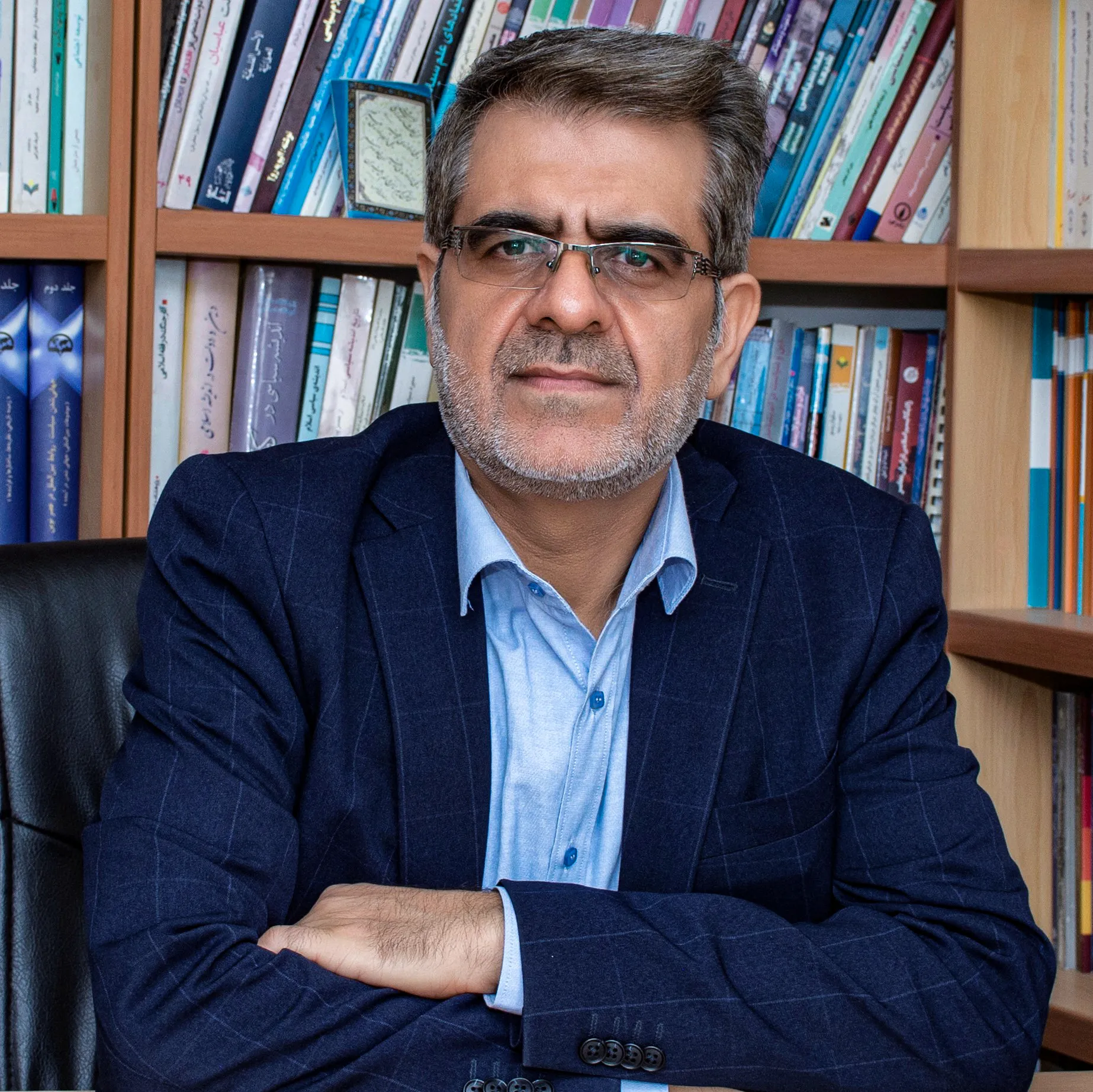
New pathbreaking theory-of-peace book by Iranian TFF Associate Dr Ali Akbar Alikhani August 27, 2026 Introduction Probably very few Westerners know that Tehran has a peace museum and that Tehran University has pioneered academic peace and conflict studies in the Muslim world, where this field is, regrettably, almost non-existent. Tehran University is the single most […]
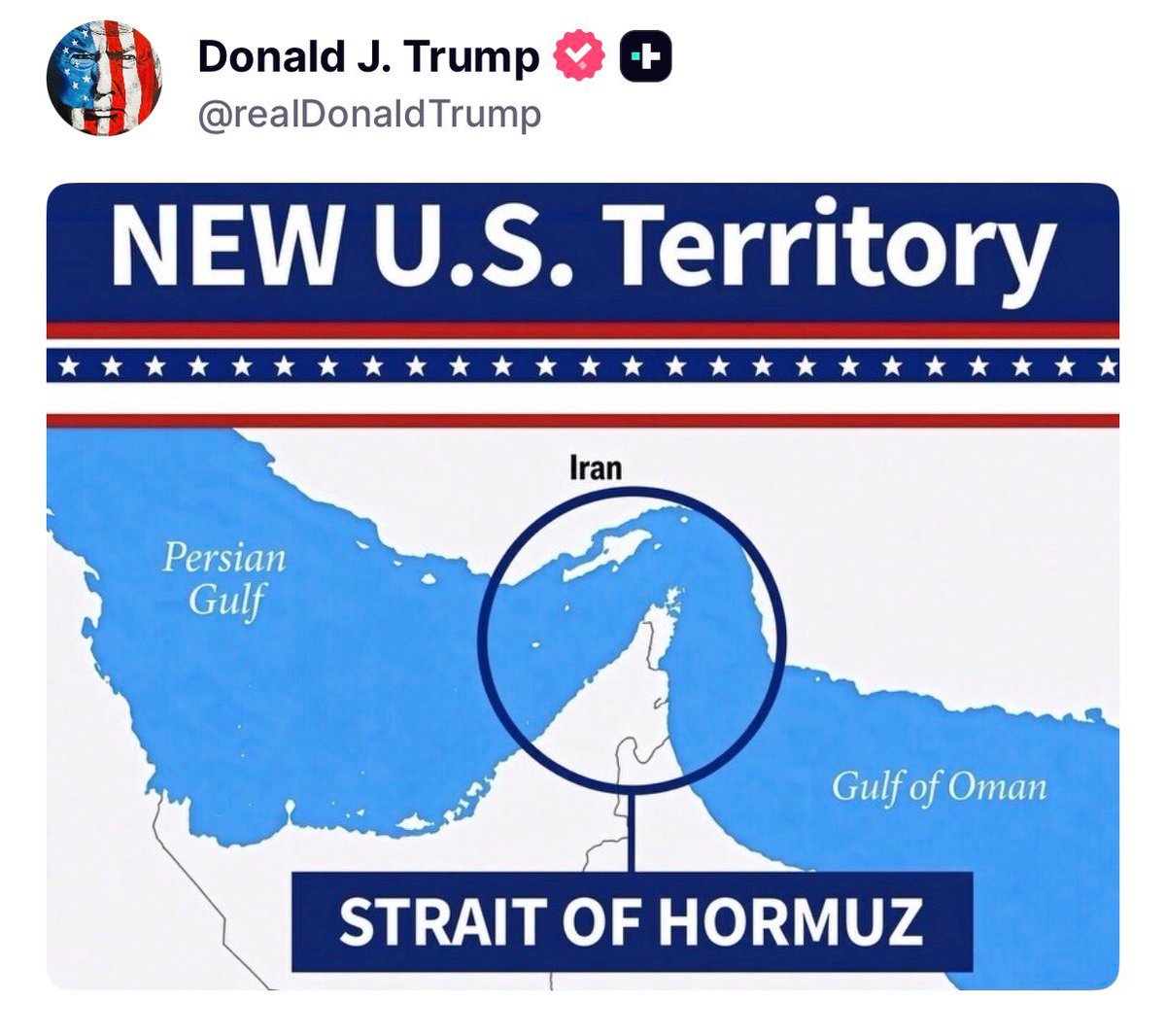
Jan ObergTFF director ☮️ When this morning – August 19, 2026 – I saw the above new US Trump map, I came to think of Frank Zappa, The Mothers of Invention, who said that politics is the entertainment division of the Military-Industrial Complex. That formulation beats many academic analyses – as you will have understood […]
TFF on Substack
Discover and subscribe to more peace materials on TFF Substack
For a global future that respects the UN norm that peace shall be established by peaceful means. Research-based public education and policy proposals continuously since 1986
Selected Highlights Since 1986

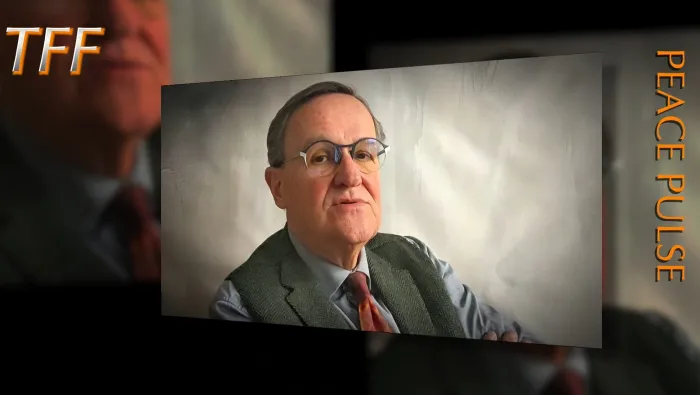
In contrast to most, we’ll bring alternatives, solutions, hope and strategies for a better future. Times are dangerous, yes, but that only intensifies the need for constructive thinking and action! Jan Oberg, TFF director April 13, 2026 The new TFF Peace Pulse uses video messages in a new way: Max 3-5-minute-long comments, ideas or perhaps mini-lectures, all about peace – positive peace. We launch them today on April 13, 2026 with a carefully crafted visual aesthetic fitting the content. We hope to publish them regularly from now on. We launch Peace Pulse (PP) – for a number of reasons. The world is in chaos, and there are countless reasons to feel concerned, frustrated, even angry. The atmosphere is saturated with doom and gloom, with negative energy and rear‑mirror thinking, while vision, imagination, alternatives, strategies and genuine future‑mindedness remain in short supply. And without them, we simply can’t save the world. Looking at problems from a hundred angles will...
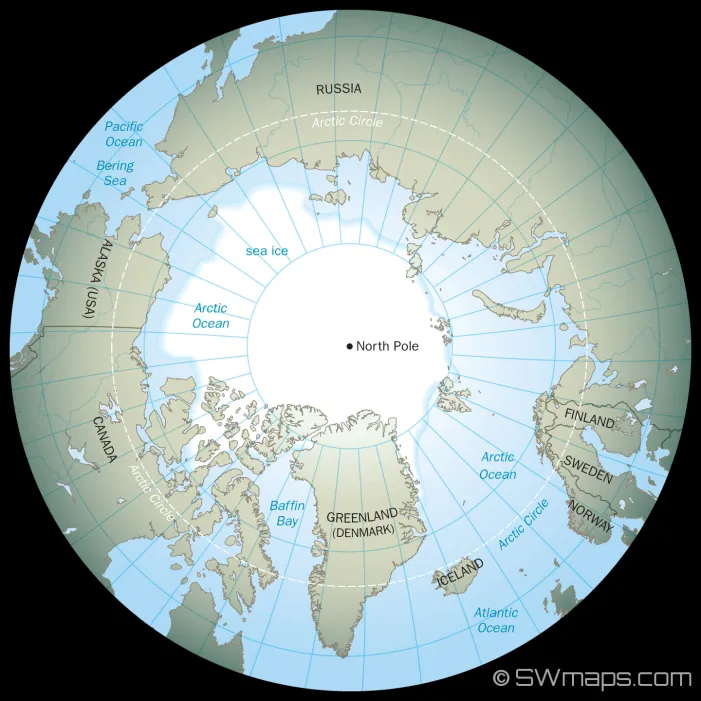
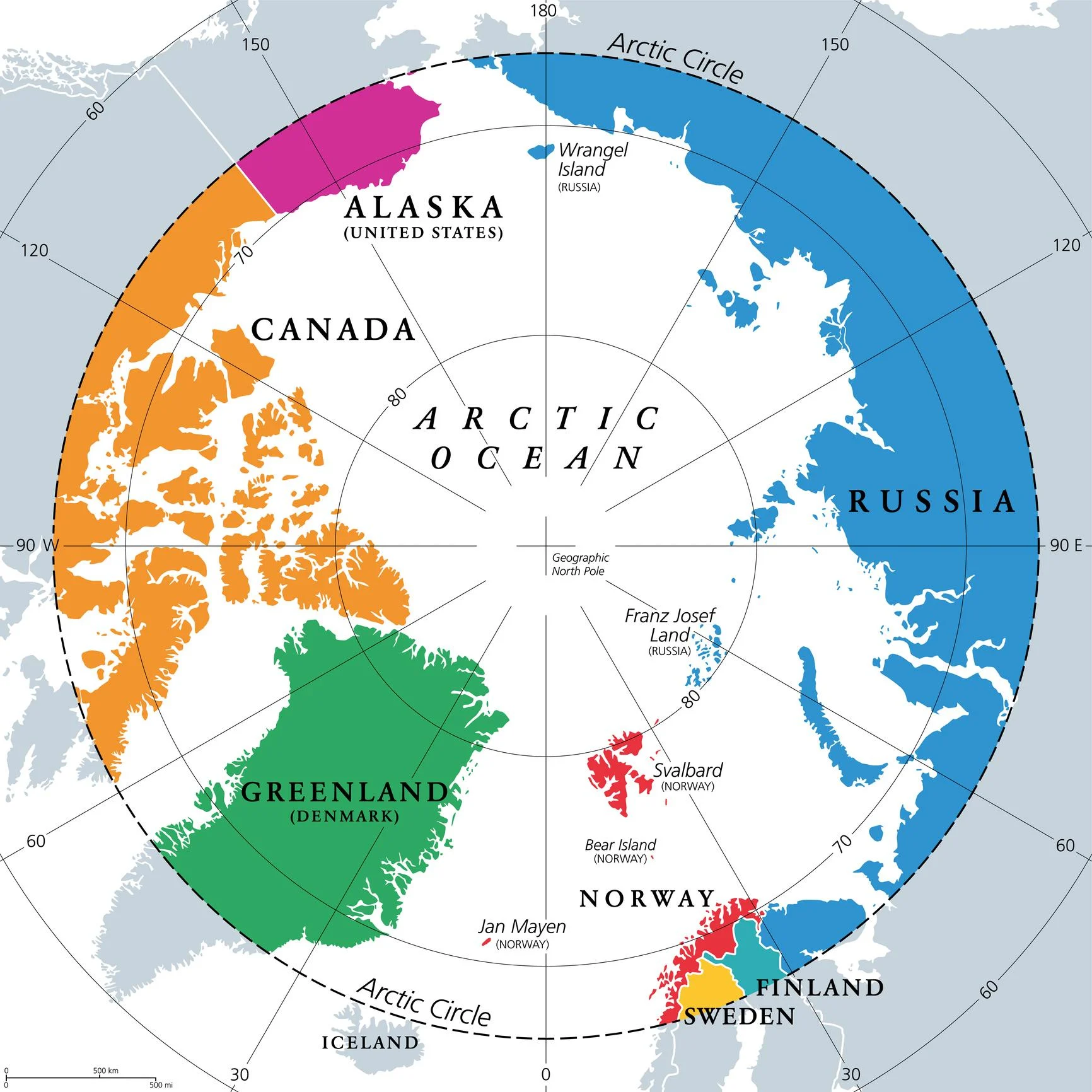
This is not another geopolitical commentary on the Arctic. It is a visionary peace proposal that can save the region from militarised rivalry and ecological ruin. A blueprint for shared security, sustainable development, and human dignity — benefitting Greenland, the Arctic, and the rest of us. Jan Oberg TFF director Lund, Sweden, February 17, 2026 I. Four Principles for a New Arctic Vision The Arctic is often framed as a cold arena of rivalry — a place where great powers test each other’s resolve. But this worldview is outdated, unimaginative, and ultimately self‑defeating. The Arctic is not a vacuum waiting to be militarised; it is a living region, a climate stabiliser, and a cultural homeland whose future will shape the future of humanity. If we begin from that understanding, a far more rational Arctic order becomes possible — one that is peaceful, cooperative, and centred on the people who actually live there. This vision rests...
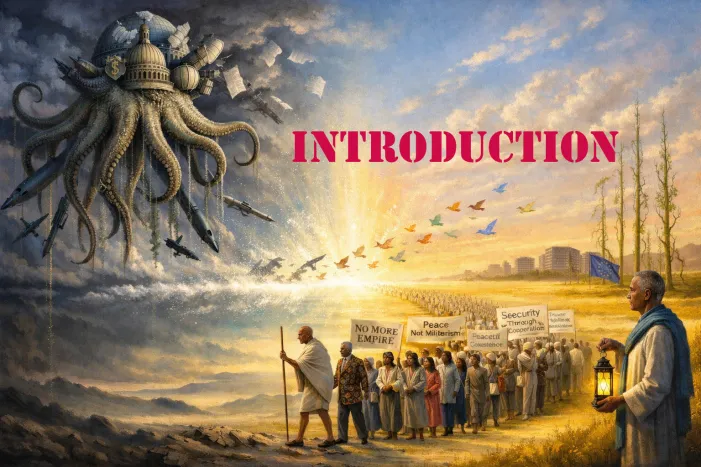
Introduction to TFF’s forthcoming four Idea Portfolios of Diplomatic and Nonviolent Resistance By TFF’s Board & FoundersPascal Lottaz, Biljana Vankovska, Annette Schiffmann, Christina Spannar & Jan Oberg January 19, 2026 “America, you are too arrogant.” — Martin Luther King Jr. Over the course of Trump’s first term and now a year into his second, the world has witnessed a consistent pattern of actions that challenge the basic long-standing norms of international cooperation, weaken multilateral institutions, and ignore the global norms and legal frameworks established by the UN Charter. During these years, we have witnessed military operations in Iran, Syria and Ukraine without UN authorisation; the killing of Iranian General Qassem Soleimani; repeated strikes across the Middle East; and the launch of tariff wars against allies and competitors alike. We have seen a renewed emphasis on nuclearism and zero interest in arms control and disarmament negotiations. Pentagon is now The Department...
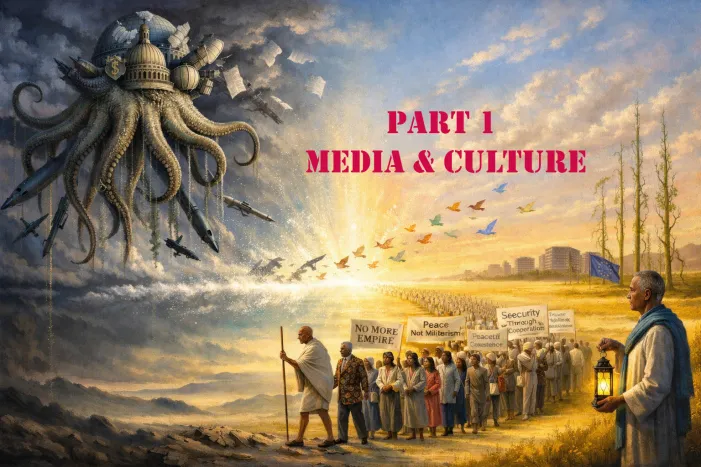
PART 1 — Media, Culture and Information Sovereignty By Jan ObergTFF co-founder and director January 20, 2026 This is the first of four TFF-created idea portfolios designed to curb the global reach of the United States and, in both the short and long term, help catalyse a worldwide nonviolent resistance to what many observers describe as the Trump administration’s uniquely confrontational, destructive and world-threatening policies. These portfolios outline what governments and citizens across the world can do through dynamic diplomacy, creative initiatives, and strictly nonviolent means. They are typical TFF works in that we do not only tell what the problem is and how bad it will go – as 90+% of all commentators, experts and scholars do – we tell what we think can be done, inviting you to think of what you think you can do. It seems painfully clear to me that the current political dynamics in Washington increasingly resemble the most...
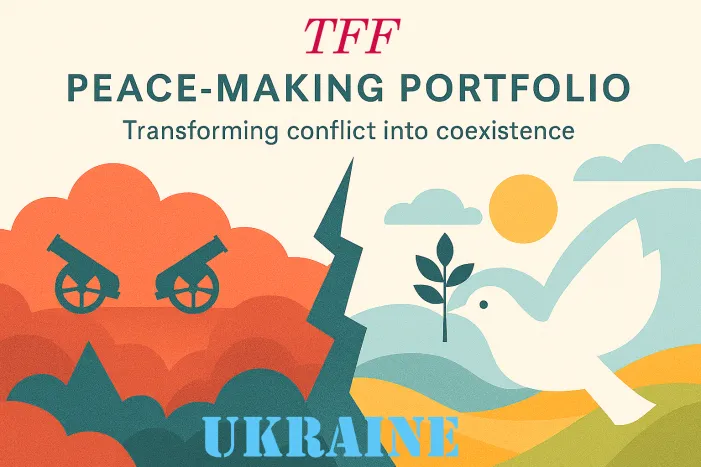
Peace will not result from any “peace” plan circulated to date. Neither will it emerge from warfare – as the elites of NATO, EU, Russia, and Ukraine seem to finally recognise after avoidable, unspeakable losses of people, trust and physical, socio-economic destruction. And horse-trading based on military ‘security’ guarantees reveals only peace and conflict illiteracy. TFF is critical of the widespread and severe misuse of the word peace – as if it did not require any knowledge. But we do not engage in geopolitical-military commentarism or dismissive criticism of present-day Realpolitik and its militarist mindset. Indeed, we do not believe that mainstream political and media elites are aware that they know woefully little about peace and peace-making or see it as a professional field. Thus, we do not expect they would acquaint themselves with a portfolio like this. TFF concentrates on constructive, visionary thinking grounded in the science and art of peace and in our 40 years...

A new, innovative, and visionary anthology about the world that is unfolding behind the doom and gloom that the media and politicians try to foist on you. It’s edited by Bijana Vankovska, Richard Sakwa, Weiwei Zhang and Toni Mileski and obviously provocative in the eyes of some (lesser minds). Preface “This volume is the outcome of what might seem, at first glance, to be an ordinary academic conference. Cooperative Multipolar System: In Quest of a New World Order was held on October 3–4, 2024, organized by the Global Changes Center (GCC), the youngest research center at the Faculty of Philosophy. Тhe Chamber of Emigrants from Macedonia eventually joined as a supporting institution, following a formal agreement with the Faculty. Yet, this gathering was far from conventional. It was designed as an intellectual intervention to engage with the evolving global order and challenge the one-dimensional narratives that dominate academic and political...

Johan Galtung – over 50 years my dear friend, collaborator and one of my two peace research mentors – died this morning. He was 93. He was, beyond any doubt, one of the greatest and most innovative social scientists of our time and one of the early pioneers of the academic field of peace and conflict research. He was a controversial intellectual to some extent – the envy, of course, by others – but kept true to his Gandhian-inspired nonviolent values where many succumbed to ‘security’ with weapons. He was also a TFF Associate since 1986 and we remained in contact – last, just a few days ago. You’ll find hundreds of articles by his hand on TFF’s present and earlier archive sites. I smile when I think of the countless hours we spent together exploring the world and coming up with new ideas. I owe him more than words...
Archive 1986–2017
The Truly Independent Peace Platform
TFF is an all-volunteer global network. It promotes conflict-mitigation and reconciliation – in general as well as in a selected number of conflict regions – through meticulous on-the-ground research, active listening, education and advocacy. The Foundation is committed to doing diagnosis and prognosis as well as proposing solutions. It does so in a clear, pro-peace manner. TFF works in support of two major UN Charter norms – “to save succeeding generations from the scourge of war” and that “peace shall be brought about by peaceful means”.

Peace
Johan Galtung 1930-2024October 2015 Published here on October 3, 2026 Let us focus on Civilization for conflict analysis and remedies. Major forms of disorder use violence; war is state organized violence. The most belligerent states are the United States of America and Israel, both with civilization roots. National Evangelism, the US Protestant Christian civilization– more national than evangelical–justifies US warfare as exceptionalism of a people chosen by God, with a manifest destiny to run the world. Orthodox Judaism justifies Israeli warfare to conquer and expand from Nile to Euphrates as a religious right and duty to the Eternal One. The third most belligerent country, the UK, no longer believes it is God-chosen but chosen by the USA; not quite the same but something. But the root cause of global disorder lies in the Occident–with Islam–seeing itself as the single, universal civilization valid for all at all times, all others being...
Lena Petrova of “World Affairs In Context” with more than half a million subscribers on YouTube wanted to explore what a peace researcher like me has to say about, among other things, the First and the Second Cold War and why eethics has disappeared from politics. I am particularly happy about this conversation that also yielded an amazing number of very appreciative comments on YouTube. No doubt, people are longing for alternatives, including peace perspectives.
Jan Oberg, TFF director April 28, 2026 In this third TFF Peace Pulse, I make the important distinction between the violence and the conflict that violence is a symptom of. If you want peace, focus on the underlying conflict because that is the key to resolution, peacemaking, and a better future for the parties. The West is obsessed with violence, just look around you – and 90+ per cent of the public debate is about military issues and other violence – totally wasted for peace. These Peace Pulses will only be published here a few times. You will also not find them on YouTube and Vimeo because both platforms have blocked TFF and me; you know, peace is dangerous these days. Most TFF’s videos since 2007 are now on Rumble.
Of course, we can we abolish war before it destroys us!
It’s a matter of principles, courage, vision and pulling together – while the militarist world is falling apart… Peter Langille October 3, 2026 “Here, then, is the problem which we present to you, stark and dreadful and inescapable: Shall we put an end to the human race; or shall mankind renounce war?”The Bertrand Russell—Albert Einstein Manifesto, July 9, 1955 ⁕ The forecast for what’s ahead is worrisome. The sharp rise in armed conflicts over the past three years is adding to what was already the highest level in over seventy years. Genocides, which should be prevented are supported. A shared climate emergency that jeopardises survival is ignored. Diverse polls now suggest that people are war-weary, worried and interested in a more effective United Nations. And, there are viable policy options for a more secure world! Yet governments are doubling-down, betting on more war and investing heavily. If current trends persist,...
Thinking
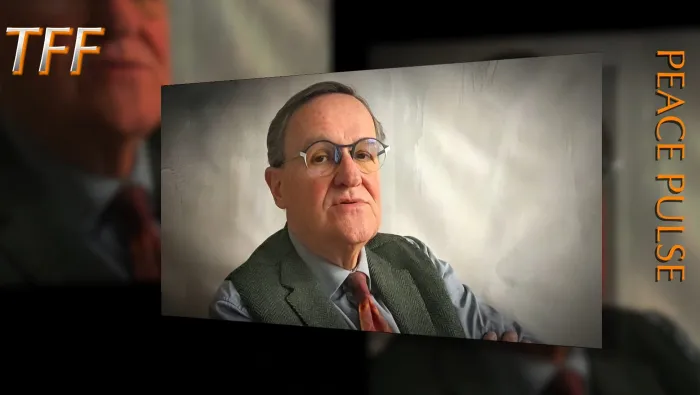
TFF Peace Pulse # 3 – Focus On Violence Is Wasted For Peace
Jan Oberg, TFF director April 28, 2026 In this third TFF Peace Pulse, I make the important distinction between the violence and the conflict that violence is a symptom of. If you want peace, focus on the underlying conflict because that is the key to resolution, peacemaking, and a better future for the parties. The West is obsessed with violence, just look around you – and 90+ per cent of the public debate is about military issues and other violence – totally wasted for peace. These Peace Pulses will only be published here a few times. You will also not find them on YouTube and Vimeo because both platforms have blocked TFF and me; you know, peace is dangerous these days. Most TFF’s videos since 2007 are now on Rumble.
In contrast to most, we’ll bring alternatives, solutions, hope and strategies for a better future. Times are dangerous, yes, but that only intensifies the need for constructive thinking and action! Jan Oberg, TFF director April 13, 2026 The new TFF Peace Pulse uses video messages in a new way: Max 3-5-minute-long comments, ideas or perhaps mini-lectures, all about peace – positive peace. We launch them today on April 13, 2026 with a carefully crafted visual aesthetic fitting the content. We hope to publish them regularly from now on. We launch Peace Pulse (PP) – for a number of reasons. The world is in chaos, and there are countless reasons to feel concerned, frustrated, even angry. The atmosphere is saturated with doom and gloom, with negative energy and rear‑mirror thinking, while vision, imagination, alternatives, strategies and genuine future‑mindedness remain in short supply. And without them, we simply can’t save the world. Looking at problems from a hundred angles will...
Jan Oberg, TFF director April 9, 2026 I was recently invited to have a good, long talk about the world – and, of course, about peace too – with Boris Malagurski on his Weight of Chains Channel on YouTube. It was a real joy and seems to have been greatly appreciated by the viewers too. Mr Malagurski and I shall of course be grateful if you share this conversation in your circles – of course, only if you like what you see and hear And remember that this one – like hundreds of others with TFF Associates – can be enjoyed at our TFF Video Collection.
Farhang Jahanpour TFF Associate, former Board member February 11, 2026 Oxford (Special to Informed Comment; Feature) – Today, 11 February, marks the 47th anniversary of the victory of the Islamic Revolution in Iran, and coincidentally, it also marks the 15th anniversary of the ousting of Hosni Mubarak after 30 years of oppressive rule. There were some other uprisings during what came to be known as the Arab Spring, which resulted in the ousting of ruling dictators. Undeterred, Iranian leaders, after the terrible carnage in January this year, are making big plans to celebrate the anniversary of the 1979 Islamic Revolution. Many people optimistically assume that massive popular revolutions against dictators will automatically result in the establishment of democratic governments. Unfortunately, the aftermath of the Iranian revolution and the massive uprisings by Arab masses during the so-called Arab Spring have led to the establishment of even worse regimes. Far from resulting in...
TFF is proud to cooperate with

– an intellectual content network dedicated to helping global audiences understand the key dynamics driving how China sees the world
Trusted by 150 million subscribers
from 86 countries.
from 86 countries.
Culture
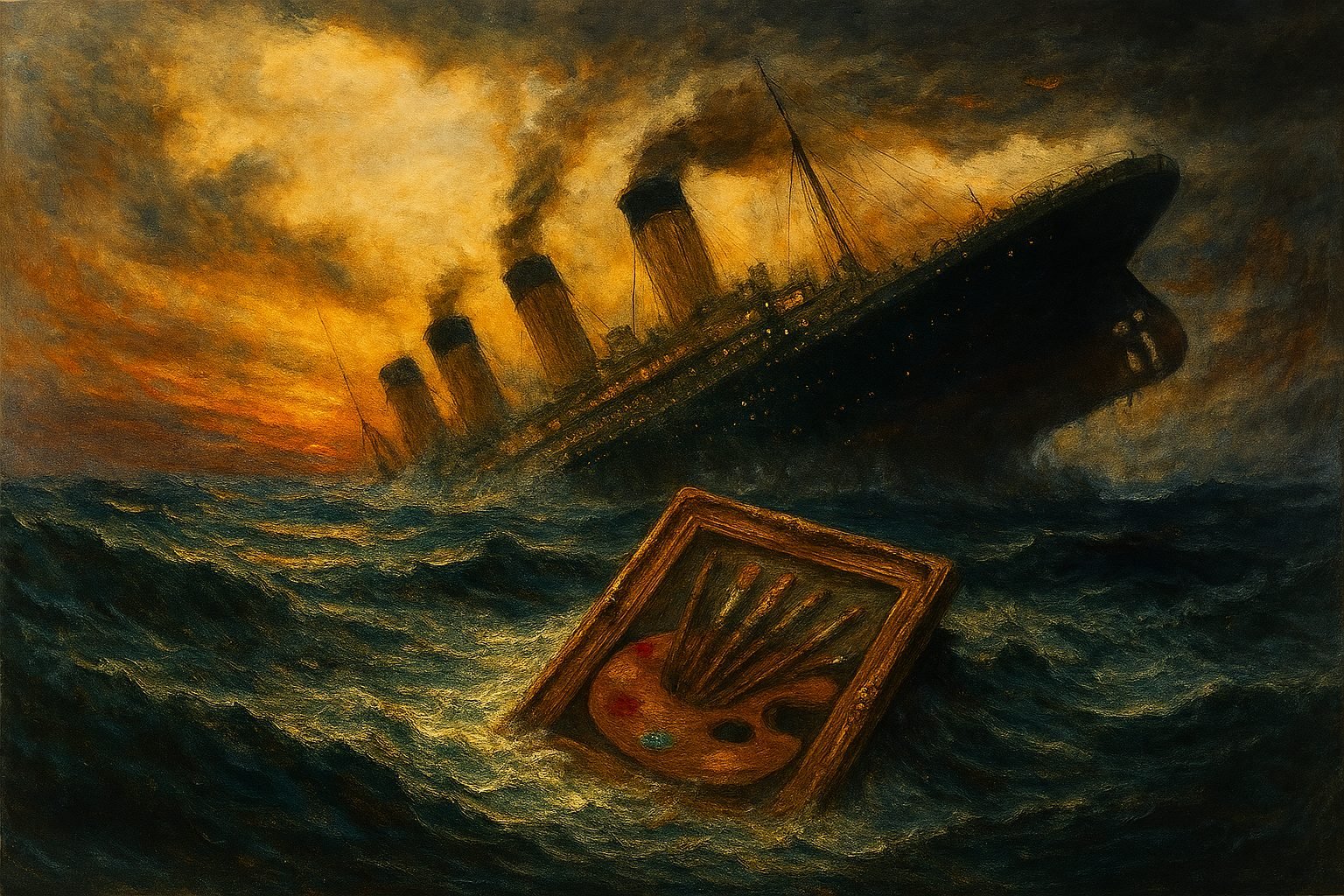
America’s Strategic Assault on Art, Academia, and the Imagination That Sustains Peace The United States once stood as a beacon of cultural audacity—a place where dissent could be beautiful, and beauty and innovation could challenge the present order of things. Its museums, universities, and artists helped inspire a worldwide imagination rooted in creative freedom and innovation. But today, under the Trump regime’s second term, those dynamic qualities are being systematically dismantled. Just read this. As Trump goes after the arts, many museums remain silent | CNN As CNN reports, the administration has launched an aggressive campaign to “eradicate improper ideology” from federally funded museums. Exhibitions involving race, gender, and identity are being censored or cancelled. Amy Sherald’s reimagining of the Statue of Liberty as a Black, trans woman was pulled from the Smithsonian after curators objected to its symbolism. Sherald warned that “history shows us what happens when governments demand loyalty...

On the invisible codes of culture that shape our worldviews long before memory or reason. This analysis was initially published on the author’s “China21 Journal” which contains several analyses of related issues, China-Western relations and how to increase knowledge and mutual understanding. Last week, we picked up our 5-year-old son from his public kindergarten in Beijing. On the way home, he proudly recited a Tang Dynasty poem by heart — 春望 (Chūnwàng, or Spring View, 757 AD), one of the most famous and widely recited works from that vibrant dynastic era over a thousand years ago, written by the renowned poet 杜甫 (Dù Fǔ, 712–770). The poem reflects on wartime and exile — hardly light or child-friendly themes. But that’s not the point. Children (and adults) recite ancient poems not just for their content, but for their rhythm, rhyme, tone, and the cultural feeling embedded in them. This is how cultural programming begins: not through rules or explanations,...

Talk at the Beijing Foreign Studies University, September 2010 Excellencies, ladies and gentlemen It is a great honor to be on a panel with the Director of CPC-CC Foreign Affairs, the Deputy Foreign Affairs Minister, the Editor-in-chief of China Daily, the Dean of the National Office of Chinese Language, the Deputy Commander of the People’s Liberation Army. I express my gratitude to the Chinese People’s Association for Peace and Disarmament and the American Friends Service Committee for having brought me to this tenth visit to China since 1973, and to Beijing Foreign Studies University for inviting me to this Forum on Public Diplomacy and China’s International Image. I define public diplomacy as diplomacy for the people and by the people. The purpose is neither public relations nor propaganda, but to bring the peoples of the world together by making them understandable to each other. Like languages have their own logic,...

This is a chapter in a TFF anthology in the making – “If You Want To Understand China.” Introduction ”Should the West see China as a threat or as an opportunity, a friend or an enemy? Are we heading for a third world war? Does the seemingly inexorable rise of China spell the doom of many values in which we have long believed? Might some form of communism prevail after all? Are China’s motives sinister? Is it trying to subvert us? Is it plotting mischief? Given the very bad press China has been getting in Western media, one might certainly think so. But the word ‘sinister’ has an interesting derivation. Its original meaning has nothing to do with wily orientalism. It means simply left-handed. Most of us are right-handed, using our dominant left-brain hemispheres which are wired to the right side of our bodies. But a few of us are...
Culture
Our Orwellian World: The anniversary of the publication of 1984
George Orwell’s prophetic book, 1984, was written in 1948 and was published on 9 June 1949. So, today is the 76th anniversary of the publication of that important and prophetic book. The book centres on the consequences of the decline of democracy and the rise of totalitarianism, mass surveillance and repressive regimentation of people’s behaviour within society.
TFF Live & Videos
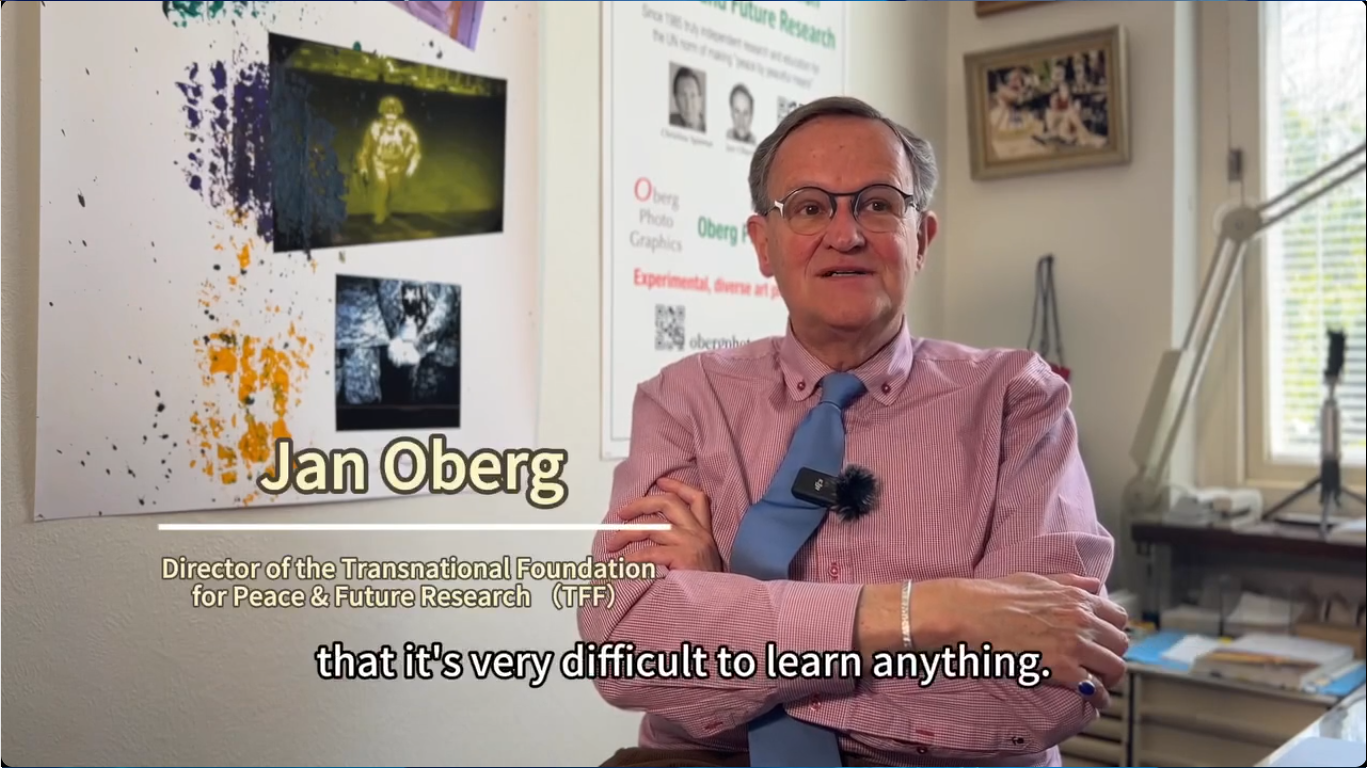
Appetiser” for a more extended interview with CGTN.

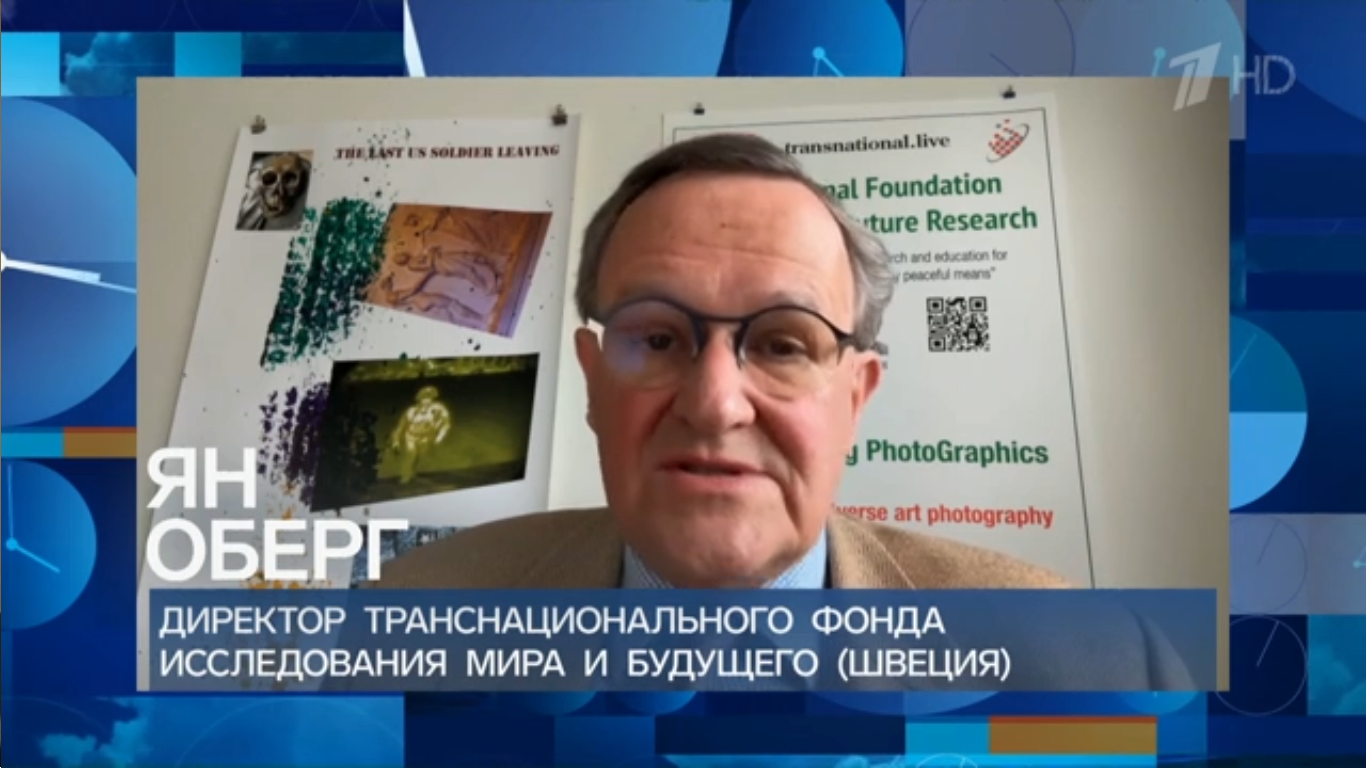
Ian Oberg. It’s time. Russia’s national TV
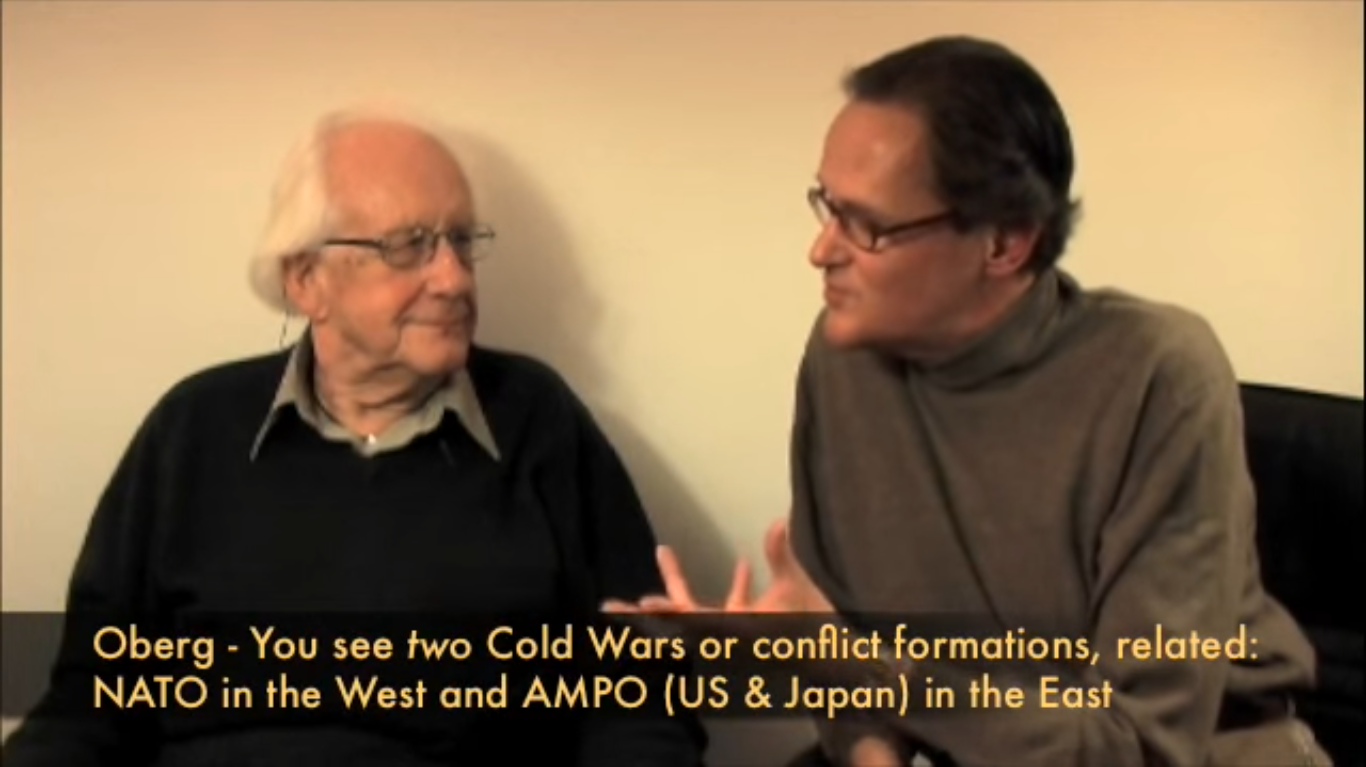
Can Japan Become Sovereign and Peaceful?
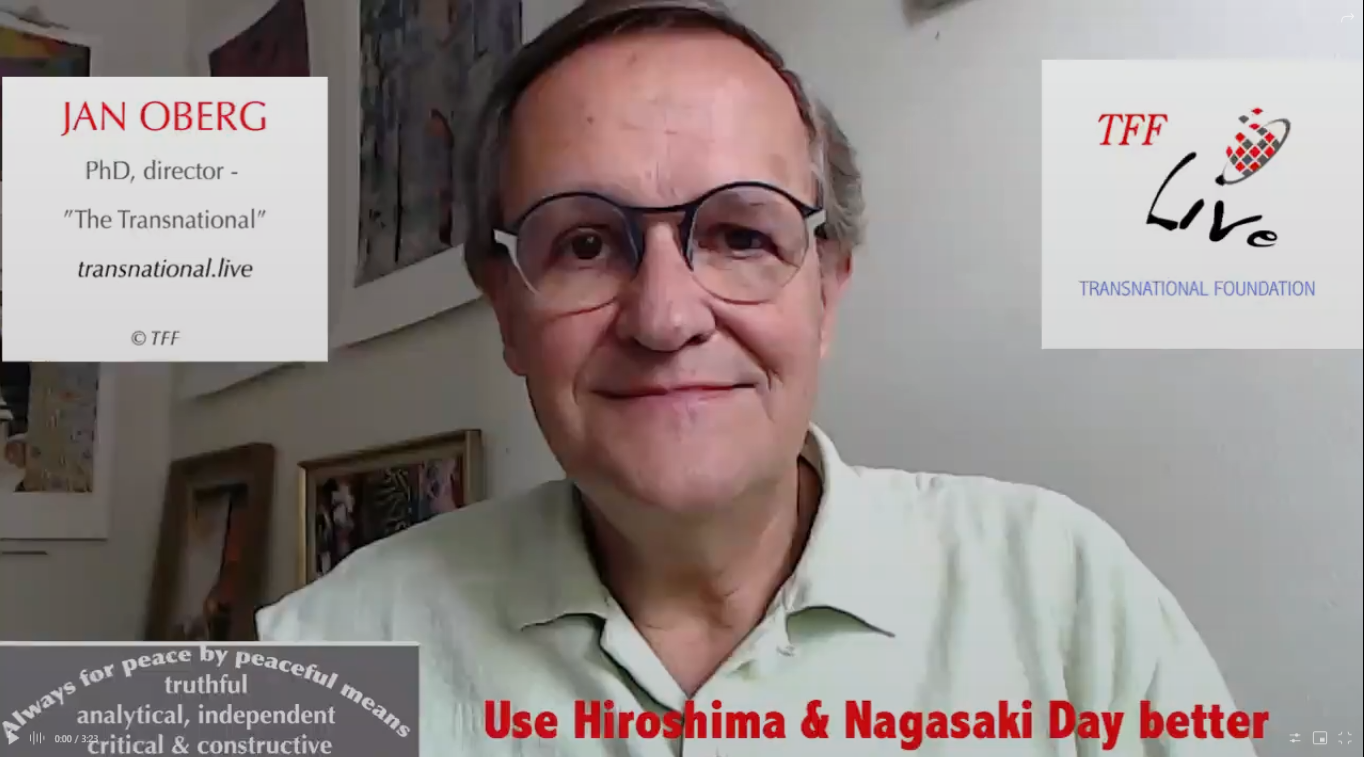
On Hiroshima & Nagasaki Days talk about the harm nuclear weapons do today without being used


Appetiser” for a more extended interview with CGTN.

Ian Oberg. It’s time. Russia’s national TV

Can Japan Become Sovereign and Peaceful?

On Hiroshima & Nagasaki Days talk about the harm nuclear weapons do today without being used


Connecting Research and Art
TFF is related to Oberg PhotoGraphics with 400 + works of art photographics, art and documentary from China, Iran, Burundi, Venice, and many other places that explore the relations between peace and art and art as an intercultural bridgebuilder.