War Criminals Are on the Run

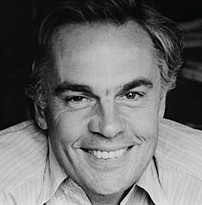
By JONATHAN POWER

August 16, 2000

LONDON – Remember the summer of ’98? In the sweltering, torpid heat of a Roman august, charged with exhaust fumes, the international community gave its overwhelming approval to the establishment of an International Criminal Court that will enable those accused of “crimes against humanity” to be tried and, if convicted, sentenced. Only seven nations opposed or abstained from the motion, including Israel, China, India and the U.S.A. where the Pentagon had successfully waged bureaucratic guerrilla war to undermine the initially sympathetic stance of President Bill Clinton.

Two years on we can now see what an epochal event that was. In a the stroke of 120 pens it changed the climate on political thuggery. After numerous half-starts and false starts ever since the Nuremberg and Tokyo trials that convicted the war criminals of the Second World War, the world at last had agreed en masse a common set of understandings and a statute on what constitutes a war criminal and how, once arrested, due process should proceed. Of course, the momentum had been gathering speed for half a dozen years- hence the ad hoc war crimes tribunals for ex-Yugoslavia and Rwanda- but that summer was the watershed, when the cold rain of judicial sense took over from personal writ, and the dam burst. In two years prosecution has followed prosecution, even though it will be another couple of years before legislatures have acquiesced in ratification and the Court itself is up and running. Meanwhile, the world waits for its most important putative, would-be member, the U.S. to make up its mind what to do.

Two months after the Rome conference the former Chilean strongman, Augustino Pinochet, was arrested in London when, in the early hours of the morning, Scotland Yard detectives sealed off the clinic where he was recuperating from a back operation. The next day, Mrs Margaret Thatcher, the former prime minister, attacked the police publicly for disturbing the rest of a “sick and frail old man”. The arrest, indeed, was a momentous event in the human rights struggle. The brilliant British lawyer, Geoffrey Robertson in his book ,”Crimes Against Humanity” wrote observantly, “The great play of sovereignty, with all its pomp and panoply, can now been seen for what it hides: a posturing troupe of human actors who when off stage are sometimes prone to rape the chorus.” For the first time in a high court anywhere it was decided that sovereign immunity must not be allowed to become sovereign impunity. For the Law Lords’ ruling we have to thank most of the nations of the world, including Chile and Thatcher’s Britain, who in the late 1980s and 1990s put their signatures to the UN Convention Against Torture and thus laid the legal basis in British jurisprudence.

And now last week the justices of the Chilean Supreme Court in effect concurred with their London colleagues and decided to lift Pinochet’s immunity from prosecution, an immunity he had longed assumed was copper-bottomed in Chile, making the fatal mistake of all tyrants in believing his popularity and his ability to cow people would last for ever.

What a year 2000 has been and there are still four and a half months to go! Earlier in the year a congressional commission in Brazil filed a petition to indict Alfredo Stroessner, the most long-lasting dictator of the twentieth century until he was overthrown in 1989, who now lives in exile in Brasilia. In Argentina, which briefly jailed its military junta before pardoning them in 1990, the former dictator Jorge Videla and eight other leaders of the “dirty war”, in which dissidents were thrown out of helicopters over the sea, are back under arrest. Today they are facing charges that they stole babies (for adoption) from female political prisoners. In Uruguay a new commission has been formed to investigate the whereabouts of people who disappeared under the country’s former military government.

In Africa, at the beginning of the year human rights groups and individuals who say they were tortured during the rule of Hissene Habre, the former dictator of Chad, announced they were intending to prosecute him in Senegal where Mr Habre lives in exile. According to Human Rights Watch, during Habre’s eight year rule, when he was vigorously supported as a Cold War friend by the U.S. and France, his secret police killed tens of thousands of people and tortured as many as two hundred thousand out of a total population of only six million. (In March, however, there was a change of government in Senegal and, at least for now, the charges have been withdrawn.) On Monday of this week the UN Security Council voted to establish a special war crimes court to deal with the accusations of atrocities in Sierra Leone. This suggests, whatever reservations the U.S., China and Russia have about a fully-fledged international court, they will at least agree to deal with the worst cases on an ad hoc basis. That is an important development.

What happens next? The indications are that Nato is about to drop its reserve and arrest Radovan Karadzic, the indicted former head of the Bosnian Serbs and his military commander, Ratko Mladic. In the last year, eight indicted war criminals have been arrested and handed over to the International War Crimes Tribunal for the Former Yugoslavia in The Hague and in April Nato troops arrested Momcilo Krajisnik, a right-hand man to Mr Karadzic. If the arrest does go ahead as expected Western leaders will find it difficult to parley away the indictment of the supreme Serb leader, Slobodan Milosevic, in any political deal for the ending of hostilities.

The sum of all this activity of the last two years is to effectively lock up former dictators in their places of refuge. They dare not venture far from where they think they are secure. Last year the former Ethiopian strongman, Mengistu Haile Mariam, suddenly left Zimbabwe where he had been given shelter for North Korea, one of the few countries that will not consider a UN demand for extradition. Also in late August last year, Suharto, the former Indonesian dictator cancelled the trip he makes annually to Germany for medical treatment.

Being big and bad is no longer enough to strut your stuff. The net is finally starting to close on those who do such evil. “They can run but they can’t hide” as the old American heavy-weight boxer, Joe Louis used to say. This is momentous sort of progress. It may not totally change the world, but it is not leaving it as we found it either. One day, it is possible to believe, we might have a world of laws not of men.

I can be reached by phone on: +44 385 351172 or by e-mail: JonatPower@aol.com

Copyright © 2000 By JONATHAN POWER
Share

Leave a Reply

Your email address will not be published. Required fields are marked *

Related Posts

By Jonathan Power April 8th 2004 LONDON – There is a widely held opinion abroad that Brazil never had the chance of profoundly changing for the better- shedding its widespread poverty and dire income distribution- until Lula (President Luiz Inácio da Silva) came along last year. This is not entirely false, but neither is it entirely true. Brazil has long made a kind of progress- in the last century it was second only to Taiwan as the fastest growing economy in the world- but it has been appallingly uneven. Part of the story of contemporary Brazil is clear to the eye in this small village of 7,000 people in the arid north east, along with the Amazon the poorest part of this vast country. Twenty five years or so ago I used to come to Pilõezinhos regularly when I had a close friend living here, Valéria Rezende, a radical, grass roots-stirring...
In October 2025, I attended two major academic conferences in Shanghai—both by invitation, and, curiously, as the only scholar from Scandinavia. That absence felt unjust to the more experienced Nordic experts in China studies who deserve a seat at such global forums. What unfolded was a journey through two distinct but interwoven events—each offering a lens into China’s intellectual landscape and its evolving role in the world. The 2nd World Conference on China Studies The first event, the 2nd World Conference on China Studies, brought together over 500 scholars from 50 countries under the theme “Historical and Contemporary China: A Global Perspective.” I participated in the sub-forum titled “China in Global Context: Continuity and Innovation of Civilisation.” It was a masterfully orchestrated gathering… Continue reading here on TFF Substack… Remember to subscribe when you are there. Then you will also automatically get TFF PressInfo and not miss any of what we say and do.
Associate Editor at Russia in Global Affairs in Moscow. Board member at International Institute for Peace (IPP) in Vienna. 
Board member at Center for Nationalism Studies (CNS) in Sarajevo.
 Editorial Board member at Contemporary World Economy in Moscow.
 EMPLOYMENT University of South-Eastern Norway
 – Professor, April 2020 – ongoing. Russia in Global Affairs
 – Associate Editor Nov 2018 – ongoing. Higher School of Economics, Moscow, Russia – Professor Aug 2018 – April 2020. Higher School of Economics, Moscow, Russia
 – Visiting Scholar, Aug 2017 – Aug 2018. Western Sydney University, Sydney, Australia – Adjunct Research Fellow Aug 2016 – Aug 2019. 
 Macquarie University (PICT), Sydney, Australia
 – Lecturer/Scholarly Teaching Fellow, Feb 2011 –Dec 2017
. EDUCATION Amsterdam Vrije Universiteit, Amsterdam, Netherlands – 
PhD Politics and International Relations (Doctor of Social Sciences) 2010-2014. 

 Macquarie University, Sydney, Australia – 
PhD Politics and International Relations (Doctor of Philosophy) 2010-2014. Macquarie University, Sydney, Australia 
- Master of International...

Recent Articles

2003 The capital Bujumbura 2006 The capital Bujumbura 2006 Gitega, the second largest town& its surroundings 2007 Muramvia Back to Oberg’s Photography main page
By JONATHAN POWER August 16, 2000 LONDON – Remember the summer of ’98? In the sweltering, torpid heat of a Roman august, charged with exhaust fumes, the international community gave its overwhelming approval to the establishment of an International Criminal Court that will enable those accused of “crimes against humanity” to be tried and, if convicted, sentenced. Only seven nations opposed or abstained from the motion, including Israel, China, India and the U.S.A. where the Pentagon had successfully waged bureaucratic guerrilla war to undermine the initially sympathetic stance of President Bill Clinton. Two years on we can now see what an epochal event that was. In a the stroke of 120 pens it changed the climate on political thuggery. After numerous half-starts and false starts ever since the Nuremberg and Tokyo trials that convicted the war criminals of the Second World War, the world at last had agreed en masse a common...
By Jonathan Power April 8th 2004 LONDON – There is a widely held opinion abroad that Brazil never had the chance of profoundly changing for the better- shedding its widespread poverty and dire income distribution- until Lula (President Luiz Inácio da Silva) came along last year. This is not entirely false, but neither is it entirely true. Brazil has long made a kind of progress- in the last century it was second only to Taiwan as the fastest growing economy in the world- but it has been appallingly uneven. Part of the story of contemporary Brazil is clear to the eye in this small village of 7,000 people in the arid north east, along with the Amazon the poorest part of this vast country. Twenty five years or so ago I used to come to Pilõezinhos regularly when I had a close friend living here, Valéria Rezende, a radical, grass roots-stirring...

TFF on Substack

Discover more from TFF Transnational Foundation & Jan Oberg.

Most Popular

2003 The capital Bujumbura 2006 The capital Bujumbura 2006 Gitega, the second largest town& its surroundings 2007 Muramvia Back to Oberg’s Photography main page
By JONATHAN POWER August 16, 2000 LONDON – Remember the summer of ’98? In the sweltering, torpid heat of a Roman august, charged with exhaust fumes, the international community gave its overwhelming approval to the establishment of an International Criminal Court that will enable those accused of “crimes against humanity” to be tried and, if convicted, sentenced. Only seven nations opposed or abstained from the motion, including Israel, China, India and the U.S.A. where the Pentagon had successfully waged bureaucratic guerrilla war to undermine the initially sympathetic stance of President Bill Clinton. Two years on we can now see what an epochal event that was. In a the stroke of 120 pens it changed the climate on political thuggery. After numerous half-starts and false starts ever since the Nuremberg and Tokyo trials that convicted the war criminals of the Second World War, the world at last had agreed en masse a common...
By Jonathan Power April 8th 2004 LONDON – There is a widely held opinion abroad that Brazil never had the chance of profoundly changing for the better- shedding its widespread poverty and dire income distribution- until Lula (President Luiz Inácio da Silva) came along last year. This is not entirely false, but neither is it entirely true. Brazil has long made a kind of progress- in the last century it was second only to Taiwan as the fastest growing economy in the world- but it has been appallingly uneven. Part of the story of contemporary Brazil is clear to the eye in this small village of 7,000 people in the arid north east, along with the Amazon the poorest part of this vast country. Twenty five years or so ago I used to come to Pilõezinhos regularly when I had a close friend living here, Valéria Rezende, a radical, grass roots-stirring...
Read More
Generic thumbnail
2003 The capital Bujumbura 2006 The capital Bujumbura 2006 Gitega, the second largest town& its surroundings 2007 Muramvia Back to Oberg’s Photography main page
By Jonathan Power April 8th 2004 LONDON – There is a widely held opinion abroad that Brazil never had the chance of profoundly changing for the better- shedding its widespread poverty and dire income distribution- until Lula (President Luiz Inácio da Silva) came along last year. This is not entirely false, but neither is it entirely true. Brazil has long made a kind of progress- in the last century it was second only to Taiwan as the fastest growing economy in the world- but it has been appallingly uneven. Part of the story of contemporary Brazil is clear to the eye in this small village of 7,000 people in the arid north east, along with the Amazon the poorest part of this vast country. Twenty five years or so ago I used to come to Pilõezinhos regularly when I had a close friend living here, Valéria Rezende, a radical, grass roots-stirring...
Mearsheimer-800x418-1
A friendly quarrel while we agree that the US sanctions are a weapon of mass destruction and kill more people than wars do. And that we must talk much more about sanctions than we have so far. Jan Oberg, TFF director March 16, 2026 John Mearsheimer recently stated that U.S. sanctions murdered around 38 million people between 1971 and 2021 – see the video below. It is a dramatic figure, and it has spread quickly because it captures, in one sentence, the enormous human cost of modern sanctions. I share his concern about the destructive effects of economic coercion. But the specific number he cites — and the way he attributes it — deserves a friendly academic clarification. The figure comes from a 2023 Lancet Global Health article estimating the mortality effects of unilateral U.S. and EU sanctions over the past half‑century. This is the first point where Mearsheimer’s shorthand diverges from the text: the study...
Screenshot-2026-05-15-103534
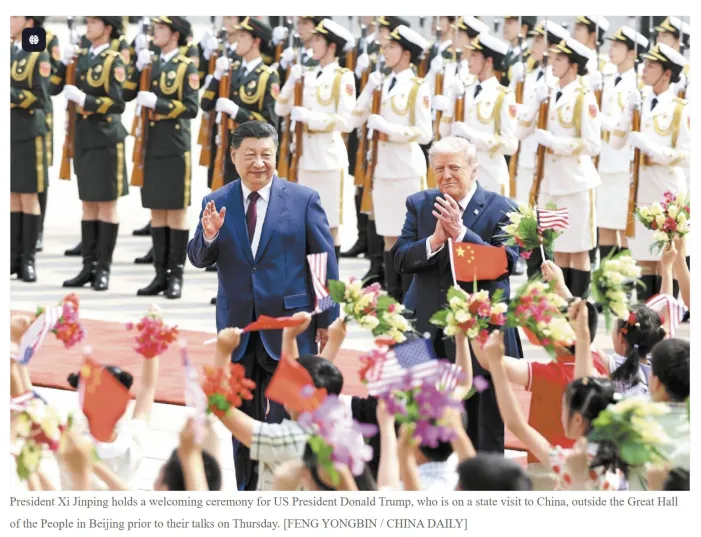
Jan Oberg May 15, 2026 Go to this Fox News page and scroll the whole way down: President Donald Trump tells the world that his meeting with President Xi Jinping yielded a lot of very concrete political and economic results – of course, only where the Chinese side, according to him, agreed with him. He does not mention the Taiwan issue, but Secretary of State, Marco Rubio, says that it did not feature prominently in their talks and that the US policy on Taiwan has not changed. Then go to China Daily – or Global Times – and you will see that for the Chinese it is framework, principles, structure of cooperation etc. that matters – all embedded in the overall idea of “constructive bilateral relationship of strategic stability.” Nowhere is any concrete agreement or deal – all that Trump refers to – mentioned. At the general level, this gives you insights into the very different social...
Screenshot-2026-05-12-104023
Lena Petrova of “World Affairs In Context” with more than half a million subscribers on YouTube wanted to explore what a peace researcher like me has to say about, among other things, the First and the Second Cold War and why eethics has disappeared from politics. I am particularly happy about this conversation that also yielded an amazing number of very appreciative comments on YouTube. No doubt, people are longing for alternatives, including peace perspectives.
Screenshot-2026-04-13-154551 (2)
The MIMAC – Military-Industrial-Media-Academic Complex – drives the world’s rampant militarism and wars without end. Here is a short reflection of how it works against all interests of humanity. #5 deals with why there is no real enemy or threat images/analysis. It’s all ex-post constructions. And, btw, theTFF Peace Pulse is now on Rumble.