
Glenn Diesen becomes a TFF Associate - CV

Associate Editor at Russia in Global Affairs in Moscow.

Board member at International Institute for Peace (IPP) in Vienna.

Board member at Center for Nationalism Studies (CNS) in Sarajevo.


Editorial Board member at Contemporary World Economy in Moscow.


University of South-Eastern Norway
 – Professor, April 2020 – ongoing.

Russia in Global Affairs
 – Associate Editor Nov 2018 – ongoing.

Higher School of Economics, Moscow, Russia – Professor Aug 2018 – April 2020.

Higher School of Economics, Moscow, Russia
 – Visiting Scholar, Aug 2017 – Aug 2018.

Western Sydney University, Sydney, Australia – Adjunct Research Fellow Aug 2016 – Aug 2019. 


Macquarie University (PICT), Sydney, Australia
 – Lecturer/Scholarly Teaching Fellow, Feb 2011 –Dec 2017
.

Amsterdam Vrije Universiteit, Amsterdam, Netherlands – 
PhD Politics and International Relations (Doctor of Social Sciences) 2010-2014. 


Macquarie University, Sydney, Australia – 
PhD Politics and International Relations (Doctor of Philosophy) 2010-2014.

Macquarie University, Sydney, Australia 
- Master of International Relations 2009.


St. Petersburg State University, St. Petersburg, Russia
 – Graduate Certificate: Russian Language and History 2006.

University of Sydney, Sydney, Australia
 – Master of Business 2003-2004.

University of Wollongong, Wollongong, Australia
 – Bachelor of Commerce 1999-2001
.

Diesen, G. 2024. The Crisis in Liberalism: The Unresolved Challenges from the 19th Century (pending).

Diesen, G., 2024. The Ukraine War and the Eurasian World Order. Clarity Press, Atlanta. (Translated into Dutch, German, Spanish, French, Russian, Italian, Bulgarian and Chinese).

Diesen, G., 2023. The Think Tank Racket. Clarity Press, Atlanta.

Diesen, G., 2022. Russophobia: Propaganda in International Politics. Palgrave, London.

Diesen, G., 2021. Europe as the Western Peninsula of Greater Eurasia: Geoeconomic Regions in a Multipolar World, Rowman & Littlefield, London. (Translated to Italian).

Diesen, G and Lukin, A., 2021. The Return of Eurasia, (eds) Palgrave Macmillan, London.

Diesen, G., 2021. Russian Conservatism: Managing Change under Permanent Revolution, Rowman & Littlefield, London.

Diesen, G., 2021. Great Power Competition in the Fourth Industrial Revolution: The Geoeconomics of Technological Sovereignty, Bloomsbury, London. (Translated to Chinese).

Diesen, G. and Lukin, A., 2020. Russia in a Changing World, (eds), Palgrave Macmillan, London.

Diesen, G., 2018. The Decay of Western Civilisation and Resurgence of Russia: Between Gemeinschaft and Gesellschaft, Routledge, London.

Diesen, G., 2017. Russia’s Geoeconomic Strategy for Greater Eurasia, Routledge, London. (Translated to German).

Diesen, G., 2015. EU and NATO Relations with Russia: After the Collapse of the Soviet Union, Routledge, London.

Diesen, G., 2023. ‘Technological Sovereignty and World Order’, edited volume by the Hungarian Central Bank (forthcoming).

Diesen, G., 2023. ‘The Arctic in the Greater Eurasian Partnership’, (pending publication / The SEPA-project: Human Security, Innovative Models of Co-management, and Participation in Arctic Regions).

Diesen, G., 2023. ‘The Geoeconomics of Technological Sovereignty in the Fourth Industrial Revolution’ (MGIMO).

Diesen, G., 2023. ‘Irrational Politics: The domestic component of Russiagate’, in Russiagate Revisited, Springer, London.

Diesen, G., (2021). “Cooperation and Competition Among Tech Hubs Across Greater Eurasia in the Fourth Industrial Revolution”, in M Patai and M Horvath (eds), Age of Eurasia, Prospektus, Budapest.

Diesen, G., 2020. ‘The Geoeconomics of the Eurasian Economic Union’, in A Aseeva and J Gorski (eds.), The Law and Policy of New Eurasian Regionalization Economic Integration, Trade, and Investment in the Post-Soviet and Greater Eurasian Space, Brill, Leiden.

Diesen, G., 2020. ‘Russia and COVID-19: Domestic Relief and Geoeconomic Reforms’, in C Hawksley and N Georgeou (eds.) State Responses to COVID-19, HADRI, Sydney.

Diesen, G., 2020. ‘Neutral Power Russia?’, in H Reginbogin and P Lottaz (eds.) Permanent Neutrality, Lexington Books, Washington D.C.

Diesen, G., 2019. ‘Narrowing the widening political gap’, in L Grigoryev (ed.) Global Governance in Transformation: Challenges for International Cooperation, Springer, London.

Diesen, G., 2016. ‘Russia’s Pivot to Asia: Constructing a Eurasian State in a Multipolar World’, in D Gopal and D Ahlawat (eds.) Indo-Pacific: Emerging Powers, Evolving Regions and Challenges to Global Governance, Aakar, New Delhi.

Zhyrun, I. and Diesen, G., 2024. NATO as an Agent of Socialisation in Ukraine (manuscript submitted).

Diesen, G., 2023. Geoeconomic Power EUrope: The Rise and Decline of the European Union, Contemporary World Economy, 1(1): 33-51.

Diesen, G., 2021. Europe as the Western Peninsula of Greater Eurasia, Journal of Eurasian Studies, 12(1): 19-27.

Diesen, G., 2020. Russia as an International Conservative Power: The Rise of Right-Wing Populists and their Affinity towards Russia, Journal of Contemporary European Studies, 28(2): 182-196.

Diesen, G., 2019. The Disorderly Transition to a Multipolar World, New Perspectives, 27(3): 25-29.

Diesen, G., 2019. The Geoeconomics of Russia’s Greater Eurasia Initiative, Asian Politics & Policy, 11(4): 566-585.

Diesen, G., 2018. The Geoeconomics of the Territorial Dispute between Russia and Japan, Asian Survey, 58(3): 582–605.

Diesen, G. and Keane, C., 2018. The offensive posture of NATO’s missile defense system, Communist and Post-Communist Studies, 51(2): 92-103.

Diesen, G., 2018. The ‘New Cold War’ and its Impact on Chinese Geoeconomics, Valdai Discussion Club, 21 November.

Diesen, G., 2017. The Global Resurgence of Economic Nationalism, Valdai Discussion Club [republished in Russia in Global Affairs], 21 December.

Diesen, G., 2017. The EU, Russia and the Manichean Trap, Cambridge Review of International Affairs, 19(3): 1-18.

Diesen, G., 2017. Russia, China and ‘Balance of Dependence’ in Greater Eurasia, Valdai Discussion Club [republished in Russia in Global Affairs], 31 March.

Diesen, G. and Keane, C., 2017. The Two-Tiered Division of Ukraine: Historical Narratives in Nation- and Region-Building, Journal of Balkan and Near Eastern Studies, 19(3): 313-329.

Gatev, I. and Diesen G., 2016. Eurasian Encounters: The Eurasian Economic Union and the Shanghai Cooperation Organisation, European Politics and Society, 17(1): 133-150.

Diesen, G. and Keane, C., 2016. Constraining Missile Defence, Defense and Security Analysis, 32(2): 129-143.

Keane, C., and Diesen, G. 2015. Divided We Stand: The US foreign policy bureaucracy and nation-building in Afghanistan, International Peacekeeping, 22(3): 205-229.

Diesen, G., 2015. Inter-democratic security institutions and the security dilemma: A neoclassical realist model of the EU and NATO after the end of the Soviet Union, East European Quarterly, 41(2-3): 137-161.

Diesen, G., 2015. Coercing ‘European Integration’? Assessing the posture of the CSDP, Polis, No.6, 81-102.

Diesen, G., and Wood, S., 2012. Russia’s Proposal for a New European Security System: Confirming Diverse Perspectives, Australian Journal of International Affairs, 66(4): 450-467.

Diesen, G., 2023. Russia’s Future Depends on Technological Sovereignty, Russian International Affairs Council (RIAC), 05.12.2023.

Diesen, G., 2023. Is There Room for Cooperation in the Arctic?, Valdai, 08.09.2023.

Diesen, G., 2023. Globalisation Under a Eurasian Westphalian World Order, Valdai, 16.03.2023.

Diesen, G., 2022. New Trajectories of Transportation Corridors in Eurasia, Valdai, 11.10.2022.

Diesen, G., 2022. Eurasian Institutions Following the European Crisis, Valdai, 08.08.2022.

Diesen, G., 2022. Digital Giants Under a De-Centralised Format for Globalisation, Valdai, 11.03.2022.

Diesen, G., 2021. Restraining the Excesses of Liberalism, Valdai, 21.10.2021.

Diesen, G., 2021. Common Eurasian Home: Towards a Conservative Political Economy, Valdai, 19.03.2021.

Diesen, G., 2020. The International Economic System After COVID-19, Valdai, 2020.

Diesen, G., 2018. China’s Geoeconomics and the ‘New Cold War’, Valdai, 21.11.2018.

Diesen, G., 2017. The Global Resurgence of Economic Nationalism, Valdai, 21.12.2017.

Diesen, G., 2017. Russia, China and ‘Balance of Dependence’ in Greater Eurasia, Valdai, 31.03.2017.
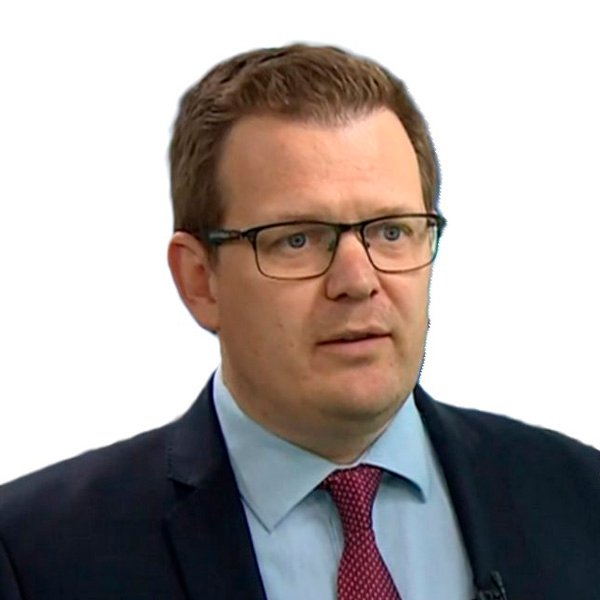
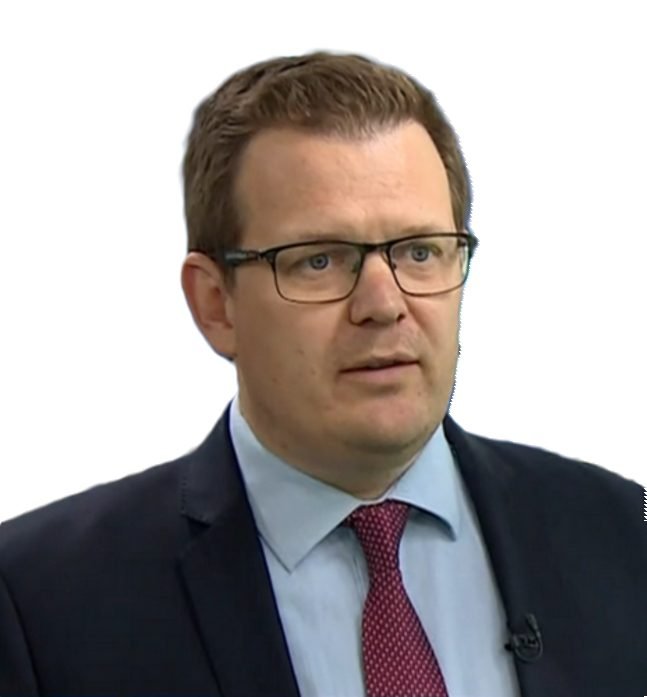
Professor Glenn Diesen, University of South-Eastern Norway, joined TFF as an Associate in October 2024.

Share

Leave a Reply

Your email address will not be published. Required fields are marked *

Related Posts

“>Sino–Indian Agreement 1954, are: • mutual respect for each other’s territorial integrity and sovereignty, • mutual non-aggression, • mutual non-interference in each other’s internal affairs, • equality and co-operation for mutual benefit, and • peaceful co-existence Read more about it here. These principles, also called Panchsheel, are fundamental to Chinese foreign policy and embedded in the preamble of the country’s constitution. Here is an excerpt of the invitation letter: “The commemorative events, to be held under the theme “From the Five Principles of Peaceful Coexistence to Building a Community with a Shared Future for Mankind” will begin with a commemorative conference, followed by a luncheon and sub-forums. His Excellency Xi Jinping, President of the People’s Republic of China, will attend and deliver an important speech at the commemorative conference, and his Excellency Li Qiang, premier of the State Council, will moderate the conference. His Excellency Wang Yi, member of the...
It can safely be assumed that NATO leaders and their media don’t care much about what the President of Serbia, Александар Вучић – Aleksandar Vučić, has to say about the NATO-Russia conflict and the war in Ukraine. Not only do they think that they know everything better than anyone else, but they also have their own experience with Serbia since NATO violated its own defensive Treaty and bombed Kosovo out of Serbia – and blamed Serbia for everything that happened in then Yugoslavia. Serbia and the Serbs have been perceived as the odd man out among the elites of NATO and the EU, as someone you fundamentally look down upon. But perhaps they – and the rest of us – should give Vučić a fair hearing on this particular issue? In my opinion, Vučić here says extremely important things based on analysis and an ability to see things from more...
Jan Oberg January 31, 2024 Mass media has always been an important instrument of warfare, victimizing a broader truth and complexity. All countries promote certain narratives, whether by state, public service, “independent” or even free media. The West has lots of state-financed and state-influenced media, but it usually calls them “free” and other countries’ media “state media,” which is meant negatively. In the Military-Industrial-Media-Academic Complex, also known as MIMAC, the Media has become more important lately due to the explosion and globalization of media types and communication. It’s become increasingly difficult to know what reality is. Public education is more difficult, or deceptive, than ever. Two and a half years ago, the foundation that I head, published a large report “Behind the Smokescreen. An Analysis of the West’s Destructive China Cold War Agenda And Why It Must Stop.” We identified nine mainstream media manipulation methods… Continue reading the article on...

Recent Articles

Jan Oberg May 15, 2026 Go to this Fox News page and scroll the whole way down: President Donald Trump tells the world that his meeting with President Xi Jinping yielded a lot of very concrete political and economic results – of course, only where the Chinese side, according to him, agreed with him. He does not mention the Taiwan issue, but Secretary of State, Marco Rubio, says that it did not feature prominently in their talks and that the US policy on Taiwan has not changed. Then go to China Daily – or Global Times – and you will see that for the Chinese it is framework, principles, structure of cooperation etc. that matters – all embedded in the overall idea of “constructive bilateral relationship of strategic stability.” Nowhere is any concrete agreement or deal – all that Trump refers to – mentioned. At the general level, this gives you insights into the very different social...
Lena Petrova of “World Affairs In Context” with more than half a million subscribers on YouTube wanted to explore what a peace researcher like me has to say about, among other things, the First and the Second Cold War and why eethics has disappeared from politics. I am particularly happy about this conversation that also yielded an amazing number of very appreciative comments on YouTube. No doubt, people are longing for alternatives, including peace perspectives.
The MIMAC – Military-Industrial-Media-Academic Complex – drives the world’s rampant militarism and wars without end. Here is a short reflection of how it works against all interests of humanity. #5 deals with why there is no real enemy or threat images/analysis. It’s all ex-post constructions. And, btw, theTFF Peace Pulse is now on Rumble.

TFF on Substack

Discover more from TFF Transnational Foundation & Jan Oberg.

Most Popular

Jan Oberg May 15, 2026 Go to this Fox News page and scroll the whole way down: President Donald Trump tells the world that his meeting with President Xi Jinping yielded a lot of very concrete political and economic results – of course, only where the Chinese side, according to him, agreed with him. He does not mention the Taiwan issue, but Secretary of State, Marco Rubio, says that it did not feature prominently in their talks and that the US policy on Taiwan has not changed. Then go to China Daily – or Global Times – and you will see that for the Chinese it is framework, principles, structure of cooperation etc. that matters – all embedded in the overall idea of “constructive bilateral relationship of strategic stability.” Nowhere is any concrete agreement or deal – all that Trump refers to – mentioned. At the general level, this gives you insights into the very different social...
Lena Petrova of “World Affairs In Context” with more than half a million subscribers on YouTube wanted to explore what a peace researcher like me has to say about, among other things, the First and the Second Cold War and why eethics has disappeared from politics. I am particularly happy about this conversation that also yielded an amazing number of very appreciative comments on YouTube. No doubt, people are longing for alternatives, including peace perspectives.
The MIMAC – Military-Industrial-Media-Academic Complex – drives the world’s rampant militarism and wars without end. Here is a short reflection of how it works against all interests of humanity. #5 deals with why there is no real enemy or threat images/analysis. It’s all ex-post constructions. And, btw, theTFF Peace Pulse is now on Rumble.
Read More
Screenshot-2026-05-15-103534
Jan Oberg May 15, 2026 Go to this Fox News page and scroll the whole way down: President Donald Trump tells the world that his meeting with President Xi Jinping yielded a lot of very concrete political and economic results – of course, only where the Chinese side, according to him, agreed with him. He does not mention the Taiwan issue, but Secretary of State, Marco Rubio, says that it did not feature prominently in their talks and that the US policy on Taiwan has not changed. Then go to China Daily – or Global Times – and you will see that for the Chinese it is framework, principles, structure of cooperation etc. that matters – all embedded in the overall idea of “constructive bilateral relationship of strategic stability.” Nowhere is any concrete agreement or deal – all that Trump refers to – mentioned. At the general level, this gives you insights into the very different social...
Screenshot-2026-05-12-104023
Lena Petrova of “World Affairs In Context” with more than half a million subscribers on YouTube wanted to explore what a peace researcher like me has to say about, among other things, the First and the Second Cold War and why eethics has disappeared from politics. I am particularly happy about this conversation that also yielded an amazing number of very appreciative comments on YouTube. No doubt, people are longing for alternatives, including peace perspectives.
Screenshot-2026-04-13-154551 (2)
The MIMAC – Military-Industrial-Media-Academic Complex – drives the world’s rampant militarism and wars without end. Here is a short reflection of how it works against all interests of humanity. #5 deals with why there is no real enemy or threat images/analysis. It’s all ex-post constructions. And, btw, theTFF Peace Pulse is now on Rumble.
Screenshot-2026-04-13-154551 (1)
Jan Oberg, TFF director April 28, 2026 In this third TFF Peace Pulse, I make the important distinction between the violence and the conflict that violence is a symptom of. If you want peace, focus on the underlying conflict because that is the key to resolution, peacemaking, and a better future for the parties. The West is obsessed with violence, just look around you – and 90+ per cent of the public debate is about military issues and other violence – totally wasted for peace. These Peace Pulses will only be published here a few times. You will also not find them on YouTube and Vimeo because both platforms have blocked TFF and me; you know, peace is dangerous these days. Most TFF’s videos since 2007 are now on Rumble.
Screenshot-2026-04-13-154551
In contrast to most, we’ll bring alternatives, solutions, hope and strategies for a better future. Times are dangerous, yes, but that only intensifies the need for constructive thinking and action! Jan Oberg, TFF director April 13, 2026 The new TFF Peace Pulse uses video messages in a new way: Max 3-5-minute-long comments, ideas or perhaps mini-lectures, all about peace – positive peace. We launch them today on April 13, 2026 with a carefully crafted visual aesthetic fitting the content. We hope to publish them regularly from now on. We launch Peace Pulse (PP) – for a number of reasons. The world is in chaos, and there are countless reasons to feel concerned, frustrated, even angry. The atmosphere is saturated with doom and gloom, with negative energy and rear‑mirror thinking, while vision, imagination, alternatives, strategies and genuine future‑mindedness remain in short supply. And without them, we simply can’t save the world. Looking at problems from a hundred angles will...
IMG_5165 (1)
PART II — Publishing Peace in a System That Prioritises Militarism Jan Oberg, TFF director April 10, 2026 How TFF Maintains a Daily Voice in a Digital World Built for Noise This article is part of the series “TFF at 40″ and it invites you to learn about Four Decades of Publishing Peace. It takes a look at how a small, people‑financed peace foundation has communicated across four generations of technology — from wax stencils and fax machines to mass email and Substack — and why TFF continues to publish every single day in a system that rewards noise, conflict, and militarism. ◆ What it means to publish peace every single day in a digital system built for 24/7 news and other noise, confrontation, and militarism. How TFF’s independence, continuity, and global readership defy algorithms, donor cycles, and Western media censorhip — and why the Majority World keeps listening. When the...


