Back to an out-of-the-wayBrazilian village

By

Jonathan Power

April 8th 2004

LONDON – There is a widely held opinion abroad that Brazil never had the chance of profoundly changing for the better- shedding its widespread poverty and dire income distribution- until Lula (President Luiz Inácio da Silva) came along last year. This is not entirely false, but neither is it entirely true. Brazil has long made a kind of progress- in the last century it was second only to Taiwan as the fastest growing economy in the world- but it has been appallingly uneven.

Part of the story of contemporary Brazil is clear to the eye in this small village of 7,000 people in the arid north east, along with the Amazon the poorest part of this vast country. Twenty five years or so ago I used to come to Pilõezinhos regularly when I had a close friend living here, Valéria Rezende, a radical, grass roots-stirring nun, part of the Catholic Church then wedded to liberation theology and the overthrow, or at least undermining, of the dictatorship that ruled the country in the 1960s, 70s and early 80s. But until today I haven’t been back for 17 years.

It’s still the same sun-beaten village square with loaded donkeys and the houses of the richer peasants built in simple Portuguese colonial style with their yellow and blue facades and roofed with red clay tiles. It’s still the same coconut and banana groves and behind them the homes of the landless on the hills behind, rudely built from sticks and clay. Rising into the mist are the orange groves, the sisal estates and the sugar plantations of the latifundiario, the large landowners who from far away- from Recife or even Rio- still give the orders and take away most of the money. At first sight its haunting beauty is the kind of place Gauguin would make famous. At second sight it is a Picasso mask.

Would you be reading this now,
if it wasn’t useful to you?
Get more quality articles in the future

When I used to visit, every day a child died in Pilõezinhos. The undertaker lived in Guarabira, a nearby market town, half an hour away along a road, ravined and potholed that was barely navigable by the twice daily bus. In his shop were the stacked layers of children’s coffins: blue with white crosses on top. More often than not the children went alone to the cemetery to bury their companions. Fathers often only heard of their children’s deaths when they got back home on their annual holiday from the building sites and factories of Sao Paulo, a week’s journey on the back of a truck.

I wrote at the time that I felt “the will to live in Pilõezinhos is slowly ebbing”. (See IHT of July 2nd and 7th, 1977.) I remember an old man on the bus telling me his landlord had said that this was the last year he could rent his small piece of land. His landlord was going to put down the land for sugar cane to fabricate ethanol then being pushed hard by the government as a substitute for high priced oil.

Today there are a few more houses and a couple more streets. But the square now has half a dozen cars and a batch of motorcycle taxis that can spin a passenger to Guarabira on a new metalled road in barely five minutes. There are two small supermarkets, a bank, a post office, two dispensaries selling generic medicines and an agricultural advisor, marketing advice and new seeds to the peasants. There is a clinic with a resident doctor who tells me that the children very rarely die these days. Next door there is a primary school bursting with young, happy faces and copy books open at a map of Europe which they have just drawn. (I remember last time, out walking with Valéria, a peasant asked her what was that I was talking. He had never heard a foreign language before and did not know that such a thing existed.)

I am invited in by the deputy mayor. Her house has a flush toilet and running water. She tells me half the village has these facilities.  She takes me to the village’s pride and joy- a little town hall, a converted shop front, with a simple square of tables for the elected councilors and six rows of chairs for those who want to see how democracy is done. 

Seventeen years ago Pilõezinhos seemed struck by the somnolence of exhaustion.  Even the religious festivals were no longer celebrated. Today the streets are full and the shops are bustling.

“So all this happened before Lula became president?” I ask Valéria. She smiles at me, amused at my naiveté. “Lula has been on the scene and pushing this country hard for nearly 30 years”, she says, “And we in the Church did our bit too”.

As we drove away I add: “and all without a shot being fired. Not bad!”
Share

Leave a Reply

Your email address will not be published. Required fields are marked *

Related Posts

Associate Editor at Russia in Global Affairs in Moscow. Board member at International Institute for Peace (IPP) in Vienna. 
Board member at Center for Nationalism Studies (CNS) in Sarajevo.
 Editorial Board member at Contemporary World Economy in Moscow.
 EMPLOYMENT University of South-Eastern Norway
 – Professor, April 2020 – ongoing. Russia in Global Affairs
 – Associate Editor Nov 2018 – ongoing. Higher School of Economics, Moscow, Russia – Professor Aug 2018 – April 2020. Higher School of Economics, Moscow, Russia
 – Visiting Scholar, Aug 2017 – Aug 2018. Western Sydney University, Sydney, Australia – Adjunct Research Fellow Aug 2016 – Aug 2019. 
 Macquarie University (PICT), Sydney, Australia
 – Lecturer/Scholarly Teaching Fellow, Feb 2011 –Dec 2017
. EDUCATION Amsterdam Vrije Universiteit, Amsterdam, Netherlands – 
PhD Politics and International Relations (Doctor of Social Sciences) 2010-2014. 

 Macquarie University, Sydney, Australia – 
PhD Politics and International Relations (Doctor of Philosophy) 2010-2014. Macquarie University, Sydney, Australia 
- Master of International...
“>Sino–Indian Agreement 1954, are: • mutual respect for each other’s territorial integrity and sovereignty, • mutual non-aggression, • mutual non-interference in each other’s internal affairs, • equality and co-operation for mutual benefit, and • peaceful co-existence Read more about it here. These principles, also called Panchsheel, are fundamental to Chinese foreign policy and embedded in the preamble of the country’s constitution. Here is an excerpt of the invitation letter: “The commemorative events, to be held under the theme “From the Five Principles of Peaceful Coexistence to Building a Community with a Shared Future for Mankind” will begin with a commemorative conference, followed by a luncheon and sub-forums. His Excellency Xi Jinping, President of the People’s Republic of China, will attend and deliver an important speech at the commemorative conference, and his Excellency Li Qiang, premier of the State Council, will moderate the conference. His Excellency Wang Yi, member of the...
It can safely be assumed that NATO leaders and their media don’t care much about what the President of Serbia, Александар Вучић – Aleksandar Vučić, has to say about the NATO-Russia conflict and the war in Ukraine. Not only do they think that they know everything better than anyone else, but they also have their own experience with Serbia since NATO violated its own defensive Treaty and bombed Kosovo out of Serbia – and blamed Serbia for everything that happened in then Yugoslavia. Serbia and the Serbs have been perceived as the odd man out among the elites of NATO and the EU, as someone you fundamentally look down upon. But perhaps they – and the rest of us – should give Vučić a fair hearing on this particular issue? In my opinion, Vučić here says extremely important things based on analysis and an ability to see things from more...

Recent Articles

A friendly quarrel while we agree that the US sanctions are a weapon of mass destruction and kill more people than wars do. And that we must talk much more about sanctions than we have so far. Jan Oberg, TFF director March 16, 2026 John Mearsheimer recently stated that U.S. sanctions murdered around 38 million people between 1971 and 2021 – see the video below. It is a dramatic figure, and it has spread quickly because it captures, in one sentence, the enormous human cost of modern sanctions. I share his concern about the destructive effects of economic coercion. But the specific number he cites — and the way he attributes it — deserves a friendly academic clarification. The figure comes from a 2023 Lancet Global Health article estimating the mortality effects of unilateral U.S. and EU sanctions over the past half‑century. This is the first point where Mearsheimer’s shorthand diverges from the text: the study...
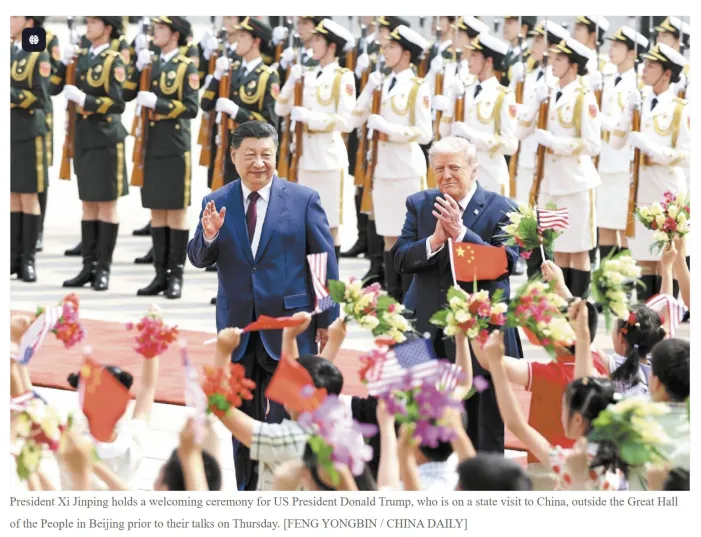
Jan Oberg May 15, 2026 Go to this Fox News page and scroll the whole way down: President Donald Trump tells the world that his meeting with President Xi Jinping yielded a lot of very concrete political and economic results – of course, only where the Chinese side, according to him, agreed with him. He does not mention the Taiwan issue, but Secretary of State, Marco Rubio, says that it did not feature prominently in their talks and that the US policy on Taiwan has not changed. Then go to China Daily – or Global Times – and you will see that for the Chinese it is framework, principles, structure of cooperation etc. that matters – all embedded in the overall idea of “constructive bilateral relationship of strategic stability.” Nowhere is any concrete agreement or deal – all that Trump refers to – mentioned. At the general level, this gives you insights into the very different social...
Lena Petrova of “World Affairs In Context” with more than half a million subscribers on YouTube wanted to explore what a peace researcher like me has to say about, among other things, the First and the Second Cold War and why eethics has disappeared from politics. I am particularly happy about this conversation that also yielded an amazing number of very appreciative comments on YouTube. No doubt, people are longing for alternatives, including peace perspectives.

TFF on Substack

Discover more from TFF Transnational Foundation & Jan Oberg.

Most Popular

A friendly quarrel while we agree that the US sanctions are a weapon of mass destruction and kill more people than wars do. And that we must talk much more about sanctions than we have so far. Jan Oberg, TFF director March 16, 2026 John Mearsheimer recently stated that U.S. sanctions murdered around 38 million people between 1971 and 2021 – see the video below. It is a dramatic figure, and it has spread quickly because it captures, in one sentence, the enormous human cost of modern sanctions. I share his concern about the destructive effects of economic coercion. But the specific number he cites — and the way he attributes it — deserves a friendly academic clarification. The figure comes from a 2023 Lancet Global Health article estimating the mortality effects of unilateral U.S. and EU sanctions over the past half‑century. This is the first point where Mearsheimer’s shorthand diverges from the text: the study...
Jan Oberg May 15, 2026 Go to this Fox News page and scroll the whole way down: President Donald Trump tells the world that his meeting with President Xi Jinping yielded a lot of very concrete political and economic results – of course, only where the Chinese side, according to him, agreed with him. He does not mention the Taiwan issue, but Secretary of State, Marco Rubio, says that it did not feature prominently in their talks and that the US policy on Taiwan has not changed. Then go to China Daily – or Global Times – and you will see that for the Chinese it is framework, principles, structure of cooperation etc. that matters – all embedded in the overall idea of “constructive bilateral relationship of strategic stability.” Nowhere is any concrete agreement or deal – all that Trump refers to – mentioned. At the general level, this gives you insights into the very different social...
Lena Petrova of “World Affairs In Context” with more than half a million subscribers on YouTube wanted to explore what a peace researcher like me has to say about, among other things, the First and the Second Cold War and why eethics has disappeared from politics. I am particularly happy about this conversation that also yielded an amazing number of very appreciative comments on YouTube. No doubt, people are longing for alternatives, including peace perspectives.
Read More
Screenshot-2026-05-15-103534
Jan Oberg May 15, 2026 Go to this Fox News page and scroll the whole way down: President Donald Trump tells the world that his meeting with President Xi Jinping yielded a lot of very concrete political and economic results – of course, only where the Chinese side, according to him, agreed with him. He does not mention the Taiwan issue, but Secretary of State, Marco Rubio, says that it did not feature prominently in their talks and that the US policy on Taiwan has not changed. Then go to China Daily – or Global Times – and you will see that for the Chinese it is framework, principles, structure of cooperation etc. that matters – all embedded in the overall idea of “constructive bilateral relationship of strategic stability.” Nowhere is any concrete agreement or deal – all that Trump refers to – mentioned. At the general level, this gives you insights into the very different social...
Screenshot-2026-05-12-104023
Lena Petrova of “World Affairs In Context” with more than half a million subscribers on YouTube wanted to explore what a peace researcher like me has to say about, among other things, the First and the Second Cold War and why eethics has disappeared from politics. I am particularly happy about this conversation that also yielded an amazing number of very appreciative comments on YouTube. No doubt, people are longing for alternatives, including peace perspectives.
Screenshot-2026-04-13-154551 (2)
The MIMAC – Military-Industrial-Media-Academic Complex – drives the world’s rampant militarism and wars without end. Here is a short reflection of how it works against all interests of humanity. #5 deals with why there is no real enemy or threat images/analysis. It’s all ex-post constructions. And, btw, theTFF Peace Pulse is now on Rumble.
Screenshot-2026-04-13-154551 (1)
Jan Oberg, TFF director April 28, 2026 In this third TFF Peace Pulse, I make the important distinction between the violence and the conflict that violence is a symptom of. If you want peace, focus on the underlying conflict because that is the key to resolution, peacemaking, and a better future for the parties. The West is obsessed with violence, just look around you – and 90+ per cent of the public debate is about military issues and other violence – totally wasted for peace. These Peace Pulses will only be published here a few times. You will also not find them on YouTube and Vimeo because both platforms have blocked TFF and me; you know, peace is dangerous these days. Most TFF’s videos since 2007 are now on Rumble.
Screenshot-2026-04-13-154551
In contrast to most, we’ll bring alternatives, solutions, hope and strategies for a better future. Times are dangerous, yes, but that only intensifies the need for constructive thinking and action! Jan Oberg, TFF director April 13, 2026 The new TFF Peace Pulse uses video messages in a new way: Max 3-5-minute-long comments, ideas or perhaps mini-lectures, all about peace – positive peace. We launch them today on April 13, 2026 with a carefully crafted visual aesthetic fitting the content. We hope to publish them regularly from now on. We launch Peace Pulse (PP) – for a number of reasons. The world is in chaos, and there are countless reasons to feel concerned, frustrated, even angry. The atmosphere is saturated with doom and gloom, with negative energy and rear‑mirror thinking, while vision, imagination, alternatives, strategies and genuine future‑mindedness remain in short supply. And without them, we simply can’t save the world. Looking at problems from a hundred angles will...
IMG_5165 (1)
PART II — Publishing Peace in a System That Prioritises Militarism Jan Oberg, TFF director April 10, 2026 How TFF Maintains a Daily Voice in a Digital World Built for Noise This article is part of the series “TFF at 40″ and it invites you to learn about Four Decades of Publishing Peace. It takes a look at how a small, people‑financed peace foundation has communicated across four generations of technology — from wax stencils and fax machines to mass email and Substack — and why TFF continues to publish every single day in a system that rewards noise, conflict, and militarism. ◆ What it means to publish peace every single day in a digital system built for 24/7 news and other noise, confrontation, and militarism. How TFF’s independence, continuity, and global readership defy algorithms, donor cycles, and Western media censorhip — and why the Majority World keeps listening. When the...