Lebanon

Showing 1-10 of 31 stories

Sort by
Categories

Year

Author / Contributor

Region

DSC_2656
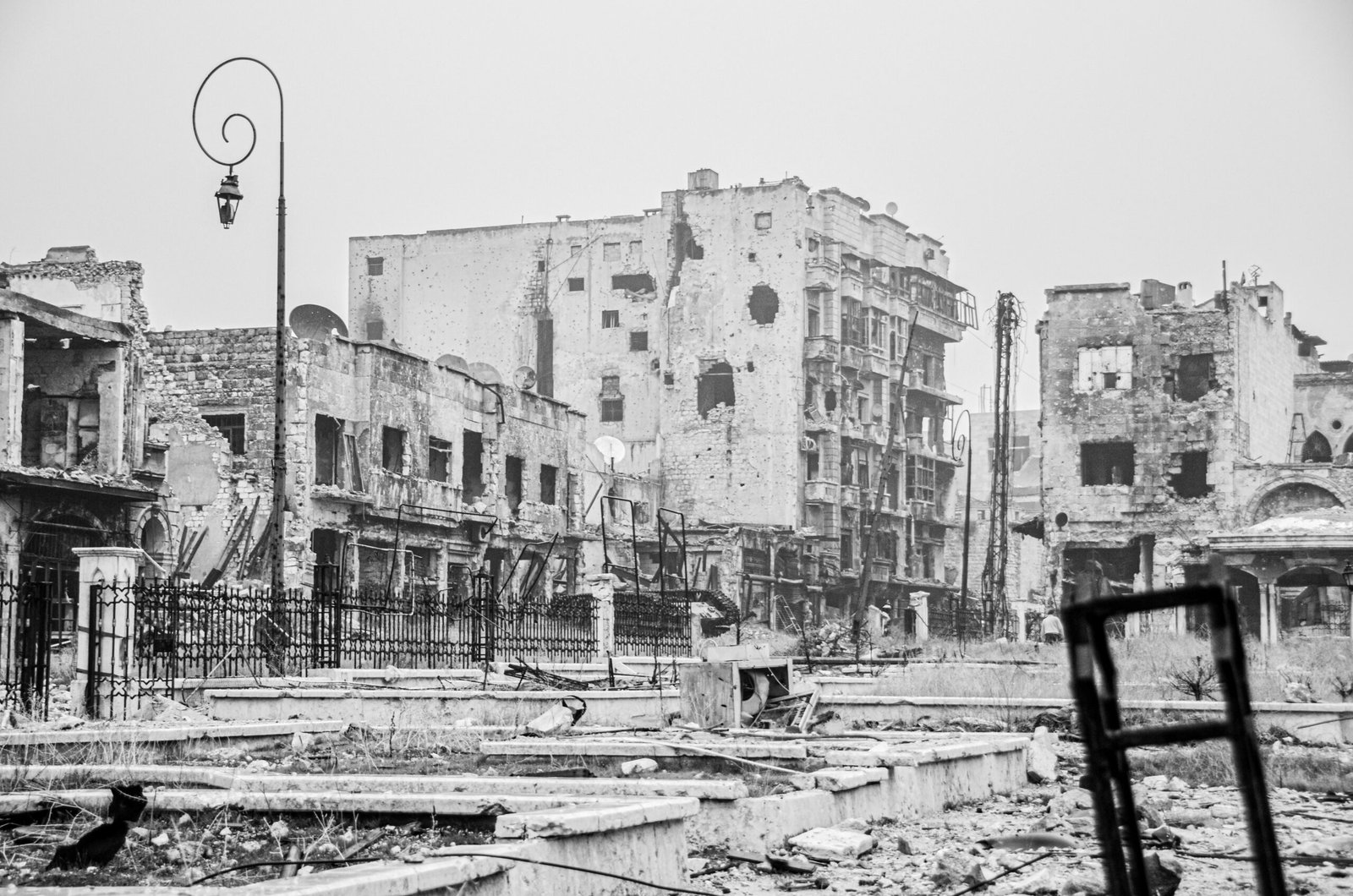
The collective cynicism is ugly. The innocent Syrian people are now doomed. The author hopes that his predictions shall soon be proven wrong… This article was published at 02:36, about 4 hours before the HTS terrorists occupied Damascus. • Lebanon-based al-Mayadeen reports tonight, December 8, 2024, that Russia, Iran, Turkey call for immediate end to hostilities in Syria. My cynical interpretation of this – beyond pathetic – “call” is the following: Turkey knew and did/does all it can – again – to destroy Syria. Russia and Iran were surprised or act surprised; they can do nothing given their own malaise. Or their “intelligence” services failed miserably? Their common statement is devoid of constructive steps in this uniquely urgent situation. It does not even mention the Syrian government or its President. They “call for” terrorists who are approaching the outskirts of Damascus and have declared long ago that they want to...
craig-manners-OVZvuqH2pvc-unsplash
Marjorie Cohn* January 24, 2023 The Houthis say their attacks in the Red Sea will continue until there is a ceasefire in Gaza In response to Israel’s assault on the people of Gaza in early October, Yemen’s Houthi movement, Ansar Allah, began mounting attacks on commercial ships in and around the Red Sea. The Houthis said the attacks were aimed at Israeli-connected or Israel-bound ships and they would continue until there is a ceasefire in Gaza. Meanwhile, the pressure on this vital trade route is impacting the global economy as ships are being redirected to more expensive routes. On January 11, South Africa presented its case documenting Israel’s genocide in Gaza to the International Court of Justice. The following day, the U.S. and U.K. attacked 28 sites in Yemen. Tomahawk cruise missiles launched from a ballistic missile submarine killed five Yemenis and injured six. Four days later, the U.S. fired...
c8ddd0cb93fc674b1cb425fea6242d22
By Gordon M. Hahn October 1, 2019 Five or six years ago, when I was still working most intensively on issues related to jihadism in Russia and globally, I warned of the Caucasus Emirate-tied network running from Russia’s North Caucasus to ISIS in Syria and Iraq through Turkey, Azerbaijan and Georgia (with Tbilisi’s connivance) (see previous articles here and here). Originally posted on Gordon M. Hahn’s personal blog on September 29, 2019 here Somewhat more recently, I also had written about former US President Barak Obama’s Muslim Brotherhood (MB) strategy for bringing ‘Islamic democracy’ to the Muslim world and its dire consequences in Egypt, Libya, Syria and elsewhere in what came to be misnamed the ‘Arab Spring’.  America’s hopefully accidental but nevertheless resulting connivance with ISIS and Al Qai`da-tied groups (e.g., AQ-tied Jabhar al-Nusrah) was exacerbated by intentional connivance by one of Obama’s partners in creating the Arab winter: Turkish...
cropped-Counquest_of_Jeusalem_1099
By Dr. William R. Polk June 27, 2019 Exclusive: Many Americans and Westerners are baffled by the violent rage expressed by many Muslims, but the reasons for their anger are real, deriving from a “deep history” of anti-Islamic wars and colonial exploitation of the Middle East, as ex-U.S. diplomat William R. Polk describes. Originally published by Consortium News on August 15, 2015, here The issue of terrorist attacks on America has been so politically sensitive that most commentators have simply wrapped themselves in the flag and closed their eyes and ears. Yet, even in fairy tales, ostriches were never saved by burying their heads in the sand. It is not a good defensive posture and it wouldn’t be wise for real-life Americans to behave like make-believe ostriches. If we want to be safe rather than sorry in the dangerous world we now inhabit, we need to be clear-headed, logical and informed. Those...
NotIranToo_FR_4_72dpi_ForNet
  TFF launches a new educational series on regime change in the Middle East to help prevent a repetition on Iran – #NotIranToo   TFF is about to publish a series of articles on regime change in the Middle East over the last few decades. The series has a special focus on Iran because it is now abundantly clear that the U.S. under Trump’s formal administration – but perhaps more under the elites that make up the Deep State underlying it – seems bent on building up to at least a political, psychological and economic war on Iran and – in the worst of cases – also to some kind of military action too. The series consists of sections of Chapter 12 in a forthcoming book by eminent scholar and TFF Board member, Farhang Jahanpour, Oxford University. In a comprehensive preface, he explains his own intellectual path and journalistic work...
SyriaPlusMap
  By Paul Rogers February 15, 2018 • The Israel-Iran antagonism risks fusing with the Russia-United States one.       Israel’s aerial strike against Iranian and regime targets in Syria on 10 February reinforces concern that a new front is opening in the Middle East’s many-sided conflicts.The risk of outright confrontation between Israel and Iran has increased, even as Turkey, Russia, Kurdish forces, and the United States are engaged in further action to the north.That so many combatants are involved, with different agendas, means that further escalation is an ever present possibility. Originally published by Open Democracy here The details of the Israel-Iran episode show how unsteady the strategic situation now is. It began when Iranian Revolutionary Guard Corps (IRGC) forces launched a drone from Tiyas airbase, which is about 100 kilometres east of Homs in west-central Syria. The drone was tracked across the Israeli border, then shot down...
GrahamFuller
By Graham Fuller • With the emergence of demonstrations and rioting in various Iranian cities earlier this month, Washington’s neoconservatives and interventionist/ imperial-minded “liberals” have been given a new lease on life in promoting their aspirations for “regime change” in Tehran. Indeed, of the three current potential global flashpoints—North Korea, Russian borderlands, and Iran in the Gulf—Iran arguably presents the most likely situation to actually turn into war. Originally published on LobeLog and Graham Fuller’s blog   The other two regions, Russia and Korea, pose such potentially appalling nuclear dangers that, rhetoric aside, one would hope will seriously deter national leadership from contemplating. War with Iran, on the other hand, presents no such nuclear threats. It is therefore perhaps the more dangerous situation since conflict with Iran is therefore quite “thinkable” and could potentially drag in Saudi Arabia, Qatar, Syria, Iraq, Russia, Turkey, and of course the supreme fomenter of...

Imagen-thumbnail-The-Transnational-1
Part A here The role – again – of marketing companies in selling wars Few wars have been so thoroughly media-managed and marketing-loaded as that on Syria. No wonder arms deals are too – otherwise citizens around the world would protest loudly that their tax money is spent on destruction and more destruction and all the promises of the past that this – or that – arms deal will increase security and peace in the world have turned out to be fake information – disinformation – and an integral part of what can only be termed “fearology” by governments against their own people. One must therefore welcome Russia Today’s excellent research by Alexey Yaroshevsky also on this dimension. This report is high-speed but listen carefully to it as it points out two US companies associated with this deal and US-Saudi relations with questionable image – a report that also highlight to some extent the...
Imagen-thumbnail-The-Transnational-1
The Secretary-General also said this new home’s “potential is enormous”. President Trump arrived on his first trip abroad to Saudi Arabia on May 19, 2017 and big things are supposed to happen, including Saudi Arabia presenting itself as a innovative, visionary leader of the region. His visit must be seen in the light of a number of events and trends, and in what follows we do like the military when it scans the horizon for enemies: we look for patterns – not the least Saudi Arabia’s “surprising new military goals” as Forbes’ Ellen Wald appropriately calls them. Or, as they say – we connect some dots that, invariable, Western mainstream media have no capacity and probably also no interest in connecting. This pattern consists of at least these events and long-term trends: 1. The broadening of NATO cooperation with Gulf countries – one may even see a Middle Eastern NATO branch emerge. 2. Saudi Arabia’s evident leadership...
jonathanpower2
they are now on the defensive. ISIS has lost nearly half of the Iraqi territory it held. (i.e. an area about half that of the UK). It has lost much of its oil infrastructure. It is taking lots of casualties. In Syria it is fighting on two contradictory fronts – the regime in Damascus, supported by Iran and Russia and against the non-Islamist rebels, supported by the US and the Arab states. Meanwhile the flow of foreign fighters on which it has depended is slowing up and large numbers are returning home. Funding is drying up. This indeed is why Mateen, the lone wolf, is so important to ISIS. ISIS spokesman, Abu Muhammad al-Adnani, has asked ISIS sympathisers to stay where they are. “The smallest action you do in the heart of [your] land is better and more enduring to us than what you would do if you were with...
janoberg
/01/tff-pressinfo-357-denmark-decency-and-decay-14/”>Article 1/4 Article 2/4 But why? One can point to many reasons for such a tragic development in an otherwise decent, wealthy and hitherto well-respected country. • It’s become too easy to go to war. The generation of politicians who might have a sense of war are long gone. If you take property owned by people who have fled thousands of kilometres because their life opportunities have been smashed and who carry just what they could grab in a hurry and carry – you simply have no idea of what life is like in a war zone. Neither do you see any need for advisers. • Only a small percentage of Danish politicians have any international experience, no special competence, in international affairs – in sharp contrast to the 1970s-80s. • Knowledge, broad civic education and cultured manners have been replaced by marketing consultants, styling experts, and fast politics salesmanship....
RichardFalk20141
Prefatory Note: What follows is a modified version of the Morton-Kenney annual public lecture given at the University of Southern Illinois in Carbondale on November 18, 2015 under the joint sponsorship of the Department of Political Science and the Paul Simon Public Policy Institute. The Failure of U.S. Foreign Policy in the Middle East While focusing on the ‘failure’ of American foreign policy in the Middle East it is relevant to acknowledge that given the circumstances of the region failure to some degree was probably unavoidable. The argument put forward here is that the degree and form of failure reflected avoidable choices that could and should have been corrected, or at least mitigated over time, but by and large this has not happened and it is important to understand why. This analysis concludes with a consideration of three correctible mistakes of policy. It is also true that the Middle East...