
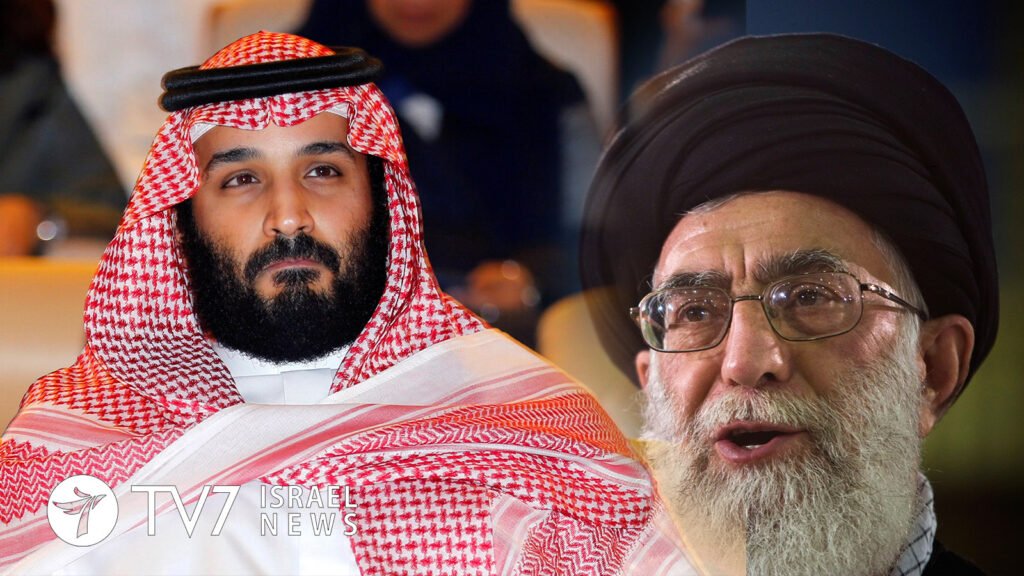
Contrasting Leadership Styles in the Saudi-Iran Conflict

By Seyed Hossein Mousavian

• Saudi Crown Prince Mohammad bin Salman (MBS) is steadily consolidating power in Riyadh and positioning himself to become the most powerful ruler in Saudi history. His rise has been accompanied with a ratcheting up of hostilities against Iran and even war rhetoric. As Saudi-Iran tensions increase, the lived experiences and leadership styles of the 78-year-old Iranian Supreme Leader Ayatollah Ali Khamenei and 32-year-old MBS will decide the future of peace and stability in the region.

Via LobeLog

Before Iran’s 1979 Islamic revolution, Ayatollah Khamenei was a political activist who opposed the dictatorship of the Shah and endured 15 years of prison, torture, and exile. He rose through the revolutionary ranks after the revolution and in 1981, was elected president. During the Iran-Iraq war (1980-1988)—which saw the United States and other global powers as well as regional Arab states support the aggressor Saddam Hussein—Ayatollah Khamenei played a key role in overseeing and leading the war effort. MBS, on the other hand, was just born in 1985 and has no comparable experience.

During the 1980s, Iran also faced a wave of terrorism, with the MEK group alone responsible for over 17,000 deaths. Ayatollah Khamenei is himself a victim of terrorism, with one his arms left paralyzed after a bomb attack in 1981. The silver lining of Iran’s history of falling victim to terrorism is that its leaders have become counterterrorism veterans—another reason for Iran’s success in combatting terrorist groups throughout the region. MBS, meanwhile, does not have a counterterrorism track record and was preparing to take the reins of power at a time when, according to a 2014 email by former Secretary of State Hillary Clinton, his country was “providing clandestine financial and logistic support to ISIL.”


Divergent Foreign Policies

Ayatollah Khamenei has for 28 years presided over a state that has been subject to every form of economic, political, and security pressure by outside powers—chiefly the United States—aimed at spurring regime change. However, not only has Iran’s security and stability endured during this period, but the country has emerged as an influential regional power. Policies of sanctions, pressure, and threats of war against Tehran have in fact resulted in Iran consolidating its position as the only regional state not beholden to foreign powers for its security.

Moreover, Ayatollah Khamenei’s national security strategy has been premised on the belief that resisting U.S. hegemonic aspirations in the Middle East is not only the source of Iran’s strength, but allows it to maintain its independence.

On the contrary, the Saudi royal family views the United States as its security guarantor and has relied on U.S. military, political, and economic patronage for decades. In May, MBS signaled his aim to continue this dependency by signing the largest arms deal in U.S. history for $350 billion—and thereby winning full support for his regional and domestic agenda from the White House.

Within the region, Tehran has formed a strategic partnership with Russia. At the behest of the Syrian and Iraqi governments, Tehran has played a key role in those countries to secure their territorial integrity and defeat terrorist organizations in the vein of the Islamic State (ISIS or IS). Saudi Arabia, despite being given carte blanche by the Trump White House, has waded into a quagmire in Yemen, creating the world’s greatest humanitarian catastrophe with its ferocious bombing campaign. It has failed in its attempt to orchestrate regime change in Qatar and Syria, witnessed its effort to undermine the Lebanese government backfire in full view of the international community, and maintains an ever-more precarious hold over Bahrain. Such actions have earned MBS a reputation as hotheaded and impulsive, with TheNew York Timesnoting how many in Saudi Arabia view him as “brash, power-hungry and inexperienced.” Other analysts have stated how under MBS, “Saudi Arabia has become an irrational actor in the Middle East.”

Another vital aspect of Iran’s national and regional security strategy has been its experience in successfully mobilizing popular forces to complement its professional armed forces. Ayatollah Khomeini initiated this policy after Saddam Hussein’s invasion of Iran in 1980, which led to the creation of popular militia units that would eventually become the Islamic Revolutionary Guards Corps and Basij. Ayatollah Sistani, Iraq’s most senior religious leader, emulated this model of mobilizing popular forces in 2014  after IS overran large parts of the country. The ensuing “Popular Mobilization Forces” played a decisive role in the fight against IS. A similar model has also been implemented in Syria with the National Defense Forces and other groups.

Via LobeLog


Iran has also made opposition to Israel a core aspect of its foreign policy and has paid a high cost for its support of the Palestinians. On the other side, MBS is rapidly fostering ties with Israel in an attempt to confront Iranian regional influence. Saudi Arabia’s green light to President Donald Trump to recognize Jerusalem as the capital of Israel will contribute dramatically to the erosion of the king’s popularity and legitimacy while making it easier for Iran to influence the Muslim world to stand together to resist the U.S., Israel, and Saudi Arabia in defense of the Palestinians and the holy sites.

Ayatollah Khamenei is well entrenched in his position, coming into it by way of a majority vote from Iran’s Assembly of Experts—a popularly elected body. He maintains legitimacy as a political figure and, as a Shia marja, is a religious guide to millions around the world. As recent purges indicate, MBS is sidelining his rivals to ward off potential obstacles to the crown once his father passes away or abdicates.

On matters of the economy, Ayatollah Khamenei and MBS also differ fundamentally. Although both Iran and Saudi Arabia suffer from corruption, chronic unemployment, and an oil-price plunge, Iran has in the face of these challenges taken steps to reform its inefficient subsidy system and diversify its economy. The World Bank has noted how oil accounts for roughly 30 percent of government revenues in Iran, as opposed to nearly 90 percent in Saudi Arabia. Furthermore, the IMF has said that Saudi Arabia will again this year run a deficit, further draining its foreign reserves. Given that traditionally Saudi Arabia’s influence in the Arab world has been based on its financial power, this declining financial prowess will undermine Saudi political leadership in the Arab world.

The recent protests in various Iranian cities that have claimed a number of lives and injuries are rooted in economic grievances. At the same time, the Trump White House has coordinated belligerent actions against Iran with Israel and Saudi Arabia to more aggressive ends than in the past. MBS, whose consolidation of power in the kingdom Trump has emphatically supported, has explicitly declared that he would take “the battle” inside Iran. After the failures of the coup d’états in Turkey, Qatar, and most recently reportedly in Jordan—as well as the effective hostage taking of the Lebanese prime minister by Saudi Arabia—the Washington-Riyadh-Abu Dhabi-Tel Aviv axis is now seeking to exploit peaceful protests in Iran and stoke instability and chaos inside the country.


Divergent Leadership Styles

Iran’s leader was raised in a poor household and has maintained a modest lifestyle since assuming official positions after the revolution. In contrast, MBS has from birth lived in ornate palaces and never tasted personal hardship or poverty. Last year, TheNew York Times even reported that he owned a $500 million yacht.

With over 50 years of political, military, and security experience, the Iranian leader is well versed in geopolitics and strategic decision-making and presides over a relatively efficient state with a rich civilization heritage. This is chiefly why, within the region, Iran has been able to make maximum gains with minimum costs, while Saudi Arabia has paid maximum costs and made minimum gains.

Nevertheless, Mohammad bin Salman is a young and ambitious leader who has an unprecedented reform plan to transform Saudi Arabia into a more open society and curb the power of its fundamentalist Wahhabi religious establishment. This is precisely what Saudi Arabia needs. If he manages to succeed, the country will become a major force for stability and development in the region and the Arab world. On the other hand, the entire Middle East will witness a new wave of havoc if Saudi Arabia succumbs to chaos.

After the eruption of the Arab uprisings in 2011, a major change in the region’s geopolitical landscape is inevitable. A zero-sum Iran-Saudi relationship will not only be detrimental to regional stability, it will diminish—not enhance—prospects for Saudi reform. Cooperation between these two major regional heavyweights remains the key element to shape a new peaceful Middle Eastern order and enable MBS to manage Saudi Arabia’s domestic challenges.

Ambassador Seyed Hossein Mousavian is Middle East Security and Nuclear Policy Specialist at Princeton University and a former Iranian diplomat. His latest book, Iran and the United States: An Insider’s view on the Failed Past and the Road to Peace, was released in May 2014. Photo: Mohammed bin Salman and Ayatollah Khamenei.

Originally published at LobeLog here on January 4, 2018.

Share

Leave a Reply

Your email address will not be published. Required fields are marked *

Related Posts

PART 2 — Diplomacy, Law and Nonviolent Power By Jan ObergTFF co-founder and director January 26, 2026 This is the second of four TFF-created idea portfolios designed to curb the global reach of the United States and, in both the short and long term, help catalyse a worldwide nonviolent resistance to what many observers describe as the Trump administration’s uniquely confrontational, destructive and world-threatening policies. These portfolios outline what governments and citizens across the world can do through dynamic diplomacy, creative initiatives, and strictly nonviolent means. They are typical TFF works in that we do not only tell what the problem is and how bad it will go – as 90+% of all commentators, experts and scholars do – we tell what we think can be done, inviting you to think of what you think you can do. It seems painfully clear to me that the current political dynamics in Washington increasingly resemble the most dangerous...
PART 1 — Media, Culture and Information Sovereignty By Jan ObergTFF co-founder and director January 20, 2026 This is the first of four TFF-created idea portfolios designed to curb the global reach of the United States and, in both the short and long term, help catalyse a worldwide nonviolent resistance to what many observers describe as the Trump administration’s uniquely confrontational, destructive and world-threatening policies. These portfolios outline what governments and citizens across the world can do through dynamic diplomacy, creative initiatives, and strictly nonviolent means. They are typical TFF works in that we do not only tell what the problem is and how bad it will go – as 90+% of all commentators, experts and scholars do – we tell what we think can be done, inviting you to think of what you think you can do. It seems painfully clear to me that the current political dynamics in Washington increasingly resemble the most...
Introduction to TFF’s forthcoming four Idea Portfolios of Diplomatic and Nonviolent Resistance By TFF’s Board & FoundersPascal Lottaz, Biljana Vankovska, Annette Schiffmann, Christina Spannar & Jan Oberg January 19, 2026 “America, you are too arrogant.” — Martin Luther King Jr. Over the course of Trump’s first term and now a year into his second, the world has witnessed a consistent pattern of actions that challenge the basic long-standing norms of international cooperation, weaken multilateral institutions, and ignore the global norms and legal frameworks established by the UN Charter. During these years, we have witnessed military operations in Iran, Syria and Ukraine without UN authorisation; the killing of Iranian General Qassem Soleimani; repeated strikes across the Middle East; and the launch of tariff wars against allies and competitors alike. We have seen a renewed emphasis on nuclearism and zero interest in arms control and disarmament negotiations. Pentagon is now The Department...

Recent Articles

2003 The capital Bujumbura 2006 The capital Bujumbura 2006 Gitega, the second largest town& its surroundings 2007 Muramvia Back to Oberg’s Photography main page
By JONATHAN POWER August 16, 2000 LONDON – Remember the summer of ’98? In the sweltering, torpid heat of a Roman august, charged with exhaust fumes, the international community gave its overwhelming approval to the establishment of an International Criminal Court that will enable those accused of “crimes against humanity” to be tried and, if convicted, sentenced. Only seven nations opposed or abstained from the motion, including Israel, China, India and the U.S.A. where the Pentagon had successfully waged bureaucratic guerrilla war to undermine the initially sympathetic stance of President Bill Clinton. Two years on we can now see what an epochal event that was. In a the stroke of 120 pens it changed the climate on political thuggery. After numerous half-starts and false starts ever since the Nuremberg and Tokyo trials that convicted the war criminals of the Second World War, the world at last had agreed en masse a common...
By Jonathan Power April 8th 2004 LONDON – There is a widely held opinion abroad that Brazil never had the chance of profoundly changing for the better- shedding its widespread poverty and dire income distribution- until Lula (President Luiz Inácio da Silva) came along last year. This is not entirely false, but neither is it entirely true. Brazil has long made a kind of progress- in the last century it was second only to Taiwan as the fastest growing economy in the world- but it has been appallingly uneven. Part of the story of contemporary Brazil is clear to the eye in this small village of 7,000 people in the arid north east, along with the Amazon the poorest part of this vast country. Twenty five years or so ago I used to come to Pilõezinhos regularly when I had a close friend living here, Valéria Rezende, a radical, grass roots-stirring...

TFF on Substack

Discover more from TFF Transnational Foundation & Jan Oberg.

Most Popular

2003 The capital Bujumbura 2006 The capital Bujumbura 2006 Gitega, the second largest town& its surroundings 2007 Muramvia Back to Oberg’s Photography main page
By JONATHAN POWER August 16, 2000 LONDON – Remember the summer of ’98? In the sweltering, torpid heat of a Roman august, charged with exhaust fumes, the international community gave its overwhelming approval to the establishment of an International Criminal Court that will enable those accused of “crimes against humanity” to be tried and, if convicted, sentenced. Only seven nations opposed or abstained from the motion, including Israel, China, India and the U.S.A. where the Pentagon had successfully waged bureaucratic guerrilla war to undermine the initially sympathetic stance of President Bill Clinton. Two years on we can now see what an epochal event that was. In a the stroke of 120 pens it changed the climate on political thuggery. After numerous half-starts and false starts ever since the Nuremberg and Tokyo trials that convicted the war criminals of the Second World War, the world at last had agreed en masse a common...
By Jonathan Power April 8th 2004 LONDON – There is a widely held opinion abroad that Brazil never had the chance of profoundly changing for the better- shedding its widespread poverty and dire income distribution- until Lula (President Luiz Inácio da Silva) came along last year. This is not entirely false, but neither is it entirely true. Brazil has long made a kind of progress- in the last century it was second only to Taiwan as the fastest growing economy in the world- but it has been appallingly uneven. Part of the story of contemporary Brazil is clear to the eye in this small village of 7,000 people in the arid north east, along with the Amazon the poorest part of this vast country. Twenty five years or so ago I used to come to Pilõezinhos regularly when I had a close friend living here, Valéria Rezende, a radical, grass roots-stirring...
Read More
Generic thumbnail
2003 The capital Bujumbura 2006 The capital Bujumbura 2006 Gitega, the second largest town& its surroundings 2007 Muramvia Back to Oberg’s Photography main page
By JONATHAN POWER August 16, 2000 LONDON – Remember the summer of ’98? In the sweltering, torpid heat of a Roman august, charged with exhaust fumes, the international community gave its overwhelming approval to the establishment of an International Criminal Court that will enable those accused of “crimes against humanity” to be tried and, if convicted, sentenced. Only seven nations opposed or abstained from the motion, including Israel, China, India and the U.S.A. where the Pentagon had successfully waged bureaucratic guerrilla war to undermine the initially sympathetic stance of President Bill Clinton. Two years on we can now see what an epochal event that was. In a the stroke of 120 pens it changed the climate on political thuggery. After numerous half-starts and false starts ever since the Nuremberg and Tokyo trials that convicted the war criminals of the Second World War, the world at last had agreed en masse a common...
By Jonathan Power April 8th 2004 LONDON – There is a widely held opinion abroad that Brazil never had the chance of profoundly changing for the better- shedding its widespread poverty and dire income distribution- until Lula (President Luiz Inácio da Silva) came along last year. This is not entirely false, but neither is it entirely true. Brazil has long made a kind of progress- in the last century it was second only to Taiwan as the fastest growing economy in the world- but it has been appallingly uneven. Part of the story of contemporary Brazil is clear to the eye in this small village of 7,000 people in the arid north east, along with the Amazon the poorest part of this vast country. Twenty five years or so ago I used to come to Pilõezinhos regularly when I had a close friend living here, Valéria Rezende, a radical, grass roots-stirring...
Mearsheimer-800x418-1
A friendly quarrel while we agree that the US sanctions are a weapon of mass destruction and kill more people than wars do. And that we must talk much more about sanctions than we have so far. Jan Oberg, TFF director March 16, 2026 John Mearsheimer recently stated that U.S. sanctions murdered around 38 million people between 1971 and 2021 – see the video below. It is a dramatic figure, and it has spread quickly because it captures, in one sentence, the enormous human cost of modern sanctions. I share his concern about the destructive effects of economic coercion. But the specific number he cites — and the way he attributes it — deserves a friendly academic clarification. The figure comes from a 2023 Lancet Global Health article estimating the mortality effects of unilateral U.S. and EU sanctions over the past half‑century. This is the first point where Mearsheimer’s shorthand diverges from the text: the study...
Screenshot-2026-05-15-103534
Jan Oberg May 15, 2026 Go to this Fox News page and scroll the whole way down: President Donald Trump tells the world that his meeting with President Xi Jinping yielded a lot of very concrete political and economic results – of course, only where the Chinese side, according to him, agreed with him. He does not mention the Taiwan issue, but Secretary of State, Marco Rubio, says that it did not feature prominently in their talks and that the US policy on Taiwan has not changed. Then go to China Daily – or Global Times – and you will see that for the Chinese it is framework, principles, structure of cooperation etc. that matters – all embedded in the overall idea of “constructive bilateral relationship of strategic stability.” Nowhere is any concrete agreement or deal – all that Trump refers to – mentioned. At the general level, this gives you insights into the very different social...
Screenshot-2026-05-12-104023
Lena Petrova of “World Affairs In Context” with more than half a million subscribers on YouTube wanted to explore what a peace researcher like me has to say about, among other things, the First and the Second Cold War and why eethics has disappeared from politics. I am particularly happy about this conversation that also yielded an amazing number of very appreciative comments on YouTube. No doubt, people are longing for alternatives, including peace perspectives.