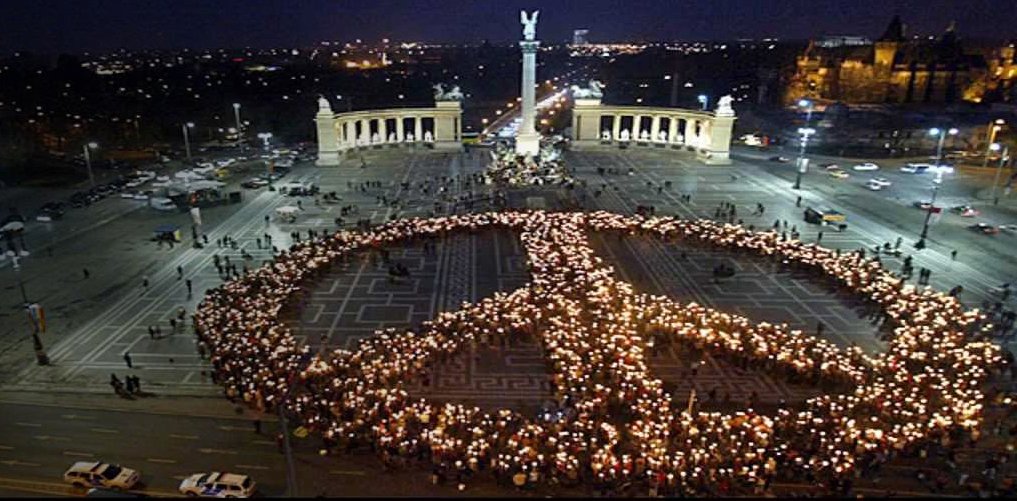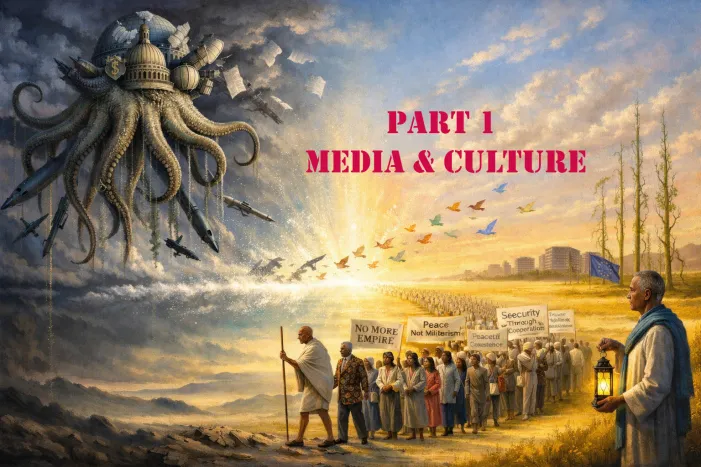
Resist and Build Alternatives to the Trump Regime Now: Part 1

PART 1 — Media, Culture and Information Sovereignty

By Jan Oberg
TFF co-founder and director

January 20, 2026

This is the first of four TFF-created idea portfolios designed to curb the global reach of the United States and, in both the short and long term, help catalyse a worldwide nonviolent resistance to what many observers describe as the Trump administration’s uniquely confrontational, destructive and world-threatening policies.

These portfolios outline what governments and citizens across the world can do through dynamic diplomacy, creative initiatives, and strictly nonviolent means.

They are typical TFF works in that we do not only tell what the problem is and how bad it will go – as 90+% of all commentators, experts and scholars do – we tell what we think can be done, inviting you to think of what you think you can do.

It seems painfully clear to me that the current political dynamics in Washington increasingly resemble the most dangerous pattern that ended in 1945 and was supposed to never happen again.

If that assessment holds, then passivity is no longer an option. A coordinated, global, nonviolent mobilisation is essential — not least because nonviolence is the one type of power and language a heavily militarised superpower is least prepared to counter.

All power rests on others accepting and carrying out its orders. Even the strongest leader in the world cannot round up criminals or fight wars with his own hands. Power is always dependent – dependent on someone who finds it legitimate, and do the dirty job on the strongman’s order. If young people were not brainwashed to accept warfare, there would be no wars. This is why nonviolence can be extremely effective and make an overarmed country look morally weak. That’s what Gandhi taught the world when using this theory to rid India not of the British as people but of the British Empire’s dominance structure.

The global mobilisation suggested here and in the coming thematic peace idea portfolios would also allow the rest of the world to deprive Trump of setting the international agenda. When Trump says something crazy, geopolitical experts, the media and the rest of the world, it seems, scrutinise his words in minute detail and waste all the time and energy that should be devoted to constructive alternatives and action. 

If all this sounds “unrealistic,” consider the alternative: a world in which Trump’s Personal Occidental Empire is allowed to take shape — one that intimidates, coerces, and disregards established norms, continuing unchecked for the next three years as it has begun.

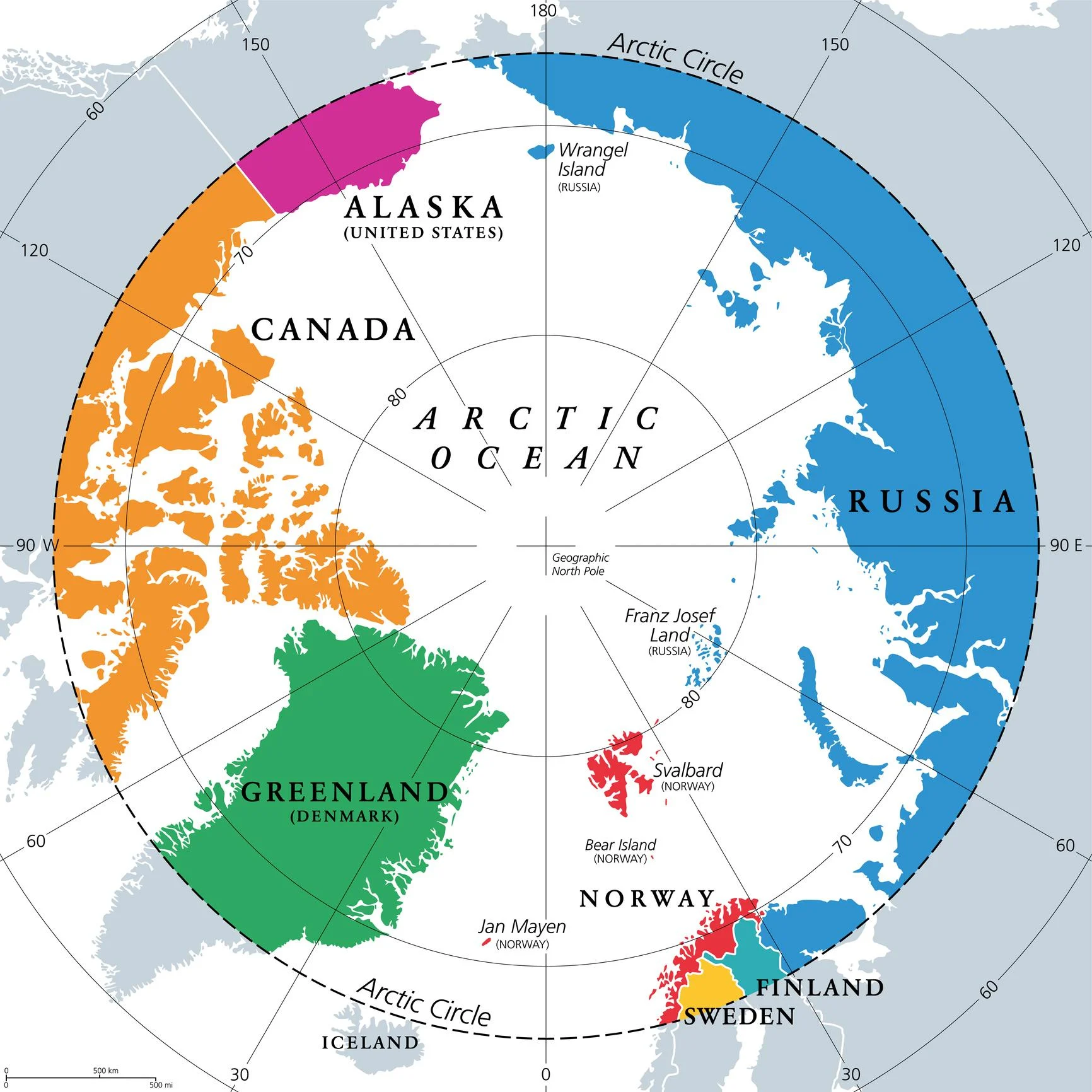
The proposals in this first portfolio are not limited to preventing the attempted acquisition of Greenland, though Greenland naturally occupies a central place here. Many fear that, without meaningful global resistance, such an acquisition could be carried out with little more than verbal protest from the international community — emboldening further unilateral ventures.

Think also of the so-called Gaza Peace Board that does not even mention Gaza. It is a cynical vehicle for establishing a new, personalised global “peace” structure intended to replace the United Nations with Trump himself as lifetime leader and the man who appoints his successor. Further, it is built on money, deals, and favours.

Only fools believe this is anything but Empire-building disguised as peace-making. Beyond any doubt, it is world-threatening.

It should now be evident that the ability to shape global perceptions — to persuade people of the inherent benevolence of U.S. power and of the current administration in particular — relies heavily on information dominance: narratives, propaganda, disinformation, and outright falsehoods. The Greenland argument, framed as a defensive move against China’s and Russia’s intention to take it, is one such example. It is also a psycho-political projection of the US/Trump’s own dark sides.

For these reasons, curbing U.S. information power is essential, as is countering its cultural and intellectual influence platforms. Therefore, this first Nonviolent U.S. Resistance Portfolio focuses on these domains. The suceeding portfolios will address additional forms of power that must be challenged and replaced through peaceful, principled means.

A. Media Transparency & Accountability Measures

These don’t censor anything, they expose dependency and deception and aim at creating an alternative global information and media structure after the US monopoly.

Immediate Measures (within a week)

Mandatory disclosure labels 
Every news story must state the origin of its primary source (AP, Reuters, AFP, NYT, etc.). This alone would shock audiences into seeing how much comes from U.S. pipelines.

Publish a “Media Dependency Index” 
A weekly ranking of outlets by percentage of U.S.-sourced content.

Announce parliamentary hearings 
Transparent, non-accusatory hearings on foreign influence in national media ecosystems.

Longer-Term Measures

European or Global South–Europe newswire alliance 
A structural alternative to U.S. news dominance.

Media Sovereignty Observatory 
A permanent body tracking narrative dependency and foreign influence.

Open source, federated news distribution systems 
Infrastructure that reduces reliance on U.S. platforms and algorithms. Boycott or at least reduce your reliance on US media platforms that censor and de-rank even peace voices and voices critical of the US, NATO, interventionism and genocide. That is – Google, Google-owned YouTube, Facebook, LinkedIn, X and more.

B. Diversification of Global News Inputs

Plurality of sources is the alternative to narrative dominance. Stop following mainstream Western media and follow non-Western media. The Internet is a wonderful invention. Spend 75% of your media time on non-Western media online or you will be fooled about what the world actually looks like.

Immediate Measures (within a week)

Emergency subscription packages to non-U.S. news agencies 
AFP, Kyodo, Al Jazeera, African newswires, Chinese and Russian media — instant diversification. Use the internet and see everybody else’s much more open-minded news coverage, editorials and discussions.

Temporary European Arctic Correspondent Network 
Reporters in Nuuk, Reykjavik, Tromsø to counter U.S. framing of Greenland.

Partnerships with Greenlandic media 
Ensures that Greenlandic voices define Greenland’s story and are heard worldwide.

Longer-Term Measures

Permanent European Arctic Desk 
A sustained reporting presence across the Arctic region. It may be more important to have them there in the future than all over the West itself.

Support for Indigenous media networks 
Strengthening local voices across the Arctic and beyond.

Cross-regional multilingual reporting hubs 
Shared editorial teams linking Europe, Africa, Asia, and Latin America.

C. Citizens’ Media Resistance

Citizens can shift the media ecosystem faster than governments.

Immediate Measures (within a week)

Boycott outlets with >40% U.S. newswire dependency 
A voluntary, global, nonviolent pressure tool.

“Switch Off America Week” 
A symbolic week where citizens consume only non-U.S. news.

Crowdsourced monitoring of U.S. narrative dominance 
Publicly track how often outlets rely on U.S. sources (and tell you they are free, diverse and public service…

Longer-Term Measures

Global media literacy networks 
Teaching citizens how narratives are constructed and by whom. And use existing non-Western ones.

Public Sphere Charter 
A global commitment to pluralistic information flows.

Global public-interest search engine 
A non-corporate, non-U.S. alternative for accessing information.

D. Cultural & Academic Sovereignty

Cultural exchange must be mutual, not a one-way projection of power and a de facto grooming of pro-US personalities and murky associations.

Immediate Measures (within a week)

Pause new academic partnerships with U.S. institutions 
A cooling-off period to reassess influence.

Suspend U.S.–EU cultural festivals and cultural cooperation 
A symbolic but powerful signal of recalibration. Of course, you can enjoy the incredible works of US cultural workers over time, but stop formalised cooperation.

Prioritise Indigenous Greenlandic cultural voices.
Shift the cultural centre of gravity toward those directly affected.

Longer-Term Measures

EU–Global South academic networks 
Diversifying knowledge production beyond U.S. institutions. Send your students to up-and-coming countries, not to the declining US. Stop filling you university reading lists with US literature; these books silently convey only a US perspective on the world.

European Arctic Cultural Institute 
A hub for Greenlandic and Arctic cultural expression.

Ethical guidelines for cultural diplomacy 
Ensuring reciprocity and preventing one-way influence.

E. Public Sphere & Civil Society Mobilisation

Nonviolent resistance begins with public consciousness and challenges military arrogance with countermeasures that set a constructive agenda.

Immediate Measures (within a week)

Global demonstrations at U.S. embassies 
A peaceful, visible expression of global resistance: Enough is more than enough, Trump!

“Greenland Solidarity Week” 
Events in 100+ cities to raise awareness.

People’s Tribunal on violations of international law 
A moral forum documenting actions and giving voice to the affected.

Longer-Term Measures

Documentary series (“Greenland And Arctic Reality Check”) 
A sustained narrative counter-campaign.

Global civil society coalitions 
Networks linking NGOs, Indigenous groups, and peace organisations, for instanced the global movement against US bases in 130 countries.

World Forum on Nonviolent Power 
A permanent platform for developing peaceful resistance strategies. There is a desperate need for solution-oriented thinking and global peace visions, for pro-peace and not just anti-war.

PART 1 SUMMARY

Media and cultural sovereignty are the foundations of nonviolent resistance. Massive, immediate actions worldwide can disrupt narrative dominance within days; long-term measures build a pluralistic global information order in which no single state monopolises the definition of reality for the rest of the world.

Introduction: How Governments and Citizens Can Stop the Trump Regime’s World-Threatening Designs

Part 1 – Media, Culture and Information Sovereignty
Part 2 – Diplomacy, Law and Nonviolent Power

Part 3 – Economics, trade and financial sovereignty

Peace & future researcher + ‌Art Photographer

Share

Leave a Reply

Your email address will not be published. Required fields are marked *

Related Posts

Jan Oberg February 19, 2026 What a thrill to be interviewed by former British diplomat Ian Proud! Don’t waste a minute: acquaint yourself with him here on his homepage, which he elegantly calls “Proud Diplomat.” Notice also his book, A Misfit In Moscow. Ian is, of course, also on Substack, where he calls himself The Peace Monger, and recently he set up his own PeaceMonger Channel on YouTube. For once, I was not interviewed as if I were a military geopolitical expert, where I normally have to twist the whole thing in the direction of peace. No, we both had a focus on peace – why it has been disappeared by research, politics and the media, but also what can be done to shape a more peaceful future for us all. One idea we came up with was that of connecting people through citizens diplomacy – in an era where more or less authoritarian leaders meet frequently and confirm each other as members...
This is not another geopolitical commentary on the Arctic. It is a visionary peace proposal that can save the region from militarised rivalry and ecological ruin. A blueprint for shared security, sustainable development, and human dignity — benefitting Greenland, the Arctic, and the rest of us. Jan Oberg TFF director Lund, Sweden, February 17, 2026 I. Four Principles for a New Arctic Vision The Arctic is often framed as a cold arena of rivalry — a place where great powers test each other’s resolve. But this worldview is outdated, unimaginative, and ultimately self‑defeating. The Arctic is not a vacuum waiting to be militarised; it is a living region, a climate stabiliser, and a cultural homeland whose future will shape the future of humanity. If we begin from that understanding, a far more rational Arctic order becomes possible — one that is peaceful, cooperative, and centred on the people who actually live there. This vision rests...
PressInfo # 141, December 21, 2001It’s time to prepare reconciliation between Albanians and Serbs PressInfo # 140, December 14, 2001Ibrahim Rugova’s decade-long leadership in Kosovo/a PressInfo # 139, 11. december, 2001En god nyhet: Jugoslaviens Sannings- och försoningskommission PressInfo # 139, 11. december, 2001Gode nyheder: Jugoslaviens Sandheds- og Forsoningskommission PressInfo # 139, December 11, 2001Good news: Yugoslavia’s Truth and Reconciliation Commission PressInfo # 138, November 8, 2001TFF co-founder PhD with thesis about young people with roots in other cultures PressInfo # 138, November 8, 2001TFF:s medstiftare doktor på avhandling om unga med ursprung i andra kulturer PressInfo # 137, October 17, 2001A new Marshall Plan: Advancing human security and controlling terrorism PressInfo # 136, October 15, 2001The UN and Annan really deserve it PressInfo # 135, October 10, 2001Preventing a terrorist mushroom cloud PressInfo # 134, 17 oktober, 2001Sverige og 11. september PressInfo # 134, October 9, 2001Sweden and September 11...

Recent Articles

Jan Oberg February 19, 2026 What a thrill to be interviewed by former British diplomat Ian Proud! Don’t waste a minute: acquaint yourself with him here on his homepage, which he elegantly calls “Proud Diplomat.” Notice also his book, A Misfit In Moscow. Ian is, of course, also on Substack, where he calls himself The Peace Monger, and recently he set up his own PeaceMonger Channel on YouTube. For once, I was not interviewed as if I were a military geopolitical expert, where I normally have to twist the whole thing in the direction of peace. No, we both had a focus on peace – why it has been disappeared by research, politics and the media, but also what can be done to shape a more peaceful future for us all. One idea we came up with was that of connecting people through citizens diplomacy – in an era where more or less authoritarian leaders meet frequently and confirm each other as members...
This is not another geopolitical commentary on the Arctic. It is a visionary peace proposal that can save the region from militarised rivalry and ecological ruin. A blueprint for shared security, sustainable development, and human dignity — benefitting Greenland, the Arctic, and the rest of us. Jan Oberg TFF director Lund, Sweden, February 17, 2026 I. Four Principles for a New Arctic Vision The Arctic is often framed as a cold arena of rivalry — a place where great powers test each other’s resolve. But this worldview is outdated, unimaginative, and ultimately self‑defeating. The Arctic is not a vacuum waiting to be militarised; it is a living region, a climate stabiliser, and a cultural homeland whose future will shape the future of humanity. If we begin from that understanding, a far more rational Arctic order becomes possible — one that is peaceful, cooperative, and centred on the people who actually live there. This vision rests...
PressInfo # 141, December 21, 2001It’s time to prepare reconciliation between Albanians and Serbs PressInfo # 140, December 14, 2001Ibrahim Rugova’s decade-long leadership in Kosovo/a PressInfo # 139, 11. december, 2001En god nyhet: Jugoslaviens Sannings- och försoningskommission PressInfo # 139, 11. december, 2001Gode nyheder: Jugoslaviens Sandheds- og Forsoningskommission PressInfo # 139, December 11, 2001Good news: Yugoslavia’s Truth and Reconciliation Commission PressInfo # 138, November 8, 2001TFF co-founder PhD with thesis about young people with roots in other cultures PressInfo # 138, November 8, 2001TFF:s medstiftare doktor på avhandling om unga med ursprung i andra kulturer PressInfo # 137, October 17, 2001A new Marshall Plan: Advancing human security and controlling terrorism PressInfo # 136, October 15, 2001The UN and Annan really deserve it PressInfo # 135, October 10, 2001Preventing a terrorist mushroom cloud PressInfo # 134, 17 oktober, 2001Sverige og 11. september PressInfo # 134, October 9, 2001Sweden and September 11...

TFF on Substack

Discover more from TFF Transnational Foundation & Jan Oberg.

Most Popular

Jan Oberg February 19, 2026 What a thrill to be interviewed by former British diplomat Ian Proud! Don’t waste a minute: acquaint yourself with him here on his homepage, which he elegantly calls “Proud Diplomat.” Notice also his book, A Misfit In Moscow. Ian is, of course, also on Substack, where he calls himself The Peace Monger, and recently he set up his own PeaceMonger Channel on YouTube. For once, I was not interviewed as if I were a military geopolitical expert, where I normally have to twist the whole thing in the direction of peace. No, we both had a focus on peace – why it has been disappeared by research, politics and the media, but also what can be done to shape a more peaceful future for us all. One idea we came up with was that of connecting people through citizens diplomacy – in an era where more or less authoritarian leaders meet frequently and confirm each other as members...
This is not another geopolitical commentary on the Arctic. It is a visionary peace proposal that can save the region from militarised rivalry and ecological ruin. A blueprint for shared security, sustainable development, and human dignity — benefitting Greenland, the Arctic, and the rest of us. Jan Oberg TFF director Lund, Sweden, February 17, 2026 I. Four Principles for a New Arctic Vision The Arctic is often framed as a cold arena of rivalry — a place where great powers test each other’s resolve. But this worldview is outdated, unimaginative, and ultimately self‑defeating. The Arctic is not a vacuum waiting to be militarised; it is a living region, a climate stabiliser, and a cultural homeland whose future will shape the future of humanity. If we begin from that understanding, a far more rational Arctic order becomes possible — one that is peaceful, cooperative, and centred on the people who actually live there. This vision rests...
PressInfo # 141, December 21, 2001It’s time to prepare reconciliation between Albanians and Serbs PressInfo # 140, December 14, 2001Ibrahim Rugova’s decade-long leadership in Kosovo/a PressInfo # 139, 11. december, 2001En god nyhet: Jugoslaviens Sannings- och försoningskommission PressInfo # 139, 11. december, 2001Gode nyheder: Jugoslaviens Sandheds- og Forsoningskommission PressInfo # 139, December 11, 2001Good news: Yugoslavia’s Truth and Reconciliation Commission PressInfo # 138, November 8, 2001TFF co-founder PhD with thesis about young people with roots in other cultures PressInfo # 138, November 8, 2001TFF:s medstiftare doktor på avhandling om unga med ursprung i andra kulturer PressInfo # 137, October 17, 2001A new Marshall Plan: Advancing human security and controlling terrorism PressInfo # 136, October 15, 2001The UN and Annan really deserve it PressInfo # 135, October 10, 2001Preventing a terrorist mushroom cloud PressInfo # 134, 17 oktober, 2001Sverige og 11. september PressInfo # 134, October 9, 2001Sweden and September 11...
Read More
Jan Oberg February 19, 2026 What a thrill to be interviewed by former British diplomat Ian Proud! Don’t waste a minute: acquaint yourself with him here on his homepage, which he elegantly calls “Proud Diplomat.” Notice also his book, A Misfit In Moscow. Ian is, of course, also on Substack, where he calls himself The Peace Monger, and recently he set up his own PeaceMonger Channel on YouTube. For once, I was not interviewed as if I were a military geopolitical expert, where I normally have to twist the whole thing in the direction of peace. No, we both had a focus on peace – why it has been disappeared by research, politics and the media, but also what can be done to shape a more peaceful future for us all. One idea we came up with was that of connecting people through citizens diplomacy – in an era where more or less authoritarian leaders meet frequently and confirm each other as members...
Arctic_North_Pole_Map
This is not another geopolitical commentary on the Arctic. It is a visionary peace proposal that can save the region from militarised rivalry and ecological ruin. A blueprint for shared security, sustainable development, and human dignity — benefitting Greenland, the Arctic, and the rest of us. Jan Oberg TFF director Lund, Sweden, February 17, 2026 I. Four Principles for a New Arctic Vision The Arctic is often framed as a cold arena of rivalry — a place where great powers test each other’s resolve. But this worldview is outdated, unimaginative, and ultimately self‑defeating. The Arctic is not a vacuum waiting to be militarised; it is a living region, a climate stabiliser, and a cultural homeland whose future will shape the future of humanity. If we begin from that understanding, a far more rational Arctic order becomes possible — one that is peaceful, cooperative, and centred on the people who actually live there. This vision rests...
Imagen-thumbnail-The-Transnational-1
PressInfo # 141, December 21, 2001It’s time to prepare reconciliation between Albanians and Serbs PressInfo # 140, December 14, 2001Ibrahim Rugova’s decade-long leadership in Kosovo/a PressInfo # 139, 11. december, 2001En god nyhet: Jugoslaviens Sannings- och försoningskommission PressInfo # 139, 11. december, 2001Gode nyheder: Jugoslaviens Sandheds- og Forsoningskommission PressInfo # 139, December 11, 2001Good news: Yugoslavia’s Truth and Reconciliation Commission PressInfo # 138, November 8, 2001TFF co-founder PhD with thesis about young people with roots in other cultures PressInfo # 138, November 8, 2001TFF:s medstiftare doktor på avhandling om unga med ursprung i andra kulturer PressInfo # 137, October 17, 2001A new Marshall Plan: Advancing human security and controlling terrorism PressInfo # 136, October 15, 2001The UN and Annan really deserve it PressInfo # 135, October 10, 2001Preventing a terrorist mushroom cloud PressInfo # 134, 17 oktober, 2001Sverige og 11. september PressInfo # 134, October 9, 2001Sweden and September 11...
Imagen-thumbnail-The-Transnational-1
Peace is promoted by constructive proposals and dialogue Four preceding PressInfos have expressed concern over — and criticised — the ongoing, militarisation of the EU. Some will say: but there are no alternatives. We believe that there are always alternatives, that democracies are characterised by alternatives and choice, and that openly discussed alternatives will improve the quality and legitimacy of society’s decision–making. In addition, it is an intellectual and moral challenge to not only criticise but also be constructive. If we only tell people that we think they are wrong, they are not likely to listen. However, if we say: what are your views on this set of ideas and steps? — we may sometimes engage them in dialogue and sow a seed. Most people in power circles live their daily lives in in a time frame and a social space where certain ideas, viewpoints and concepts are just not...
Imagen-thumbnail-The-Transnational-1
Photos © TFF 2000 Read PressInfo 90 “Lift the Sanctions and Bring More Aid to Yugoslavia” See Pictures from Belgrade © TFF 2000 Please reprint, copy, archive, quote or re-post this item, but please retain the source.
Imagen-thumbnail-The-Transnational-1
Av FRANK SØHOLM GREVIL 16 augusti 2004  Vi er nu nået til tredje akt i det absurde teaterstykke, der i analogi med de store skueprocesser i Moskva 1936-38 er blevet døbt ‘Grevil-sagen’. Første akt bestod i min anonyme fremlæggelse af egenhændigt nedklassificerede rapporter i Berlingske Tidende i februar og marts. Andet akt udgjordes af min fremtræden med navn og billede i Information i april samt den efterfølgende mediestorm, som uden min direkte medvirken kostede en forsvarsminister taburetten samt en sigtelse for brud på tavshedspligten. Tredje akt bliver en retssag, hvor jeg står tiltalt for at have overtrådt straffelovens bestemmelser om uberettiget videregivelse eller udnyttelse af fortrolige oplysninger. Statsanklageren har ovenikøbet valgt at påberåbe sig særligt skærpende omstændigheder. Da jeg aldrig har modtaget betaling for at stille rapporterne til rådighed eller lade mig interviewe, må det skærpende bestå i, at “videregivelsen eller udnyttelsen er sket under sådanne omstændigheder, at det påfører...