TFF 1986-1996

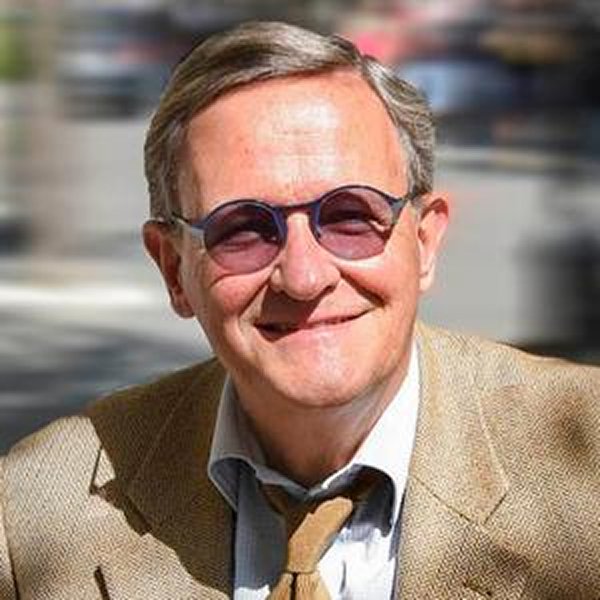
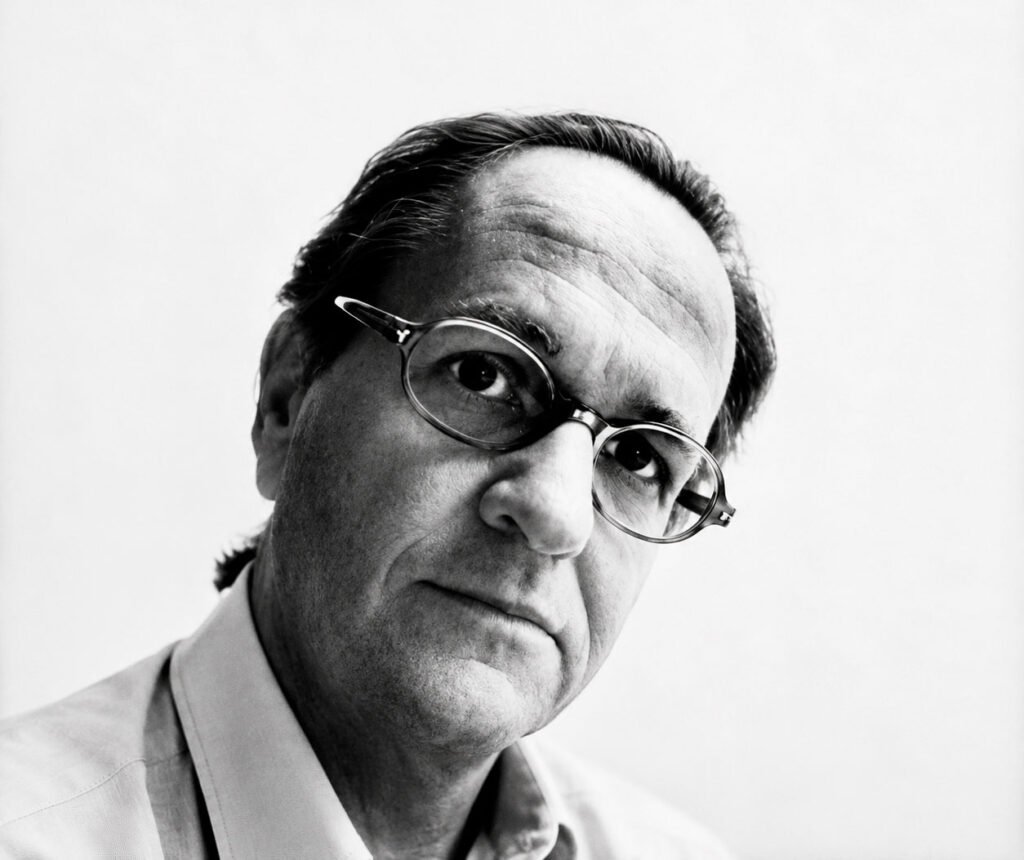
and later associate professor in peace studies (“docent” in Swedish) – was also head of the Lund University Peace Research Institute, LUPRI – succeeding the legendary peace researcher and Lund public figure, Haakan Wiberg (1942-2010).

Regrettably, the university’s social science faculty got the – even at the time bizarre – idea to close down all inter-disciplinary units and departments such as environment, human anthropology, gender studies, human rights and peace and conflict research.

Neither academic quality nor productivity in terms of courses given, students passing exams, research carried out etc. played any role.

The overarching idea was that Lund University should remain a traditional ”discipline university” as it was argued. The decision to close down peace research was also taken because the similar peace research institutions in Gothenburg and Uppsala seem to have had closer connections with the Ministry of Education than the researchers in Lund and had received full chairs in the field earlier.

The decision was taken without any consultation with Jan Oberg who therefore was the last head of the department. Some resources from the closed down department went to the department of sociology and the department of political science, the latter of which has offered courses under the heading of peace and conflict studies.

In the case of LUPRI, an additional argument for closing it down was that, since the Cold War would soon be history – this was November 1989 – there would be no need for such studies anymore.

It was only 10 months later that Iraq invaded Kuwait and in April 1991 the first instance of violence occurred in Croatia and the Yugoslavia dissolution wars gained speed, the most serious violence in Europe since 1945.

The thickness of academic walls and academic people’s distance from the real world out there should never be underestimated.

LUPRI enjoyed full personal support by the then chancellor, MD Håkan Westling in cooperation with whom it had arranged a series of US-Soviet scholarly meetings about East-West relations, security and disarmament.

Yet another, quite extraordinary, argument by the faculty chairman was that TFF (starting out in 1986) was a kind of competitor to the university institute and headed by Jan Oberg too. This was rather much nonsense since TFF’s emphasis was on internationally oriented research while LUPRI’s main activity was to offer educational courses in the field.

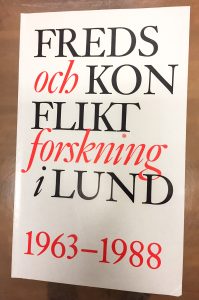
The 25 out of 26 years of peace research at Lund University is documented in the booklet ”Freds och Konfliktforskning i Lund 1963-1988” edited by Jan Oberg; unfortunately it is in Swedish and not available online. It explains the developments – research programs, courses and seminars in the field of peace and conflict in Lund – until it was all destroyed by the faculty itself and external forces (in Swedish). It also made mention of conflict studies that could be found here and there, e.g. empirical studies of border conflicts under the able leadership of professor Sven Tägil at the Department of History.

The 25th Anniversary publication also lists no less than 372 publications between 1963 and 1988 by researchers such as Lars Dencik, Lars Borgquist, Kerstin Nyström, Herman Schmid, Charles Edquist, Kent Lindquist, Jan Annerstedt, Per Gahrton, Wilhelm Agrell, Haakan Wiberg, Jan Oberg, Jan Andersson, Katsuya Kodama and a few others – all of whom were either employed or otherwise associated via projects with LUPRI.

A detailed account of this destructive process can be found here.
1985-90

TFF was established as a private foundation and independent of the university in September 1985 and started operations in January 1986. The first years, it produces academic books on peace and security issues and the foundation served as research environment to scholars from abroad – Dr. Suman Khanna, India; professor Toshiki Mogami from the International Christian University in Mitaka, Tokyo; Dr. Dietrich Fischer from Switzerland and lieutenant-colonel and documentarist Wilhelm Nolte, West Germany.

Fischer’s and Nolte’s frequent seminars in Lund with Jan Oberg resulted in the 1989 bestseller Winning Peace. Strategies and Ethics for a Nuclear-Free World with editions in Danish, German and Swedish.

The foundation initiated various projects in cooperation with organisations such as the Myrdal Foundation in Stockholm, Greenpeace, the National Science Foundation and it conducted, among several other projects, one which built on a co-operation between North American, Russian and Nordic scholar about Economics, Environment and Ethics. Another, with the Myrdal Foundation focused on the possibility and dimensions of Nuclear Winter.

Several projects and publications were related to the concept of common security, security in general, Nordic aspects of security and peace, nuclear weapons, European politics, disarmament, UN reform, studies of the roles of the international peace movement, nuclearism, the necessary switch from deterrence policies to common security – all topical at the time when the possibility of a new security architecture in Europe could be seen at the horizon.

A major endeavour was a series of studies of alternative defensive military, civil defence and non-violent defence as a new model the chances of which was increasing as the Soviet Union and the Warsaw Pact was, slowly but surely, falling apart.

TFF also issued reports on themes such as the need for conflict consortiums, the concept of conflict mitigation, UN reform in general and peace-keeping and peace-building issues in particular.

After Oberg had left the university for good in November 1989, he became a visiting professor at the International Christian University, ICU, 1990-91 (and – later – at Chuo University (1995), Nagoya (2004 and 2007) and Kyoto (2009-2010).
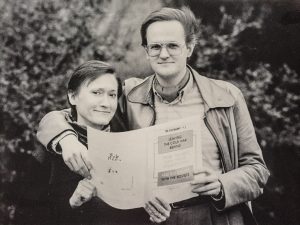
With a TFF Statement in March 1989 – on how to build peace with the Soviets

1990-97

After the first five years with an almost hectic research and publishing activity – documented in a series of printed newsletters – the founders and the board raised a strategically important question: Shall TFF continue to do this type of armchair or desk research ending in academic publications of various types or shall it engage in conflict zones and practise all these theories and ideas and see which work and which don’t?

In other words, shall the doctor meet a patient and try to be of practical help with diagnosis, prognosis and treatment? At this moment the foundation changed course to walk on two legs – one in academia and one in selected conflict zones out there – and, thereby, also a policy and media think-and-do tank.

It happened that TFF board members had multi-year experiences from Yugoslavia – Haakan Wiberg, Ulf Svensson and Jan Oberg. So had some of the TFF Associates such as Johan Galtung and Soren Sommelius.

From 1991 and well into the 2000s, TFF was engaged in all parts of what was then Yugoslavia and the republics it was, later, split up into.

The results of that multi-year project can be found in the blog ”Yugoslavia – What Should Have Been Done?” where everything Johan Galtung, Jan Oberg and Haakan Wiberg wrote between 1991 and 2014 has been collected and published as it was written during the process.

TFF’s teams made some 70 mission trips, did more than 3000 interviews with people in all republic and at all societal levels, produced reports and peace plans, gave courses in conflict-resolution and reconciliation in war zones, worked with a series of UN missions in Croatia, Bosnia, Macedonia and Serbia and did a lot of media work back home but also press conferences and other outreach activities in the various conflict areas.

It served as goodwill (unpaid) mediator over four years between Belgrade and Prishtina in the Kosovo conflict and produced an international law-based plan for a three-year negotiated solution. The only one anywhere of its kind and one that attracted considerably attention on both sides and in the UN.

Alas, it all came to nought by NATO’s war on Serbia in spring 1999.

In 1994 another TFF team did a fact-finding mission to Georgia, South Ossetia and Abkhazia – resulting in the printed report ”Georgia On Our Minds” by two of the team members, Marta Cullberg Weston and Burns Weston.

However, TFF did not continue its work in Georgia. A foundation with very limited resources knows well that it must focus and the focus in those days remained on Yugoslavia.

Documentation

Printed books and reports were the main products of an academic institution in those days.

Apart from the mentioned blog about Yugoslavia, the documentation of TFF’s projects and publications at the time is found in TFF’s archive in Lund – reports, books, anthologies, newsletters, board statements, media articles and interviews and that its Associates produced in during those years.

TFF went online and established its first homepage on the Internet in 1997 and it has been on Facebook and other social media since 2007.

Hopefully, this has offered the reader a few glimpses and a sense of what peace research in Lund has been and is about. The full story – LUPRI at the time and TFF – will, one day, be published but that requires more archive studies.

Lund,
December 16, 2017

Peace & future researcher + ‌Art Photographer

Share

Leave a Reply

Your email address will not be published. Required fields are marked *

Related Posts

PART II — Publishing Peace in a System That Prioritises Militarism Jan Oberg, TFF director April 10, 2026 How TFF Maintains a Daily Voice in a Digital World Built for Noise This article is part of the series “TFF at 40″ and it invites you to learn about Four Decades of Publishing Peace. It takes a look at how a small, people‑financed peace foundation has communicated across four generations of technology — from wax stencils and fax machines to mass email and Substack — and why TFF continues to publish every single day in a system that rewards noise, conflict, and militarism. ◆ What it means to publish peace every single day in a digital system built for 24/7 news and other noise, confrontation, and militarism. How TFF’s independence, continuity, and global readership defy algorithms, donor cycles, and Western media censorhip — and why the Majority World keeps listening. When the...
Jan Oberg, TFF director April 10, 2026 How TFF Sent Peace Into the World Before the Internet Existed This article is part of the series “TFF at 40″ and it invites you to learn about Four Decades of Publishing Peace. It takes a look at how a small, people‑financed peace foundation has communicated across four generations of technology — from wax stencils and fax machines to mass email and Substack — and why TFF continues to publish every single day in a system that rewards noise, conflict, and militarism. ◆ Follow me on a journey through forty years of peace publishing — from wax stencils and hand‑cranked duplicators to the fax machine that never slept, and finally to the global reach of online publishing. This is the story of how TFF carried ideas across borders long before the internet made it easy, and why we chose independence over academic profit-making and...
A donors’ conference, co-sponsered by the Burundian government, the Belgian government and UNDP will be held in Brussels January 12-13, 2004. This PressInfo offers a perspective on its urgency. See also TFF’s new Burundi Forum. Imagine for a moment that politics is about goodness and generosity. Where could a few million dollars of government aid and a few civil society organisations – guaranteed – win the hearts of extremely poor millions who want peace and already work hard to achieve it after 10 years of war and genocide? The answer is Burundi, the heart-shaped country in the heart of Africa. Burundi makes a good story from Africa. But what does the world know about Burundi, its problems and struggles? Burundi’s tough reality Here are the basic facts. Burundi’s population is about 7 million and it is number 171 out of the 175 countries on the UNDP’s human development index. Their life...

Recent Articles

Jan Oberg May 15, 2026 Go to this Fox News page and scroll the whole way down: President Donald Trump tells the world that his meeting with President Xi Jinping yielded a lot of very concrete political and economic results – of course, only where the Chinese side, according to him, agreed with him. He does not mention the Taiwan issue, but Secretary of State, Marco Rubio, says that it did not feature prominently in their talks and that the US policy on Taiwan has not changed. Then go to China Daily – or Global Times – and you will see that for the Chinese it is framework, principles, structure of cooperation etc. that matters – all embedded in the overall idea of “constructive bilateral relationship of strategic stability.” Nowhere is any concrete agreement or deal – all that Trump refers to – mentioned. At the general level, this gives you insights into the very different social...
Lena Petrova of “World Affairs In Context” with more than half a million subscribers on YouTube wanted to explore what a peace researcher like me has to say about, among other things, the First and the Second Cold War and why eethics has disappeared from politics. I am particularly happy about this conversation that also yielded an amazing number of very appreciative comments on YouTube. No doubt, people are longing for alternatives, including peace perspectives.
The MIMAC – Military-Industrial-Media-Academic Complex – drives the world’s rampant militarism and wars without end. Here is a short reflection of how it works against all interests of humanity. #5 deals with why there is no real enemy or threat images/analysis. It’s all ex-post constructions. And, btw, theTFF Peace Pulse is now on Rumble.

TFF on Substack

Discover more from TFF Transnational Foundation & Jan Oberg.

Most Popular

Jan Oberg May 15, 2026 Go to this Fox News page and scroll the whole way down: President Donald Trump tells the world that his meeting with President Xi Jinping yielded a lot of very concrete political and economic results – of course, only where the Chinese side, according to him, agreed with him. He does not mention the Taiwan issue, but Secretary of State, Marco Rubio, says that it did not feature prominently in their talks and that the US policy on Taiwan has not changed. Then go to China Daily – or Global Times – and you will see that for the Chinese it is framework, principles, structure of cooperation etc. that matters – all embedded in the overall idea of “constructive bilateral relationship of strategic stability.” Nowhere is any concrete agreement or deal – all that Trump refers to – mentioned. At the general level, this gives you insights into the very different social...
Lena Petrova of “World Affairs In Context” with more than half a million subscribers on YouTube wanted to explore what a peace researcher like me has to say about, among other things, the First and the Second Cold War and why eethics has disappeared from politics. I am particularly happy about this conversation that also yielded an amazing number of very appreciative comments on YouTube. No doubt, people are longing for alternatives, including peace perspectives.
The MIMAC – Military-Industrial-Media-Academic Complex – drives the world’s rampant militarism and wars without end. Here is a short reflection of how it works against all interests of humanity. #5 deals with why there is no real enemy or threat images/analysis. It’s all ex-post constructions. And, btw, theTFF Peace Pulse is now on Rumble.
Read More
Screenshot-2026-05-15-103534
Jan Oberg May 15, 2026 Go to this Fox News page and scroll the whole way down: President Donald Trump tells the world that his meeting with President Xi Jinping yielded a lot of very concrete political and economic results – of course, only where the Chinese side, according to him, agreed with him. He does not mention the Taiwan issue, but Secretary of State, Marco Rubio, says that it did not feature prominently in their talks and that the US policy on Taiwan has not changed. Then go to China Daily – or Global Times – and you will see that for the Chinese it is framework, principles, structure of cooperation etc. that matters – all embedded in the overall idea of “constructive bilateral relationship of strategic stability.” Nowhere is any concrete agreement or deal – all that Trump refers to – mentioned. At the general level, this gives you insights into the very different social...
Screenshot-2026-05-12-104023
Lena Petrova of “World Affairs In Context” with more than half a million subscribers on YouTube wanted to explore what a peace researcher like me has to say about, among other things, the First and the Second Cold War and why eethics has disappeared from politics. I am particularly happy about this conversation that also yielded an amazing number of very appreciative comments on YouTube. No doubt, people are longing for alternatives, including peace perspectives.
Screenshot-2026-04-13-154551 (2)
The MIMAC – Military-Industrial-Media-Academic Complex – drives the world’s rampant militarism and wars without end. Here is a short reflection of how it works against all interests of humanity. #5 deals with why there is no real enemy or threat images/analysis. It’s all ex-post constructions. And, btw, theTFF Peace Pulse is now on Rumble.
Screenshot-2026-04-13-154551 (1)
Jan Oberg, TFF director April 28, 2026 In this third TFF Peace Pulse, I make the important distinction between the violence and the conflict that violence is a symptom of. If you want peace, focus on the underlying conflict because that is the key to resolution, peacemaking, and a better future for the parties. The West is obsessed with violence, just look around you – and 90+ per cent of the public debate is about military issues and other violence – totally wasted for peace. These Peace Pulses will only be published here a few times. You will also not find them on YouTube and Vimeo because both platforms have blocked TFF and me; you know, peace is dangerous these days. Most TFF’s videos since 2007 are now on Rumble.
Screenshot-2026-04-13-154551
In contrast to most, we’ll bring alternatives, solutions, hope and strategies for a better future. Times are dangerous, yes, but that only intensifies the need for constructive thinking and action! Jan Oberg, TFF director April 13, 2026 The new TFF Peace Pulse uses video messages in a new way: Max 3-5-minute-long comments, ideas or perhaps mini-lectures, all about peace – positive peace. We launch them today on April 13, 2026 with a carefully crafted visual aesthetic fitting the content. We hope to publish them regularly from now on. We launch Peace Pulse (PP) – for a number of reasons. The world is in chaos, and there are countless reasons to feel concerned, frustrated, even angry. The atmosphere is saturated with doom and gloom, with negative energy and rear‑mirror thinking, while vision, imagination, alternatives, strategies and genuine future‑mindedness remain in short supply. And without them, we simply can’t save the world. Looking at problems from a hundred angles will...
IMG_5165 (1)
PART II — Publishing Peace in a System That Prioritises Militarism Jan Oberg, TFF director April 10, 2026 How TFF Maintains a Daily Voice in a Digital World Built for Noise This article is part of the series “TFF at 40″ and it invites you to learn about Four Decades of Publishing Peace. It takes a look at how a small, people‑financed peace foundation has communicated across four generations of technology — from wax stencils and fax machines to mass email and Substack — and why TFF continues to publish every single day in a system that rewards noise, conflict, and militarism. ◆ What it means to publish peace every single day in a digital system built for 24/7 news and other noise, confrontation, and militarism. How TFF’s independence, continuity, and global readership defy algorithms, donor cycles, and Western media censorhip — and why the Majority World keeps listening. When the...