
How Yemen’s Houthis are bringing down a Goliath

By Pepe Escobar

October 1, 2019

“It is clear to us that Iran bears responsibility for this attack. There is no other plausible explanation. We support ongoing investigations to establish further details.”

Originally posted on in the Asia Times on September 25, 2019 here

The statement above was not written by Franz Kafka. In fact, it was written by a Kafka derivative: Brussels-based European bureaucracy. The Merkel-Macron-Johnson trio, representing Germany, France and the UK, seems to know what no “ongoing investigation” has unearthed: that Tehran was definitively responsible for the twin aerial strikes on Saudi oil installations.

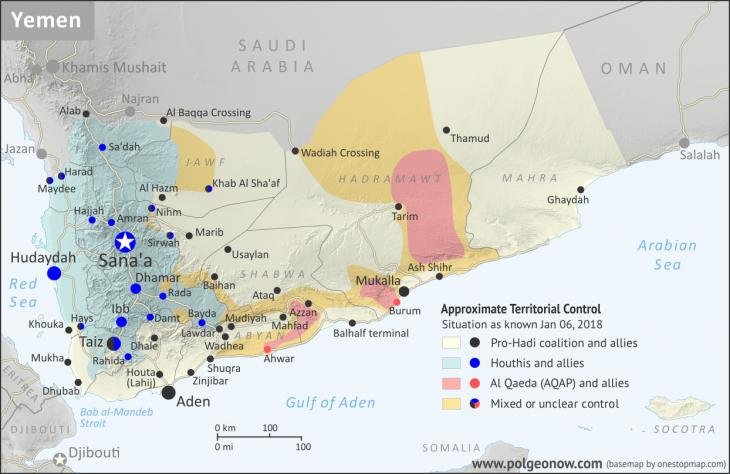
“There is no other plausible explanation” translates as the occultation of Yemen. Yemen only features as the pounding ground of a vicious Saudi war, de facto supported by Washington and London and conducted with US and UK weapons, which has generated a horrendous humanitarian crisis.

So Iran is the culprit, no evidence provided, end of story, even if the “investigation continues.”

Hassan Ali Al-Emad, Yemeni scholar and the son of a prominent tribal leader with ascendance over ten clans, begs to differ. “From a military perspective, nobody ever took our forces in Yemen seriously. Perhaps they started understanding it when our missiles hit Aramco.”

A satellite image from the US government shows damage to oil and gas infrastructure from weekend drone attacks at Abqaig on September 15.

Al-Emad said: “Yemeni people have been encircled by an embargo. Why are Yemeni airports still closed? Children are dying without treatment. In this current war, the first door [to be closed against enemies] was Damascus. The second door is Yemen.” Al-Emad considers that Hezbollah’s Secretary-General Sayed Nasrallah and the Houthis are involved in the same struggle.

Al-Emad was born in Sana’a in a Zaydi family influenced by Wahhabi practices. Yet when he was 20, in 1997, he converted to Ahlulbayat after comparative studies between Sunni, Zaydi and the Imamiyyah – the branch of Shi’ite Islam that believes in 12 imams. He abandoned Zaydi in what could be considered a Voltairean act: because the sect cannot withstand critical analysis.

I talked and broke bread – and hummus – with Al-Emad, in Beirut, during the New Horizon conference among scholars from Lebanon, Iran, Italy, Canada, Russia and Germany. Although he says he cannot get into detail about military secrets, he confirmed: “Past Yemeni governments had missiles, but after 9/11 Yemen was banned from buying weapons from Russia. But we still had 400 missiles in warehouses in South Yemen. We used 200 Scuds – the rest is still there [laughs].”

Al-Emad breaks down Houthi weaponry into three categories: the old missile stock; cannibalized missiles using different spare parts (“transformation made in Yemen”); and those with new technology that use reverse engineering. He stressed: “We accept help from everybody,” which suggests that not only Tehran and Hezbollah are pitching in.

Smoke billows from the Aramco oil facility in Abqaiq in Saudi Arabia’s Eastern province after the Sept 14 attacks. Photo: AFP

Al-Emad’s key demand is actually humanitarian: “We request that Sana’a airport be reopened for help to the Yemeni people.”

And he has a message for global public opinion that the EU-3 are obviously not aware of: “Saudi is collapsing and America is embracing it in its fall.”

The real danger

On the energy front, Persian Gulf energy traders that I have relied upon as trustworthy sources for two decades confirm that, contrary to Saudi Oil Minister Abdulazziz bin Salman’s spin, the damage from the Houthi attack on Abqaiq could last not only “months” but even years.

As a Dubai-based trader put it: “When an Iraqi pipeline was damaged in the mid-2000s the pumps were destroyed. It takes two years to replace a pump as the backlogs are long. The Saudis, to secure their pipelines, acquired spare pumps for this reason. But they did not dream that Abqaiq could be damaged. If you build a refinery it can take three to five years if not more. It could be done in a month if all the components and parts were available at once, as then it would be merely a task of assembling the components and parts.”

On top of this, the Saudis are now only offering heavier crudes to their customers in Asia. “Then,” adds a trader, “We heard that the Saudis were buying 20,000,000 barrels of heavier crudes from Iraq. Now, the Saudis were supposed to have as much as 160 million barrels a day of stored crude.  So what does this mean?  Either there was no stored crude or that crude had to go through Abqaiq in order to be sold.”

Al-Emad explicitly told me that Houthi attacks are not over, and further drone swarms are inevitable.

Now compare it with analysis by one trader: “If in the next wave of drone attacks 18 million barrels a day of Saudi crude are knocked out, it would represent a catastrophe of epic proportions. The US does not want the Houthi to believe that they have such power through such fourth generational warfare as drones that cannot be defended against. But they do. Here is where a tiny country can bring down not only a Goliath such as the US, but also the whole world.”

Asked about the consequences of a possible US attack against Iran – picking up on Robert Gates’ famous 2010 remark that “Saudis want to fight Iran to the last American” – the consensus among traders is that it would be another disaster.

“Saudis want to fight Iran to the last American”

Robert Gates, 2010

“It would not be possible to bring Iranian crude on line for the world to replace the rest of what was destroyed,” said one.

He noted that Senator Lindsey Graham had “said he wanted to destroy the Iranian refineries but not the oil wells. This is a very important point.  The horror of horrors would be an oil war where everyone is destroying each others’ wells until there was nothing left.”

While the “horror of horrors” hangs by a thread, the blind leading the blind stick to the script: Blame Iran and ignore Yemen.
Pepe Escobar

Pepe Escobar is a Brazilian journalist who has written for Asia Times for many years, covering events throughout Asia and the Middle East. He has also been an analyst for RT and Sputnik News, and previously worked for Al Jazeera.

Share

Leave a Reply

Your email address will not be published. Required fields are marked *

Related Posts

PART 2 — Diplomacy, Law and Nonviolent Power By Jan ObergTFF co-founder and director January 26, 2026 This is the second of four TFF-created idea portfolios designed to curb the global reach of the United States and, in both the short and long term, help catalyse a worldwide nonviolent resistance to what many observers describe as the Trump administration’s uniquely confrontational, destructive and world-threatening policies. These portfolios outline what governments and citizens across the world can do through dynamic diplomacy, creative initiatives, and strictly nonviolent means. They are typical TFF works in that we do not only tell what the problem is and how bad it will go – as 90+% of all commentators, experts and scholars do – we tell what we think can be done, inviting you to think of what you think you can do. It seems painfully clear to me that the current political dynamics in Washington increasingly resemble the most dangerous...
PART 1 — Media, Culture and Information Sovereignty By Jan ObergTFF co-founder and director January 20, 2026 This is the first of four TFF-created idea portfolios designed to curb the global reach of the United States and, in both the short and long term, help catalyse a worldwide nonviolent resistance to what many observers describe as the Trump administration’s uniquely confrontational, destructive and world-threatening policies. These portfolios outline what governments and citizens across the world can do through dynamic diplomacy, creative initiatives, and strictly nonviolent means. They are typical TFF works in that we do not only tell what the problem is and how bad it will go – as 90+% of all commentators, experts and scholars do – we tell what we think can be done, inviting you to think of what you think you can do. It seems painfully clear to me that the current political dynamics in Washington increasingly resemble the most...
Introduction to TFF’s forthcoming four Idea Portfolios of Diplomatic and Nonviolent Resistance By TFF’s Board & FoundersPascal Lottaz, Biljana Vankovska, Annette Schiffmann, Christina Spannar & Jan Oberg January 19, 2026 “America, you are too arrogant.” — Martin Luther King Jr. Over the course of Trump’s first term and now a year into his second, the world has witnessed a consistent pattern of actions that challenge the basic long-standing norms of international cooperation, weaken multilateral institutions, and ignore the global norms and legal frameworks established by the UN Charter. During these years, we have witnessed military operations in Iran, Syria and Ukraine without UN authorisation; the killing of Iranian General Qassem Soleimani; repeated strikes across the Middle East; and the launch of tariff wars against allies and competitors alike. We have seen a renewed emphasis on nuclearism and zero interest in arms control and disarmament negotiations. Pentagon is now The Department...

Recent Articles

Jan Oberg May 15, 2026 Go to this Fox News page and scroll the whole way down: President Donald Trump tells the world that his meeting with President Xi Jinping yielded a lot of very concrete political and economic results – of course, only where the Chinese side, according to him, agreed with him. He does not mention the Taiwan issue, but Secretary of State, Marco Rubio, says that it did not feature prominently in their talks and that the US policy on Taiwan has not changed. Then go to China Daily – or Global Times – and you will see that for the Chinese it is framework, principles, structure of cooperation etc. that matters – all embedded in the overall idea of “constructive bilateral relationship of strategic stability.” Nowhere is any concrete agreement or deal – all that Trump refers to – mentioned. At the general level, this gives you insights into the very different social...
Lena Petrova of “World Affairs In Context” with more than half a million subscribers on YouTube wanted to explore what a peace researcher like me has to say about, among other things, the First and the Second Cold War and why eethics has disappeared from politics. I am particularly happy about this conversation that also yielded an amazing number of very appreciative comments on YouTube. No doubt, people are longing for alternatives, including peace perspectives.
The MIMAC – Military-Industrial-Media-Academic Complex – drives the world’s rampant militarism and wars without end. Here is a short reflection of how it works against all interests of humanity. #5 deals with why there is no real enemy or threat images/analysis. It’s all ex-post constructions. And, btw, theTFF Peace Pulse is now on Rumble.

TFF on Substack

Discover more from TFF Transnational Foundation & Jan Oberg.

Most Popular

Jan Oberg May 15, 2026 Go to this Fox News page and scroll the whole way down: President Donald Trump tells the world that his meeting with President Xi Jinping yielded a lot of very concrete political and economic results – of course, only where the Chinese side, according to him, agreed with him. He does not mention the Taiwan issue, but Secretary of State, Marco Rubio, says that it did not feature prominently in their talks and that the US policy on Taiwan has not changed. Then go to China Daily – or Global Times – and you will see that for the Chinese it is framework, principles, structure of cooperation etc. that matters – all embedded in the overall idea of “constructive bilateral relationship of strategic stability.” Nowhere is any concrete agreement or deal – all that Trump refers to – mentioned. At the general level, this gives you insights into the very different social...
Lena Petrova of “World Affairs In Context” with more than half a million subscribers on YouTube wanted to explore what a peace researcher like me has to say about, among other things, the First and the Second Cold War and why eethics has disappeared from politics. I am particularly happy about this conversation that also yielded an amazing number of very appreciative comments on YouTube. No doubt, people are longing for alternatives, including peace perspectives.
The MIMAC – Military-Industrial-Media-Academic Complex – drives the world’s rampant militarism and wars without end. Here is a short reflection of how it works against all interests of humanity. #5 deals with why there is no real enemy or threat images/analysis. It’s all ex-post constructions. And, btw, theTFF Peace Pulse is now on Rumble.
Read More
Screenshot-2026-05-15-103534
Jan Oberg May 15, 2026 Go to this Fox News page and scroll the whole way down: President Donald Trump tells the world that his meeting with President Xi Jinping yielded a lot of very concrete political and economic results – of course, only where the Chinese side, according to him, agreed with him. He does not mention the Taiwan issue, but Secretary of State, Marco Rubio, says that it did not feature prominently in their talks and that the US policy on Taiwan has not changed. Then go to China Daily – or Global Times – and you will see that for the Chinese it is framework, principles, structure of cooperation etc. that matters – all embedded in the overall idea of “constructive bilateral relationship of strategic stability.” Nowhere is any concrete agreement or deal – all that Trump refers to – mentioned. At the general level, this gives you insights into the very different social...
Screenshot-2026-05-12-104023
Lena Petrova of “World Affairs In Context” with more than half a million subscribers on YouTube wanted to explore what a peace researcher like me has to say about, among other things, the First and the Second Cold War and why eethics has disappeared from politics. I am particularly happy about this conversation that also yielded an amazing number of very appreciative comments on YouTube. No doubt, people are longing for alternatives, including peace perspectives.
Screenshot-2026-04-13-154551 (2)
The MIMAC – Military-Industrial-Media-Academic Complex – drives the world’s rampant militarism and wars without end. Here is a short reflection of how it works against all interests of humanity. #5 deals with why there is no real enemy or threat images/analysis. It’s all ex-post constructions. And, btw, theTFF Peace Pulse is now on Rumble.
Screenshot-2026-04-13-154551 (1)
Jan Oberg, TFF director April 28, 2026 In this third TFF Peace Pulse, I make the important distinction between the violence and the conflict that violence is a symptom of. If you want peace, focus on the underlying conflict because that is the key to resolution, peacemaking, and a better future for the parties. The West is obsessed with violence, just look around you – and 90+ per cent of the public debate is about military issues and other violence – totally wasted for peace. These Peace Pulses will only be published here a few times. You will also not find them on YouTube and Vimeo because both platforms have blocked TFF and me; you know, peace is dangerous these days. Most TFF’s videos since 2007 are now on Rumble.
Screenshot-2026-04-13-154551
In contrast to most, we’ll bring alternatives, solutions, hope and strategies for a better future. Times are dangerous, yes, but that only intensifies the need for constructive thinking and action! Jan Oberg, TFF director April 13, 2026 The new TFF Peace Pulse uses video messages in a new way: Max 3-5-minute-long comments, ideas or perhaps mini-lectures, all about peace – positive peace. We launch them today on April 13, 2026 with a carefully crafted visual aesthetic fitting the content. We hope to publish them regularly from now on. We launch Peace Pulse (PP) – for a number of reasons. The world is in chaos, and there are countless reasons to feel concerned, frustrated, even angry. The atmosphere is saturated with doom and gloom, with negative energy and rear‑mirror thinking, while vision, imagination, alternatives, strategies and genuine future‑mindedness remain in short supply. And without them, we simply can’t save the world. Looking at problems from a hundred angles will...
IMG_5165 (1)
PART II — Publishing Peace in a System That Prioritises Militarism Jan Oberg, TFF director April 10, 2026 How TFF Maintains a Daily Voice in a Digital World Built for Noise This article is part of the series “TFF at 40″ and it invites you to learn about Four Decades of Publishing Peace. It takes a look at how a small, people‑financed peace foundation has communicated across four generations of technology — from wax stencils and fax machines to mass email and Substack — and why TFF continues to publish every single day in a system that rewards noise, conflict, and militarism. ◆ What it means to publish peace every single day in a digital system built for 24/7 news and other noise, confrontation, and militarism. How TFF’s independence, continuity, and global readership defy algorithms, donor cycles, and Western media censorhip — and why the Majority World keeps listening. When the...

