

PressInfo #193 - Give Burundi's Peacea Chance

A donors’ conference, co-sponsered by the Burundian government, the Belgian government and UNDP will be held in Brussels January 12-13, 2004. This PressInfo offers a perspective on its urgency. See also TFF’s new Burundi Forum.

Imagine for a moment that politics is about goodness and generosity. Where could a few million dollars of government aid and a few civil society organisations – guaranteed – win the hearts of extremely poor millions who want peace and already work hard to achieve it after 10 years of war and genocide?

The answer is Burundi, the heart-shaped country in the heart of Africa. Burundi makes a good story from Africa. But what does the world know about Burundi, its problems and struggles?

Burundi’s tough reality

Here are the basic facts. Burundi’s population is about 7 million and it is number 171 out of the 175 countries on the UNDP’s human development index. Their life expectancy is 41 years. 69 per cent of its people are under-nourished. It has 290,000 internally displaced citizens and there are about 800,000 Burundian refugees outside of the country waiting to get home. The GNP per capita is US $145. While half of the people are illiterate, 50 per cent of primary school kids don’t have access to schools and those who have lack some 80-100 per cent of the textbooks needed.

There is one (1) doctor per 100,000 citizens and one single psychiatrist in the whole country. The health system has collapsed and 70 per cent of its hospital beds are occupied by AIDS patients. 40,000 die annually because of AIDS; that is13 times the victims of September 11. There are a quarter of a million AIDS orphans in the country. So, humanists of the world, Burundi is your best choice this year!

There is extreme poverty, rampant emotional, social and sexual violence; there is increasing corruption. There is an extremely unequal distribution of wealth and power. The infrastructure is virtually non-existent; travelling to certain provinces requires special security; there is no railway and the country does not have any national museum. And, yes, there is still some fighting because a rebel movement, said to number less than 1,000 soldiers-cum-looters, refuses to join the peace process. Burundi last hit the front pages in July 2003 when these rebels managed to launch an attack on the capital, Bujumbura, in the so-called Tutsi-Hutu ethnic conflict. It is far from only an ethnic conflict – if at all – but that’s the generalised interpretation by people who are more interested in violence and war than in the underlying conflicts.

The good story – wanting peace

So much for the sad facts about Burundi. Fortunately, there is a much better story to tell from this former “Oasis of Peace” in Africa: it could become such an oasis again. The good news is that, with the exception of the mentioned few rebel fighters, all parties are now inside the framework of the Arusha Peace and Reconciliation Agreement and they all participate in the peace process, the second-last rebel movement joining in August 2003.

Burundi is one of few countries in the world that has a minister for peace and reconciliation, and a minister for human rights and good governance, the latter a former rebel leader. There is an African peace-monitoring mission that works. Any visitor who meets politicians and intellectuals will find out that there is a surprising number of open-minded, simply good-hearted, women and men who have both good visions and good will.

Irrespective of all this, the peace process will invariably fail without an international community – EU countries in particular – that shows similar qualities: good hearts, vision and the will to do something. Burundi does not have diamonds or oil – perhaps a good thing so it won’t be the object of some “humanitarian” intervention – but it has a good climate, excellent natural conditions for feeding its people and, being exceptionally beautiful, an indisputable potential for tourism.

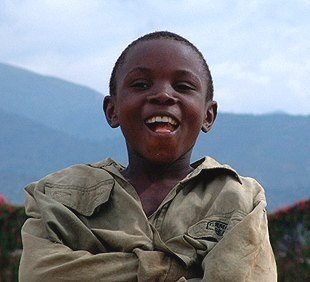
Most important of all, the people are now completely exhausted – neither Hutus (84 percent) nor Tutsis (15 per cent) nor Twas (1 per cent) want one day more of fighting. That is a marked difference from when I visited Burundi four years ago. The Burundians have learned the hard way that war, genocide and other violence only brought grief and devastation on everybody except for a few corrupted politicians and looters (who, as usual, also got rich here through ill-conceived international sanctions hitting only the wrong people). Few people could work with deeper conviction for peace and development after the hell on earth they have gone through.
How to survive 2004 and beyond?

So, what are the immediate challenges in 2004? There is demobilisation and a military that will have to find civilian jobs. During the war years, the army swelled to perhaps 60,000 soldiers; it has to transform into a unified military of maximum 20,000. It desperately needs to secure that demobilised soldiers, returning refugees and the rest of the people have something to eat, something to do, schools to send their kids to and somewhere to get medical treatment.

In 11 months from now, the present transitional government and parliament shall be replaced by new ones through elections. I ask how on earth they will be able to carry through fair, honest and reliable elections on top of all the other problems and without a census and election law. Top level politicians tell me that the country simply must, that it is stipulated in the Arusha Agreement and that even bad elections are better than none.

Another huge issue is that of reconciliation and trust-building. Some tell me that the country should establish a Truth and Reconciliation Commission like that in South Africa. Some tell me that Burundi is different and special and that such a process could do more harm than good. Also, there were simply too many who committed crimes to be given legal processes in court rooms – not to mention that the legal system itself is in ruins. Thus, the only thing that is likely to work constructively seems to be informal, everyday people-to-people, municipality-to-municipality reconciliation and forgiveness.

I met many peace heroes in Burundi. There are excellent, visionary intellectuals; there are devoted, hard-working NGOs; there is an emerging civil society gaining strength and trying with inhumanly small resources to anchor and solidify the elite and the party system’s peace agreement among the millions of destitute. It is common knowledge that this peace agreement leaves very much to be desired. And it is common recognition that there is no faster or better road to the future.

Can the madness return? Where to turn when you want peace aid?

But I am afraid that, if we don’t assist Burundi now, many will be so frustrated that they will likely return to the mountains and resume their fighting and their genocidal policies. That does not have to happen.

If a new genocide happens, you will hear about it. But you won’t hear that we – the “international community” – caused it by not doing what easily could be done. Such is the angle on Africa. It is not fair, it is not objective journalism, and it certainly does not increase the willingness of governments and development agencies to get involved when time is ripe. And the time is ripe now! Not helping Burundi through 2004 could be a recipe for a new hell in Africa.

When countries have natural resources we want or when extremist groups inside a country take to violent methods, various groups in the international community stand ready to provide arms, ammunition, mercenaries, propaganda and media attention. But to whom can countries turn for empathy, assistance and compassion when they struggle to get out of war and maldevelopment? Where shall they turn to obtain peace assistance on their own terms?

Get the priorities right and help make Burundi an Oasis of Peace

Here is an African country that ought to hit our headlines for its struggle towards development and peace. What human folly and what wrong priorities in our world that powerful countries in Europe and the US itself try to create impossible peace where they are not wanted and ignore the places where peace is perfectly possible! The Bush administration spends US $1 billion a week in Iraq without, it seems, winning the hearts of the 24 million Iraqis.

The fact is that it would be very cheap to help Burundi. The UN Consolidated Appeals Process, CAP, calls for US $72 million to meet the immediate humanitarian needs for 2004. The country has an accumulated debt of US $1.2 billion. In global terms, this is peanuts! Of course, true development over the next decade would require much more aid and investment. But the first precondition is that people survive and kids get to school. They will if we help them.

Let’s reward the Burundians because they turned to peace, give them that humanitarian assistance and cancel that debt in full. That would be conflict-management, violence prevention and humanitarianism in one. It would show others that peace pays.

Here is a good story in the making! This is the place where you can win 7 million hearts. This is where people and governments who are serious about their wish to see a better world have a golden opportunity. Let’s work with the Burundians to re-create their desired Oasis of Peace!

© TFF 2004
Peace & future researcher + ‌Art Photographer

Share

Leave a Reply

Your email address will not be published. Required fields are marked *

Related Posts

“En dag som berättigar till fest”, utropade den London-baserade al-Quds al-Arabi efter FN:s eldupphörresolution, “eftersom detta är första gången som Israel accepterar ett FN-beslut från en position som besegrad och inte som segrare”. Att ett arabisk-israeliskt krig för en gångs skull slutat med arabisk seger, är en helt dominerade åsikt i arabiska medier. Al-Quds al-Arabi tillåter sig att drömma om att det israeliska nederlaget skall leda till massflykt från Israel. Men i nästa andetag påminner tidningen om att Israel aldrig brukar genomföra sina internationella åtaganden och varnar för att förlorarna, liksom tidigare, kan hämnas genom att provocera fram inbördeskrig i Libanon. Med tanke på de otaliga massmediala vittnesmålen om det libanesiska folkets eniga motståndskraft förefaller risken för inre stridigheter i det sargade landet just nu liten. Men visst kan man urskilja nyansskillnader i libanesiska tidningar. Vänsterorganet al-Safir uppfattar FN-resolutionen som en komplott i syfte att rädda Israel från ännu större...
A friendly quarrel while we agree that the US sanctions are a weapon of mass destruction and kill more people than wars do. And that we must talk much more about sanctions than we have so far. Jan Oberg, TFF director March 16, 2026 John Mearsheimer recently stated that U.S. sanctions murdered around 38 million people between 1971 and 2021 – see the video below. It is a dramatic figure, and it has spread quickly because it captures, in one sentence, the enormous human cost of modern sanctions. I share his concern about the destructive effects of economic coercion. But the specific number he cites — and the way he attributes it — deserves a friendly academic clarification. The figure comes from a 2023 Lancet Global Health article estimating the mortality effects of unilateral U.S. and EU sanctions over the past half‑century. This is the first point where Mearsheimer’s shorthand diverges from the text: the study...
Jan Oberg May 15, 2026 Go to this Fox News page and scroll the whole way down: President Donald Trump tells the world that his meeting with President Xi Jinping yielded a lot of very concrete political and economic results – of course, only where the Chinese side, according to him, agreed with him. He does not mention the Taiwan issue, but Secretary of State, Marco Rubio, says that it did not feature prominently in their talks and that the US policy on Taiwan has not changed. Then go to China Daily – or Global Times – and you will see that for the Chinese it is framework, principles, structure of cooperation etc. that matters – all embedded in the overall idea of “constructive bilateral relationship of strategic stability.” Nowhere is any concrete agreement or deal – all that Trump refers to – mentioned. At the general level, this gives you insights into the very different social...

Recent Articles

“En dag som berättigar till fest”, utropade den London-baserade al-Quds al-Arabi efter FN:s eldupphörresolution, “eftersom detta är första gången som Israel accepterar ett FN-beslut från en position som besegrad och inte som segrare”. Att ett arabisk-israeliskt krig för en gångs skull slutat med arabisk seger, är en helt dominerade åsikt i arabiska medier. Al-Quds al-Arabi tillåter sig att drömma om att det israeliska nederlaget skall leda till massflykt från Israel. Men i nästa andetag påminner tidningen om att Israel aldrig brukar genomföra sina internationella åtaganden och varnar för att förlorarna, liksom tidigare, kan hämnas genom att provocera fram inbördeskrig i Libanon. Med tanke på de otaliga massmediala vittnesmålen om det libanesiska folkets eniga motståndskraft förefaller risken för inre stridigheter i det sargade landet just nu liten. Men visst kan man urskilja nyansskillnader i libanesiska tidningar. Vänsterorganet al-Safir uppfattar FN-resolutionen som en komplott i syfte att rädda Israel från ännu större...
Greenland – the world’s largest island, a continent of its own with only 57.000 inhabitants. I visited it for the first time in May 2005. I flew across the inland ice to Nuuk, the tiny capital with some 14.000 inhabitants. I was overwhelmed by the pride and kindness of everyone I met as well as by the unique natural beauty. Unfortunately, due to weather conditions during my ten-day stay I could get nowhere else but Nuuk. Fortunately, however, among those I met was Gitte Arvegaard, a Danish lawyer and negotiator employed by the local government, Greenland Home Rule. She turned out to be an enthusiastic photographer with a lot of pictures taken during various trips around Greenland. So this Greeland series is the result of our cooperative effort. We both hope you enjoy it and are stimulated to visit Greenland – about which you may read more here. Finally, if you want to...
 Jan Oberg’s storyof how he met Sir Paul Liverpool – where else to meet Paul McCartney? Paul’s old class mate and TFF Associate, Jonathan Power introduced me to Paul McCartney in Liverpool at an informal reception. It was held at what used to be their school, now the Liverpool Institute for Performing Arts and we were there to celebrate that Jonathan had written Amnesty International’s 40th Anniversary book. This happy event for “righting wrongs and writing songs” gave me an opportunity to meet Paul and tell him about TFF and get straight to the matter: would he consider making a donation in support of our work for peace? While I was probably the only one with such a wish that day, I was certainly not the only one who wanted to shake hands and talk with him. In the last minutes before Paul was to leave, Jonathan brought us together and we got about three...

TFF on Substack

Discover more from TFF Transnational Foundation & Jan Oberg.

Most Popular

“En dag som berättigar till fest”, utropade den London-baserade al-Quds al-Arabi efter FN:s eldupphörresolution, “eftersom detta är första gången som Israel accepterar ett FN-beslut från en position som besegrad och inte som segrare”. Att ett arabisk-israeliskt krig för en gångs skull slutat med arabisk seger, är en helt dominerade åsikt i arabiska medier. Al-Quds al-Arabi tillåter sig att drömma om att det israeliska nederlaget skall leda till massflykt från Israel. Men i nästa andetag påminner tidningen om att Israel aldrig brukar genomföra sina internationella åtaganden och varnar för att förlorarna, liksom tidigare, kan hämnas genom att provocera fram inbördeskrig i Libanon. Med tanke på de otaliga massmediala vittnesmålen om det libanesiska folkets eniga motståndskraft förefaller risken för inre stridigheter i det sargade landet just nu liten. Men visst kan man urskilja nyansskillnader i libanesiska tidningar. Vänsterorganet al-Safir uppfattar FN-resolutionen som en komplott i syfte att rädda Israel från ännu större...
Greenland – the world’s largest island, a continent of its own with only 57.000 inhabitants. I visited it for the first time in May 2005. I flew across the inland ice to Nuuk, the tiny capital with some 14.000 inhabitants. I was overwhelmed by the pride and kindness of everyone I met as well as by the unique natural beauty. Unfortunately, due to weather conditions during my ten-day stay I could get nowhere else but Nuuk. Fortunately, however, among those I met was Gitte Arvegaard, a Danish lawyer and negotiator employed by the local government, Greenland Home Rule. She turned out to be an enthusiastic photographer with a lot of pictures taken during various trips around Greenland. So this Greeland series is the result of our cooperative effort. We both hope you enjoy it and are stimulated to visit Greenland – about which you may read more here. Finally, if you want to...
 Jan Oberg’s storyof how he met Sir Paul Liverpool – where else to meet Paul McCartney? Paul’s old class mate and TFF Associate, Jonathan Power introduced me to Paul McCartney in Liverpool at an informal reception. It was held at what used to be their school, now the Liverpool Institute for Performing Arts and we were there to celebrate that Jonathan had written Amnesty International’s 40th Anniversary book. This happy event for “righting wrongs and writing songs” gave me an opportunity to meet Paul and tell him about TFF and get straight to the matter: would he consider making a donation in support of our work for peace? While I was probably the only one with such a wish that day, I was certainly not the only one who wanted to shake hands and talk with him. In the last minutes before Paul was to leave, Jonathan brought us together and we got about three...
Read More
Imagen-thumbnail-The-Transnational-1
“En dag som berättigar till fest”, utropade den London-baserade al-Quds al-Arabi efter FN:s eldupphörresolution, “eftersom detta är första gången som Israel accepterar ett FN-beslut från en position som besegrad och inte som segrare”. Att ett arabisk-israeliskt krig för en gångs skull slutat med arabisk seger, är en helt dominerade åsikt i arabiska medier. Al-Quds al-Arabi tillåter sig att drömma om att det israeliska nederlaget skall leda till massflykt från Israel. Men i nästa andetag påminner tidningen om att Israel aldrig brukar genomföra sina internationella åtaganden och varnar för att förlorarna, liksom tidigare, kan hämnas genom att provocera fram inbördeskrig i Libanon. Med tanke på de otaliga massmediala vittnesmålen om det libanesiska folkets eniga motståndskraft förefaller risken för inre stridigheter i det sargade landet just nu liten. Men visst kan man urskilja nyansskillnader i libanesiska tidningar. Vänsterorganet al-Safir uppfattar FN-resolutionen som en komplott i syfte att rädda Israel från ännu större...
Greenland – the world’s largest island, a continent of its own with only 57.000 inhabitants. I visited it for the first time in May 2005. I flew across the inland ice to Nuuk, the tiny capital with some 14.000 inhabitants. I was overwhelmed by the pride and kindness of everyone I met as well as by the unique natural beauty. Unfortunately, due to weather conditions during my ten-day stay I could get nowhere else but Nuuk. Fortunately, however, among those I met was Gitte Arvegaard, a Danish lawyer and negotiator employed by the local government, Greenland Home Rule. She turned out to be an enthusiastic photographer with a lot of pictures taken during various trips around Greenland. So this Greeland series is the result of our cooperative effort. We both hope you enjoy it and are stimulated to visit Greenland – about which you may read more here. Finally, if you want to...
p_mccartney_poem
 Jan Oberg’s storyof how he met Sir Paul Liverpool – where else to meet Paul McCartney? Paul’s old class mate and TFF Associate, Jonathan Power introduced me to Paul McCartney in Liverpool at an informal reception. It was held at what used to be their school, now the Liverpool Institute for Performing Arts and we were there to celebrate that Jonathan had written Amnesty International’s 40th Anniversary book. This happy event for “righting wrongs and writing songs” gave me an opportunity to meet Paul and tell him about TFF and get straight to the matter: would he consider making a donation in support of our work for peace? While I was probably the only one with such a wish that day, I was certainly not the only one who wanted to shake hands and talk with him. In the last minutes before Paul was to leave, Jonathan brought us together and we got about three...
Logo-Transnational
1942James Paul McCartney is born in Liverpool on June 18th. 1956Paul writes his first song, I Lost My Little Girl. 1957Paul meets John Lennon at St. Peter’s Church Fete, Woolton, Liverpool. He joins his first group, The Quarrymen and performs in his first gig at The New Clubmoor Hall, Liverpool, on October 18th. 1960Formation of The Beatles, who play residencies in Hamburg and at The Cavern in Liverpool. 1961First Beatles recordings issued in Germany, as the backing group for Tony Sheridan. 1962The first Beatles Parlophone recording, Love Me Do, reaches number 17 in the British charts. 1963The birth of Beatlemania. Please Please Me gives the group their first British Number 1. She Loves You cements their success. Please Please Me and With The Beatles albums released. 1964First triumphant American tour. The Beatles perform at the Royal Command Performance and release their first film, A Hard Day’s Night. Their single I...
Logo-Transnational
  Back to the series “Bujumbura, Burundi”
By JONATHAN POWER August 16, 2000 LONDON – Remember the summer of ’98? In the sweltering, torpid heat of a Roman august, charged with exhaust fumes, the international community gave its overwhelming approval to the establishment of an International Criminal Court that will enable those accused of “crimes against humanity” to be tried and, if convicted, sentenced. Only seven nations opposed or abstained from the motion, including Israel, China, India and the U.S.A. where the Pentagon had successfully waged bureaucratic guerrilla war to undermine the initially sympathetic stance of President Bill Clinton. Two years on we can now see what an epochal event that was. In a the stroke of 120 pens it changed the climate on political thuggery. After numerous half-starts and false starts ever since the Nuremberg and Tokyo trials that convicted the war criminals of the Second World War, the world at last had agreed en masse a common...


