
The irrelevance of liberal Zionism

Frustrated by Israeli settlement expansion, excessive violence, AIPAC maximalism, Netanyahu’s arrogance, Israel’s defiant disregard of international law, various Jewish responses claim to seek a middle ground. Israel is criticized by this loyal opposition, sometimes harshly, although so is the Palestinian Authority, Hamas, and activists around the world. Both sides are deemed responsible in equal measure for the failure to end the conflict.

With such a stance liberal Zionists seek to occupy the high moral ground without ceding political relevance. In contrast, those who believe as I do that Israel poses the main obstacle to achieving a sustainable peace are dismissed by liberal Zionists as either obstructive or unrealistic, and at worst, as anti-Israeli or even anti-Semitic.

Listen to the funding appeals of J Street or read such columnists in the NY Times as Roger Cohen and Thomas Friedman to grasp the approach of liberal Zionism.

These views are made to appear reasonable, and even just, by being set off against such maximalist support for Israel as associated with AIPAC and the U.S. Congress, or in the NY Times context by comparison with the more conservative views of David Brooks (whose son currently serves in the IDF) who published a recent ‘balanced’ column lionizing Netanyahu, “The Age of Bibi” [Jan. 2, 2014].

Of all the deformed reasoning contained in the column, perhaps the most scandalous was comparing Netanyahu to Churchill, and to suggest that his story has the grandeur that bears a resemblance to Shakespeare’s MacBeth, an observation that many would find unflattering. Of all Netanyahu’s qualities remarked upon, Brooks astoundingly finds that “his caution is the most fascinating.” According to Brooks, Netanyahu deserves to be regarded as cautious because he has refrained from attacking Iran despite threatening to do so with bellicose rhetoric.

I would have thought that Netanyahu’s inflammatory threats directed at Iran, especially as combined with covert acts including inserting viruses to disable its nuclear program and assassinating Iranian scientists, would seem reckless enough for most observers. Since Brooks fails to mention the murderous attacks on Gaza, there is no need to reconcile such aggressive behavior with this overall assessment of caution.

At the core of liberal Zionism is the indictment of the Palestinian leadership for “never missing an opportunity to miss an opportunity” to recall the self-serving quip of the Israeli diplomat, Abba Eban.

Roger Cohen would have us believe that prior to the collapse of the April negotiations the U.S. Government had presented a framework agreement, acceptable to Tel Aviv, that the Palestinian Authority irresponsibly and unreasonably rejected. And not only rejected, but the PA behaved in a manner that was provocative, signed some international agreements as if it already was a state. [“Why Israeli-Palestinian Peace Failed,” Dec. 23, 2014]

This spin comes from Netanyahu’s chief negotiator, Tzipi Livni, who is presented by Cohen as the voice of moderation, as the self-proclaimed champion of ‘two states for two peoples.’

Livni who is the leader of a small party called Hatnua, which is joined in coalition with a revamped Labor Party headed by Isaac Herzog, contesting Likud and Netanyahu. Cohen never inquires as to what sort of state she would wish upon the Palestinians, which on the basis of her past, would be thoroughly subjugated to Israeli security demands as well as accommodating the bulk of settlements and settlers while rejecting the rights under international law of Palestinians in relations to refugees.

When Livni was asked by Cohen whether she would suspend Israeli settlement expansion so as to get direct negotiations started once more, she indicated that she would “at least outside the major blocs.” Cohen calls her party ‘centrist,’ which is one way of acknowledging how far Israeli politics have drifted to the right in recent years.

A reading of the leaked documents of the secret negotiations between the Palestinian Authority and Israel represented by Livni showed how disinterested Israel seemed to be in two states for two peoples at that time of far less extensive settlement encroachment, as well as her overt rejection of the relevance of international law to the diplomatic process. [For a collection of the leaked documents showing Livni’s role see Clayton E. Swisher, ed., Palestine Papers: The End of the Road (2011)]

This expresses a second element of liberal Zionism, that despite everything the two state solution is confirmed over and over again as the only path to peace. As such, it should be endlessly activated in accordance with the Oslo formula that keeps the United States in the absurd role of intermediary and continue to insist that any Palestinian reference to rights under international law is an obstacle to peace.

After more than 47 years of occupation and over 20 years of submission to the Oslo approach it would seem that it is past time to issue a certificate of futility, and the failure to do so, is for me a sure sign of either bad faith or extreme denial.

What is baffling is that those like Friedman and Cohen who surely know better play this game that never even raises the concrete question of how to reverse a settlement process that now includes as many as 600,000 settlers many of whom are militantly opposed to any kind of solution to the conflict that challenges their present situation.

Conveniently, also, this liberal advocacy finesses the claims of the four million or so Palestinian refugees, including almost two million that have been confined to miserable refugee camps for decades, some since 1948. How can one possibly imagine a sustainable and just peace emerging from such a blinkered outlook!

Liberal Zionists also oppose as irresponsible and unhelpful all efforts to challenge this framework, especially any call for holding Israel to account under international humanitarian law for its excessive violence. Alternative futures based on the equality of the two peoples, such as some kind of living together within a single political community are dismissed out of hand, either because of colliding with Zionist expectations of a Jewish state or because after decades of hatred any effort at social integration would be bound to fail.

Intriguingly, my experience of many conversations with both Palestinian refugees and Gazans is far more hopeful about peaceful coexistence within shared political space than are the Israelis despite their prosperity, prowess, and far greater security.

In a similar vein, liberal Zionists almost always oppose as counterproductive, activist initiatives taken under the auspice of the BDS Campaign. Their argument is that Israel will never make ‘painful sacrifices’ when put under pressure deemed hostile, and without these, no peace is possible.

What these painful sacrifices might be on the Israeli side are never spelled out, but presumably would include disbanding the isolated settlements and maybe the separation wall, both of which were in any event unlawful. The real sacrifice for Israelis would be to give up the completion of the maximal version of the Zionist project, that of so-called Greater Israel that encompasses the entirety of the alleged biblical entitlement to Palestine.

For the Palestinians in contrast their sacrifice would necessitate renouncing a series of entitlements conferred by international law, pertaining to settlements, refugees, borders, self-determination, sovereignty. In effect, Israel would sacrifice part of its unlawful dominion, while Palestine would relinquish its lawful claims, and the end result would be one of the inequality of the two peoples, not a recipe for a lasting peace.

A final feature of liberal Zionism is to make concessions to the Greater Israel outlook along the following lines:

• Israel should be allowed to control the unlawfully established settlement blocs;
• Israeli security concerns should be met, including by stationing military forces within the West Bank for many ears, while any Palestinian security concerns are treated as irrelevant; • Palestinian refugees would be denied the right to return to their pre-1967 places of residence;
• Jerusalem would remain essentially under Israel’s control;
• No provision would be made to ensure non-discrimination against the 20% Palestine minority living within pre-1967 Israel;
• No acknowledgement would be made of the past injustices flowing from the 1948 dispossession of hundreds of thousands of Palestinians from their place of residence and the destruction of hundreds of Palestinian villages, the catastrophe that befell the Palestinian people, the nakba, nor the recognition that the nakba is a process that has continued to afflict Palestinians to this very moment.

Despite its claim of reasonableness and practicality, the liberal Zionist approach is an increasingly irrelevant presence on the Israeli political horizon, paralleling the decline of the Labor Party and the peace movement in the country, as well as the ascendancy of the Likud and the politics of the extreme right.

The Israeli end game is now overwhelmingly based on unilateralism, either imposing a highly subordinated and circumscribed Palestinian state confined to parts of the West Bank or establishing Greater Israel and giving up any pretense of implementing the formula of two states for two peoples.

The fact that liberal Zionism and the diplomacy of the West largely plays along with the discarded scenario of two states for two peoples is nothing more than subservience to a cruel variant of ‘the politics of delusion.’

The denigration of liberal Zionism is not meant to belittle the effort of Jews as Jews to find a just and sustainable solution for both peoples. I strongly support such organizations as Jewish Voices for Peace and Middle East Children’s Alliance, and hail the contributions of Noam Chomsky, Norman Finkelstein, Ilan Pappe, and many others to the struggle for Palestinian empowerment and emancipation.

Fortunately, Palestinian resistance will likely stymie the two variants of the Israeli end game mentioned above, but much suffering is almost certain to ensue before sufficient momentum builds within Israel and throughout the world for living together on the basis of equality and even solidarity, accompanied by the necessary acknowledgement of past injustices via some kind of truth commission mechanism. After such knowledge, anything will be possible!
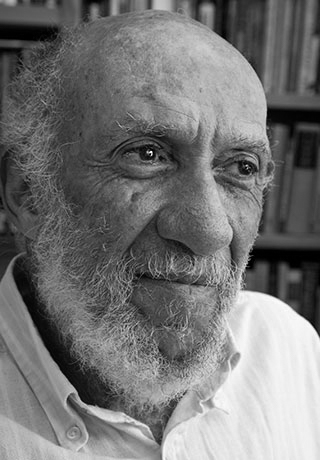

Professor Falk became an adviser to TFF when it was established in 1985.

Share

Leave a Reply

Your email address will not be published. Required fields are marked *

Related Posts

“En dag som berättigar till fest”, utropade den London-baserade al-Quds al-Arabi efter FN:s eldupphörresolution, “eftersom detta är första gången som Israel accepterar ett FN-beslut från en position som besegrad och inte som segrare”. Att ett arabisk-israeliskt krig för en gångs skull slutat med arabisk seger, är en helt dominerade åsikt i arabiska medier. Al-Quds al-Arabi tillåter sig att drömma om att det israeliska nederlaget skall leda till massflykt från Israel. Men i nästa andetag påminner tidningen om att Israel aldrig brukar genomföra sina internationella åtaganden och varnar för att förlorarna, liksom tidigare, kan hämnas genom att provocera fram inbördeskrig i Libanon. Med tanke på de otaliga massmediala vittnesmålen om det libanesiska folkets eniga motståndskraft förefaller risken för inre stridigheter i det sargade landet just nu liten. Men visst kan man urskilja nyansskillnader i libanesiska tidningar. Vänsterorganet al-Safir uppfattar FN-resolutionen som en komplott i syfte att rädda Israel från ännu större...
A donors’ conference, co-sponsered by the Burundian government, the Belgian government and UNDP will be held in Brussels January 12-13, 2004. This PressInfo offers a perspective on its urgency. See also TFF’s new Burundi Forum. Imagine for a moment that politics is about goodness and generosity. Where could a few million dollars of government aid and a few civil society organisations – guaranteed – win the hearts of extremely poor millions who want peace and already work hard to achieve it after 10 years of war and genocide? The answer is Burundi, the heart-shaped country in the heart of Africa. Burundi makes a good story from Africa. But what does the world know about Burundi, its problems and struggles? Burundi’s tough reality Here are the basic facts. Burundi’s population is about 7 million and it is number 171 out of the 175 countries on the UNDP’s human development index. Their life...
This is not another geopolitical commentary on the Arctic. It is a visionary peace proposal that can save the region from militarised rivalry and ecological ruin. A blueprint for shared security, sustainable development, and human dignity — benefitting Greenland, the Arctic, and the rest of us. Jan Oberg TFF director Lund, Sweden, February 17, 2026 I. Four Principles for a New Arctic Vision The Arctic is often framed as a cold arena of rivalry — a place where great powers test each other’s resolve. But this worldview is outdated, unimaginative, and ultimately self‑defeating. The Arctic is not a vacuum waiting to be militarised; it is a living region, a climate stabiliser, and a cultural homeland whose future will shape the future of humanity. If we begin from that understanding, a far more rational Arctic order becomes possible — one that is peaceful, cooperative, and centred on the people who actually live there. This vision rests...

Recent Articles

“En dag som berättigar till fest”, utropade den London-baserade al-Quds al-Arabi efter FN:s eldupphörresolution, “eftersom detta är första gången som Israel accepterar ett FN-beslut från en position som besegrad och inte som segrare”. Att ett arabisk-israeliskt krig för en gångs skull slutat med arabisk seger, är en helt dominerade åsikt i arabiska medier. Al-Quds al-Arabi tillåter sig att drömma om att det israeliska nederlaget skall leda till massflykt från Israel. Men i nästa andetag påminner tidningen om att Israel aldrig brukar genomföra sina internationella åtaganden och varnar för att förlorarna, liksom tidigare, kan hämnas genom att provocera fram inbördeskrig i Libanon. Med tanke på de otaliga massmediala vittnesmålen om det libanesiska folkets eniga motståndskraft förefaller risken för inre stridigheter i det sargade landet just nu liten. Men visst kan man urskilja nyansskillnader i libanesiska tidningar. Vänsterorganet al-Safir uppfattar FN-resolutionen som en komplott i syfte att rädda Israel från ännu större...
Greenland – the world’s largest island, a continent of its own with only 57.000 inhabitants. I visited it for the first time in May 2005. I flew across the inland ice to Nuuk, the tiny capital with some 14.000 inhabitants. I was overwhelmed by the pride and kindness of everyone I met as well as by the unique natural beauty. Unfortunately, due to weather conditions during my ten-day stay I could get nowhere else but Nuuk. Fortunately, however, among those I met was Gitte Arvegaard, a Danish lawyer and negotiator employed by the local government, Greenland Home Rule. She turned out to be an enthusiastic photographer with a lot of pictures taken during various trips around Greenland. So this Greeland series is the result of our cooperative effort. We both hope you enjoy it and are stimulated to visit Greenland – about which you may read more here. Finally, if you want to...
 Jan Oberg’s storyof how he met Sir Paul Liverpool – where else to meet Paul McCartney? Paul’s old class mate and TFF Associate, Jonathan Power introduced me to Paul McCartney in Liverpool at an informal reception. It was held at what used to be their school, now the Liverpool Institute for Performing Arts and we were there to celebrate that Jonathan had written Amnesty International’s 40th Anniversary book. This happy event for “righting wrongs and writing songs” gave me an opportunity to meet Paul and tell him about TFF and get straight to the matter: would he consider making a donation in support of our work for peace? While I was probably the only one with such a wish that day, I was certainly not the only one who wanted to shake hands and talk with him. In the last minutes before Paul was to leave, Jonathan brought us together and we got about three...

TFF on Substack

Discover more from TFF Transnational Foundation & Jan Oberg.

Most Popular

“En dag som berättigar till fest”, utropade den London-baserade al-Quds al-Arabi efter FN:s eldupphörresolution, “eftersom detta är första gången som Israel accepterar ett FN-beslut från en position som besegrad och inte som segrare”. Att ett arabisk-israeliskt krig för en gångs skull slutat med arabisk seger, är en helt dominerade åsikt i arabiska medier. Al-Quds al-Arabi tillåter sig att drömma om att det israeliska nederlaget skall leda till massflykt från Israel. Men i nästa andetag påminner tidningen om att Israel aldrig brukar genomföra sina internationella åtaganden och varnar för att förlorarna, liksom tidigare, kan hämnas genom att provocera fram inbördeskrig i Libanon. Med tanke på de otaliga massmediala vittnesmålen om det libanesiska folkets eniga motståndskraft förefaller risken för inre stridigheter i det sargade landet just nu liten. Men visst kan man urskilja nyansskillnader i libanesiska tidningar. Vänsterorganet al-Safir uppfattar FN-resolutionen som en komplott i syfte att rädda Israel från ännu större...
Greenland – the world’s largest island, a continent of its own with only 57.000 inhabitants. I visited it for the first time in May 2005. I flew across the inland ice to Nuuk, the tiny capital with some 14.000 inhabitants. I was overwhelmed by the pride and kindness of everyone I met as well as by the unique natural beauty. Unfortunately, due to weather conditions during my ten-day stay I could get nowhere else but Nuuk. Fortunately, however, among those I met was Gitte Arvegaard, a Danish lawyer and negotiator employed by the local government, Greenland Home Rule. She turned out to be an enthusiastic photographer with a lot of pictures taken during various trips around Greenland. So this Greeland series is the result of our cooperative effort. We both hope you enjoy it and are stimulated to visit Greenland – about which you may read more here. Finally, if you want to...
 Jan Oberg’s storyof how he met Sir Paul Liverpool – where else to meet Paul McCartney? Paul’s old class mate and TFF Associate, Jonathan Power introduced me to Paul McCartney in Liverpool at an informal reception. It was held at what used to be their school, now the Liverpool Institute for Performing Arts and we were there to celebrate that Jonathan had written Amnesty International’s 40th Anniversary book. This happy event for “righting wrongs and writing songs” gave me an opportunity to meet Paul and tell him about TFF and get straight to the matter: would he consider making a donation in support of our work for peace? While I was probably the only one with such a wish that day, I was certainly not the only one who wanted to shake hands and talk with him. In the last minutes before Paul was to leave, Jonathan brought us together and we got about three...
Read More
Imagen-thumbnail-The-Transnational-1
“En dag som berättigar till fest”, utropade den London-baserade al-Quds al-Arabi efter FN:s eldupphörresolution, “eftersom detta är första gången som Israel accepterar ett FN-beslut från en position som besegrad och inte som segrare”. Att ett arabisk-israeliskt krig för en gångs skull slutat med arabisk seger, är en helt dominerade åsikt i arabiska medier. Al-Quds al-Arabi tillåter sig att drömma om att det israeliska nederlaget skall leda till massflykt från Israel. Men i nästa andetag påminner tidningen om att Israel aldrig brukar genomföra sina internationella åtaganden och varnar för att förlorarna, liksom tidigare, kan hämnas genom att provocera fram inbördeskrig i Libanon. Med tanke på de otaliga massmediala vittnesmålen om det libanesiska folkets eniga motståndskraft förefaller risken för inre stridigheter i det sargade landet just nu liten. Men visst kan man urskilja nyansskillnader i libanesiska tidningar. Vänsterorganet al-Safir uppfattar FN-resolutionen som en komplott i syfte att rädda Israel från ännu större...
Greenland – the world’s largest island, a continent of its own with only 57.000 inhabitants. I visited it for the first time in May 2005. I flew across the inland ice to Nuuk, the tiny capital with some 14.000 inhabitants. I was overwhelmed by the pride and kindness of everyone I met as well as by the unique natural beauty. Unfortunately, due to weather conditions during my ten-day stay I could get nowhere else but Nuuk. Fortunately, however, among those I met was Gitte Arvegaard, a Danish lawyer and negotiator employed by the local government, Greenland Home Rule. She turned out to be an enthusiastic photographer with a lot of pictures taken during various trips around Greenland. So this Greeland series is the result of our cooperative effort. We both hope you enjoy it and are stimulated to visit Greenland – about which you may read more here. Finally, if you want to...
p_mccartney_poem
 Jan Oberg’s storyof how he met Sir Paul Liverpool – where else to meet Paul McCartney? Paul’s old class mate and TFF Associate, Jonathan Power introduced me to Paul McCartney in Liverpool at an informal reception. It was held at what used to be their school, now the Liverpool Institute for Performing Arts and we were there to celebrate that Jonathan had written Amnesty International’s 40th Anniversary book. This happy event for “righting wrongs and writing songs” gave me an opportunity to meet Paul and tell him about TFF and get straight to the matter: would he consider making a donation in support of our work for peace? While I was probably the only one with such a wish that day, I was certainly not the only one who wanted to shake hands and talk with him. In the last minutes before Paul was to leave, Jonathan brought us together and we got about three...
Logo-Transnational
1942James Paul McCartney is born in Liverpool on June 18th. 1956Paul writes his first song, I Lost My Little Girl. 1957Paul meets John Lennon at St. Peter’s Church Fete, Woolton, Liverpool. He joins his first group, The Quarrymen and performs in his first gig at The New Clubmoor Hall, Liverpool, on October 18th. 1960Formation of The Beatles, who play residencies in Hamburg and at The Cavern in Liverpool. 1961First Beatles recordings issued in Germany, as the backing group for Tony Sheridan. 1962The first Beatles Parlophone recording, Love Me Do, reaches number 17 in the British charts. 1963The birth of Beatlemania. Please Please Me gives the group their first British Number 1. She Loves You cements their success. Please Please Me and With The Beatles albums released. 1964First triumphant American tour. The Beatles perform at the Royal Command Performance and release their first film, A Hard Day’s Night. Their single I...
Logo-Transnational
  Back to the series “Bujumbura, Burundi”
By JONATHAN POWER August 16, 2000 LONDON – Remember the summer of ’98? In the sweltering, torpid heat of a Roman august, charged with exhaust fumes, the international community gave its overwhelming approval to the establishment of an International Criminal Court that will enable those accused of “crimes against humanity” to be tried and, if convicted, sentenced. Only seven nations opposed or abstained from the motion, including Israel, China, India and the U.S.A. where the Pentagon had successfully waged bureaucratic guerrilla war to undermine the initially sympathetic stance of President Bill Clinton. Two years on we can now see what an epochal event that was. In a the stroke of 120 pens it changed the climate on political thuggery. After numerous half-starts and false starts ever since the Nuremberg and Tokyo trials that convicted the war criminals of the Second World War, the world at last had agreed en masse a common...

