
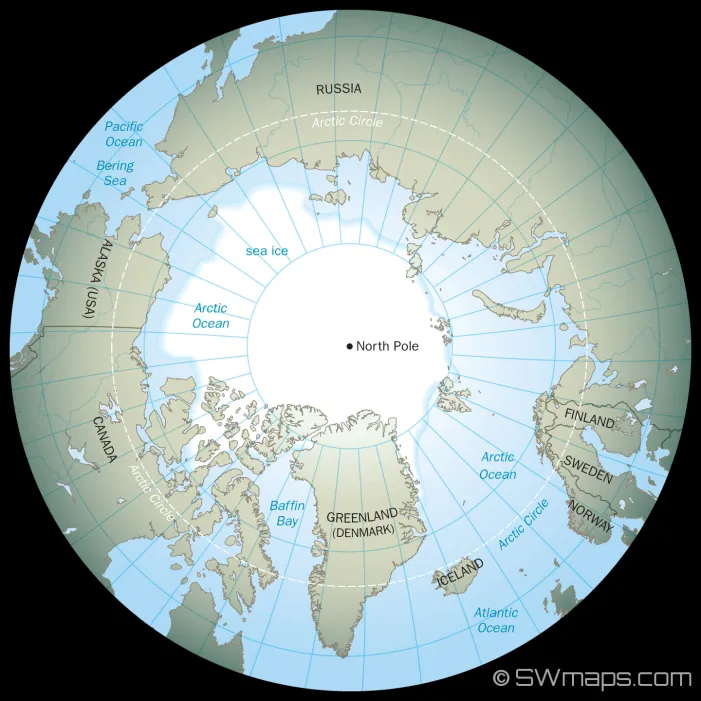
A New Perspective and Blueprint: A Demilitarised Arctic for the Common Good — and Why It Is Rational

This is not another geopolitical commentary on the Arctic. It is a visionary peace proposal that can save the region from militarised rivalry and ecological ruin. A blueprint for shared security, sustainable development, and human dignity — benefitting Greenland, the Arctic, and the rest of us.

Jan Oberg

TFF director

Lund, Sweden, February 17, 2026

I. Four Principles for a New Arctic Vision

The Arctic is often framed as a cold arena of rivalry — a place where great powers test each other’s resolve. But this worldview is outdated, unimaginative, and ultimately self‑defeating. The Arctic is not a vacuum waiting to be militarised; it is a living region, a climate stabiliser, and a cultural homeland whose future will shape the future of humanity. If we begin from that understanding, a far more rational Arctic order becomes possible — one that is peaceful, cooperative, and centred on the people who actually live there.

This vision rests on four practical principles. None of them is utopian. All of them are grounded in common sense, human dignity, and long‑term strategic thinking.

1. The Greenlanders Must Stand at the Centre of Any Arctic Vision

Greenland is not a strategic prize; it is a society with its own civilisation, its own knowledge systems, and its own right to shape the region’s future. Any Arctic governance model that sidelines the Greenlanders is doomed to fail. Their ecological knowledge, cultural continuity, and lived experience of the ice make them indispensable partners in any sustainable future. This is not naïve — it is the only realistic foundation for legitimate Arctic governance.

Empowerment becomes the most effective form of legitimacy.

2. Cooperation Reduces the Need for Militarisation — and Saves Enormous Resources

Militarisation in the Arctic is not a sign of strength; it is a symptom of distrust. Russia, with by far the longest Arctic coastline, is an indispensable actor. China, though not an Arctic state, is a global scientific and economic presence whose engagement in the region is inevitable. The United States, the Nordic countries, Canada, and others all have legitimate interests. But legitimacy can’t be based on rivalry. Interests do not mean intimidation. And influence isn’t about militarisation. There are more intelligent approaches.

Ice‑capable destroyers, nuclear submarines, hardened bases, and satellite surveillance systems are among the most expensive military assets on Earth. Every krone, dollar, ruble, or yuan spent on Arctic militarisation is money not spent on climate adaptation, education, health, renewable energy, or the wellbeing of Arctic communities. When states share data, coordinate policies, and build joint institutions, the perceived need for military posturing naturally declines — and so do the costs. This is not naïve — it is an intelligent, sustainable strategy.

Cooperation becomes the most effective — and the most economical — form of disarmament.

3. Sustainable Use of Arctic Resources Should Benefit Humanity, Not Only the Armed and Powerful

The Arctic’s minerals, fisheries, shipping routes, and scientific knowledge are globally significant. To treat them as spoils for those with the largest fleets is not only unjust; it is irrational. A civilised international order uses resources wisely, protects fragile ecosystems, and distributes benefits fairly. Sustainable development is a planetary necessity – that militarist power politics makes impossible. And when done cooperatively, it can serve all of humanity, not just those who can project force. Those who now think “oh, how naive” have no idea about how to otherwise prevent ecological collapse and geopolitical conflict.

Sustainability becomes the most effective form of prosperity.

4. The United Nations Should Serve as Custodian of Peace and Shared Stewardship

The Arctic is too important — ecologically, climatically, culturally — to be governed by big but not ‘great’ powers’ fragmented national interests. The United Nations provides the legitimacy, continuity, and normative framework needed to anchor a peaceful Arctic order. A UN‑recognised Arctic Peace and Sustainability Zone would embed demilitarisation, indigenous rights, scientific cooperation, and sustainable development in a global framework that transcends short‑term tensions. Shared stewardship becomes the most effective form of security.

If these four principles are accepted — and they are neither unrealistic nor naive — then a new question emerges: What would an Arctic governance system look like if it were built on legitimacy, cooperation, sustainability, and shared stewardship? The answer is a blueprint for a demilitarised Arctic, jointly governed, scientifically grounded, ecologically protected, and centred on the people who call it home.

II. A Practical Blueprint for a Peaceful Arctic Future

1. A Demilitarised Arctic: Security Through Cooperation

A peaceful Arctic begins with the establishment of an Arctic Demilitarised Zone — a region where military assets, bases, and exercises are gradually phased out and replaced with civilian, scientific, and humanitarian functions. This does not diminish national sovereignty; it simply recognises that the Arctic’s most pressing threats are not military in nature. Melting ice, extreme weather, collapsing ecosystems, and unpredictable sea routes cannot be deterred by submarines or fighter jets.

A demilitarised Arctic would reduce tensions between major powers, prevent accidents and escalation, and protect fragile ecosystems. It would also free enormous financial resources currently tied up in polar‑ready military systems. Verification would rely on satellite monitoring, open data, and periodic inspections — ideally under UN auspices. The Arctic would become a symbol of what cooperative security looks like in the 21st century: not the absence of sovereignty, but the presence of trust.

The US insistence on a ‘Golden Dome’ – and Greenland as vital for the US to control – is one big destabiliser because it aims at enabling the US to destroy Russia or China and (hope to) shoot down retaliatory second-strike missiles from either. This lowers the threshold for the US starting a nuclear war because its decision-makers may hope it can start and win a nuclear war without cost. The solution to this – terror-based – philosophy is a new agreement between the US and Russia about reducing and finally abolishing nuclear weapons. It is not to further militarise Greenland.

2. A New Governance Architecture: The Arctic Cooperation Council

The Arctic Council, while valuable, is no longer sufficient. It was never designed to handle today’s geopolitical tensions or the accelerating climate crisis. A new Arctic Cooperation Council would build on the strengths of the existing Council while correcting its weaknesses. It would be inclusive, transparent, and capable of making binding decisions in areas where cooperation is essential.

Greenlandic authorities and indigenous peoples would be full co‑decision makers. Arctic states, observer states, and scientific organisations would participate in a structure that uses qualified majority voting, clear mandates, and indigenous veto rights on cultural and ecological matters. Its remit would include environmental protection, sustainable resource management, shipping regulation, scientific cooperation, emergency response, and dealing with conflict to prevent violence. This is not a supranational authority; it is a place where states and peoples coordinate policies, resolve disputes, and build trust.

3. Greenland as a Special Responsibility Zone

Greenland is the moral and strategic heart of the Arctic. Its people have endured centuries of colonialism, strategic exploitation, and geopolitical pressure. A peaceful Arctic future must therefore include a Greenland Partnership Compact, anchored in the UN system, that guarantees full respect for Greenlandic self‑determination and protects the island from coercive diplomacy. The Compact would ensure that Greenland retains priority access to revenues from local resources and receives sustained investment in education, health, cultural preservation, and sustainable infrastructure.

Greenland would also host a UN Arctic Peace Centre — a hub for research, diplomacy, and Indigenous knowledge. This approach recognises that Greenland is not a passive object of international interest but an active subject with its own aspirations.

4. Sustainable Resource Use: A Civilised Alternative to Extraction Rivalry

The Arctic’s resources must be used wisely, sparingly, and for the benefit of all. This requires strict ecological thresholds, Indigenous consent, transparent impact assessments, and shared revenue mechanisms. It requires clean shipping corridors, slow‑steaming regulations, and the designation of large protected areas — Arctic Peace Parks — that safeguard biodiversity and cultural heritage. This is responsible development, the only kind that makes sense in a region whose ecological health affects the entire planet.

5. The UN as Custodian: Completing UNCLOS

The United Nations would anchor the entire system through a suite of new instruments: a UN Arctic Demilitarisation Treaty, a UN Arctic Commons Charter, a UN‑Greenland Partnership Compact, a UN Sustainable Resource Convention for the Arctic, and a UN Arctic Mobility and Knowledge Accord.

These instruments would not replace the UN Convention on the Law of the Sea (UNCLOS). On the contrary, they would complete it. UNCLOS provides the legal foundation for maritime zones, navigation rights, and resource claims. But it does not address demilitarisation, Indigenous rights, cooperative governance, or sustainable development. The UN framework proposed here would fill those gaps while fully respecting UNCLOS principles. In this way, the Arctic becomes not a legal vacuum but a region where international law is strengthened, clarified, and modernised.

III. Conclusion: A More Rational, Civilised, and Visionary Arctic Future

The Arctic is not destined to become a militarised arena of suspicion and strategic posturing. That path is simply intellectually lazy and unimaginative. What this blueprint demonstrates is that a different Arctic future is not only possible but profoundly more rational. It is more cost‑effective, more stabilising, more respectful of the people who live there, and far more beneficial to humanity than anything conceived through the narrow lens of transactional geopolitics.

This vision recognises the realities of the 21st century. Russia’s vast Arctic coastline makes it indispensable. China’s scientific and economic presence makes it inevitable. The United States, the Nordic countries, Canada, and others all have legitimate interests.

This is not naïve. What is naïve is believing that more bases, more submarines, and more strategic signalling will somehow produce peace, development and cooperation – all of which are dealy needed. What is naïve is assuming that the Arctic can be militarised without consequence, or that the climate crisis can be managed through deterrence.

What is naïve is imagining that the future can be secured by repeating the – bad – habits of the past.

Politics, at its best, is the art of imagining what does not yet exist and then building the institutions that make it real. It is the ability to include others in a shared horizon of development and security. It is the courage to say: we can do better than rivalry, better than fear, better than the logic of the strongest.

This blueprint is an invitation to return to that deeper meaning of politics—the politics of vision, responsibility, and common purpose—of thinking globally and locally instead of only nationally.

And it is no coincidence that such a proposal arises from the traditions of peace research and future studies. These fields have always insisted that security is not the absence of war but the presence of cooperation about the realisation of society’s potentials. That the future is not predetermined but shaped by choices; that humanity advances when it replaces domination with dialogue and competition with creativity.

The Arctic, perhaps more than any other region, calls for this kind of thinking — thinking that is rigorous, long‑term, interdisciplinary, and grounded in respect for the lived realities of local communities. How else to develop peace and security?

The question is not whether this vision is too ambitious. The Arctic and the world can not afford anything less. A militarised Arctic offers only instability, resource waste, and ecological destruction. All involved ‘big’ powers must rethink and think out of their common militarist box.

A cooperative, demilitarised, UN‑anchored Arctic offers stability, sustainability, and shared benefit for us all. The Arctic is a brilliant opportunity to think in new ways and shape a more civilised future. There Are Many Alternatives (TAMA), and this proposal is not the only one. But the present bullying build-up to visionless raw exploitation with military power projection and nuclearism, however, can not be one of them.

The world needs visions, images of a better future and constructive-creative thinking to realise that better world. TFF welcomes your constructive ideas and visions, because we cannot drive toward a better, more desirable place with our eyes fixed on the rearview mirror.

Peace & future researcher + ‌Art Photographer

Share

Leave a Reply

Your email address will not be published. Required fields are marked *

Related Posts

Jan Oberg February 19, 2026 What a thrill to be interviewed by former British diplomat Ian Proud! Don’t waste a minute: acquaint yourself with him here on his homepage, which he elegantly calls “Proud Diplomat.” Notice also his book, A Misfit In Moscow. Ian is, of course, also on Substack, where he calls himself The Peace Monger, and recently he set up his own PeaceMonger Channel on YouTube. For once, I was not interviewed as if I were a military geopolitical expert, where I normally have to twist the whole thing in the direction of peace. No, we both had a focus on peace – why it has been disappeared by research, politics and the media, but also what can be done to shape a more peaceful future for us all. One idea we came up with was that of connecting people through citizens diplomacy – in an era where more or less authoritarian leaders meet frequently and confirm each other as members...
PressInfo # 141, December 21, 2001It’s time to prepare reconciliation between Albanians and Serbs PressInfo # 140, December 14, 2001Ibrahim Rugova’s decade-long leadership in Kosovo/a PressInfo # 139, 11. december, 2001En god nyhet: Jugoslaviens Sannings- och försoningskommission PressInfo # 139, 11. december, 2001Gode nyheder: Jugoslaviens Sandheds- og Forsoningskommission PressInfo # 139, December 11, 2001Good news: Yugoslavia’s Truth and Reconciliation Commission PressInfo # 138, November 8, 2001TFF co-founder PhD with thesis about young people with roots in other cultures PressInfo # 138, November 8, 2001TFF:s medstiftare doktor på avhandling om unga med ursprung i andra kulturer PressInfo # 137, October 17, 2001A new Marshall Plan: Advancing human security and controlling terrorism PressInfo # 136, October 15, 2001The UN and Annan really deserve it PressInfo # 135, October 10, 2001Preventing a terrorist mushroom cloud PressInfo # 134, 17 oktober, 2001Sverige og 11. september PressInfo # 134, October 9, 2001Sweden and September 11...
Peace is promoted by constructive proposals and dialogue Four preceding PressInfos have expressed concern over — and criticised — the ongoing, militarisation of the EU. Some will say: but there are no alternatives. We believe that there are always alternatives, that democracies are characterised by alternatives and choice, and that openly discussed alternatives will improve the quality and legitimacy of society’s decision–making. In addition, it is an intellectual and moral challenge to not only criticise but also be constructive. If we only tell people that we think they are wrong, they are not likely to listen. However, if we say: what are your views on this set of ideas and steps? — we may sometimes engage them in dialogue and sow a seed. Most people in power circles live their daily lives in in a time frame and a social space where certain ideas, viewpoints and concepts are just not...

Recent Articles

Jan Oberg February 19, 2026 What a thrill to be interviewed by former British diplomat Ian Proud! Don’t waste a minute: acquaint yourself with him here on his homepage, which he elegantly calls “Proud Diplomat.” Notice also his book, A Misfit In Moscow. Ian is, of course, also on Substack, where he calls himself The Peace Monger, and recently he set up his own PeaceMonger Channel on YouTube. For once, I was not interviewed as if I were a military geopolitical expert, where I normally have to twist the whole thing in the direction of peace. No, we both had a focus on peace – why it has been disappeared by research, politics and the media, but also what can be done to shape a more peaceful future for us all. One idea we came up with was that of connecting people through citizens diplomacy – in an era where more or less authoritarian leaders meet frequently and confirm each other as members...
This is not another geopolitical commentary on the Arctic. It is a visionary peace proposal that can save the region from militarised rivalry and ecological ruin. A blueprint for shared security, sustainable development, and human dignity — benefitting Greenland, the Arctic, and the rest of us. Jan Oberg TFF director Lund, Sweden, February 17, 2026 I. Four Principles for a New Arctic Vision The Arctic is often framed as a cold arena of rivalry — a place where great powers test each other’s resolve. But this worldview is outdated, unimaginative, and ultimately self‑defeating. The Arctic is not a vacuum waiting to be militarised; it is a living region, a climate stabiliser, and a cultural homeland whose future will shape the future of humanity. If we begin from that understanding, a far more rational Arctic order becomes possible — one that is peaceful, cooperative, and centred on the people who actually live there. This vision rests...
PressInfo # 141, December 21, 2001It’s time to prepare reconciliation between Albanians and Serbs PressInfo # 140, December 14, 2001Ibrahim Rugova’s decade-long leadership in Kosovo/a PressInfo # 139, 11. december, 2001En god nyhet: Jugoslaviens Sannings- och försoningskommission PressInfo # 139, 11. december, 2001Gode nyheder: Jugoslaviens Sandheds- og Forsoningskommission PressInfo # 139, December 11, 2001Good news: Yugoslavia’s Truth and Reconciliation Commission PressInfo # 138, November 8, 2001TFF co-founder PhD with thesis about young people with roots in other cultures PressInfo # 138, November 8, 2001TFF:s medstiftare doktor på avhandling om unga med ursprung i andra kulturer PressInfo # 137, October 17, 2001A new Marshall Plan: Advancing human security and controlling terrorism PressInfo # 136, October 15, 2001The UN and Annan really deserve it PressInfo # 135, October 10, 2001Preventing a terrorist mushroom cloud PressInfo # 134, 17 oktober, 2001Sverige og 11. september PressInfo # 134, October 9, 2001Sweden and September 11...

TFF on Substack

Discover more from TFF Transnational Foundation & Jan Oberg.

Most Popular

Jan Oberg February 19, 2026 What a thrill to be interviewed by former British diplomat Ian Proud! Don’t waste a minute: acquaint yourself with him here on his homepage, which he elegantly calls “Proud Diplomat.” Notice also his book, A Misfit In Moscow. Ian is, of course, also on Substack, where he calls himself The Peace Monger, and recently he set up his own PeaceMonger Channel on YouTube. For once, I was not interviewed as if I were a military geopolitical expert, where I normally have to twist the whole thing in the direction of peace. No, we both had a focus on peace – why it has been disappeared by research, politics and the media, but also what can be done to shape a more peaceful future for us all. One idea we came up with was that of connecting people through citizens diplomacy – in an era where more or less authoritarian leaders meet frequently and confirm each other as members...
This is not another geopolitical commentary on the Arctic. It is a visionary peace proposal that can save the region from militarised rivalry and ecological ruin. A blueprint for shared security, sustainable development, and human dignity — benefitting Greenland, the Arctic, and the rest of us. Jan Oberg TFF director Lund, Sweden, February 17, 2026 I. Four Principles for a New Arctic Vision The Arctic is often framed as a cold arena of rivalry — a place where great powers test each other’s resolve. But this worldview is outdated, unimaginative, and ultimately self‑defeating. The Arctic is not a vacuum waiting to be militarised; it is a living region, a climate stabiliser, and a cultural homeland whose future will shape the future of humanity. If we begin from that understanding, a far more rational Arctic order becomes possible — one that is peaceful, cooperative, and centred on the people who actually live there. This vision rests...
PressInfo # 141, December 21, 2001It’s time to prepare reconciliation between Albanians and Serbs PressInfo # 140, December 14, 2001Ibrahim Rugova’s decade-long leadership in Kosovo/a PressInfo # 139, 11. december, 2001En god nyhet: Jugoslaviens Sannings- och försoningskommission PressInfo # 139, 11. december, 2001Gode nyheder: Jugoslaviens Sandheds- og Forsoningskommission PressInfo # 139, December 11, 2001Good news: Yugoslavia’s Truth and Reconciliation Commission PressInfo # 138, November 8, 2001TFF co-founder PhD with thesis about young people with roots in other cultures PressInfo # 138, November 8, 2001TFF:s medstiftare doktor på avhandling om unga med ursprung i andra kulturer PressInfo # 137, October 17, 2001A new Marshall Plan: Advancing human security and controlling terrorism PressInfo # 136, October 15, 2001The UN and Annan really deserve it PressInfo # 135, October 10, 2001Preventing a terrorist mushroom cloud PressInfo # 134, 17 oktober, 2001Sverige og 11. september PressInfo # 134, October 9, 2001Sweden and September 11...
Read More
Jan Oberg February 19, 2026 What a thrill to be interviewed by former British diplomat Ian Proud! Don’t waste a minute: acquaint yourself with him here on his homepage, which he elegantly calls “Proud Diplomat.” Notice also his book, A Misfit In Moscow. Ian is, of course, also on Substack, where he calls himself The Peace Monger, and recently he set up his own PeaceMonger Channel on YouTube. For once, I was not interviewed as if I were a military geopolitical expert, where I normally have to twist the whole thing in the direction of peace. No, we both had a focus on peace – why it has been disappeared by research, politics and the media, but also what can be done to shape a more peaceful future for us all. One idea we came up with was that of connecting people through citizens diplomacy – in an era where more or less authoritarian leaders meet frequently and confirm each other as members...
Imagen-thumbnail-The-Transnational-1
PressInfo # 141, December 21, 2001It’s time to prepare reconciliation between Albanians and Serbs PressInfo # 140, December 14, 2001Ibrahim Rugova’s decade-long leadership in Kosovo/a PressInfo # 139, 11. december, 2001En god nyhet: Jugoslaviens Sannings- och försoningskommission PressInfo # 139, 11. december, 2001Gode nyheder: Jugoslaviens Sandheds- og Forsoningskommission PressInfo # 139, December 11, 2001Good news: Yugoslavia’s Truth and Reconciliation Commission PressInfo # 138, November 8, 2001TFF co-founder PhD with thesis about young people with roots in other cultures PressInfo # 138, November 8, 2001TFF:s medstiftare doktor på avhandling om unga med ursprung i andra kulturer PressInfo # 137, October 17, 2001A new Marshall Plan: Advancing human security and controlling terrorism PressInfo # 136, October 15, 2001The UN and Annan really deserve it PressInfo # 135, October 10, 2001Preventing a terrorist mushroom cloud PressInfo # 134, 17 oktober, 2001Sverige og 11. september PressInfo # 134, October 9, 2001Sweden and September 11...
Imagen-thumbnail-The-Transnational-1
Peace is promoted by constructive proposals and dialogue Four preceding PressInfos have expressed concern over — and criticised — the ongoing, militarisation of the EU. Some will say: but there are no alternatives. We believe that there are always alternatives, that democracies are characterised by alternatives and choice, and that openly discussed alternatives will improve the quality and legitimacy of society’s decision–making. In addition, it is an intellectual and moral challenge to not only criticise but also be constructive. If we only tell people that we think they are wrong, they are not likely to listen. However, if we say: what are your views on this set of ideas and steps? — we may sometimes engage them in dialogue and sow a seed. Most people in power circles live their daily lives in in a time frame and a social space where certain ideas, viewpoints and concepts are just not...
Imagen-thumbnail-The-Transnational-1
Photos © TFF 2000 Read PressInfo 90 “Lift the Sanctions and Bring More Aid to Yugoslavia” See Pictures from Belgrade © TFF 2000 Please reprint, copy, archive, quote or re-post this item, but please retain the source.
Imagen-thumbnail-The-Transnational-1
Av FRANK SØHOLM GREVIL 16 augusti 2004  Vi er nu nået til tredje akt i det absurde teaterstykke, der i analogi med de store skueprocesser i Moskva 1936-38 er blevet døbt ‘Grevil-sagen’. Første akt bestod i min anonyme fremlæggelse af egenhændigt nedklassificerede rapporter i Berlingske Tidende i februar og marts. Andet akt udgjordes af min fremtræden med navn og billede i Information i april samt den efterfølgende mediestorm, som uden min direkte medvirken kostede en forsvarsminister taburetten samt en sigtelse for brud på tavshedspligten. Tredje akt bliver en retssag, hvor jeg står tiltalt for at have overtrådt straffelovens bestemmelser om uberettiget videregivelse eller udnyttelse af fortrolige oplysninger. Statsanklageren har ovenikøbet valgt at påberåbe sig særligt skærpende omstændigheder. Da jeg aldrig har modtaget betaling for at stille rapporterne til rådighed eller lade mig interviewe, må det skærpende bestå i, at “videregivelsen eller udnyttelsen er sket under sådanne omstændigheder, at det påfører...
Imagen-thumbnail-The-Transnational-1
Af Svenska Irakkommittén mot de Ekonomiska Sanktionerna (SIES) 13 september 2002 FN:s ekonomiska sanktioner mot Irak har nu pågått i tolv år och drabbat det irakiska folket med svåra lidanden. Enligt FN:s egna siffror har mer än 1,5 miljoner människor, varav ca 600 000 barn, dött som en direkt följd av sanktionerna. Dessutom har ett lågintensivt bombkrig mot landet pågått under dessa år. Av all denna förödelse- orsakad huvudsakligen av amerikansk och brittisk politik- har Saddam Husseins brutala och diktatoriska regim snarast stärkts än försvagats. Nu förbereder USA under president Bushs ledning ett storskaligt bombkrig mot Irak som kommer att innebära ett ännu större lidande för civilbefolkningen. Ett sådant krig kommer dessutom att ytterligare undergräva freden och säkerheten i världen. Att upprätta en demokratisk regim i Irak är det irakiska folkets angelägenhet och får enligt folkrätten inte ske med krigshandlingar utifrån. Folkrätten och FN:s stadgar måste respekteras. Vi vädjar till...

