
TFF turns 31: Flashbacks and vision

were in the midst of European peace and anti-nuclear activities and a moment of history when one could begin to feel the Soviet Union and the Warsaw Pact cracking, fragmenting and giving way to something new.

Whatever survives this long under very very difficult circumstances of independence and freedom in our world must have some qualities.

During these more than three decades, we’ve been witnesses to world history in international affairs such as the end of the first Cold War with the fall of the Soviet Union and the Warsaw Pact, the dissolution of Yugoslavia, the genocide in Burundi and Rwanda, NATOs expansion as well as 9/11, the War On Terror and – sadly – all the failed wars in Afghanistan, Iraq, Libya and Syria to just mention a few.

But we have also seen the world order change, the trend towards a multipolar world, the betterment after the end of formal colonialism, people living longer and better, the rise of non-Western powers, the good sides of globalisation and modern communication technology etc.

We’ve done research – everything we do is research-based – public education, academic courses, mediation in major conflicts such as Kosovo and a lot of outreach: Social media, videos, media commentaries etc. And we still remember how we sent out newsletter that we had typed on thin stencils and manifolded on a stencil printer, the pages sorted and put into envelopes with address labels. The kids in our street helped us and got some good food (or child labour!) and we could do 1100 in one day in the basement and bring them to the post office the next. Then came the fax machine…

Those were the days.

Today about 10.000 people all over the world get TFF PressInfo several times a month; while it does take a couple of hours to edit and format, they go out in one batch within a couple of minutes at the click of a button. And we are later told who and how many have opened them or clicked on their links!

TFF was among the first academic institutions to actively use the Internet, our first very simple homepage being online 1997; we are presently working on a new one, our 6th or 7th. We began using social media in 2006 if I remember correctly. On a good day we are in direct or personal contact with about 100 people one way or the other on Facebook (2), Google+ and Twitter. And the total reach per year through homepage, social media, lectures, media appearances, articles, PressInfos etc – all of it produced by our brilliant TFF Associates – must be counted in tens of millions worldwide.

TFF’s new flip-magazine, Transnational Affairs, hasn’t yet gathered many followers – but it will come: It’s where everything is gathered, also what may not be on our homepage or other social media.

Until 1999 we had a small annual, organisational support from the Swedish government but we knew too much about Yugoslavia and had been mediating over 4 years in the Kosovo conflict and went out worldwide, including at CNN, and argued against the bombing that later took place. Actually, we predicted today’s situation quite well and had also produced a peace plan for a 3-year negotiated solution that both sides were seriously interested in; nobody else did that.

But that was too much for a Swedish government that only wanted to get closer to the U.S. – prime minister Göran Persson and foreign minister Anna Lindh.

TFF was thrown out of the government’s budget for good (although it was couched in bureaucratic terms). It’s the only NGO thrown out so far, as far as we know, and today we consider in an honour. Naively, these people probably thought we had made ourselves dependent on those US$ 40.000 or so we received per year and that they could by that narrow-minded act make us close down TFF. But no one except we ourselves can.

We have remained – and will remain – independent.

That means receiving no government or corporate funds to support the organisation as such (while we have now and then sought and received specific project funds). TFF is people-financed – and there is no big sugar daddy, there are only good-hearted citizens around the world and particularly in Denmark and Sweden who support us with anything from US $ 5 to a couple of thousands per year. We do all we do for about US$ 25,000 annually and – sorry to tell you – no matter what we give to ever more people around the world and in spite of quite intensive fund-raising appeals on social media where people benefit a lot from TFF, we receive less than ever.

See how far it will go. Bottom line is to be able to pay the necessary bills and go to the necessary places – like we do to Iran nowadays – to know for ourselves and gather the facts.

So, how do we do it all on such a shoe-string budget?

Well, first of all the founders, the board and the Associates are all unpaid – unpaid for the production of articles, administration, outreach, etc. Secondly, the foundation is housed in the founders’ private villa, the rent symbolic. Third, we do it thanks to passion and commitment – a strong belief that it is better to work for peace than for war (!)… And the tremendous joy of meeting on our way so many wonderful people all over the world from high-school students to those over 90 who are passionate about peace.

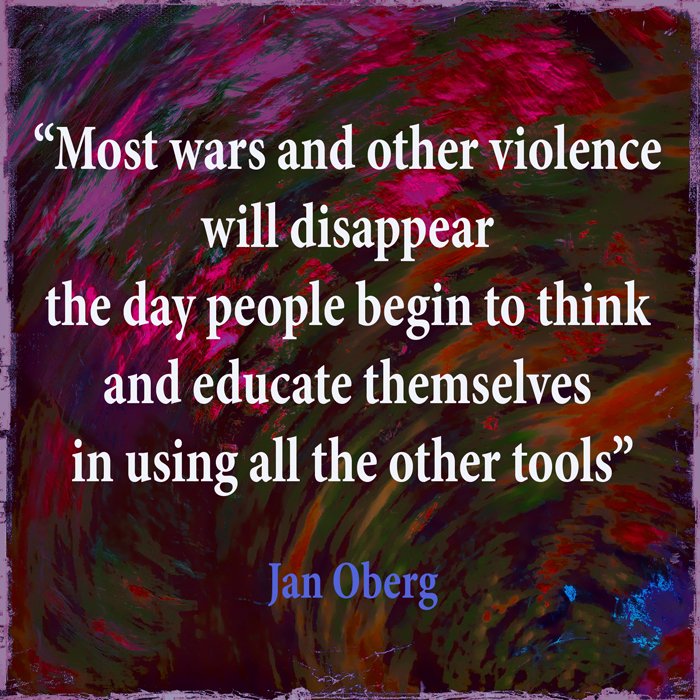
Or – peace by peaceful means, as stated in Article 1 of the UN Charter.

That is what we remain committed to no matter what. In contrast even to much peace research, we are uncompromisingly – fundamentalism, yes please! – opposed to the use of violence to solve humanity’s conflict. Only in cases where everything has actually been tried and proven in vain may we contemplate the use of some kind of violence and then – as also stipulated by the UN Charter – only organised by the UN and not by coalitions of “the willing” – meaning interventionists, militarists and racists who look down upon others with contempt.

To do good, hold on to basic values – to realize a credo – creates an enormous energy. Also when the world developments are not going in the direction – at the moment at least – that we hoped for when we were younger.

We expect to go through some very tough years now but in about a decade when the US Empire has lost most of its influence (and the US republic thrived wonderfully) and NATO has closed shop and then witness a new multi-polar and balanced world order that can offer humanity more hope and vision than the West as a leader has been able to. Those who live shall see.

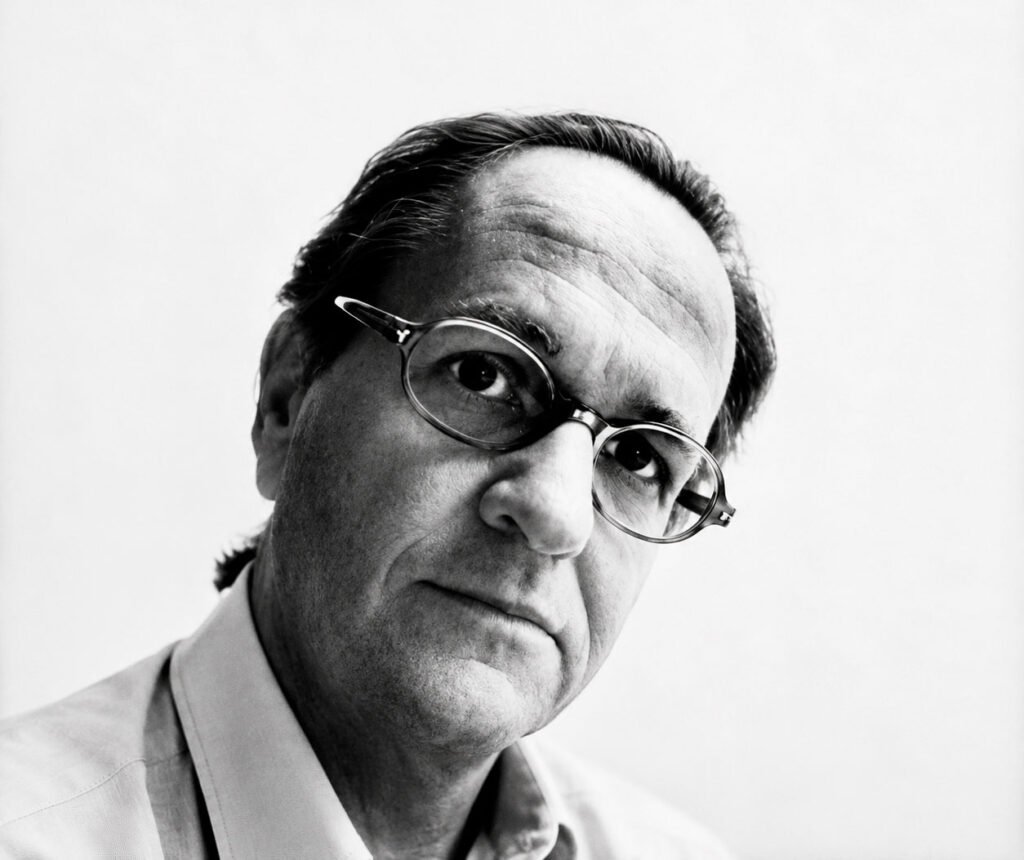
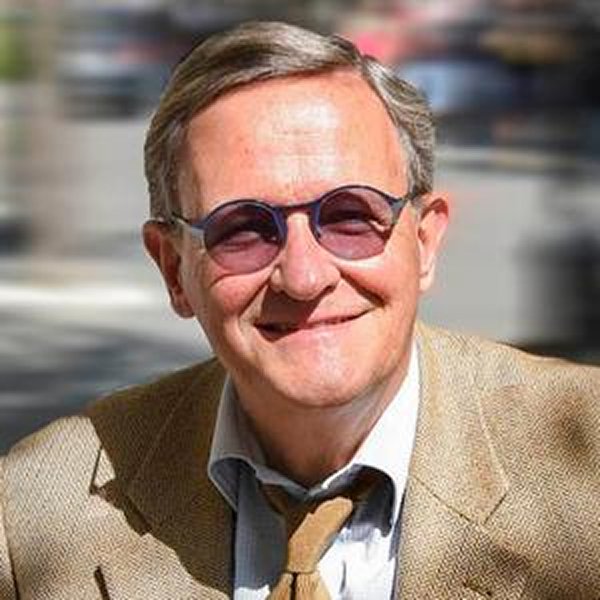
We’ll be around through those years too – but perhaps at a slightly lower activity level. We are getting a little older after 30 years and I want to do more art photography work before it is too late.

And here you can see what the founders said about it all last year at our 30th anniversary.

Some ideas and things do not change. Because they are right, necessary, sustainable, visionary – and still have a lot to offer and achieve.

Nonviolence in thought, speech and action – nonviolence in relation to other people, cultures, genders and Nature is such a thing and has exactly that: A lot to offer! More than violence ever had.

TFF will remain at service for that great civilizational idea.

Whereas, as Gandhi stated it, the principle of an eye for an eye will one day make the whole world blind. Well, it doesn’t have to go that way: one, it is a principle whose death is approaching and, two, as long as we help each other daily with eye-opening counter ideas – facts, criticism but most importantly, constructive ideas and visions about how beautiful the world can still be. Open your eyes!! See!!

You can count on TFF: Up-to-date, diverse, factual, critical and constructive – pro-peace. Independent of state and corporate (and military) interests. Free to do and say – and go – where we feel we must. Uncompromising on the side of the UN Charter norm that war shall be abolished and peace be established by peaceful means. Quite high productive and flexible in adapting to world developments.

No, we don’t do everything and there are many issues, theories and conflicts in the world that we and our associates have no particular knowledge about. TFF also knows when to not utter opinions or play experts. That preserves our credibility in areas where we have expertise.

On a day like this we thank the thousands of supporters over the years out there, our Board and Associates for making TFF what it is today. We, the founders, do carry a good part of the burden, that is true – but our dream a good 30 years back would have come to nothing without all of you. Our heartfelt thanks! We shall keep on going. Together.

Convinced that TFF is important to support? Please go here.

Thanks for thinking of TFFs work when you think of a better world!
Peace & future researcher + ‌Art Photographer

Share

Leave a Reply

Your email address will not be published. Required fields are marked *

Related Posts

A donors’ conference, co-sponsered by the Burundian government, the Belgian government and UNDP will be held in Brussels January 12-13, 2004. This PressInfo offers a perspective on its urgency. See also TFF’s new Burundi Forum. Imagine for a moment that politics is about goodness and generosity. Where could a few million dollars of government aid and a few civil society organisations – guaranteed – win the hearts of extremely poor millions who want peace and already work hard to achieve it after 10 years of war and genocide? The answer is Burundi, the heart-shaped country in the heart of Africa. Burundi makes a good story from Africa. But what does the world know about Burundi, its problems and struggles? Burundi’s tough reality Here are the basic facts. Burundi’s population is about 7 million and it is number 171 out of the 175 countries on the UNDP’s human development index. Their life...
Peace is promoted by constructive proposals and dialogue Four preceding PressInfos have expressed concern over — and criticised — the ongoing, militarisation of the EU. Some will say: but there are no alternatives. We believe that there are always alternatives, that democracies are characterised by alternatives and choice, and that openly discussed alternatives will improve the quality and legitimacy of society’s decision–making. In addition, it is an intellectual and moral challenge to not only criticise but also be constructive. If we only tell people that we think they are wrong, they are not likely to listen. However, if we say: what are your views on this set of ideas and steps? — we may sometimes engage them in dialogue and sow a seed. Most people in power circles live their daily lives in in a time frame and a social space where certain ideas, viewpoints and concepts are just not...
Photos © TFF 2000 Read PressInfo 90 “Lift the Sanctions and Bring More Aid to Yugoslavia” See Pictures from Belgrade © TFF 2000 Please reprint, copy, archive, quote or re-post this item, but please retain the source.

Recent Articles

Greenland – the world’s largest island, a continent of its own with only 57.000 inhabitants. I visited it for the first time in May 2005. I flew across the inland ice to Nuuk, the tiny capital with some 14.000 inhabitants. I was overwhelmed by the pride and kindness of everyone I met as well as by the unique natural beauty. Unfortunately, due to weather conditions during my ten-day stay I could get nowhere else but Nuuk. Fortunately, however, among those I met was Gitte Arvegaard, a Danish lawyer and negotiator employed by the local government, Greenland Home Rule. She turned out to be an enthusiastic photographer with a lot of pictures taken during various trips around Greenland. So this Greeland series is the result of our cooperative effort. We both hope you enjoy it and are stimulated to visit Greenland – about which you may read more here. Finally, if you want to...
 Jan Oberg’s storyof how he met Sir Paul Liverpool – where else to meet Paul McCartney? Paul’s old class mate and TFF Associate, Jonathan Power introduced me to Paul McCartney in Liverpool at an informal reception. It was held at what used to be their school, now the Liverpool Institute for Performing Arts and we were there to celebrate that Jonathan had written Amnesty International’s 40th Anniversary book. This happy event for “righting wrongs and writing songs” gave me an opportunity to meet Paul and tell him about TFF and get straight to the matter: would he consider making a donation in support of our work for peace? While I was probably the only one with such a wish that day, I was certainly not the only one who wanted to shake hands and talk with him. In the last minutes before Paul was to leave, Jonathan brought us together and we got about three...
1942James Paul McCartney is born in Liverpool on June 18th. 1956Paul writes his first song, I Lost My Little Girl. 1957Paul meets John Lennon at St. Peter’s Church Fete, Woolton, Liverpool. He joins his first group, The Quarrymen and performs in his first gig at The New Clubmoor Hall, Liverpool, on October 18th. 1960Formation of The Beatles, who play residencies in Hamburg and at The Cavern in Liverpool. 1961First Beatles recordings issued in Germany, as the backing group for Tony Sheridan. 1962The first Beatles Parlophone recording, Love Me Do, reaches number 17 in the British charts. 1963The birth of Beatlemania. Please Please Me gives the group their first British Number 1. She Loves You cements their success. Please Please Me and With The Beatles albums released. 1964First triumphant American tour. The Beatles perform at the Royal Command Performance and release their first film, A Hard Day’s Night. Their single I...

TFF on Substack

Discover more from TFF Transnational Foundation & Jan Oberg.

Most Popular

Greenland – the world’s largest island, a continent of its own with only 57.000 inhabitants. I visited it for the first time in May 2005. I flew across the inland ice to Nuuk, the tiny capital with some 14.000 inhabitants. I was overwhelmed by the pride and kindness of everyone I met as well as by the unique natural beauty. Unfortunately, due to weather conditions during my ten-day stay I could get nowhere else but Nuuk. Fortunately, however, among those I met was Gitte Arvegaard, a Danish lawyer and negotiator employed by the local government, Greenland Home Rule. She turned out to be an enthusiastic photographer with a lot of pictures taken during various trips around Greenland. So this Greeland series is the result of our cooperative effort. We both hope you enjoy it and are stimulated to visit Greenland – about which you may read more here. Finally, if you want to...
 Jan Oberg’s storyof how he met Sir Paul Liverpool – where else to meet Paul McCartney? Paul’s old class mate and TFF Associate, Jonathan Power introduced me to Paul McCartney in Liverpool at an informal reception. It was held at what used to be their school, now the Liverpool Institute for Performing Arts and we were there to celebrate that Jonathan had written Amnesty International’s 40th Anniversary book. This happy event for “righting wrongs and writing songs” gave me an opportunity to meet Paul and tell him about TFF and get straight to the matter: would he consider making a donation in support of our work for peace? While I was probably the only one with such a wish that day, I was certainly not the only one who wanted to shake hands and talk with him. In the last minutes before Paul was to leave, Jonathan brought us together and we got about three...
1942James Paul McCartney is born in Liverpool on June 18th. 1956Paul writes his first song, I Lost My Little Girl. 1957Paul meets John Lennon at St. Peter’s Church Fete, Woolton, Liverpool. He joins his first group, The Quarrymen and performs in his first gig at The New Clubmoor Hall, Liverpool, on October 18th. 1960Formation of The Beatles, who play residencies in Hamburg and at The Cavern in Liverpool. 1961First Beatles recordings issued in Germany, as the backing group for Tony Sheridan. 1962The first Beatles Parlophone recording, Love Me Do, reaches number 17 in the British charts. 1963The birth of Beatlemania. Please Please Me gives the group their first British Number 1. She Loves You cements their success. Please Please Me and With The Beatles albums released. 1964First triumphant American tour. The Beatles perform at the Royal Command Performance and release their first film, A Hard Day’s Night. Their single I...
Read More
Greenland – the world’s largest island, a continent of its own with only 57.000 inhabitants. I visited it for the first time in May 2005. I flew across the inland ice to Nuuk, the tiny capital with some 14.000 inhabitants. I was overwhelmed by the pride and kindness of everyone I met as well as by the unique natural beauty. Unfortunately, due to weather conditions during my ten-day stay I could get nowhere else but Nuuk. Fortunately, however, among those I met was Gitte Arvegaard, a Danish lawyer and negotiator employed by the local government, Greenland Home Rule. She turned out to be an enthusiastic photographer with a lot of pictures taken during various trips around Greenland. So this Greeland series is the result of our cooperative effort. We both hope you enjoy it and are stimulated to visit Greenland – about which you may read more here. Finally, if you want to...
p_mccartney_poem
 Jan Oberg’s storyof how he met Sir Paul Liverpool – where else to meet Paul McCartney? Paul’s old class mate and TFF Associate, Jonathan Power introduced me to Paul McCartney in Liverpool at an informal reception. It was held at what used to be their school, now the Liverpool Institute for Performing Arts and we were there to celebrate that Jonathan had written Amnesty International’s 40th Anniversary book. This happy event for “righting wrongs and writing songs” gave me an opportunity to meet Paul and tell him about TFF and get straight to the matter: would he consider making a donation in support of our work for peace? While I was probably the only one with such a wish that day, I was certainly not the only one who wanted to shake hands and talk with him. In the last minutes before Paul was to leave, Jonathan brought us together and we got about three...
Logo-Transnational
1942James Paul McCartney is born in Liverpool on June 18th. 1956Paul writes his first song, I Lost My Little Girl. 1957Paul meets John Lennon at St. Peter’s Church Fete, Woolton, Liverpool. He joins his first group, The Quarrymen and performs in his first gig at The New Clubmoor Hall, Liverpool, on October 18th. 1960Formation of The Beatles, who play residencies in Hamburg and at The Cavern in Liverpool. 1961First Beatles recordings issued in Germany, as the backing group for Tony Sheridan. 1962The first Beatles Parlophone recording, Love Me Do, reaches number 17 in the British charts. 1963The birth of Beatlemania. Please Please Me gives the group their first British Number 1. She Loves You cements their success. Please Please Me and With The Beatles albums released. 1964First triumphant American tour. The Beatles perform at the Royal Command Performance and release their first film, A Hard Day’s Night. Their single I...
Logo-Transnational
  Back to the series “Bujumbura, Burundi”
By JONATHAN POWER August 16, 2000 LONDON – Remember the summer of ’98? In the sweltering, torpid heat of a Roman august, charged with exhaust fumes, the international community gave its overwhelming approval to the establishment of an International Criminal Court that will enable those accused of “crimes against humanity” to be tried and, if convicted, sentenced. Only seven nations opposed or abstained from the motion, including Israel, China, India and the U.S.A. where the Pentagon had successfully waged bureaucratic guerrilla war to undermine the initially sympathetic stance of President Bill Clinton. Two years on we can now see what an epochal event that was. In a the stroke of 120 pens it changed the climate on political thuggery. After numerous half-starts and false starts ever since the Nuremberg and Tokyo trials that convicted the war criminals of the Second World War, the world at last had agreed en masse a common...
By Jonathan Power April 8th 2004 LONDON – There is a widely held opinion abroad that Brazil never had the chance of profoundly changing for the better- shedding its widespread poverty and dire income distribution- until Lula (President Luiz Inácio da Silva) came along last year. This is not entirely false, but neither is it entirely true. Brazil has long made a kind of progress- in the last century it was second only to Taiwan as the fastest growing economy in the world- but it has been appallingly uneven. Part of the story of contemporary Brazil is clear to the eye in this small village of 7,000 people in the arid north east, along with the Amazon the poorest part of this vast country. Twenty five years or so ago I used to come to Pilõezinhos regularly when I had a close friend living here, Valéria Rezende, a radical, grass roots-stirring...

