
Seeing in the dark

Seeing in the Dark with Victoria Brittain

As with the best of journalists, Victoria Brittain has spent a lifetime enabling us to see in the dark! Or more accurately, she has shined a bright light on those whose suffering has been hidden by being deliberately situated in one or another shadow land of governmental and societal abuse, whether local, national, or geopolitical in its animus.

These patterns of abuse are hidden because whenever their visibility cannot be avoided, the liberal mythologizing of the decency of the modern democratic state suffers a staggering blow. In recent years this unwanted visibility has permanently tarnished the human rights credentials of the United States due to the spectacular exposés of the horrifying pictures of prisoner abuse at the Abu Ghraib prison in Iraq or various reports of grotesque treatment of Guantanomo detainees.

As with Bradley Manning and Wikileaks, the U.S. Government should be embarrassed by its response: a preoccupation with these unwelcome leaks of its dirty secrets, while manifesting indifference to the substantive disclosures of its endorsement of torture and other crimes against humanity. But it is not, and that has become and remains a deep challenge to all of us who wish to live in a society of laws, not sadistic men, a society based on ethics and human rights, not cruelty and dehumanization.

Once such secrets have been revealed, all of us are challenged not to avert our gaze, being reminded that upholding the rights and dignity of every person is the duty of government and the responsibility of all citizens, and when flagrant and intentional failures along these lines remain unchallenged, the credentials of decency are forever compromised.

This is but a prelude to commenting briefly upon Victoria Brittain’s extraordinary recent book of humane disclosure, Shadow Lives: The Forgotten Women of the War on Terror (London: Pluto, 2013; distributed in the United States by Palgrave Macmillan). Brittain is a journalist who not only sees in the dark, but what is even rarer among the restless practitioners of this profession, she stays around long enough to listen.

Here she listens with empathy and insight to the words and experience of women whose male partners have been targeted in Britain and the United States by the rapacious masters of homeland security in the years since the 9/11 attacks. These women and their children, mainly living in Britain, are the forgotten and neglected ‘collateral damage’ of those who are detained year after year without charges or trials as terrorist suspects.

As the book makes clear, Muslims as a distinct ethnic and religious group, have been deprived of rights available to others accused of political crime. She quotes an American lawyer, Linda Moreno, “After 9/11 the Constitution when it comes to Muslims, especially Palestinians.” (p.161) But it was not only the liberal governments that were at fault, it was also the media that stereotyped anyone accused of being a jihadist or somehow sympathetic with the aims and activities of those alleged to be guilty of acts of terrorism as unquestionably evil, and such a menace as to deserve ill-treatment. In Brittain’s words, “[t]he enormity of the injustice perpetrated over a decade and more has been airbrushed out of America’s and Britain’s mainstream consciousness.” She goes on to ask a question we need to ask ourselves with all due gravity – “How did we get so coarsened that this is virtually unremarked?” (p.23)

The real story here is that of several women who try to live in the ruins created by the detention of their husbands, and seek to do whatever they can to bring normalcy to their family life, and raise their children as lovingly as possible in the process. It is a difficult life where the reverberations of Islamophobia are daily felt via the hostility of neighbors and the treatment experienced in schools and elsewhere. In other words, society, as well as government and the media, are complicit in the incidental, yet severe, punishments endured by these families of targeted individuals.

Yet the picture is not entirely grim as these women are also courageous and determined not to be defeated, even as they struggle against depression and acute anxiety, as well as the loneliness associated with the loss of their loving partner and co-parent. And what is worse in some ways, are witnesses to the collapse of their men due to the mistreatment of prolonged prison experiences unalleviated by the reality of indictments and charges. These men are mainly held on the basis of secret evidence that is not even disclosed to their lawyers, and the majority seem entirely innocent, victims of post-9/11 panic politics nurtured by the nanny security state. When in Britain such detainees are released, it should not be confused with ‘freedom’ because the former prisoner is require to wear electronic tags, subject to curfews, daily reporting to local police, living with rigid restrictions on visits by friends, routine intrusions in family space by security personnel, even prohibitions on use of computers. In summing up the overall ordeal of these families, Brittain comments, “[f]or all of them, something worse than their very worst nightmares had come true.” (p.149) One of the daughters who had endured this reality asks plaintively, “[l]isten to my story, then decide if you will be able to live my life.” (p.67) It occasions no surprise that the several of the men attempt suicide or experience paranoid delusion and that the women become clinically depressed.

There is for several of the women a kind of existential double jeopardy. They came to Britain or the United States as refugees to escape from deadly torments in Afghanistan, Pakistan, and Palestine, expecting at least the benefits of a liberal democracy, and instead were confronted by a far worse existence than what they had reluctantly left behind. Sometimes their memories were filled with happiness, as with one woman describing her earlier time in Afghanistan: “The life was not easy, but it was beautiful.” (p.154) These years of injustice were “intertwined with memories, ghosts and dreams of an Afghanistan or a Palestine – past or future. Those other shadow lives infused everything for them, if you came close enough to listen, and were, with their faith. Their secret lifeline of joy against bitterness and despair.” (p.164) Not only what was remembered, but also what was hoped for, believed in, a faith, often with overtones of the Koran, of a deliverance yet to come, however difficult the life of exile had become.

Especially, the women from a Palestinian background were passionate about educating their children, sometimes doing the schooling at home to avoid the unpleasant atmosphere facing Muslim children in British society. Other children of imprisoned fathers received their education at local schools. Brittain is sensitive to their acute sense of their special circumstances: “One child spoke for several others when she said that now loyalty and duty to her absent father meant excelling at school and remembering to be happy.” (p.158) Remembering to be happy! Every child should be exempt from such a duty!

Victoria Brittain has written a book that we need to read, ponder, discuss, and to the best of our ability, act upon. It is a captivating book of love and dedication, as well as of torments, and it is mainly the intimate renderings of these women doing the best they can under the most agonizing of condition that no decent society should allow to persist.

What is made clear throughout is the degree to which the state-sanctioned cruelty to these individuals, including the terrorist suspects themselves, is a blend of panic, sadism, and anti-Muslim hatred, and cannot be convincingly explained away as regrettable but necessary measures to ensure the security of societies threatened by terrorism. In effect, Brittain condemns reliance on such disproportionate means in the alleged pursuit of the end of security, opportunistically sacrificing the few to promote the pseudo-contentment of the many.

In his short Foreword, John Berger puts the essence of what makes Shadow Lives a mandatory reading experience: “What makes this book unforgettable and terrible is its demonstration of the extent of the human cruelty meted out by the (human) stupidity of those wielding power. Neither such cruelty nor such stupidity exist in the natural world without humankind.” (p.ix). In her Afterword, Marina Warner issues a similar injunction, although more directly: “..we need uncomfortable books like this one, to ask the tough questions.” (p.166)

Indeed, we do!
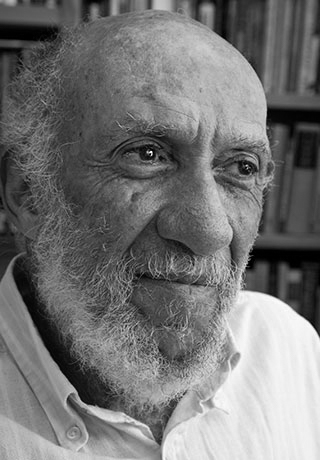
Professor Falk became an adviser to TFF when it was established in 1985.

Share

Leave a Reply

Your email address will not be published. Required fields are marked *

Related Posts

This is not another geopolitical commentary on the Arctic. It is a visionary peace proposal that can save the region from militarised rivalry and ecological ruin. A blueprint for shared security, sustainable development, and human dignity — benefitting Greenland, the Arctic, and the rest of us. Jan Oberg TFF director Lund, Sweden, February 17, 2026 I. Four Principles for a New Arctic Vision The Arctic is often framed as a cold arena of rivalry — a place where great powers test each other’s resolve. But this worldview is outdated, unimaginative, and ultimately self‑defeating. The Arctic is not a vacuum waiting to be militarised; it is a living region, a climate stabiliser, and a cultural homeland whose future will shape the future of humanity. If we begin from that understanding, a far more rational Arctic order becomes possible — one that is peaceful, cooperative, and centred on the people who actually live there. This vision rests...
Peace is promoted by constructive proposals and dialogue Four preceding PressInfos have expressed concern over — and criticised — the ongoing, militarisation of the EU. Some will say: but there are no alternatives. We believe that there are always alternatives, that democracies are characterised by alternatives and choice, and that openly discussed alternatives will improve the quality and legitimacy of society’s decision–making. In addition, it is an intellectual and moral challenge to not only criticise but also be constructive. If we only tell people that we think they are wrong, they are not likely to listen. However, if we say: what are your views on this set of ideas and steps? — we may sometimes engage them in dialogue and sow a seed. Most people in power circles live their daily lives in in a time frame and a social space where certain ideas, viewpoints and concepts are just not...
Photos © TFF 2000 Read PressInfo 90 “Lift the Sanctions and Bring More Aid to Yugoslavia” See Pictures from Belgrade © TFF 2000 Please reprint, copy, archive, quote or re-post this item, but please retain the source.

Recent Articles

Jan Oberg May 15, 2026 Go to this Fox News page and scroll the whole way down: President Donald Trump tells the world that his meeting with President Xi Jinping yielded a lot of very concrete political and economic results – of course, only where the Chinese side, according to him, agreed with him. He does not mention the Taiwan issue, but Secretary of State, Marco Rubio, says that it did not feature prominently in their talks and that the US policy on Taiwan has not changed. Then go to China Daily – or Global Times – and you will see that for the Chinese it is framework, principles, structure of cooperation etc. that matters – all embedded in the overall idea of “constructive bilateral relationship of strategic stability.” Nowhere is any concrete agreement or deal – all that Trump refers to – mentioned. At the general level, this gives you insights into the very different social...
Lena Petrova of “World Affairs In Context” with more than half a million subscribers on YouTube wanted to explore what a peace researcher like me has to say about, among other things, the First and the Second Cold War and why eethics has disappeared from politics. I am particularly happy about this conversation that also yielded an amazing number of very appreciative comments on YouTube. No doubt, people are longing for alternatives, including peace perspectives.
The MIMAC – Military-Industrial-Media-Academic Complex – drives the world’s rampant militarism and wars without end. Here is a short reflection of how it works against all interests of humanity. #5 deals with why there is no real enemy or threat images/analysis. It’s all ex-post constructions. And, btw, theTFF Peace Pulse is now on Rumble.

TFF on Substack

Discover more from TFF Transnational Foundation & Jan Oberg.

Most Popular

Jan Oberg May 15, 2026 Go to this Fox News page and scroll the whole way down: President Donald Trump tells the world that his meeting with President Xi Jinping yielded a lot of very concrete political and economic results – of course, only where the Chinese side, according to him, agreed with him. He does not mention the Taiwan issue, but Secretary of State, Marco Rubio, says that it did not feature prominently in their talks and that the US policy on Taiwan has not changed. Then go to China Daily – or Global Times – and you will see that for the Chinese it is framework, principles, structure of cooperation etc. that matters – all embedded in the overall idea of “constructive bilateral relationship of strategic stability.” Nowhere is any concrete agreement or deal – all that Trump refers to – mentioned. At the general level, this gives you insights into the very different social...
Lena Petrova of “World Affairs In Context” with more than half a million subscribers on YouTube wanted to explore what a peace researcher like me has to say about, among other things, the First and the Second Cold War and why eethics has disappeared from politics. I am particularly happy about this conversation that also yielded an amazing number of very appreciative comments on YouTube. No doubt, people are longing for alternatives, including peace perspectives.
The MIMAC – Military-Industrial-Media-Academic Complex – drives the world’s rampant militarism and wars without end. Here is a short reflection of how it works against all interests of humanity. #5 deals with why there is no real enemy or threat images/analysis. It’s all ex-post constructions. And, btw, theTFF Peace Pulse is now on Rumble.
Read More
Screenshot-2026-05-15-103534
Jan Oberg May 15, 2026 Go to this Fox News page and scroll the whole way down: President Donald Trump tells the world that his meeting with President Xi Jinping yielded a lot of very concrete political and economic results – of course, only where the Chinese side, according to him, agreed with him. He does not mention the Taiwan issue, but Secretary of State, Marco Rubio, says that it did not feature prominently in their talks and that the US policy on Taiwan has not changed. Then go to China Daily – or Global Times – and you will see that for the Chinese it is framework, principles, structure of cooperation etc. that matters – all embedded in the overall idea of “constructive bilateral relationship of strategic stability.” Nowhere is any concrete agreement or deal – all that Trump refers to – mentioned. At the general level, this gives you insights into the very different social...
Screenshot-2026-05-12-104023
Lena Petrova of “World Affairs In Context” with more than half a million subscribers on YouTube wanted to explore what a peace researcher like me has to say about, among other things, the First and the Second Cold War and why eethics has disappeared from politics. I am particularly happy about this conversation that also yielded an amazing number of very appreciative comments on YouTube. No doubt, people are longing for alternatives, including peace perspectives.
Screenshot-2026-04-13-154551 (2)
The MIMAC – Military-Industrial-Media-Academic Complex – drives the world’s rampant militarism and wars without end. Here is a short reflection of how it works against all interests of humanity. #5 deals with why there is no real enemy or threat images/analysis. It’s all ex-post constructions. And, btw, theTFF Peace Pulse is now on Rumble.
Screenshot-2026-04-13-154551 (1)
Jan Oberg, TFF director April 28, 2026 In this third TFF Peace Pulse, I make the important distinction between the violence and the conflict that violence is a symptom of. If you want peace, focus on the underlying conflict because that is the key to resolution, peacemaking, and a better future for the parties. The West is obsessed with violence, just look around you – and 90+ per cent of the public debate is about military issues and other violence – totally wasted for peace. These Peace Pulses will only be published here a few times. You will also not find them on YouTube and Vimeo because both platforms have blocked TFF and me; you know, peace is dangerous these days. Most TFF’s videos since 2007 are now on Rumble.
Screenshot-2026-04-13-154551
In contrast to most, we’ll bring alternatives, solutions, hope and strategies for a better future. Times are dangerous, yes, but that only intensifies the need for constructive thinking and action! Jan Oberg, TFF director April 13, 2026 The new TFF Peace Pulse uses video messages in a new way: Max 3-5-minute-long comments, ideas or perhaps mini-lectures, all about peace – positive peace. We launch them today on April 13, 2026 with a carefully crafted visual aesthetic fitting the content. We hope to publish them regularly from now on. We launch Peace Pulse (PP) – for a number of reasons. The world is in chaos, and there are countless reasons to feel concerned, frustrated, even angry. The atmosphere is saturated with doom and gloom, with negative energy and rear‑mirror thinking, while vision, imagination, alternatives, strategies and genuine future‑mindedness remain in short supply. And without them, we simply can’t save the world. Looking at problems from a hundred angles will...
IMG_5165 (1)
PART II — Publishing Peace in a System That Prioritises Militarism Jan Oberg, TFF director April 10, 2026 How TFF Maintains a Daily Voice in a Digital World Built for Noise This article is part of the series “TFF at 40″ and it invites you to learn about Four Decades of Publishing Peace. It takes a look at how a small, people‑financed peace foundation has communicated across four generations of technology — from wax stencils and fax machines to mass email and Substack — and why TFF continues to publish every single day in a system that rewards noise, conflict, and militarism. ◆ What it means to publish peace every single day in a digital system built for 24/7 news and other noise, confrontation, and militarism. How TFF’s independence, continuity, and global readership defy algorithms, donor cycles, and Western media censorhip — and why the Majority World keeps listening. When the...


