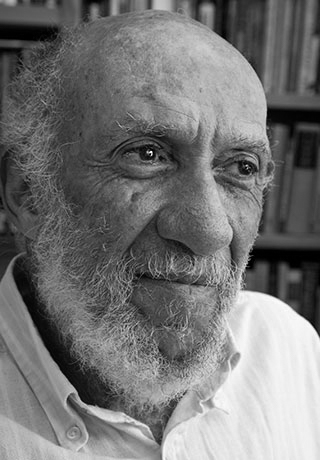
Professor emeritus of international law at Princeton University and University of California, Santa Barbara, board member of The Nuclear Age Peace Foundation and TFF Associate since 1985
Finally, the committee in Oslo that picks a winner of the Nobel Peace Prize each year selected in 2017 an awardee that is a true embodiment of the intended legacy of Alfred Nobel when he established the prize more than a century ago.
It is also a long overdue acknowledgement of the extraordinary dedication of anti-nuclear activists around the planet who for decades have done all in their power to rid the world of this infernal weaponry before it inflicts catastrophe upon all living beings even more unspeakable that what befell the cities of Hiroshima and Nagasaki on two infamous days in August 1945.
Such a prize result was actually anticipated days before the announcement by Fredrik Heffermehl, a crusading Norwegian critic of past departures from Nobel’s vision by the prize committee.
In making the prediction that the 2017 prize would be given in recognition of anti-nuclear activism Heffermehl prophetically relied on the outlook of the current chair of the Nobel selection committee, a distinguished Norwegian lawyer, Berit Reiss-Andersen, who has publicly affirmed her belief in the correlation between adherence to international law and world peace.
The recipient of the prize is ICAN, International Campaign to Abolish Nuclear Weapons, a coalition of more than 450 civil society groups around the world that is justly credited with spreading an awareness of the dire humanitarian impacts of nuclear weapons and of making the heroic effort to generate grassroots pressure sufficient to allow for the adoption of the UN Treaty on the Prohibition of Nuclear Weapons by 122 UN members on 7 July 2017 (known as the ‘BAN Treaty’).
The treaty was officially signed by 53 governments of UN member states this September and will come into force when 50 instruments of ratifications have been deposited at UN Headquarters, which suggests its legal status will soon be realized as a signature is almost always followed by ratification.
The core provision of the BAN Treaty sets forth an unconditional legal prohibition of the weaponry that is notable for its comprehensiveness—the prohibition extends to “the developing, testing, producing, manufacturing, possessing, stockpiling and deploying nuclear weapons, transferring or receiving them from others, using or threatening to use them, or allowing any stationing or deployment of nuclear weapons on national territories of signatories, and assisting, encouraging, or inducing any of these prohibited acts.” Each signatory state is obligated to develop “legal, administrative and other measures, including the imposition of penal sanctions, to prevent and suppress” activities prohibited by the treaty. It should be understood that the prohibition contributes to the further delegitimation of nuclear weapons, but it does nothing directly by way of disarmament.
The BAN Treaty nowhere claims to mandate disarmament except by an extension of the reasoning that if something is prohibited, then it should certainly not be possessed, and the conscientious move would be to seek a prudent way to get rid of the weaponry step by step. In this regard, it is notable that none of the nuclear weapons states are expected to become parties to the BAN Treaty, and therefore are under no immediate legal obligation to respect the prohibition or implement its purpose by seeking a disarmament arrangement.
A next step for the ICAN coalition might be to have the BAN prohibition declared by the UN General Assembly and other institutions around the world (from cities to the UN System) to be binding on all political actors (whether parties to the treaty or not), an expression of what international lawyers call ‘peremptory norms,’ those that are binding and authoritative without treaty membership and cannot be changed by the action of sovereign states.
Standing in opposition to the BAN Treaty are all of the present nuclear weapons states, led by the United States. Indeed, all five permanent members (P-5) of the UN Security Council and their allies refused to join in this legal prohibition of nuclear weapons, and to a disturbing degree, seem addicted sustainers of the war system in its most horrific dimensions.
Their rationale for such a posture can be reduced to the proposition that deterrence is more congenial than disarmament. Yet the nuclearism is a deeply discrediting contention that the P-5 provide the foundations of responsible global leadership, and therefore have accorded favourable status.
What the BAN Treaty makes clear is the cleavage between those who want to get rid of the weaponry, and regard international law as a crucial step in this process, and those who prefer to take their chances by retaining and even further developing this omnicidal weaponry and then hoping for the best.
Leaders like Donald Trump and Kim Jung-un make us aware of how irresponsible it is to hope to avoid the use of nuclear weapons over time when such unstable and impulsive individuals are only an arm’s reach away from decreeing a nuclear Armageddon.
What the Cuban Missile Crisis of 1962 should have taught the world, but didn’t, is that even highly rational governments of the world’s most powerful states can come within a hair’s breath of launching a nuclear war merely to avoid an appearance of geopolitical weakness (the U.S. initial refusal to remove nuclear missiles deployed in Turkey even though they were already scheduled for removal because obsolete as it feared that such a step would be taken as a sign of weakness in its rivalry with the Soviet Union).
Further, we know that it was only the unusual and unexpected willingness of an unheralded Soviet submarine officer to disobey a rogue order to fire off a nuclear missile that then saved the world from a terrifying chain of events.
The nuclear weapons states, governed by political realists, basically have no trust in law or morality when it comes to national security, but base their faith in the hyper-rationality of destructive military power, which in the nuclear age is expressed in the arcane idiom of deterrence, an idea more transparently known in the Cold War Era as Mutually Assured Destruction (or MAD)!!
It is impossible to grasp the essential links between geopolitical ambition and security without understanding the complementary relationship of deterrence and the nonproliferation regime (its geopolitical implementation to avoid the disarmament obligation of Article VI).
In essence, the grandest Faustian Bargain of all times is contained within the confines of the Nonproliferation Regime, which is a geopolitical instrument of control by permanently dividing the world between those that have the bomb and decide who else should be allowed to develop the capability and those who are without the bomb but also without any way to secure a world in which no political actor possesses a nuclear weapons option.
In a central respect, the issue between the militarized leadership of the nuclear weapons states and the peoples of the world is a question of trust – that is, a matter of geopolitics as practiced versus international law if reliably implemented.
Everything in the human domain is contingent, including even species survival.
This makes it rational to be prudent, especially in relation to risks that have no upper limit and could produce massive suffering and devastation far beyond tragedies of the past.
Of course, there are also risks with a world legally committed to prohibit the possession, threat, and use of nuclear weapons, although if nuclear disarmament were to carry forward the overriding intent of the BAN Treaty, a disarming process would seek with the greatest possible diligence to minimize these risks.
A world without nuclear weapons would almost certainly be a safer, saner, more humane world than the one we now inhabit.
Beyond that it would move national and international policy away from the gross immorality of a security system premised on mass destruction of civilian life along with assorted secondary effects of ‘nuclear famine’ caused by dense smoke blockage of the sun, potentially imperilling the well-being of all inhabitants of the planet. The dissemination of toxic radiation as far as winds will carry is an inevitable side effect with disastrous consequences even for future generations. Such an ecocidal gamble is not only a throw of the dice with respect to the human future but also in relation to the habitability of the planet by every living species. As such, it profiles an aggravated form of Crimes Against Nature, which while not codified, epitomizes the peak of anthropogenic hubris.
It is with these considerations in mind that one reads with consternation the cynical, flippant, and condescending response of The Economist: “This year’s Nobel peace prize rewards a nice but pointless idea.” Such a choice of words, ‘nice,’ ‘pointless’ tells it all.
What is being expressed is the elite mainstream consensus that it is the height of futility to challenge conventional realist wisdom, that is, the Faustian Bargain mentioned earlier. The challenge is declared futile without even considering the dubious record of geopolitics over the centuries of war upon war, which in the process has deprived humanity of untold resources wasted on generations of deadly weaponry that have inflicted massive suffering and could have been put to many far better and necessary uses.
Of course, the BAN Treaty as an expression of faith in the path of international law and morality radically diverges conceptually and behaviorally from the political path of nuclearism, hard power, and political realism.
It will require nothing less than a passionate and determined mobilization of peoples throughout the world to get rid of nuclear weapons, and its accompanying deep ideology of nuclearism.
This is a far preferable alternative than passively waiting for the occurrence of a traumatizing sequence of events that so jolt political consciousness as to topple the power structures that now shape security policy throughout the world.
What the BAN Treaty achieves, and the Nobel Prize recognizes, is that the cleavage is now clear between international law and geopolitics with respect to nuclear weapons.
The BAN Treaty provides like-minded governments and animated citizen pilgrims throughout the world with a roadmap for closing the gap from the side of law and morality.
It will be an epic struggle, but now at least there are some reasons to be hopeful, which should itself strengthen the political will of the global community of anti-nuclear militants.
It is helpful to appreciate that this BAN Treaty was achieved despite the strenuous opposition of the geopolitical forces that run the world order system.
Just as Nehru read the outcome of the Russo-Japanese War of 1904-05 as a decisive sign that European colonialism was vulnerable to national resistance, despite military inferiority, so let us believe and act as if this occasion of the Nobel Peace Prize is another tipping point in the balance between morality/legality on one side and violent geopolitics on the other.