
The irrelevance of liberal Zionism

Frustrated by Israeli settlement expansion, excessive violence, AIPAC maximalism, Netanyahu’s arrogance, Israel’s defiant disregard of international law, various Jewish responses claim to seek a middle ground. Israel is criticized by this loyal opposition, sometimes harshly, although so is the Palestinian Authority, Hamas, and activists around the world. Both sides are deemed responsible in equal measure for the failure to end the conflict.

With such a stance liberal Zionists seek to occupy the high moral ground without ceding political relevance. In contrast, those who believe as I do that Israel poses the main obstacle to achieving a sustainable peace are dismissed by liberal Zionists as either obstructive or unrealistic, and at worst, as anti-Israeli or even anti-Semitic.

Listen to the funding appeals of J Street or read such columnists in the NY Times as Roger Cohen and Thomas Friedman to grasp the approach of liberal Zionism.

These views are made to appear reasonable, and even just, by being set off against such maximalist support for Israel as associated with AIPAC and the U.S. Congress, or in the NY Times context by comparison with the more conservative views of David Brooks (whose son currently serves in the IDF) who published a recent ‘balanced’ column lionizing Netanyahu, “The Age of Bibi” [Jan. 2, 2014].

Of all the deformed reasoning contained in the column, perhaps the most scandalous was comparing Netanyahu to Churchill, and to suggest that his story has the grandeur that bears a resemblance to Shakespeare’s MacBeth, an observation that many would find unflattering. Of all Netanyahu’s qualities remarked upon, Brooks astoundingly finds that “his caution is the most fascinating.” According to Brooks, Netanyahu deserves to be regarded as cautious because he has refrained from attacking Iran despite threatening to do so with bellicose rhetoric.

I would have thought that Netanyahu’s inflammatory threats directed at Iran, especially as combined with covert acts including inserting viruses to disable its nuclear program and assassinating Iranian scientists, would seem reckless enough for most observers. Since Brooks fails to mention the murderous attacks on Gaza, there is no need to reconcile such aggressive behavior with this overall assessment of caution.

At the core of liberal Zionism is the indictment of the Palestinian leadership for “never missing an opportunity to miss an opportunity” to recall the self-serving quip of the Israeli diplomat, Abba Eban.

Roger Cohen would have us believe that prior to the collapse of the April negotiations the U.S. Government had presented a framework agreement, acceptable to Tel Aviv, that the Palestinian Authority irresponsibly and unreasonably rejected. And not only rejected, but the PA behaved in a manner that was provocative, signed some international agreements as if it already was a state. [“Why Israeli-Palestinian Peace Failed,” Dec. 23, 2014]

This spin comes from Netanyahu’s chief negotiator, Tzipi Livni, who is presented by Cohen as the voice of moderation, as the self-proclaimed champion of ‘two states for two peoples.’

Livni who is the leader of a small party called Hatnua, which is joined in coalition with a revamped Labor Party headed by Isaac Herzog, contesting Likud and Netanyahu. Cohen never inquires as to what sort of state she would wish upon the Palestinians, which on the basis of her past, would be thoroughly subjugated to Israeli security demands as well as accommodating the bulk of settlements and settlers while rejecting the rights under international law of Palestinians in relations to refugees.

When Livni was asked by Cohen whether she would suspend Israeli settlement expansion so as to get direct negotiations started once more, she indicated that she would “at least outside the major blocs.” Cohen calls her party ‘centrist,’ which is one way of acknowledging how far Israeli politics have drifted to the right in recent years.

A reading of the leaked documents of the secret negotiations between the Palestinian Authority and Israel represented by Livni showed how disinterested Israel seemed to be in two states for two peoples at that time of far less extensive settlement encroachment, as well as her overt rejection of the relevance of international law to the diplomatic process. [For a collection of the leaked documents showing Livni’s role see Clayton E. Swisher, ed., Palestine Papers: The End of the Road (2011)]

This expresses a second element of liberal Zionism, that despite everything the two state solution is confirmed over and over again as the only path to peace. As such, it should be endlessly activated in accordance with the Oslo formula that keeps the United States in the absurd role of intermediary and continue to insist that any Palestinian reference to rights under international law is an obstacle to peace.

After more than 47 years of occupation and over 20 years of submission to the Oslo approach it would seem that it is past time to issue a certificate of futility, and the failure to do so, is for me a sure sign of either bad faith or extreme denial.

What is baffling is that those like Friedman and Cohen who surely know better play this game that never even raises the concrete question of how to reverse a settlement process that now includes as many as 600,000 settlers many of whom are militantly opposed to any kind of solution to the conflict that challenges their present situation.

Conveniently, also, this liberal advocacy finesses the claims of the four million or so Palestinian refugees, including almost two million that have been confined to miserable refugee camps for decades, some since 1948. How can one possibly imagine a sustainable and just peace emerging from such a blinkered outlook!

Liberal Zionists also oppose as irresponsible and unhelpful all efforts to challenge this framework, especially any call for holding Israel to account under international humanitarian law for its excessive violence. Alternative futures based on the equality of the two peoples, such as some kind of living together within a single political community are dismissed out of hand, either because of colliding with Zionist expectations of a Jewish state or because after decades of hatred any effort at social integration would be bound to fail.

Intriguingly, my experience of many conversations with both Palestinian refugees and Gazans is far more hopeful about peaceful coexistence within shared political space than are the Israelis despite their prosperity, prowess, and far greater security.

In a similar vein, liberal Zionists almost always oppose as counterproductive, activist initiatives taken under the auspice of the BDS Campaign. Their argument is that Israel will never make ‘painful sacrifices’ when put under pressure deemed hostile, and without these, no peace is possible.

What these painful sacrifices might be on the Israeli side are never spelled out, but presumably would include disbanding the isolated settlements and maybe the separation wall, both of which were in any event unlawful. The real sacrifice for Israelis would be to give up the completion of the maximal version of the Zionist project, that of so-called Greater Israel that encompasses the entirety of the alleged biblical entitlement to Palestine.

For the Palestinians in contrast their sacrifice would necessitate renouncing a series of entitlements conferred by international law, pertaining to settlements, refugees, borders, self-determination, sovereignty. In effect, Israel would sacrifice part of its unlawful dominion, while Palestine would relinquish its lawful claims, and the end result would be one of the inequality of the two peoples, not a recipe for a lasting peace.

A final feature of liberal Zionism is to make concessions to the Greater Israel outlook along the following lines:

• Israel should be allowed to control the unlawfully established settlement blocs;
• Israeli security concerns should be met, including by stationing military forces within the West Bank for many ears, while any Palestinian security concerns are treated as irrelevant; • Palestinian refugees would be denied the right to return to their pre-1967 places of residence;
• Jerusalem would remain essentially under Israel’s control;
• No provision would be made to ensure non-discrimination against the 20% Palestine minority living within pre-1967 Israel;
• No acknowledgement would be made of the past injustices flowing from the 1948 dispossession of hundreds of thousands of Palestinians from their place of residence and the destruction of hundreds of Palestinian villages, the catastrophe that befell the Palestinian people, the nakba, nor the recognition that the nakba is a process that has continued to afflict Palestinians to this very moment.

Despite its claim of reasonableness and practicality, the liberal Zionist approach is an increasingly irrelevant presence on the Israeli political horizon, paralleling the decline of the Labor Party and the peace movement in the country, as well as the ascendancy of the Likud and the politics of the extreme right.

The Israeli end game is now overwhelmingly based on unilateralism, either imposing a highly subordinated and circumscribed Palestinian state confined to parts of the West Bank or establishing Greater Israel and giving up any pretense of implementing the formula of two states for two peoples.

The fact that liberal Zionism and the diplomacy of the West largely plays along with the discarded scenario of two states for two peoples is nothing more than subservience to a cruel variant of ‘the politics of delusion.’

The denigration of liberal Zionism is not meant to belittle the effort of Jews as Jews to find a just and sustainable solution for both peoples. I strongly support such organizations as Jewish Voices for Peace and Middle East Children’s Alliance, and hail the contributions of Noam Chomsky, Norman Finkelstein, Ilan Pappe, and many others to the struggle for Palestinian empowerment and emancipation.

Fortunately, Palestinian resistance will likely stymie the two variants of the Israeli end game mentioned above, but much suffering is almost certain to ensue before sufficient momentum builds within Israel and throughout the world for living together on the basis of equality and even solidarity, accompanied by the necessary acknowledgement of past injustices via some kind of truth commission mechanism. After such knowledge, anything will be possible!
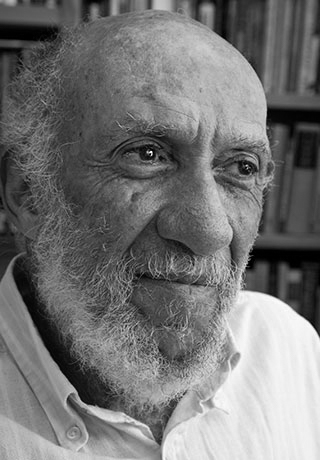

Professor Falk became an adviser to TFF when it was established in 1985.

Share

Leave a Reply

Your email address will not be published. Required fields are marked *

Related Posts

Gandhi, Arun. Lord Richard Attenborough. Kasturba: a lifeNew Delhi: Penguin Books Ltd., 2000.315 pp, 295 Indian Rs, US $22.51 January 29, 2002 Arun Gandhi, grandson to Mohandas and Kasturba, has written a thorough account of Kasturba’s life. Arun begins with a description of Kasturba’s childhood in Porbandar in the late1800s, before she met Mohandas. By having chosen to embark on difficult research into his grandmother’s life, including her first years which are not well-documented, Arun ensures that the reader receives an intimate and life-long portrait of this amazing woman. Kasturba is presented as a lively woman &endash; obedient, yet with a mind of her own. As the relationship between Kasturba and Mohandas developed, Arun maintains that Kasturba’s influence over Mohandas in her own quiet way also grew, to which some of Mohandas’ writings also attest.  Arun paints a vivid picture of the beginnings of Mohandas’ non-violence movement in South Africa, a...
In response to an urgent Appeal from all the living Nobel Peace Prize Laureates, the General Assembly of the United Nations, on November 1998, unanimously declared the first decade of the twenty-first century to be The Decade for a Culture of Peace and Nonviolence. While people are naturally concerned about the amount of violence in our world and how it threatens our future, the Nobel Laureates are right to remind us of the potential of nonviolence and our calling to build a culture of peace and nonviolence.  The twentieth century is instructive in the way that the philosophy and practice of nonviolence have begun to flourish and in the way that nonviolent movements have had an exponential growth across the world. Mohandas Gandhi and Martin Luther King, Jr. are the most famous nonviolent leaders but many have built upon the paths they charted as in country after country, tyrannies and...
We know that medical personnel have failed to report to higher authorities wounds that were clearly caused by torture and that they have neglected to take steps to interrupt this torture. In addition, they have turned over prisoners’ medical records to interrogators who could use them to exploit the prisoners’ weaknesses or vulnerabilities. We have not yet learned the extent of medical involvement in delaying and possibly falsifying the death certificates of prisoners who have been killed by torturers. A May 22 article on Abu Ghraib in the New York Times states that “much of the evidence of abuse at the prison came from medical documents” and that records and statements “showed doctors and medics reporting to the area of the prison where the abuse occurred several times to stitch wounds, tend to collapsed prisoners or see patients with bruised or reddened genitals.” http://www.truthout.org/docs_04/080604J.shtml#16 According to the article, two doctors who...

Recent Articles

Gandhi, Arun. Lord Richard Attenborough. Kasturba: a lifeNew Delhi: Penguin Books Ltd., 2000.315 pp, 295 Indian Rs, US $22.51 January 29, 2002 Arun Gandhi, grandson to Mohandas and Kasturba, has written a thorough account of Kasturba’s life. Arun begins with a description of Kasturba’s childhood in Porbandar in the late1800s, before she met Mohandas. By having chosen to embark on difficult research into his grandmother’s life, including her first years which are not well-documented, Arun ensures that the reader receives an intimate and life-long portrait of this amazing woman. Kasturba is presented as a lively woman &endash; obedient, yet with a mind of her own. As the relationship between Kasturba and Mohandas developed, Arun maintains that Kasturba’s influence over Mohandas in her own quiet way also grew, to which some of Mohandas’ writings also attest.  Arun paints a vivid picture of the beginnings of Mohandas’ non-violence movement in South Africa, a...
In response to an urgent Appeal from all the living Nobel Peace Prize Laureates, the General Assembly of the United Nations, on November 1998, unanimously declared the first decade of the twenty-first century to be The Decade for a Culture of Peace and Nonviolence. While people are naturally concerned about the amount of violence in our world and how it threatens our future, the Nobel Laureates are right to remind us of the potential of nonviolence and our calling to build a culture of peace and nonviolence.  The twentieth century is instructive in the way that the philosophy and practice of nonviolence have begun to flourish and in the way that nonviolent movements have had an exponential growth across the world. Mohandas Gandhi and Martin Luther King, Jr. are the most famous nonviolent leaders but many have built upon the paths they charted as in country after country, tyrannies and...
We know that medical personnel have failed to report to higher authorities wounds that were clearly caused by torture and that they have neglected to take steps to interrupt this torture. In addition, they have turned over prisoners’ medical records to interrogators who could use them to exploit the prisoners’ weaknesses or vulnerabilities. We have not yet learned the extent of medical involvement in delaying and possibly falsifying the death certificates of prisoners who have been killed by torturers. A May 22 article on Abu Ghraib in the New York Times states that “much of the evidence of abuse at the prison came from medical documents” and that records and statements “showed doctors and medics reporting to the area of the prison where the abuse occurred several times to stitch wounds, tend to collapsed prisoners or see patients with bruised or reddened genitals.” http://www.truthout.org/docs_04/080604J.shtml#16 According to the article, two doctors who...

TFF on Substack

Discover more from TFF Transnational Foundation & Jan Oberg.

Most Popular

Gandhi, Arun. Lord Richard Attenborough. Kasturba: a lifeNew Delhi: Penguin Books Ltd., 2000.315 pp, 295 Indian Rs, US $22.51 January 29, 2002 Arun Gandhi, grandson to Mohandas and Kasturba, has written a thorough account of Kasturba’s life. Arun begins with a description of Kasturba’s childhood in Porbandar in the late1800s, before she met Mohandas. By having chosen to embark on difficult research into his grandmother’s life, including her first years which are not well-documented, Arun ensures that the reader receives an intimate and life-long portrait of this amazing woman. Kasturba is presented as a lively woman &endash; obedient, yet with a mind of her own. As the relationship between Kasturba and Mohandas developed, Arun maintains that Kasturba’s influence over Mohandas in her own quiet way also grew, to which some of Mohandas’ writings also attest.  Arun paints a vivid picture of the beginnings of Mohandas’ non-violence movement in South Africa, a...
In response to an urgent Appeal from all the living Nobel Peace Prize Laureates, the General Assembly of the United Nations, on November 1998, unanimously declared the first decade of the twenty-first century to be The Decade for a Culture of Peace and Nonviolence. While people are naturally concerned about the amount of violence in our world and how it threatens our future, the Nobel Laureates are right to remind us of the potential of nonviolence and our calling to build a culture of peace and nonviolence.  The twentieth century is instructive in the way that the philosophy and practice of nonviolence have begun to flourish and in the way that nonviolent movements have had an exponential growth across the world. Mohandas Gandhi and Martin Luther King, Jr. are the most famous nonviolent leaders but many have built upon the paths they charted as in country after country, tyrannies and...
We know that medical personnel have failed to report to higher authorities wounds that were clearly caused by torture and that they have neglected to take steps to interrupt this torture. In addition, they have turned over prisoners’ medical records to interrogators who could use them to exploit the prisoners’ weaknesses or vulnerabilities. We have not yet learned the extent of medical involvement in delaying and possibly falsifying the death certificates of prisoners who have been killed by torturers. A May 22 article on Abu Ghraib in the New York Times states that “much of the evidence of abuse at the prison came from medical documents” and that records and statements “showed doctors and medics reporting to the area of the prison where the abuse occurred several times to stitch wounds, tend to collapsed prisoners or see patients with bruised or reddened genitals.” http://www.truthout.org/docs_04/080604J.shtml#16 According to the article, two doctors who...
Read More
Imagen-thumbnail-The-Transnational-1
Gandhi, Arun. Lord Richard Attenborough. Kasturba: a lifeNew Delhi: Penguin Books Ltd., 2000.315 pp, 295 Indian Rs, US $22.51 January 29, 2002 Arun Gandhi, grandson to Mohandas and Kasturba, has written a thorough account of Kasturba’s life. Arun begins with a description of Kasturba’s childhood in Porbandar in the late1800s, before she met Mohandas. By having chosen to embark on difficult research into his grandmother’s life, including her first years which are not well-documented, Arun ensures that the reader receives an intimate and life-long portrait of this amazing woman. Kasturba is presented as a lively woman &endash; obedient, yet with a mind of her own. As the relationship between Kasturba and Mohandas developed, Arun maintains that Kasturba’s influence over Mohandas in her own quiet way also grew, to which some of Mohandas’ writings also attest.  Arun paints a vivid picture of the beginnings of Mohandas’ non-violence movement in South Africa, a...
Imagen-thumbnail-The-Transnational-1
In response to an urgent Appeal from all the living Nobel Peace Prize Laureates, the General Assembly of the United Nations, on November 1998, unanimously declared the first decade of the twenty-first century to be The Decade for a Culture of Peace and Nonviolence. While people are naturally concerned about the amount of violence in our world and how it threatens our future, the Nobel Laureates are right to remind us of the potential of nonviolence and our calling to build a culture of peace and nonviolence.  The twentieth century is instructive in the way that the philosophy and practice of nonviolence have begun to flourish and in the way that nonviolent movements have had an exponential growth across the world. Mohandas Gandhi and Martin Luther King, Jr. are the most famous nonviolent leaders but many have built upon the paths they charted as in country after country, tyrannies and...
Imagen-thumbnail-The-Transnational-1
We know that medical personnel have failed to report to higher authorities wounds that were clearly caused by torture and that they have neglected to take steps to interrupt this torture. In addition, they have turned over prisoners’ medical records to interrogators who could use them to exploit the prisoners’ weaknesses or vulnerabilities. We have not yet learned the extent of medical involvement in delaying and possibly falsifying the death certificates of prisoners who have been killed by torturers. A May 22 article on Abu Ghraib in the New York Times states that “much of the evidence of abuse at the prison came from medical documents” and that records and statements “showed doctors and medics reporting to the area of the prison where the abuse occurred several times to stitch wounds, tend to collapsed prisoners or see patients with bruised or reddened genitals.” http://www.truthout.org/docs_04/080604J.shtml#16 According to the article, two doctors who...
Imagen-thumbnail-The-Transnational-1
Jan Øberg behandler i artiklen en lang række faktorer, som ligger til grund for den måde vores samfund er organiseret på – og derfor også for konflikter. Artiklen introducerer således sammenhængen mellem familien, foreninger, regeringer, NGO’ er, nation, stat, nationalstat og alliancer for på denne måde bedre at kunne forstå konflikter og i sidste ende blive klogere mht. at løse disse. Øberg, der er fortaler for global bevidsthed, hvilket skal ses i lyset af den øgede globalisering, skelner mellem kulturkamp og kulturdialog. Endelig behandles begrebet magt og magtesløshed: giver magt ret til at udøve magt – fordi man mener at have ret? Litteraturliste og arbejdsspørgsmål efter artiklen. Ordene vi bruger om verden I satellitperspektiv kan man godt tale om den menneskelige familie eller menneskeheden. Udtrykket understreger, at der eksisterer – eller burde eksistere – et fællesskab fordi vi alle er mennesker og sammen bebor denne klode og ingen anden. Og...
Imagen-thumbnail-The-Transnational-1
Kapitel 2: Forskellige sider af Europa og USA…fortsat 2.5 Militære relationer I forbifarten har vi allerede sagt nogle ting om USA’s militære situation. Kig lige en gang til på afsnit 2.3. Nu skal vi uddybe det militære forhold mellem USA og EU. Der er en række ligheder mellem visse europæiske landes og USA’s militær. Næsten alle er med på en eller anden måde i NATO, direkte som medlem – selv Island, der ikke har et forsvar – eller indirekte i Partnerskab for Fred. USA og Canada er med i OSCE (på dansk OSSE), Organisationen for Sikkerhed og Samarbejde i Europa, der tæller over 50 lande. USA samt England og Frankrig er kernevåbenstater og de har styrker til intervention langt borte fra hjemlandet, om end USA’s er tifold større. Alle har også en omfattende våbeneksport og bruger den som et middel til at tjene penge og få loyale venner på, det...
Imagen-thumbnail-The-Transnational-1
Background Christian Harleman and Jan Oberg conducted a fact-finding mission to Burundi between November 26 and December 6, 2003. (See websites about the country here). The first TFF mission took place in March 1999. Unfortunately, since then it has not been practically possible to implement the co-operation with Burundi’s Ministry of Education and Burundian NGOs that was planned at the time. The 2003 mission had three purposes. First, to do fact-finding in general about the situation and, in particular, the progress under the Arusha Peace Process. Second, to explore the possibilities for co-operation between the government and relevant NGOs on the one hand and TFF on the other, in order to develop and deepen the existing competence in fields such as conflict-understanding, reconciliation and peace-building. Finally, third, to find out whether it would be possible, in co-operation with the Swedish Rescue Services Agency (Statens Räddningsverk), to establish a health care unit that...

