
The second anniversary of the Tahrir Square Rising

The rising in Tahrir Square two years ago electrified the world and achieved the impossible: forcing the departure of Hosni Mubarak, the harsh and corrupt dictator of Egypt for the prior 30 years. What inspired the world was the spontaneous spirit of unity, a movement guided by exhilarating visions of democracy and freedom and hope, generating a new kind of populism that dispensed with ideology and leaders, a sense that the people of Egypt had acted creatively and bravely to recover their country from the clutches of neoliberal predators and their domestic collaborators. Even the armed forces had seemed mainly to welcome these developments, partly because of their own fears that Mubarak harbored dynastic dreams. Although the Jasmine Revolution in Tunisia preceded Tahrir Square, it was the developments in Egypt that made it plausible back in 2011 to speak about and to dream of the ‘Arab Spring.’

A year later in 2012 there was still some afterglow from the drama of Tahrir Square, but there were also growing signs of disunity. It was becoming clear that Muslim Brotherhood, as well as the Salafis, enjoyed the benefits of grassroots organizing and support, which translated into electoral dominance. It was also evident that the Supreme Council of the Armed Forces (SCAF) that was providing governmental authority was not clearly committed to the values and practices of constitutional democracy and human rights.

For many Egyptians, SCAF was becoming a threat of new structure of governance describable as ‘Mubarakism without Mubarak.’ Labor unions, minorities, and special interest groups were all seeking to put forward their grievances. There was a growing concern in some economic sectors that the new situation was unable to revive confidence and trust, creating a kind of backlash, ‘nothing has changed,’ and ‘we are worse off than when the Mubarak regime was in power.’

At least, before the rising of 2011, tourists came, and shop owners in the cities flourished. After one year, the excitement had died down, and there were severe worries about political leadership, human rights, and economic revival, and many of those that had been in the front lines of the challenge to Mubarak were no longer politically active and visible, or were now confronting the Morsi government.

On this second anniversary the situation has definitely deteriorated. Tahrir Square and other city centers around the country are increasingly sites of struggle between the governing Islamic Brotherhood and discontented liberal, secular, and minority forces. On this day of anniversary early reports indicate that there were clashes in many cities throughout the country, which resulted in at least one death and 186 reported injuries.

Mohammed Morsi has pleaded for unity, but his leadership has been widely perceived by his adversaries as pushing the country in the direction of Islamism, which is serving as the ideological vehicle for the hegemony of the Muslim Brotherhood. There is also a growing atmosphere of polarization in which it has become express policy that for the anti-Morsi opposition nothing less than the removal of Morsi from the presidency of Egypt will quiet their opposition.

There are also a variety of hostile claims that the proposed new Egyptian Constitution embodies a deal with the armed forces, which jeopardizes democracy by ensuring SCAF’s economic private sector interests and gives it wide ranging powers to interfere in the political life of the country without even providing mechanisms to guard accountability to the constitution.

Not all Egyptians buy into the politics of polarization. There are a few, too few, who stand above the fray, pointing to the exaggerations on both the Morsi and the opposition side. Their contention is that Morsi is implementing a generally inclusive constitutional scheme under difficult economic circumstances and that the secularists have reason for concern about Islamic influence and ambitions, but not for seeking to produce chaos in the country by challenging after the fact outcomes of democratic elections. The damage done by this polarization is to strengthen extremists on both sides, and to render problematic prospects for either humane governance or economic recovery. Unfortunately, the intensification of polarization in recent months is approaching a point of no return, which inevitably casts a dark cloud over the future of Egypt.

There are some younger activists who are more hopeful, partly because they are looking away from Tahrir Square, and find encouraging a variety of local developments throughout the country. These developments take the form of labor and environmental activism, the organization of local markets, and a lowering of expectations with respect to the central government in Cairo. In effect, this perspective sees a trend toward the invention of democratization-from-below that is working toward a just and fair society outside the conventional framings of political parties and elections. Such populism in one sense keeps the flame of Tahrir Square burning, but not on the square itself, which has been taken over by secular/Islamist ugly encounters.

At this point in Egypt’s evolution, there are plenty of reasons for concern, but also for patience. It may be that the opposition forces will tire of confrontation and that the governing authorities will moderate their policies in ways that credibly heed the promise of inclusivity.

Let us hope that some of these reasons for worry will no longer be present a year hence when the third anniversary of the 2011 rising will be celebrated. It is already clear that this rising did not produce a ‘revolution,’ but it is not yet evident whether what is emerging in Egypt can be welcomed as fundamental ‘reform’ of state/society, civilian/military, and public sector/private sector relations, a program of reform that protects and promotes human rights, including economic, social, and cultural, as well as political and civil rights.

For now, it is best for people of good will to withhold judgment, and wish the people of Egypt success in their ongoing struggle for justice, freedom, dignity, and substantive democracy (that is, rights and justice, as well as the procedures of elections and institutions).

Originally posted on Richard Falk’s blog here.
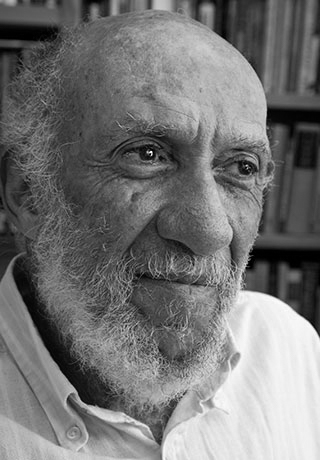
Professor Falk became an adviser to TFF when it was established in 1985.

Share

Leave a Reply

Your email address will not be published. Required fields are marked *

Related Posts

Peace is promoted by constructive proposals and dialogue Four preceding PressInfos have expressed concern over — and criticised — the ongoing, militarisation of the EU. Some will say: but there are no alternatives. We believe that there are always alternatives, that democracies are characterised by alternatives and choice, and that openly discussed alternatives will improve the quality and legitimacy of society’s decision–making. In addition, it is an intellectual and moral challenge to not only criticise but also be constructive. If we only tell people that we think they are wrong, they are not likely to listen. However, if we say: what are your views on this set of ideas and steps? — we may sometimes engage them in dialogue and sow a seed. Most people in power circles live their daily lives in in a time frame and a social space where certain ideas, viewpoints and concepts are just not...
Photos © TFF 2000 Read PressInfo 90 “Lift the Sanctions and Bring More Aid to Yugoslavia” See Pictures from Belgrade © TFF 2000 Please reprint, copy, archive, quote or re-post this item, but please retain the source.
Farhang Jahanpour TFF Associate, former Board member February 11, 2026 Oxford (Special to Informed Comment; Feature) – Today, 11 February, marks the 47th anniversary of the victory of the Islamic Revolution in Iran, and coincidentally, it also marks the 15th anniversary of the ousting of Hosni Mubarak after 30 years of oppressive rule. There were some other uprisings during what came to be known as the Arab Spring, which resulted in the ousting of ruling dictators. Undeterred, Iranian leaders, after the terrible carnage in January this year, are making big plans to celebrate the anniversary of the 1979 Islamic Revolution. Many people optimistically assume that massive popular revolutions against dictators will automatically result in the establishment of democratic governments. Unfortunately, the aftermath of the Iranian revolution and the massive uprisings by Arab masses during the so-called Arab Spring have led to the establishment of even worse regimes. Far from resulting in...

Recent Articles

Jan Oberg May 15, 2026 Go to this Fox News page and scroll the whole way down: President Donald Trump tells the world that his meeting with President Xi Jinping yielded a lot of very concrete political and economic results – of course, only where the Chinese side, according to him, agreed with him. He does not mention the Taiwan issue, but Secretary of State, Marco Rubio, says that it did not feature prominently in their talks and that the US policy on Taiwan has not changed. Then go to China Daily – or Global Times – and you will see that for the Chinese it is framework, principles, structure of cooperation etc. that matters – all embedded in the overall idea of “constructive bilateral relationship of strategic stability.” Nowhere is any concrete agreement or deal – all that Trump refers to – mentioned. At the general level, this gives you insights into the very different social...
Lena Petrova of “World Affairs In Context” with more than half a million subscribers on YouTube wanted to explore what a peace researcher like me has to say about, among other things, the First and the Second Cold War and why eethics has disappeared from politics. I am particularly happy about this conversation that also yielded an amazing number of very appreciative comments on YouTube. No doubt, people are longing for alternatives, including peace perspectives.
The MIMAC – Military-Industrial-Media-Academic Complex – drives the world’s rampant militarism and wars without end. Here is a short reflection of how it works against all interests of humanity. #5 deals with why there is no real enemy or threat images/analysis. It’s all ex-post constructions. And, btw, theTFF Peace Pulse is now on Rumble.

TFF on Substack

Discover more from TFF Transnational Foundation & Jan Oberg.

Most Popular

Jan Oberg May 15, 2026 Go to this Fox News page and scroll the whole way down: President Donald Trump tells the world that his meeting with President Xi Jinping yielded a lot of very concrete political and economic results – of course, only where the Chinese side, according to him, agreed with him. He does not mention the Taiwan issue, but Secretary of State, Marco Rubio, says that it did not feature prominently in their talks and that the US policy on Taiwan has not changed. Then go to China Daily – or Global Times – and you will see that for the Chinese it is framework, principles, structure of cooperation etc. that matters – all embedded in the overall idea of “constructive bilateral relationship of strategic stability.” Nowhere is any concrete agreement or deal – all that Trump refers to – mentioned. At the general level, this gives you insights into the very different social...
Lena Petrova of “World Affairs In Context” with more than half a million subscribers on YouTube wanted to explore what a peace researcher like me has to say about, among other things, the First and the Second Cold War and why eethics has disappeared from politics. I am particularly happy about this conversation that also yielded an amazing number of very appreciative comments on YouTube. No doubt, people are longing for alternatives, including peace perspectives.
The MIMAC – Military-Industrial-Media-Academic Complex – drives the world’s rampant militarism and wars without end. Here is a short reflection of how it works against all interests of humanity. #5 deals with why there is no real enemy or threat images/analysis. It’s all ex-post constructions. And, btw, theTFF Peace Pulse is now on Rumble.
Read More
Screenshot-2026-05-15-103534
Jan Oberg May 15, 2026 Go to this Fox News page and scroll the whole way down: President Donald Trump tells the world that his meeting with President Xi Jinping yielded a lot of very concrete political and economic results – of course, only where the Chinese side, according to him, agreed with him. He does not mention the Taiwan issue, but Secretary of State, Marco Rubio, says that it did not feature prominently in their talks and that the US policy on Taiwan has not changed. Then go to China Daily – or Global Times – and you will see that for the Chinese it is framework, principles, structure of cooperation etc. that matters – all embedded in the overall idea of “constructive bilateral relationship of strategic stability.” Nowhere is any concrete agreement or deal – all that Trump refers to – mentioned. At the general level, this gives you insights into the very different social...
Screenshot-2026-05-12-104023
Lena Petrova of “World Affairs In Context” with more than half a million subscribers on YouTube wanted to explore what a peace researcher like me has to say about, among other things, the First and the Second Cold War and why eethics has disappeared from politics. I am particularly happy about this conversation that also yielded an amazing number of very appreciative comments on YouTube. No doubt, people are longing for alternatives, including peace perspectives.
Screenshot-2026-04-13-154551 (2)
The MIMAC – Military-Industrial-Media-Academic Complex – drives the world’s rampant militarism and wars without end. Here is a short reflection of how it works against all interests of humanity. #5 deals with why there is no real enemy or threat images/analysis. It’s all ex-post constructions. And, btw, theTFF Peace Pulse is now on Rumble.
Screenshot-2026-04-13-154551 (1)
Jan Oberg, TFF director April 28, 2026 In this third TFF Peace Pulse, I make the important distinction between the violence and the conflict that violence is a symptom of. If you want peace, focus on the underlying conflict because that is the key to resolution, peacemaking, and a better future for the parties. The West is obsessed with violence, just look around you – and 90+ per cent of the public debate is about military issues and other violence – totally wasted for peace. These Peace Pulses will only be published here a few times. You will also not find them on YouTube and Vimeo because both platforms have blocked TFF and me; you know, peace is dangerous these days. Most TFF’s videos since 2007 are now on Rumble.
Screenshot-2026-04-13-154551
In contrast to most, we’ll bring alternatives, solutions, hope and strategies for a better future. Times are dangerous, yes, but that only intensifies the need for constructive thinking and action! Jan Oberg, TFF director April 13, 2026 The new TFF Peace Pulse uses video messages in a new way: Max 3-5-minute-long comments, ideas or perhaps mini-lectures, all about peace – positive peace. We launch them today on April 13, 2026 with a carefully crafted visual aesthetic fitting the content. We hope to publish them regularly from now on. We launch Peace Pulse (PP) – for a number of reasons. The world is in chaos, and there are countless reasons to feel concerned, frustrated, even angry. The atmosphere is saturated with doom and gloom, with negative energy and rear‑mirror thinking, while vision, imagination, alternatives, strategies and genuine future‑mindedness remain in short supply. And without them, we simply can’t save the world. Looking at problems from a hundred angles will...
IMG_5165 (1)
PART II — Publishing Peace in a System That Prioritises Militarism Jan Oberg, TFF director April 10, 2026 How TFF Maintains a Daily Voice in a Digital World Built for Noise This article is part of the series “TFF at 40″ and it invites you to learn about Four Decades of Publishing Peace. It takes a look at how a small, people‑financed peace foundation has communicated across four generations of technology — from wax stencils and fax machines to mass email and Substack — and why TFF continues to publish every single day in a system that rewards noise, conflict, and militarism. ◆ What it means to publish peace every single day in a digital system built for 24/7 news and other noise, confrontation, and militarism. How TFF’s independence, continuity, and global readership defy algorithms, donor cycles, and Western media censorhip — and why the Majority World keeps listening. When the...


