
The dangers of not going forward -a new UN report published today


LONDON – The world is still going forward, but only just. After September 11th, after Enron, after the stock market crash, after the Israeli invasion of Palestine, after the war talk about Iraq that continuously hovers in the air above us like some putrid cloud, and after the latest reports that say that AIDS is the biggest plague in the history of humanity, we can still argue the world on the whole is getting better.

Economic growth is picking up in Africa and the share of the world’s people living in extreme poverty is slowly but steadily declining. Primary school enrolments have risen worldwide. Since 1990, 800 million people have gained access to improved water supplies and improved sanitation. On the political and civil liberties front there has also been enormous progress. Since 1980 some eighty countries have taken significant steps towards democratisation, and the number of people being killed by war has fallen dramatically.

Still, it is obvious to all of us that these achievements are precariousness. If the Clinton boom can evaporate overnight so can all this. We cannot let our guard down for a moment.

Today the United Nations Development Program publishes its annual Human Development report and its director, Mark Malloch Brown, observes in his downbeat preface: “Many countries are poorer than 10, 20 and in some cases 30 years ago. Just as troubling, the flush of euphoria that saw the number of countries embracing many of the hallmarks of democracy soar to 140 over the past fifteen years is starting to turn into frustration and despair.”

Are we going backwards? “Globalisation is forging greater independence, yet the world seems more fragmented- between rich and poor, between the powerful and the powerless, and between those who welcome the new global economy and those who demand a different course.” One of the important reasons for the rapid rate of progress during the 1990s was that no one was any longer distracted by the demands of the Cold War- building up alliances, winning friends and influencing people, “he may be a son-of a-bitch but he is our son-of-a-bitch”, and all the Machiavellian policies that went with it. At last human rights, democracy and a more honest-to-goodness economic development were able to move to centre stage. Today there is a real danger, despite the Bush Administration’s decision to sharply increase economic aid, that in this new age when “who is not with us is against us” we will regress to a state of affairs where strategic alliances move back to the centre of national policy-making. Who is given aid and help will depend once again more on their political stance vis a vis America than on their long term economic and social policies, and human rights will be traded off for a supposed added security.

Two problems seem intractable and a third is becoming more complicated. The first is what the UNDP calls “income poverty”. To halve the share of people living on $1 a day we need to see at least an annual per capita income growth in poor countries of 3.7% a year. But even in the “boom decade” of the 1990s only 24 developing countries grew that fast. (Admittedly China and India, which between them contain two thirds of the people of the developing world, were of the 24 and that is a momentous achievement.) 127 countries with 35% of the world’s population have not grown at this rate. Indeed, many have suffered negative growth in recent years.

The second major problem is child mortality. The good news is that 85 countries appear to be on track to reduce by the year 2015 under 5 mortality rates by two thirds compared with 1990 levels. But another 81 countries with more than 60% of the world’s people won’t, at their present rate, make this goal. Most of these countries are in Africa.

On the democracy front a growing number of the new democracies of the 1980s and 90s are finding themselves in trouble. Too many are slipping back into increasingly undemocratic practices, with leaders altering constitutions, bullying weak legislatures and judiciaries and openly manipulating elections. Further, even though majority rule is now established, minorities are persecuted or discriminated against. Too often the absence of a democratic culture means that those who lose elections are either persecuted by the winners or refuse to accept the electoral verdict. Democracies require not just legitimate governments but legitimate oppositions too. Of the 81 countries that embraced full democracy in the last twenty years only 47 have gone on to become fully functioning democracies. Several have returned to authoritarian rule- a mercifully small 6 – but many other countries have got stalled somewhere between democracy and authoritarianism.

The progress of the world is very finely balanced. Since the 1980s – thank Jimmy Carter for this- and even more since the end of the Cold War- thank Mikhail Gorbachev for that – the steps forward became very apparent. But they will only continue if the world gives the unmet problems its undivided attention. India and Pakistan have not been doing that with their talk of nuclear war. Africa with its multitude of wars and run away corruption has not either. Nor has America which under President George Bush sees the world through an ever-narrowing prism of self-interest.

I can be reached by phone +44 7785 351172 and e-mail: JonatPower@aol.com

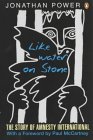
Copyright © 2002 By JONATHAN POWERFollow this link to read about – and order – Jonathan Power’s book written for the

40th Anniversary of Amnesty International

“Like Water on Stone – The Story of Amnesty International”
Foreign affairs columnist, film-maker and author

Share

Leave a Reply

Your email address will not be published. Required fields are marked *

Related Posts

Peace is promoted by constructive proposals and dialogue Four preceding PressInfos have expressed concern over — and criticised — the ongoing, militarisation of the EU. Some will say: but there are no alternatives. We believe that there are always alternatives, that democracies are characterised by alternatives and choice, and that openly discussed alternatives will improve the quality and legitimacy of society’s decision–making. In addition, it is an intellectual and moral challenge to not only criticise but also be constructive. If we only tell people that we think they are wrong, they are not likely to listen. However, if we say: what are your views on this set of ideas and steps? — we may sometimes engage them in dialogue and sow a seed. Most people in power circles live their daily lives in in a time frame and a social space where certain ideas, viewpoints and concepts are just not...
Photos © TFF 2000 Read PressInfo 90 “Lift the Sanctions and Bring More Aid to Yugoslavia” See Pictures from Belgrade © TFF 2000 Please reprint, copy, archive, quote or re-post this item, but please retain the source.
Av FRANK SØHOLM GREVIL 16 augusti 2004  Vi er nu nået til tredje akt i det absurde teaterstykke, der i analogi med de store skueprocesser i Moskva 1936-38 er blevet døbt ‘Grevil-sagen’. Første akt bestod i min anonyme fremlæggelse af egenhændigt nedklassificerede rapporter i Berlingske Tidende i februar og marts. Andet akt udgjordes af min fremtræden med navn og billede i Information i april samt den efterfølgende mediestorm, som uden min direkte medvirken kostede en forsvarsminister taburetten samt en sigtelse for brud på tavshedspligten. Tredje akt bliver en retssag, hvor jeg står tiltalt for at have overtrådt straffelovens bestemmelser om uberettiget videregivelse eller udnyttelse af fortrolige oplysninger. Statsanklageren har ovenikøbet valgt at påberåbe sig særligt skærpende omstændigheder. Da jeg aldrig har modtaget betaling for at stille rapporterne til rådighed eller lade mig interviewe, må det skærpende bestå i, at “videregivelsen eller udnyttelsen er sket under sådanne omstændigheder, at det påfører...

Recent Articles

Jan Oberg May 15, 2026 Go to this Fox News page and scroll the whole way down: President Donald Trump tells the world that his meeting with President Xi Jinping yielded a lot of very concrete political and economic results – of course, only where the Chinese side, according to him, agreed with him. He does not mention the Taiwan issue, but Secretary of State, Marco Rubio, says that it did not feature prominently in their talks and that the US policy on Taiwan has not changed. Then go to China Daily – or Global Times – and you will see that for the Chinese it is framework, principles, structure of cooperation etc. that matters – all embedded in the overall idea of “constructive bilateral relationship of strategic stability.” Nowhere is any concrete agreement or deal – all that Trump refers to – mentioned. At the general level, this gives you insights into the very different social...
Lena Petrova of “World Affairs In Context” with more than half a million subscribers on YouTube wanted to explore what a peace researcher like me has to say about, among other things, the First and the Second Cold War and why eethics has disappeared from politics. I am particularly happy about this conversation that also yielded an amazing number of very appreciative comments on YouTube. No doubt, people are longing for alternatives, including peace perspectives.
The MIMAC – Military-Industrial-Media-Academic Complex – drives the world’s rampant militarism and wars without end. Here is a short reflection of how it works against all interests of humanity. #5 deals with why there is no real enemy or threat images/analysis. It’s all ex-post constructions. And, btw, theTFF Peace Pulse is now on Rumble.

TFF on Substack

Discover more from TFF Transnational Foundation & Jan Oberg.

Most Popular

Jan Oberg May 15, 2026 Go to this Fox News page and scroll the whole way down: President Donald Trump tells the world that his meeting with President Xi Jinping yielded a lot of very concrete political and economic results – of course, only where the Chinese side, according to him, agreed with him. He does not mention the Taiwan issue, but Secretary of State, Marco Rubio, says that it did not feature prominently in their talks and that the US policy on Taiwan has not changed. Then go to China Daily – or Global Times – and you will see that for the Chinese it is framework, principles, structure of cooperation etc. that matters – all embedded in the overall idea of “constructive bilateral relationship of strategic stability.” Nowhere is any concrete agreement or deal – all that Trump refers to – mentioned. At the general level, this gives you insights into the very different social...
Lena Petrova of “World Affairs In Context” with more than half a million subscribers on YouTube wanted to explore what a peace researcher like me has to say about, among other things, the First and the Second Cold War and why eethics has disappeared from politics. I am particularly happy about this conversation that also yielded an amazing number of very appreciative comments on YouTube. No doubt, people are longing for alternatives, including peace perspectives.
The MIMAC – Military-Industrial-Media-Academic Complex – drives the world’s rampant militarism and wars without end. Here is a short reflection of how it works against all interests of humanity. #5 deals with why there is no real enemy or threat images/analysis. It’s all ex-post constructions. And, btw, theTFF Peace Pulse is now on Rumble.
Read More
Screenshot-2026-05-15-103534
Jan Oberg May 15, 2026 Go to this Fox News page and scroll the whole way down: President Donald Trump tells the world that his meeting with President Xi Jinping yielded a lot of very concrete political and economic results – of course, only where the Chinese side, according to him, agreed with him. He does not mention the Taiwan issue, but Secretary of State, Marco Rubio, says that it did not feature prominently in their talks and that the US policy on Taiwan has not changed. Then go to China Daily – or Global Times – and you will see that for the Chinese it is framework, principles, structure of cooperation etc. that matters – all embedded in the overall idea of “constructive bilateral relationship of strategic stability.” Nowhere is any concrete agreement or deal – all that Trump refers to – mentioned. At the general level, this gives you insights into the very different social...
Screenshot-2026-05-12-104023
Lena Petrova of “World Affairs In Context” with more than half a million subscribers on YouTube wanted to explore what a peace researcher like me has to say about, among other things, the First and the Second Cold War and why eethics has disappeared from politics. I am particularly happy about this conversation that also yielded an amazing number of very appreciative comments on YouTube. No doubt, people are longing for alternatives, including peace perspectives.
Screenshot-2026-04-13-154551 (2)
The MIMAC – Military-Industrial-Media-Academic Complex – drives the world’s rampant militarism and wars without end. Here is a short reflection of how it works against all interests of humanity. #5 deals with why there is no real enemy or threat images/analysis. It’s all ex-post constructions. And, btw, theTFF Peace Pulse is now on Rumble.
Screenshot-2026-04-13-154551 (1)
Jan Oberg, TFF director April 28, 2026 In this third TFF Peace Pulse, I make the important distinction between the violence and the conflict that violence is a symptom of. If you want peace, focus on the underlying conflict because that is the key to resolution, peacemaking, and a better future for the parties. The West is obsessed with violence, just look around you – and 90+ per cent of the public debate is about military issues and other violence – totally wasted for peace. These Peace Pulses will only be published here a few times. You will also not find them on YouTube and Vimeo because both platforms have blocked TFF and me; you know, peace is dangerous these days. Most TFF’s videos since 2007 are now on Rumble.
Screenshot-2026-04-13-154551
In contrast to most, we’ll bring alternatives, solutions, hope and strategies for a better future. Times are dangerous, yes, but that only intensifies the need for constructive thinking and action! Jan Oberg, TFF director April 13, 2026 The new TFF Peace Pulse uses video messages in a new way: Max 3-5-minute-long comments, ideas or perhaps mini-lectures, all about peace – positive peace. We launch them today on April 13, 2026 with a carefully crafted visual aesthetic fitting the content. We hope to publish them regularly from now on. We launch Peace Pulse (PP) – for a number of reasons. The world is in chaos, and there are countless reasons to feel concerned, frustrated, even angry. The atmosphere is saturated with doom and gloom, with negative energy and rear‑mirror thinking, while vision, imagination, alternatives, strategies and genuine future‑mindedness remain in short supply. And without them, we simply can’t save the world. Looking at problems from a hundred angles will...
IMG_5165 (1)
PART II — Publishing Peace in a System That Prioritises Militarism Jan Oberg, TFF director April 10, 2026 How TFF Maintains a Daily Voice in a Digital World Built for Noise This article is part of the series “TFF at 40″ and it invites you to learn about Four Decades of Publishing Peace. It takes a look at how a small, people‑financed peace foundation has communicated across four generations of technology — from wax stencils and fax machines to mass email and Substack — and why TFF continues to publish every single day in a system that rewards noise, conflict, and militarism. ◆ What it means to publish peace every single day in a digital system built for 24/7 news and other noise, confrontation, and militarism. How TFF’s independence, continuity, and global readership defy algorithms, donor cycles, and Western media censorhip — and why the Majority World keeps listening. When the...



