
TFF Adviser Biljana Vankovska on the Situation in Macedonia

Interview with Dr. Biljana Vankovska from the University of Skopje for the Belgrade newspapers “POLITIKA”

Q: In spite of the condemnations that come from the international community and especially NATO, the Albanian terrorists have not ceased armed attacks in southern Serbia and northern Macedonia. The whole region is heavily destabilised. According to your opinion are we facing one more war in the Balkans or we can expect elimination of the tensions?

A: First of all, something like “international community” does not exist. It is euphemism and the real question is who has legitimacy to represent the states and nations in the world. The role of this so-called international community in regard to the current crisis in the Balkans is just declaratory and symbolic. It is quite absurd that UN Security Council who once authorised the unique mission of UNPREDEP in Macedonia (i.e. deployed its forces BEFORE the outbreak of any violence), now when that violence is reality &endash; has nothing to say but looks towards Brussels and waits for a decision to come from there. Your observation that we are coping with a regional problem here is very accurate, and I do think that both governments (of FR Yugoslavia and Macedonia) should undertake a joint action before the international forums and ask for coordinated measures. During the 1999 NATO intervention in Yugoslavia I was repeatedly speaking that Macedonia had become one of NATO’s ‘collateral damages’. I was also warning that soon one could expect spilling over effect in Macedonia (known as an ‘oasis of peace’). Certainly, the international community is ‘surprised’ (once again!) with the developments. Macedonia has always had its internal conflict structure and potential, so it was enough something bad to happen and to take a role of a catalyst (in negative sense of the word) of the conflict cycle. I wish I could believe that the situation would be stabilised soon, especially having in mind the newly signed cease-fire agreement in southern Serbia. However, I am not so sure about the developments in Macedonia. The basic preconditions for peaceful solution are wisdom, knowledge and courage to abstinence violent responses. Unfortunately, at the time being I am simply not able to identify internal actors who would be willing and able to promote the culture of non-violence. The tensions are growing with incredible speed, and any reluctance to undertake resolute actions just worsens the situation.

Q: Are Macedonian security forces capable to control the conflict points in a long run, or even the predominantly Albanian-populated areas?

A: The crucial security problem is not the border one, in spite of the whole seriousness of the situation (i.e. swift spreading of the clashes from one village into several others, killed people, etc.). The problem is not of a military nature and cannot be perceived through the prism of human and technical capabilities of the Macedonian security forces. The prolonged crisis on the border has had a strong echo in society, which is splitting from inside and becomes paranoiac in terms of the distrust between the ethnic groups, the loud cries for discrimination, state terror, more rights for Albanian minority etc. Counter-reaction on the Macedonian side is as expected: there are lot of talks about ‘granted enormous rights’, that there must not be any other steps on expense of the Macedonians, that Macedonians have no other state in reserve etc. In media there is a lot of hate speech, and people are more concerned not about the things that are said bit about the things that are not said explicitly. The state apparatus can keep certain control over the situation for some time, but under such conditions there cannot be any talk about human rights, democracy, and peace. I would not like Macedonia to pay such a high price for its existence.

Q: What is really going on within the Albanian ethnic community in Macedonia right now? Some are engaged in military resistance, others stage peace marches, while the rest calls for federalisation of Macedonia…

A: It is very true that something is going on within the Albanian community. Therefore the leader of the Albanian party (DPA) that is a partner in the governing coalition, Mr. Arabian Hxaferi has evaluated this current problem as internal problem of the Albanians, which should be resolved among them alone. There is a lot of rivalry, both in political and para-military terms, and what makes things very dramatic is that each faction blames the others for copying its own political agenda, which has been promoted since long ago. That agenda includes, certainly, more collective rights for Albanians, change of the constitution and federalisation of the state, bi-lingual official communication etc.). Unfortunately, none of the political parties claims to be a citizen-based party, because it is probably seen as a political suicide. DPA, the member of the governing coalition, is in an enviable situation between a hammer and an anvil: on one hand, it faces open accusations by the armed rebels that they have not achieved anything in terms of declared Albanian cause (the story that reminds a bit on the rise of Kosovo UCK and Ibrahim Rugova), while on the other side with similar accusations stand their political opposition and the Albanian part of ‘civil society’. Because of its weird position DPA staged a peace march with dubious motto “For peace and justice”. In other words, it was balancing between promoting peaceful solutions for the problems and keeping the integrity of the Macedonian state (which behaviour the international community expects from them), and from the other hand &endash; it was flirting with the demands for ‘justice’ (which implied that there were injustices against Albanians in Macedonia). The most absurd aspect of the current situation in misuse of the concepts of human rights, justice and democracy as a mask behind which there are down-to-earth interests and agendas.

Q: It seems that Macedonia is rapidly transforming from ‘oasis of peace’ into a ‘powder keg’. How do you see the future of the Macedonian state?

A: The ‘oasis of peace’ has always been more a metaphor than reality, which brought good image to Macedonian state in the international community especially during the period of struggle for international recognition. On the other hand, it is also true that for ten years there has been a process of building of multiethnic society, a slow but persistent one. Regardless the fact that the achievements were maybe modest, they deserved whole praise because of the opposite developments in the other parts of the former Yugoslavia. In my view, Macedonia is losing its ‘virginity’ and is again transforming into a powder keg (i.e. re-gains its old historical attribute). However, today this powder keg is not related to the rivalry of the neighbouring Balkan states over the Macedonian population and territory. The danger of implosion of Macedonian society is far bigger. The Macedonian state can have future only under peaceful framework. Therefore the crucial question is whether the society has enough internal strength to resolve problems by peaceful means. Certainly, this approach calls for prevention of the negative external influences. It means that the violence should be stopped where it has its origins (i.e. in Kosovo), but also to stop wrong moves of the so-called international community.

Q: You have joined critics against the biased reporting by some international media about the currents in Macedonia? Also you are well known as a consistent criticiser of the role of the international community in the Balkan conflicts. According to your opinion, what should be the appropriate contribution from the side of the international community in regard to the handling the situation and what should they do in long run. And what should we from the region do all together?

A: I would not pose the question about long term steps because the situation is more than urgent. Unfortunately the measure of time differs a lot in the Balkans. It is something that the so-called international community never understood. On the other hand, I would not rely too much on the solutions imposed from outside. I may sound too cynical but what we have seen so far in this region has been a classical example of conflict mismanagement and there was no single success story. That success story should have been Macedonia but there is nothing left from that image now. The international forces in Kosovo has become hostages and they are mostly afraid of their former ‘protégés’ that they are not able to control. It is well known how sensitive is the American public when it comes to coffins. Having in mind the electoral promises of the President Bush, then it becomes clear how absurd is the position of the American troops in Kosovo. It is very indicative that the newly promoted UCK commanders in Macedonia (could be seen on CNN, BBC reports) have sent a clear message to the American people not to be afraid for their soldiers and that their struggle is only directed towards the Macedonian state. As long any of the conflict parties perceives the external forces, as allies (or enemies) peace cannot get a chance.
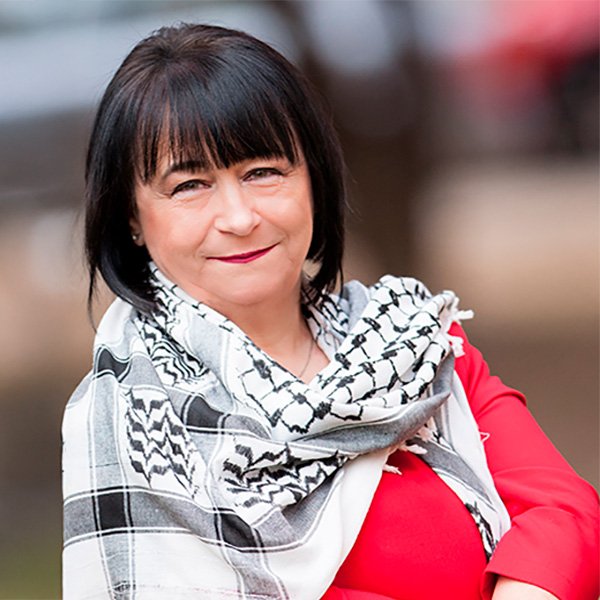

Ph.D. Political Science, Department of Political Studies, Faculty of Law, University of Skopje, 1992 MA Political Science, Department for Political Studies, Faculty of Law, University of Skopje, 1988 BA Law, Department of Political and Administrative Studies, Faculty of Law, University of Skopje, 1982

Share

Leave a Reply

Your email address will not be published. Required fields are marked *

Related Posts

Peace is promoted by constructive proposals and dialogue Four preceding PressInfos have expressed concern over — and criticised — the ongoing, militarisation of the EU. Some will say: but there are no alternatives. We believe that there are always alternatives, that democracies are characterised by alternatives and choice, and that openly discussed alternatives will improve the quality and legitimacy of society’s decision–making. In addition, it is an intellectual and moral challenge to not only criticise but also be constructive. If we only tell people that we think they are wrong, they are not likely to listen. However, if we say: what are your views on this set of ideas and steps? — we may sometimes engage them in dialogue and sow a seed. Most people in power circles live their daily lives in in a time frame and a social space where certain ideas, viewpoints and concepts are just not...
Photos © TFF 2000 Read PressInfo 90 “Lift the Sanctions and Bring More Aid to Yugoslavia” See Pictures from Belgrade © TFF 2000 Please reprint, copy, archive, quote or re-post this item, but please retain the source.
Av FRANK SØHOLM GREVIL 16 augusti 2004  Vi er nu nået til tredje akt i det absurde teaterstykke, der i analogi med de store skueprocesser i Moskva 1936-38 er blevet døbt ‘Grevil-sagen’. Første akt bestod i min anonyme fremlæggelse af egenhændigt nedklassificerede rapporter i Berlingske Tidende i februar og marts. Andet akt udgjordes af min fremtræden med navn og billede i Information i april samt den efterfølgende mediestorm, som uden min direkte medvirken kostede en forsvarsminister taburetten samt en sigtelse for brud på tavshedspligten. Tredje akt bliver en retssag, hvor jeg står tiltalt for at have overtrådt straffelovens bestemmelser om uberettiget videregivelse eller udnyttelse af fortrolige oplysninger. Statsanklageren har ovenikøbet valgt at påberåbe sig særligt skærpende omstændigheder. Da jeg aldrig har modtaget betaling for at stille rapporterne til rådighed eller lade mig interviewe, må det skærpende bestå i, at “videregivelsen eller udnyttelsen er sket under sådanne omstændigheder, at det påfører...

Recent Articles

PressInfo # 141, December 21, 2001It’s time to prepare reconciliation between Albanians and Serbs PressInfo # 140, December 14, 2001Ibrahim Rugova’s decade-long leadership in Kosovo/a PressInfo # 139, 11. december, 2001En god nyhet: Jugoslaviens Sannings- och försoningskommission PressInfo # 139, 11. december, 2001Gode nyheder: Jugoslaviens Sandheds- og Forsoningskommission PressInfo # 139, December 11, 2001Good news: Yugoslavia’s Truth and Reconciliation Commission PressInfo # 138, November 8, 2001TFF co-founder PhD with thesis about young people with roots in other cultures PressInfo # 138, November 8, 2001TFF:s medstiftare doktor på avhandling om unga med ursprung i andra kulturer PressInfo # 137, October 17, 2001A new Marshall Plan: Advancing human security and controlling terrorism PressInfo # 136, October 15, 2001The UN and Annan really deserve it PressInfo # 135, October 10, 2001Preventing a terrorist mushroom cloud PressInfo # 134, 17 oktober, 2001Sverige og 11. september PressInfo # 134, October 9, 2001Sweden and September 11...
Peace is promoted by constructive proposals and dialogue Four preceding PressInfos have expressed concern over — and criticised — the ongoing, militarisation of the EU. Some will say: but there are no alternatives. We believe that there are always alternatives, that democracies are characterised by alternatives and choice, and that openly discussed alternatives will improve the quality and legitimacy of society’s decision–making. In addition, it is an intellectual and moral challenge to not only criticise but also be constructive. If we only tell people that we think they are wrong, they are not likely to listen. However, if we say: what are your views on this set of ideas and steps? — we may sometimes engage them in dialogue and sow a seed. Most people in power circles live their daily lives in in a time frame and a social space where certain ideas, viewpoints and concepts are just not...
Photos © TFF 2000 Read PressInfo 90 “Lift the Sanctions and Bring More Aid to Yugoslavia” See Pictures from Belgrade © TFF 2000 Please reprint, copy, archive, quote or re-post this item, but please retain the source.

TFF on Substack

Discover more from TFF Transnational Foundation & Jan Oberg.

Most Popular

PressInfo # 141, December 21, 2001It’s time to prepare reconciliation between Albanians and Serbs PressInfo # 140, December 14, 2001Ibrahim Rugova’s decade-long leadership in Kosovo/a PressInfo # 139, 11. december, 2001En god nyhet: Jugoslaviens Sannings- och försoningskommission PressInfo # 139, 11. december, 2001Gode nyheder: Jugoslaviens Sandheds- og Forsoningskommission PressInfo # 139, December 11, 2001Good news: Yugoslavia’s Truth and Reconciliation Commission PressInfo # 138, November 8, 2001TFF co-founder PhD with thesis about young people with roots in other cultures PressInfo # 138, November 8, 2001TFF:s medstiftare doktor på avhandling om unga med ursprung i andra kulturer PressInfo # 137, October 17, 2001A new Marshall Plan: Advancing human security and controlling terrorism PressInfo # 136, October 15, 2001The UN and Annan really deserve it PressInfo # 135, October 10, 2001Preventing a terrorist mushroom cloud PressInfo # 134, 17 oktober, 2001Sverige og 11. september PressInfo # 134, October 9, 2001Sweden and September 11...
Peace is promoted by constructive proposals and dialogue Four preceding PressInfos have expressed concern over — and criticised — the ongoing, militarisation of the EU. Some will say: but there are no alternatives. We believe that there are always alternatives, that democracies are characterised by alternatives and choice, and that openly discussed alternatives will improve the quality and legitimacy of society’s decision–making. In addition, it is an intellectual and moral challenge to not only criticise but also be constructive. If we only tell people that we think they are wrong, they are not likely to listen. However, if we say: what are your views on this set of ideas and steps? — we may sometimes engage them in dialogue and sow a seed. Most people in power circles live their daily lives in in a time frame and a social space where certain ideas, viewpoints and concepts are just not...
Photos © TFF 2000 Read PressInfo 90 “Lift the Sanctions and Bring More Aid to Yugoslavia” See Pictures from Belgrade © TFF 2000 Please reprint, copy, archive, quote or re-post this item, but please retain the source.
Read More
Imagen-thumbnail-The-Transnational-1
PressInfo # 141, December 21, 2001It’s time to prepare reconciliation between Albanians and Serbs PressInfo # 140, December 14, 2001Ibrahim Rugova’s decade-long leadership in Kosovo/a PressInfo # 139, 11. december, 2001En god nyhet: Jugoslaviens Sannings- och försoningskommission PressInfo # 139, 11. december, 2001Gode nyheder: Jugoslaviens Sandheds- og Forsoningskommission PressInfo # 139, December 11, 2001Good news: Yugoslavia’s Truth and Reconciliation Commission PressInfo # 138, November 8, 2001TFF co-founder PhD with thesis about young people with roots in other cultures PressInfo # 138, November 8, 2001TFF:s medstiftare doktor på avhandling om unga med ursprung i andra kulturer PressInfo # 137, October 17, 2001A new Marshall Plan: Advancing human security and controlling terrorism PressInfo # 136, October 15, 2001The UN and Annan really deserve it PressInfo # 135, October 10, 2001Preventing a terrorist mushroom cloud PressInfo # 134, 17 oktober, 2001Sverige og 11. september PressInfo # 134, October 9, 2001Sweden and September 11...
Imagen-thumbnail-The-Transnational-1
Peace is promoted by constructive proposals and dialogue Four preceding PressInfos have expressed concern over — and criticised — the ongoing, militarisation of the EU. Some will say: but there are no alternatives. We believe that there are always alternatives, that democracies are characterised by alternatives and choice, and that openly discussed alternatives will improve the quality and legitimacy of society’s decision–making. In addition, it is an intellectual and moral challenge to not only criticise but also be constructive. If we only tell people that we think they are wrong, they are not likely to listen. However, if we say: what are your views on this set of ideas and steps? — we may sometimes engage them in dialogue and sow a seed. Most people in power circles live their daily lives in in a time frame and a social space where certain ideas, viewpoints and concepts are just not...
Imagen-thumbnail-The-Transnational-1
Photos © TFF 2000 Read PressInfo 90 “Lift the Sanctions and Bring More Aid to Yugoslavia” See Pictures from Belgrade © TFF 2000 Please reprint, copy, archive, quote or re-post this item, but please retain the source.
Imagen-thumbnail-The-Transnational-1
Av FRANK SØHOLM GREVIL 16 augusti 2004  Vi er nu nået til tredje akt i det absurde teaterstykke, der i analogi med de store skueprocesser i Moskva 1936-38 er blevet døbt ‘Grevil-sagen’. Første akt bestod i min anonyme fremlæggelse af egenhændigt nedklassificerede rapporter i Berlingske Tidende i februar og marts. Andet akt udgjordes af min fremtræden med navn og billede i Information i april samt den efterfølgende mediestorm, som uden min direkte medvirken kostede en forsvarsminister taburetten samt en sigtelse for brud på tavshedspligten. Tredje akt bliver en retssag, hvor jeg står tiltalt for at have overtrådt straffelovens bestemmelser om uberettiget videregivelse eller udnyttelse af fortrolige oplysninger. Statsanklageren har ovenikøbet valgt at påberåbe sig særligt skærpende omstændigheder. Da jeg aldrig har modtaget betaling for at stille rapporterne til rådighed eller lade mig interviewe, må det skærpende bestå i, at “videregivelsen eller udnyttelsen er sket under sådanne omstændigheder, at det påfører...
Imagen-thumbnail-The-Transnational-1
Af Svenska Irakkommittén mot de Ekonomiska Sanktionerna (SIES) 13 september 2002 FN:s ekonomiska sanktioner mot Irak har nu pågått i tolv år och drabbat det irakiska folket med svåra lidanden. Enligt FN:s egna siffror har mer än 1,5 miljoner människor, varav ca 600 000 barn, dött som en direkt följd av sanktionerna. Dessutom har ett lågintensivt bombkrig mot landet pågått under dessa år. Av all denna förödelse- orsakad huvudsakligen av amerikansk och brittisk politik- har Saddam Husseins brutala och diktatoriska regim snarast stärkts än försvagats. Nu förbereder USA under president Bushs ledning ett storskaligt bombkrig mot Irak som kommer att innebära ett ännu större lidande för civilbefolkningen. Ett sådant krig kommer dessutom att ytterligare undergräva freden och säkerheten i världen. Att upprätta en demokratisk regim i Irak är det irakiska folkets angelägenhet och får enligt folkrätten inte ske med krigshandlingar utifrån. Folkrätten och FN:s stadgar måste respekteras. Vi vädjar till...

