
Reflections on the great Palestinian prison strike of 2012

Ché Guevera was once asked what was at the root of his revolutionary commitment. His response, which we should all take some moments to reflect upon, “it is about love.” Reading the words of Khader Adnan (‘Open Letter to the People of the World’) and Thaer Halahleh (‘Letter to my Daughter’), or the comments of Hana Shalabi’s mother and sister, or Bilal Diab’s father, led me to recall Guevera’s illuminating comment. Only those with closed minds can read such words of devotion without feeling that the animating hunger of these Palestinians is for peace and justice, for love and dignity, and that their heroic strikes would have impossible without cherishing life and future freedom for the people of Palestine.

The nature of extreme self-sacrifice, provided it is autonomous and nonviolent, is an inherently spiritual undertaking even when its external appearance is political. For Christians, and others moved to tears by the life of Jesus, the Crucifixion exemplifies this encounter between the political and the spiritual.

We can only marvel at the duplicitous double standards of the media. Without the Internet and Al Jazeera the West, especially the United States, would have rendered invisible these challenges to Israeli abuses of human rights and international humanitarian law. Only the settlement of the strike, and to some extent fear of Palestinian unrest should one of these hunger strikes die while in detention, was deemed somewhat newsworthy by the Western press.

As many have observed, the media treatment of the Chinese dissident, Chen Guangcheng, or the global attention given to the Israeli soldier held captive in Gaza, underscores the media victimization of the Palestinian struggle, and exposes the illegitimacy of an information regime that rests upon such a flagrant disregard for objectivity, taking refuge in ill-disguised double standards: magnifying Israeli grievances, disappearing Palestinian wrongs.

The Israeli media did have a cynical preoccupation with the hunger strikes wavering between worries of seeming to give in to pressure exerted by fears if the strikes continued Third Intifada and the characteristic concern of an oppressor that accommodating grievances would be treated as a show of weakness and an encouragement of further Palestinian resistance activity. For this reason the agreement reached to end the main strike has been sharply criticized by Israeli right-wing politicians.

Israel is not alone in addressing prison hunger strikes in a detached manner that refuses to acknowledge the moral motivation, physical courage and discipline, and the righteousness of the demands for reforms.

A 2011 protest hunger strike in a notorious California Pelican Bay State Prison and other prisons around the state led to this monumentally icy reaction from Nancy Kincaid, Director of Communications for California Correctional Health Service: “They have the right to die of starvation if they wish.” And as the late Kurt Vonnegut so memorably reflected on the terror bombing of Dresden during World War II: “And so it goes.”

The ending of the hunger strikes on the eve of the 64th observance of Nakba Day is above all a protest against the particular reality of these protests against administrative detention, arrest procedures of a police state, and unacceptable prison regulations that include extensive and extended consignment to solitary confinement, taunting of prisoner suffering, denial of family visits (especially for Gaza families), and a variety of forms of inhumane treatment.

It also needs to be understood as part of the general Palestinian struggle for protection and rights, above all, the inalienable right of self-determination, which is accorded to every people by virtue of Article 1 of both Human Rights Covenants.

Any agreement reached with Israel should be carefully monitored and scrutinized. It was a disgrace that Israel should have released Hana Shalabi but punitively ‘deported’ her to Gaza where she is required to remain for three years before returning to her family and home in the West Bank village of Burqin.

Without charges to sentence Shalabi to what many have called the world’s largest open air prison is to compound the wrong done by detaining her in the first place, and is an implied admission by Israel that it is a punishment to be required to live in blockaded Gaza.

Throughout this period of hunger strikes that was started by Khader Adnan on the day following his December 17th arrest I and others have taken notice of the IRA strike in the Maze Prison in Northern Ireland in which ten Irish prisoners fasted unto death, including the martyred Irish hero, Bobby Sands. What I have learned of while following the developments in the Palestinian strikes was the earlier celebrated hunger strike of Terrence MacSwiney, the elected lord mayor of county Cork who was arrested, charged, and convicted of his activism in the Irish struggle against British colonial rule.

MacSwiney upon conviction told a stunned court, “I whall be free, alive, or dead, within a month.” He died on October 25, 1920 in the Brixton Prison after an extraordinary 74 day hunger strike, and has been part of the proud tradition of Irish revolutionary iconography ever since. (For a detailed account see Dave Hannigan’s Terrence MacSwiney: The Hunger Strike that Rocked an Empire (Dublin: Obrien Press, 2010))

Unlike the blanket of denial and silence that has accompanied the Palestinian acts of protest, the MacSwiney story “became a worldwide sensation, causing workers to lay down tools on the New York waterfront, sparking riots in Barcelona and mass demonstrations from Buenos Aires to Boston. The international press covered his decline on a daily basis, raising the profile of the cause of Irish Independence to previously unheard-of-heights.” (from back cover material)

Aside from the contrast in media coverage, there is the notable fact that MacSwiney faced charges in an open court, and was allowed to speak in his own defense. Governments that claim to be democracies and respectful of human rights and the rule of law should waste no time in abolishing administrative detention provisions. And if that is not done, at least the pretension of being a constitutional democracy should be abandoned.

It’s time that we demanded that ‘power speak truth to the people’!
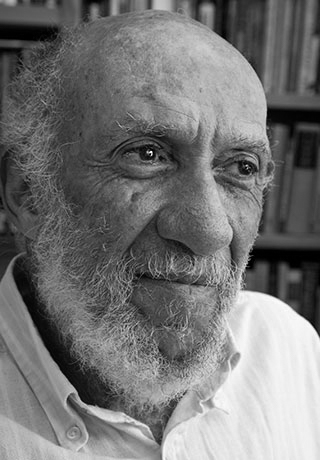
Professor Falk became an adviser to TFF when it was established in 1985.

Share

Leave a Reply

Your email address will not be published. Required fields are marked *

Related Posts

A donors’ conference, co-sponsered by the Burundian government, the Belgian government and UNDP will be held in Brussels January 12-13, 2004. This PressInfo offers a perspective on its urgency. See also TFF’s new Burundi Forum. Imagine for a moment that politics is about goodness and generosity. Where could a few million dollars of government aid and a few civil society organisations – guaranteed – win the hearts of extremely poor millions who want peace and already work hard to achieve it after 10 years of war and genocide? The answer is Burundi, the heart-shaped country in the heart of Africa. Burundi makes a good story from Africa. But what does the world know about Burundi, its problems and struggles? Burundi’s tough reality Here are the basic facts. Burundi’s population is about 7 million and it is number 171 out of the 175 countries on the UNDP’s human development index. Their life...
Peace is promoted by constructive proposals and dialogue Four preceding PressInfos have expressed concern over — and criticised — the ongoing, militarisation of the EU. Some will say: but there are no alternatives. We believe that there are always alternatives, that democracies are characterised by alternatives and choice, and that openly discussed alternatives will improve the quality and legitimacy of society’s decision–making. In addition, it is an intellectual and moral challenge to not only criticise but also be constructive. If we only tell people that we think they are wrong, they are not likely to listen. However, if we say: what are your views on this set of ideas and steps? — we may sometimes engage them in dialogue and sow a seed. Most people in power circles live their daily lives in in a time frame and a social space where certain ideas, viewpoints and concepts are just not...
Photos © TFF 2000 Read PressInfo 90 “Lift the Sanctions and Bring More Aid to Yugoslavia” See Pictures from Belgrade © TFF 2000 Please reprint, copy, archive, quote or re-post this item, but please retain the source.

Recent Articles

Jan Oberg May 15, 2026 Go to this Fox News page and scroll the whole way down: President Donald Trump tells the world that his meeting with President Xi Jinping yielded a lot of very concrete political and economic results – of course, only where the Chinese side, according to him, agreed with him. He does not mention the Taiwan issue, but Secretary of State, Marco Rubio, says that it did not feature prominently in their talks and that the US policy on Taiwan has not changed. Then go to China Daily – or Global Times – and you will see that for the Chinese it is framework, principles, structure of cooperation etc. that matters – all embedded in the overall idea of “constructive bilateral relationship of strategic stability.” Nowhere is any concrete agreement or deal – all that Trump refers to – mentioned. At the general level, this gives you insights into the very different social...
Lena Petrova of “World Affairs In Context” with more than half a million subscribers on YouTube wanted to explore what a peace researcher like me has to say about, among other things, the First and the Second Cold War and why eethics has disappeared from politics. I am particularly happy about this conversation that also yielded an amazing number of very appreciative comments on YouTube. No doubt, people are longing for alternatives, including peace perspectives.
The MIMAC – Military-Industrial-Media-Academic Complex – drives the world’s rampant militarism and wars without end. Here is a short reflection of how it works against all interests of humanity. #5 deals with why there is no real enemy or threat images/analysis. It’s all ex-post constructions. And, btw, theTFF Peace Pulse is now on Rumble.

TFF on Substack

Discover more from TFF Transnational Foundation & Jan Oberg.

Most Popular

Jan Oberg May 15, 2026 Go to this Fox News page and scroll the whole way down: President Donald Trump tells the world that his meeting with President Xi Jinping yielded a lot of very concrete political and economic results – of course, only where the Chinese side, according to him, agreed with him. He does not mention the Taiwan issue, but Secretary of State, Marco Rubio, says that it did not feature prominently in their talks and that the US policy on Taiwan has not changed. Then go to China Daily – or Global Times – and you will see that for the Chinese it is framework, principles, structure of cooperation etc. that matters – all embedded in the overall idea of “constructive bilateral relationship of strategic stability.” Nowhere is any concrete agreement or deal – all that Trump refers to – mentioned. At the general level, this gives you insights into the very different social...
Lena Petrova of “World Affairs In Context” with more than half a million subscribers on YouTube wanted to explore what a peace researcher like me has to say about, among other things, the First and the Second Cold War and why eethics has disappeared from politics. I am particularly happy about this conversation that also yielded an amazing number of very appreciative comments on YouTube. No doubt, people are longing for alternatives, including peace perspectives.
The MIMAC – Military-Industrial-Media-Academic Complex – drives the world’s rampant militarism and wars without end. Here is a short reflection of how it works against all interests of humanity. #5 deals with why there is no real enemy or threat images/analysis. It’s all ex-post constructions. And, btw, theTFF Peace Pulse is now on Rumble.
Read More
Screenshot-2026-05-15-103534
Jan Oberg May 15, 2026 Go to this Fox News page and scroll the whole way down: President Donald Trump tells the world that his meeting with President Xi Jinping yielded a lot of very concrete political and economic results – of course, only where the Chinese side, according to him, agreed with him. He does not mention the Taiwan issue, but Secretary of State, Marco Rubio, says that it did not feature prominently in their talks and that the US policy on Taiwan has not changed. Then go to China Daily – or Global Times – and you will see that for the Chinese it is framework, principles, structure of cooperation etc. that matters – all embedded in the overall idea of “constructive bilateral relationship of strategic stability.” Nowhere is any concrete agreement or deal – all that Trump refers to – mentioned. At the general level, this gives you insights into the very different social...
Screenshot-2026-05-12-104023
Lena Petrova of “World Affairs In Context” with more than half a million subscribers on YouTube wanted to explore what a peace researcher like me has to say about, among other things, the First and the Second Cold War and why eethics has disappeared from politics. I am particularly happy about this conversation that also yielded an amazing number of very appreciative comments on YouTube. No doubt, people are longing for alternatives, including peace perspectives.
Screenshot-2026-04-13-154551 (2)
The MIMAC – Military-Industrial-Media-Academic Complex – drives the world’s rampant militarism and wars without end. Here is a short reflection of how it works against all interests of humanity. #5 deals with why there is no real enemy or threat images/analysis. It’s all ex-post constructions. And, btw, theTFF Peace Pulse is now on Rumble.
Screenshot-2026-04-13-154551 (1)
Jan Oberg, TFF director April 28, 2026 In this third TFF Peace Pulse, I make the important distinction between the violence and the conflict that violence is a symptom of. If you want peace, focus on the underlying conflict because that is the key to resolution, peacemaking, and a better future for the parties. The West is obsessed with violence, just look around you – and 90+ per cent of the public debate is about military issues and other violence – totally wasted for peace. These Peace Pulses will only be published here a few times. You will also not find them on YouTube and Vimeo because both platforms have blocked TFF and me; you know, peace is dangerous these days. Most TFF’s videos since 2007 are now on Rumble.
Screenshot-2026-04-13-154551
In contrast to most, we’ll bring alternatives, solutions, hope and strategies for a better future. Times are dangerous, yes, but that only intensifies the need for constructive thinking and action! Jan Oberg, TFF director April 13, 2026 The new TFF Peace Pulse uses video messages in a new way: Max 3-5-minute-long comments, ideas or perhaps mini-lectures, all about peace – positive peace. We launch them today on April 13, 2026 with a carefully crafted visual aesthetic fitting the content. We hope to publish them regularly from now on. We launch Peace Pulse (PP) – for a number of reasons. The world is in chaos, and there are countless reasons to feel concerned, frustrated, even angry. The atmosphere is saturated with doom and gloom, with negative energy and rear‑mirror thinking, while vision, imagination, alternatives, strategies and genuine future‑mindedness remain in short supply. And without them, we simply can’t save the world. Looking at problems from a hundred angles will...
IMG_5165 (1)
PART II — Publishing Peace in a System That Prioritises Militarism Jan Oberg, TFF director April 10, 2026 How TFF Maintains a Daily Voice in a Digital World Built for Noise This article is part of the series “TFF at 40″ and it invites you to learn about Four Decades of Publishing Peace. It takes a look at how a small, people‑financed peace foundation has communicated across four generations of technology — from wax stencils and fax machines to mass email and Substack — and why TFF continues to publish every single day in a system that rewards noise, conflict, and militarism. ◆ What it means to publish peace every single day in a digital system built for 24/7 news and other noise, confrontation, and militarism. How TFF’s independence, continuity, and global readership defy algorithms, donor cycles, and Western media censorhip — and why the Majority World keeps listening. When the...


