At Diakonhjemmet International Centre, Oslo, Norway
Peacebuilding, Conflict Transformation and Global Development, PCTGD 2001, is a five-days intensive training programme for advanced practitioners, aid and development workers, international diplomats, journalists and academics, held at DiS, in Oslo, Norway, from September 3rd – 7th, 2001.
Peacebuilding, Conflict Transformation and Global Development (PCTGD 2001) is aimed to help participants strengthen their knowledge and understanding of the fields of peacebuilding, conflict transformation, and people-centred, participatory development, building concrete skills and conceptual resources vital to both the practitioner and to scholars.
The programme is a joint initiative between TRANSCEND, A Peace and Development Network for Conflict Transformation by Peaceful Means; the Nordic Institute for Peace Research (NIFF); the Transnational Foundation for Peace and Future Research (TFF); and Diakonhjemmet International Centre (DiS).
The PCTGD 2001 training programme offers participants an intensive, five-days programme designed both to challenge and to stimulate, and is the first of its kind exploring in-depth the theory and practise of peacebuilding, conflict transformation, and development work with some of the leading practitioners and scholars in the world.
Description of the Peacebuilding, Conflict Transformation and Global Development
5-Days Intensive Training Programme
Peacebuilding, Conflict Transformation and Global Development is a 5-days intensive training programme designed specifically for aid and development workers, national and local level politicians and policy makers, diplomats, senior NGO staff, human rights and peace workers, advanced researchers, social activists, journalists and social workers.
Bridging the fields of theory and practice, the PCTGD 2001 Training Programme will be useful to all those who wish to understand more deeply the difficulties and challenges of working to transform violent and intractable conflicts towards peaceful and constructive outcomes, and to link the challenges of people-centred, participatory development with empowerment for active peace work and conflict transformation.
Designed as a process-oriented approach, the training programme will seek to respond to the needs and difficulties faced by aid and development workers, social activists, and politicians and policy makers in their work and communities, helping them to develop concrete skills and tools to address the challenges facing them.
A particular focus of the PCTGD 2001 Training Programme will be to address the relationship between peacebuilding and development, focussing upon empowerment of local actors and civil society organisations, as well as the role of international organisations, NGOs, and governments. The major fault-lines of global conflicts at the beginning of the 21st century, the challenges for reconciliation and healing, and the particular dynamics of conflicts in areas such as former Yugoslavia, Israel-Palestine, India-Pakistan, Afghanistan, Colombia, and elsewhere, will form core components of the programme.
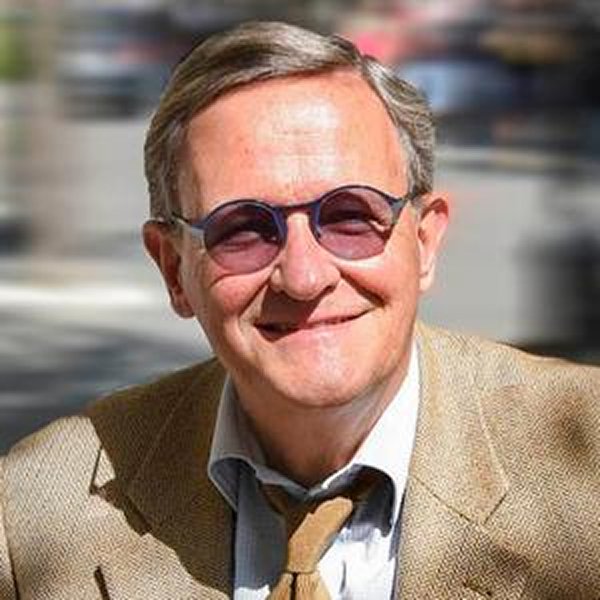
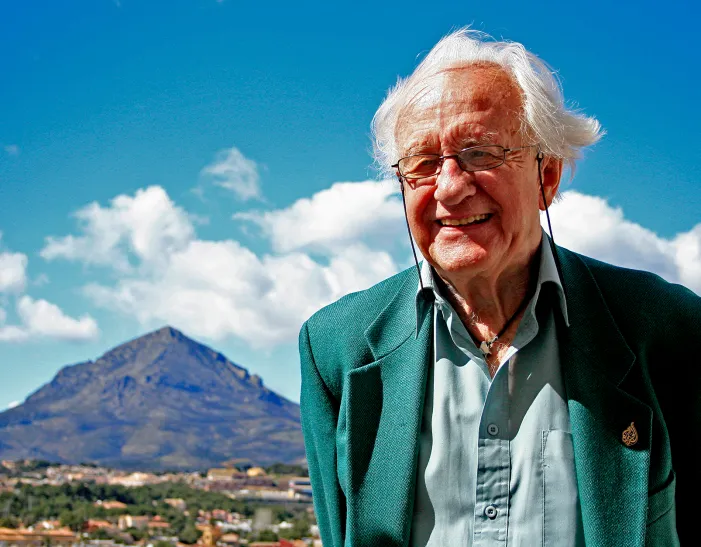
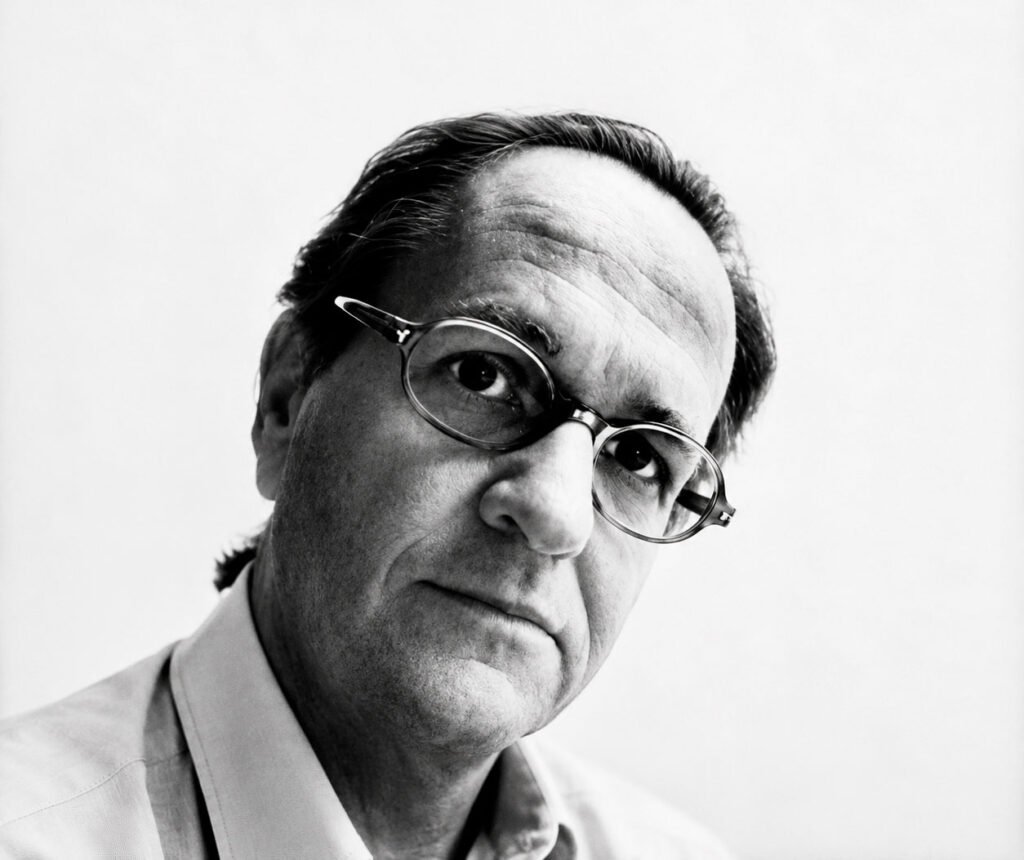
Held in cooperation by some of the leading organisations in the field, trainers to the PCTGD 2001 Training Programme include Johan Galtung, Kai Frithjof Brand-Jacobsen, Dietrich Fischer and Jan Oberg. Short bios on all the trainers are presented below.
Building upon the United Nations’ Manual for Conflict Transformation by Peaceful Means: The TRANSCEND Approach, designed and developed by TRANSCEND, the PCTGD 2001 Training Programme is a pioneering programme, and an important step in addressing the challenges to peacebuilding and development in the 21st century.
THE TRAINING PROGRAMME – September 3 – 7, 2001
The Training Programme will take place from Monday to Friday, September 3 – 7, 2001. All sessions of the training programme will take place at the facilities of Diakonhjemmet International Centre located at Vinderen, Oslo, Norway.
The Training Programme will be divided into a Morning and Afternoon session for each day, with a 1 hour and 30 minutes break for lunch in between, and additional breaks for tea and coffee in each session. The programme will begin each day at 09:00, and run until 17:00.
09:00 – 12:00 Conflict Transformation by Peaceful Means: the TRANSCEND Approach
13:30 – 17:00 Conflict Transformation by Peaceful Means: The TRANSCEND Approach II
09:00 – 12:00 Peacebuilding, Human Rights and Development: Challenges for Dialogue and Creativity
13:30 – 17:00 After Violence: The 3 ‘R’s – Reconstruction, Reconciliation, Resolution
09:00 – 12:00 Empowering Civil Society and Local Actors for Peace
13:30 – 17:00 Reconciliation and Forgiveness
09:00 – 12:00 Development and Violence: Impact on Local Communities
13:30 – 17:00 Challenging the Roots of Violence: Empowering Communities for Peace and People-Centred Development
Friday, September 7th, Kai Frithjof Brand-Jacobsen
09:00 – 12:00 Peacebuilding and Empowerment: Linking Development and Peace Work – Challenges to NGOs, Social Activists and the International Community
13:30 – 17:00 Organisation, Mobilisation, Empowerment: Strengthening Communities for Peace
Additional evening lectures and activities
The lectures Challenges to Global and Local Peace(s) in the 21st Century: Global Fault Lines and Globalisation and Peace: Transforming the Roots of Violence will be organised during the week of September 3rd – 7th, and are open to participants in the PCTGD 2001 Training Programme as well as the general public.
For those who wish, there will be visits to the International Peace Research Institute in Oslo (PRIO) and the Norwegian Institute for International Affairs (NUPI). For long distance travelers additional social activities will be organised.
PARTICIPANTS – Who Can Take Part?
The PCTGD 2001 Training Programme is primarily intended for aid and development workers, national and local level politicians and policy makers, diplomats, senior NGO staff, human rights and peace workers, advanced researchers and social activists. Journalists, social workers, and others interested in the areas and topics addressed by the programme are also welcome to apply.
Participants are requested to send in a copy of their CV and the completed Application Form no later than Monday, August 20th, 2001 (see the end of this document for the Application Form). The programme is limited to a maximum number of 30 participants, and applicants are requested to send in their applications as early as possible in order to guarantee a place in the programme.
Be sure to complete the Application Form included at the end of the document, and return it to the organisers no later than Monday, August 20th. All applications should be sent either by e-mail or by regular mail to:
Peacebuilding 2001,
John Y. Jones,
Diakonhjemmet International Centre,
PO Box 23 Vinderen, 0319 Oslo
e-mail: jones@dis.no
For more information, see:
THE TRAINERS
is founder and director of TRANSCEND, a peace and development network for conflict transformation by peaceful means, with about 150 invited members from over 50 countries. A professor of Peace Studies, he is widely regarded as the founder of the academic discipline of peace research and one of the leading pioneers of peace and conflict transformation in theory and practice. He has played an active role in helping mediate and prevent violence in 45 major conflicts around the world over the past four decades, and is author of the United Nations’ first ever manual for trainers and participants on “Conflict Transformation by Peaceful Means: The TRANSCEND Approach (UNDP 2000) which is an important input to the training programme. He has taught peace studies at the Universities of Hawai’i, Witten/Herdecke, Tromsoe, Alicante, Ritsumeikan and the European Peace University, among others. Galtung established the Peace Research Institute, Oslo (PRIO) in 1959, the Journal of Peace Research in 1964, and the Nordic Institute for Peace Research (NIFF) in 2000. He has published more than 1000 articles and over 100 books, including Searching for Peace the Road to TRANSCEND (Pluto, 2000). He is a consultant to several UN agencies and a constantly traveling trainer/lecturer. He holds numerous honorary degrees and awards, among them the Right Livelihood Award (the “Alternative Nobel Prize”) for 1987.
is Director of the Transnational Foundation for Peace and Future Research (TFF). He is the former director of the Lund University Peace Research Institute; former secretary-general of the Danish Peace Foundation; former member of the Danish government’s Committee on security and disarmament. Visiting professor in Japan; on Scientific Committee of International University for Peoples’ Initiatives for Peace, IUPIP, in Italy. Co-initiator of the Danish Highschool for Peace and the Danish Centre for Conflict Resolution. Some 3600 pages of published academic works. Honorary doctoral degree from the Buddhist Soka University, Tokyo. Columnist in Nordic newspapers. Chairman of the board since 1997, director of the TFF and head of its Conflict-Mitigation team to ex-Yugoslavia and Georgia.
is Co-Director of TRANSCEND. He is a Professor of Computer Science at Pace University, New York, and a Visiting Professor at the European Peace University, Burg Schlaining, Austria. From 1986-88 he was a MacArthur Fellow in International Peace and Security Studies at Princeton University. He is author of Preventing War in the Nuclear Age (1984) and Non-Military Aspects of SecurityA Systems Approach (1993) and co-author of Warfare and Welfare (with Jan Tinbergen, 1987), Winning Peace (with Wilhelm Nolte and Jan Oberg, 1989), Conditions of Peace (with Grace Boggs, et al., 1991), and Peaceful Conflict Transformation and Nonviolent Approaches to Security (with Johan Galtung, 1999). He has been a consultant to various United Nations agencies on questions of disarmament and development.
is Co-Director and Board Member of TRANSCEND, and Director of the Coalition for Global Solidarity and Social Development. In 2000, together with Johan Galtung, he was founder of the Nordic Institue for Peace Research. He has worked extensively in Afghanistan, Russia, South Eastern Europe, North America, and the Middle East, has an extensive production of research papers, articles, training programmes and lectures. His most recent writings include The Struggle Continues: Peace Praxis”, forthcoming, and Searching for Peace: The Road to TRANSCEND, together with Johan Galtung, and Carl Jacobsen (Pluto Press, May 2000).
COSTS and FEES
Participation fees for the full 5-days training programme come to NOK 3500, or approx. USD 400. This includes participation in the training programme, and all materials, including copies of the United Nations’ Manual “Conflict Transformation by Peaceful Means: The TRANSCEND Approach” (UNDP 2000) and “Searching for Peace: The Road to TRANSCEND” by Johan Galtung and Carl Jacobsen (Pluto Press, 2000).
Participants from outside Oslo must also arrange for accommodation while in Oslo for the duration of the programme, and should include some extra money for costs of living. Hotel prices in Oslo range, on average, between NOK 500 and NOK 900 a night (USD 60 – 100).
Participants can stay at Rainbow Hotell Gyldenlove, a partner hotel of Diakonhjemmet International Centre, at about 600 NOK (USD 65) a night with breakfast. A few rooms will also be available at Diakonhjemmet. For accomodation contact the Gyldenlove Hotell on tel. 22601090, or fax. 22603603 (please give our code DIAKON to obtain our discounted price)
For students and participants from the South there will be discounts and possibility to apply for scholarships.
For participants from outside Norway, it is important that you check with the Norwegian Embassy in your country to learn about all possible travel and visa regulations. Travellers coming from the EU and North America do not require visas for entering Norway.
THE ORGANISERS
TRANSCEND – A Peace and Development Network for Conflict Transformation by Peaceful Means
TRANSCEND is a network of invited scholars-practitioners working for peace and development through action, education/training, dissemination, and research. Local Centres exist in Barcelona/Spain, Cluj/Romania, Geneva/Switzerland, Hagen/Germany, Vienna/Austria, Honolulu/Hawai’i, Kyoto/Japan, Moscow/Russia, Sandnes/Norway, Taplow Court/UK, Torino/Italy, Washington DC/USA, and several other places in Europe, Latin America, Africa, and Asia. TRANSCEND has conducted more than 100 training programmes in 30 countries, reaching over 3,000 participants. Participants to TRANSCEND training programmes generally include diplomats, ambassadors, professors, NGO workers, journalists, psychiatrists, social workers, international civil servants, and students. In 2000, TRANSCEND developed the United Nations’ first ever manual on Conflict Transformation by Peaceful Means: The TRANSCEND Approach. TRANSCEND information and perspectives are openly and freely available from our website (www.transcend.org).
The Nordic Institute for Peace Research (NIFF)
The Nordic Institute for Peace Research (NIFF) is an independent network of scholars-activists in the Nordic countries working in peace research, development, and conflict transformation by peaceful means. NIFF’s aim is to promote peace by peaceful means, exploring and enacting nonviolent initiatives to defuse dangerous conflict formations. NIFF’s goal is to re-create the tradition of peace research in the Nordic countries, pioneering original and creative research, while contributing to the strengthening of peace education and peaceful conflict transformation in the region and internationally, in cooperation with governments, research institutes, educational bodies, NGOs, and civil society organisations.
The Transnational Foundation for Peace and Future Research (TFF)
TFF’s mission is peace: learning to handle conflicts with ever less violence against other human beings, other cultures and Nature. It is a networking organisation with associates all over the globe. TFF believes that alternatives to the main trends of our time are desirable and possible — indeed necessary for humankind to survive and live with dignity. TFF is critical and constructive. The Transnational Foundation for Future and Peace Research expresses a vision and is an experiment in applied research and global networking. TFF is an independent and innovative force for peace, working in conflict mitigation, peace research and education to improve conflict understanding at all levels and promote alternative security and global development based on nonviolent politics, economics, sustainability and ethics of care. The results which aim at decision-makers and citizens alike combine innovative thinking and theories with workable, practical solutions.
Diakonhjemmet International Centre, DiS,
is a part of Diakonhjemmet College located in Oslo, Norway. DiS is a multidisciplinary center engaged in training, advocacy and networking, research and evaluations in development and international relations issues. NGOs and aspects of people centred development and international peace issues are areas of particular concern to the centre.
APPLICATION FORM
Name:
Age:
Occupation:
Organisation:
Motivation/reasons for wishing to take part (500 words maximum)
How the training programme will benefit your work (500 words maximum)
Address:
Tel:
E-mail:
Fax:
All applications should be sent either by e-mail or by regular mail to:
Peacebuilding 2001,
John Y. Jones,
Diakonhjemmet International Centre,
PO Box 23 Vinderen, 0319 Oslo
e-mail: <mailto:jones@dis.no>jones@dis.no