
Oslo is dead! Long live Oslo! The UK House of Commons Supports Diplomatic Recognition of Palestine

Prefatory NoteThe post below is a modified version, especially the ending, of a piece published online two days ago in AlJazeera English. While appreciating the importance of the European moves to endorse Palestinian statehood, it seeks a more definitive repudiation of the Oslo Approach.
It calls for an end to the U.S. role as exclusive intermediary and the presumed outcome of a peace process being two states without indicating the character of the Palestinian state. So far, the two-state mantra has been cut back to allow Israel to retain at least the unlawful settlement blocs and to insist on arrangements that uphold their security against unforeseen threats, while granting not a word of acknowledgement to Palestinian security concerns.
My own strong belief is that unless the two peoples are treated with full equality in seeking a solution, the result will not be sustainable or just even in the unlikely event that some sort of agreement is reached.

Oslo is dead! Long live Oslo! The UK House of Commons Supports Diplomatic Recognition of Palestine

On October 13 the House of Commons by an overwhelming vote of 274-12 urged the British government to extend diplomatic recognition to Palestine.

At first glance, it would seem a rather meaningless gesture. It is a non-binding resolution, and Prime Minister David Cameron has already declared that this expression of parliamentary opinion will have no effect whatever on existing government policy.

So far Britain along with the states in Western Europe adhere to Israel’s stubborn insistence, echoed by Washington, that Palestinian statehood can only be established through a solution to the conflict negotiated by the parties.

Even if the British vote was binding, why should it be seen as a dramatic move in Palestine’s favor? After all, Palestine has already been accorded recognition by 134 states since Yasir Arafat declared the existence of a Palestinian state within 1967 borders back in 1988.

Such downgrading of the significance of what took place is also part of the Israel tactical response. Its ambassador in London now declining even to comment on the decision after earlier indicating extreme disapproval with the evident hope of discouraging affirmative votes.

Before the vote Israeli leaders used their levers of strong influence to discourage the vote. Netanyahu even insisted that such a step would seriously diminish prospects for resumed negotiations and would seriously harm peace prospects. After losing out, the Israeli tone changed, now calling the vote meaningless and devoid of importance.

In actuality, the UK initiative is an important symbolic victory for the Palestinians. Until recently when the elected Swedish government indicated its intention to recognize Palestine as a state at some future undesignated time, no Western European government had broken ranks on the Oslo approach as interpreted by Israel and the United States.

It is this approach that has put a straightjacket on diplomacy, requiring any progress toward a solution to be exclusively through direct negotiations for a Palestinian in which the U.S. acts as the one and only intermediary.

At stake, then, is not only the momentum building for European countries to extend recognition to Palestine, but also a belated admission that this Oslo approach after more than 20 years of futility should no longer be respected as the consensus foundation of Israel-Palestine conflict resolution.

The UK action needs to be joined with the recent diplomacy of the Palestinian Authority, first the Fatah/Hamas agreement of April to form a unity government, and even more so, the resolution to be submitted to the Security Council on behalf of the Palestinian Authority that calls for Israeli withdrawal to 1967 borders, including East Jerusalem, no later than November 2016.

It is expected that the U.S. will veto this resolution if it is unable to mount enough pressure to prevent nine SC members from voting affirmatively. Such an initiative by Ramallah further signals that the PA is no longer willing to play the waiting game that has given Israel ample time for settlement expansion and ethnic cleansing in East Jerusalem past points of no return.

In Mahmoud Abbas’ speech of September 26th to the General Assembly he clearly indicated that he was refusing to cooperate any longer with these diplomatic maneuvers facilitated by the Oslo framework. Responding to Palestinian pressures from below, Abbas left no doubt that he would not pretend that he had ‘a partner for peace,’ thereby turning the tables on Tel Aviv.

He signaled this clearly when he described Israel’s 50-day military operation against Gaza this past summer as “a genocidal war.” The G-word was bound to elicit an angry Israeli response, which Netanyahu provided a few days later in the same UN venue, calling Abbas’ speech “shameless.”

There still remains a lingering and unfortunate ambiguity in these developments suggesting we have not yet truly arrived at a post-Oslo phase of diplomacy.

The UK resolution accepted an amendment stating that its purpose was “as a contribution to securing a negotiated two-state solution.” The former British Foreign Secretary, Jack Straw, elaborated on this, suggesting that was being done was to exert additional pressure on the parties to get on with negotiating a two-state outcome.

This tail wagging the dog is a regression, sustaining the illusion that Israel, whatever the context, is at all willing at this stage to allow an independent sovereign Palestinian state to be established within 1967 borders, even if these are slightly modified. In effect, “Oslo is dead! Long live Oslo!”

Since the latest Gaza war there have been two developments of lasting significance: first, the inter-governmental diplomacy is slowly moving away from the Oslo approach, and Western Europe is beginning to fill the diplomatic vacuum created by the April collapse of the Kerry round of talks between Israel and the Palestinian Authority.

And secondly, civil society nonviolent militancy and political leadership is beginning to occupy center stage in Palestinian hopes and dreams, particularly taking the form of the growing BDS campaign, but also visible in the refusal of Oakland, California workers to unload an Israeli cargo ship.

This latter fulcrum of resistance within Palestine and without raises serious leadership and representation questions—who now speaks with authority and authenticity on behalf of the Palestinian people? How can this question be answered given the statist manner in which the world is organized?

Let me put my own understanding of this issue more directly: I find that the voices of Omar Barghouti and Ali Abunimah to be more authoritative and authentic than are those of the diplomats from Ramallah who a few years ago showed themselves ready to give the store away in the Palestine Papers and on other occasions.

They couldn’t manage such a transaction since Israel apparently felt it already owned the store and was not ready to show gratitude even for a political outcome heavily slanted in their favor.
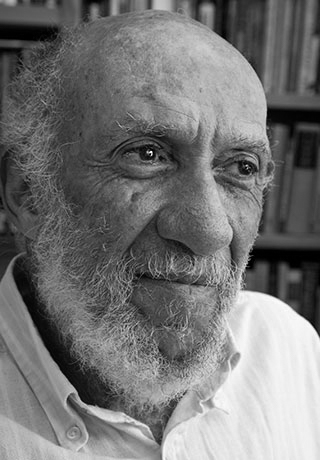

Professor Falk became an adviser to TFF when it was established in 1985.

Share

Leave a Reply

Your email address will not be published. Required fields are marked *

Related Posts

A donors’ conference, co-sponsered by the Burundian government, the Belgian government and UNDP will be held in Brussels January 12-13, 2004. This PressInfo offers a perspective on its urgency. See also TFF’s new Burundi Forum. Imagine for a moment that politics is about goodness and generosity. Where could a few million dollars of government aid and a few civil society organisations – guaranteed – win the hearts of extremely poor millions who want peace and already work hard to achieve it after 10 years of war and genocide? The answer is Burundi, the heart-shaped country in the heart of Africa. Burundi makes a good story from Africa. But what does the world know about Burundi, its problems and struggles? Burundi’s tough reality Here are the basic facts. Burundi’s population is about 7 million and it is number 171 out of the 175 countries on the UNDP’s human development index. Their life...
Peace is promoted by constructive proposals and dialogue Four preceding PressInfos have expressed concern over — and criticised — the ongoing, militarisation of the EU. Some will say: but there are no alternatives. We believe that there are always alternatives, that democracies are characterised by alternatives and choice, and that openly discussed alternatives will improve the quality and legitimacy of society’s decision–making. In addition, it is an intellectual and moral challenge to not only criticise but also be constructive. If we only tell people that we think they are wrong, they are not likely to listen. However, if we say: what are your views on this set of ideas and steps? — we may sometimes engage them in dialogue and sow a seed. Most people in power circles live their daily lives in in a time frame and a social space where certain ideas, viewpoints and concepts are just not...
Photos © TFF 2000 Read PressInfo 90 “Lift the Sanctions and Bring More Aid to Yugoslavia” See Pictures from Belgrade © TFF 2000 Please reprint, copy, archive, quote or re-post this item, but please retain the source.

Recent Articles

Jan Oberg May 15, 2026 Go to this Fox News page and scroll the whole way down: President Donald Trump tells the world that his meeting with President Xi Jinping yielded a lot of very concrete political and economic results – of course, only where the Chinese side, according to him, agreed with him. He does not mention the Taiwan issue, but Secretary of State, Marco Rubio, says that it did not feature prominently in their talks and that the US policy on Taiwan has not changed. Then go to China Daily – or Global Times – and you will see that for the Chinese it is framework, principles, structure of cooperation etc. that matters – all embedded in the overall idea of “constructive bilateral relationship of strategic stability.” Nowhere is any concrete agreement or deal – all that Trump refers to – mentioned. At the general level, this gives you insights into the very different social...
Lena Petrova of “World Affairs In Context” with more than half a million subscribers on YouTube wanted to explore what a peace researcher like me has to say about, among other things, the First and the Second Cold War and why eethics has disappeared from politics. I am particularly happy about this conversation that also yielded an amazing number of very appreciative comments on YouTube. No doubt, people are longing for alternatives, including peace perspectives.
The MIMAC – Military-Industrial-Media-Academic Complex – drives the world’s rampant militarism and wars without end. Here is a short reflection of how it works against all interests of humanity. #5 deals with why there is no real enemy or threat images/analysis. It’s all ex-post constructions. And, btw, theTFF Peace Pulse is now on Rumble.

TFF on Substack

Discover more from TFF Transnational Foundation & Jan Oberg.

Most Popular

Jan Oberg May 15, 2026 Go to this Fox News page and scroll the whole way down: President Donald Trump tells the world that his meeting with President Xi Jinping yielded a lot of very concrete political and economic results – of course, only where the Chinese side, according to him, agreed with him. He does not mention the Taiwan issue, but Secretary of State, Marco Rubio, says that it did not feature prominently in their talks and that the US policy on Taiwan has not changed. Then go to China Daily – or Global Times – and you will see that for the Chinese it is framework, principles, structure of cooperation etc. that matters – all embedded in the overall idea of “constructive bilateral relationship of strategic stability.” Nowhere is any concrete agreement or deal – all that Trump refers to – mentioned. At the general level, this gives you insights into the very different social...
Lena Petrova of “World Affairs In Context” with more than half a million subscribers on YouTube wanted to explore what a peace researcher like me has to say about, among other things, the First and the Second Cold War and why eethics has disappeared from politics. I am particularly happy about this conversation that also yielded an amazing number of very appreciative comments on YouTube. No doubt, people are longing for alternatives, including peace perspectives.
The MIMAC – Military-Industrial-Media-Academic Complex – drives the world’s rampant militarism and wars without end. Here is a short reflection of how it works against all interests of humanity. #5 deals with why there is no real enemy or threat images/analysis. It’s all ex-post constructions. And, btw, theTFF Peace Pulse is now on Rumble.
Read More
Screenshot-2026-05-15-103534
Jan Oberg May 15, 2026 Go to this Fox News page and scroll the whole way down: President Donald Trump tells the world that his meeting with President Xi Jinping yielded a lot of very concrete political and economic results – of course, only where the Chinese side, according to him, agreed with him. He does not mention the Taiwan issue, but Secretary of State, Marco Rubio, says that it did not feature prominently in their talks and that the US policy on Taiwan has not changed. Then go to China Daily – or Global Times – and you will see that for the Chinese it is framework, principles, structure of cooperation etc. that matters – all embedded in the overall idea of “constructive bilateral relationship of strategic stability.” Nowhere is any concrete agreement or deal – all that Trump refers to – mentioned. At the general level, this gives you insights into the very different social...
Screenshot-2026-05-12-104023
Lena Petrova of “World Affairs In Context” with more than half a million subscribers on YouTube wanted to explore what a peace researcher like me has to say about, among other things, the First and the Second Cold War and why eethics has disappeared from politics. I am particularly happy about this conversation that also yielded an amazing number of very appreciative comments on YouTube. No doubt, people are longing for alternatives, including peace perspectives.
Screenshot-2026-04-13-154551 (2)
The MIMAC – Military-Industrial-Media-Academic Complex – drives the world’s rampant militarism and wars without end. Here is a short reflection of how it works against all interests of humanity. #5 deals with why there is no real enemy or threat images/analysis. It’s all ex-post constructions. And, btw, theTFF Peace Pulse is now on Rumble.
Screenshot-2026-04-13-154551 (1)
Jan Oberg, TFF director April 28, 2026 In this third TFF Peace Pulse, I make the important distinction between the violence and the conflict that violence is a symptom of. If you want peace, focus on the underlying conflict because that is the key to resolution, peacemaking, and a better future for the parties. The West is obsessed with violence, just look around you – and 90+ per cent of the public debate is about military issues and other violence – totally wasted for peace. These Peace Pulses will only be published here a few times. You will also not find them on YouTube and Vimeo because both platforms have blocked TFF and me; you know, peace is dangerous these days. Most TFF’s videos since 2007 are now on Rumble.
Screenshot-2026-04-13-154551
In contrast to most, we’ll bring alternatives, solutions, hope and strategies for a better future. Times are dangerous, yes, but that only intensifies the need for constructive thinking and action! Jan Oberg, TFF director April 13, 2026 The new TFF Peace Pulse uses video messages in a new way: Max 3-5-minute-long comments, ideas or perhaps mini-lectures, all about peace – positive peace. We launch them today on April 13, 2026 with a carefully crafted visual aesthetic fitting the content. We hope to publish them regularly from now on. We launch Peace Pulse (PP) – for a number of reasons. The world is in chaos, and there are countless reasons to feel concerned, frustrated, even angry. The atmosphere is saturated with doom and gloom, with negative energy and rear‑mirror thinking, while vision, imagination, alternatives, strategies and genuine future‑mindedness remain in short supply. And without them, we simply can’t save the world. Looking at problems from a hundred angles will...
IMG_5165 (1)
PART II — Publishing Peace in a System That Prioritises Militarism Jan Oberg, TFF director April 10, 2026 How TFF Maintains a Daily Voice in a Digital World Built for Noise This article is part of the series “TFF at 40″ and it invites you to learn about Four Decades of Publishing Peace. It takes a look at how a small, people‑financed peace foundation has communicated across four generations of technology — from wax stencils and fax machines to mass email and Substack — and why TFF continues to publish every single day in a system that rewards noise, conflict, and militarism. ◆ What it means to publish peace every single day in a digital system built for 24/7 news and other noise, confrontation, and militarism. How TFF’s independence, continuity, and global readership defy algorithms, donor cycles, and Western media censorhip — and why the Majority World keeps listening. When the...

