

Macedonia: Washington'smilitary-intelligence ploy

A NATO led military intervention in Macedonia involving American and British special forces “against the NLA rebels” would be a phony operation from the outset.  Amply documented, the NLA terrorists –who are directly linked to the Kosovo Liberation Army (KLA) —  are armed and trained by Washington. So why would the US intervene under NATO auspices to fight against its own proxy army?

This article follows an earlier text focussing in greater length on the military-intelligence aspects entitled: “Washington Finances Ethnic Warfare in the Balkans” (3 April 2001) at:
http://www.emperors-clothes.com/articles/choss/fin.htm.

See also “America at War in Macedonia” at http://emperors-clothes.com/articles/choss/pipe.htm, also at http://www.antiwar.com/rep/chuss5.html. The latter article examines the issue of control over strategic pipeline routes and transport corridors and the strategic role of Macedonia, which lies at the cross-roads of the Trans-Balkan oil pipeline.

The US is once more waging a proxy war using the Kosovo Liberation Army (KLA) to fight the Macedonian Armed Forces. While US KFOR troops stationed in Kosovo are not directly involved, American military personnel from Military Professional Resources, Inc (MPRI)  (a mercenary outfit on contract to the Pentagon) is advising the Kosovo Liberation Army (KLA) and its Macedonian proxy the NLA.1

ALBANIAN REBEL LEADERS PAID BY THE UNITED NATIONS

Military personnel of the “civilian” Kosovo Protection Corps (KPC) (i.e. the KLA under its UN label) have now joined the NLA. KPC Reservists have been called up and KPC Chief of Staff Gezim Ostreni –who was on the United Nations payroll– has been appointed “second in command” in the NLA.

Also well established is the longstanding relationship between KLA Commander  Agim Ceku and MPRI General Richard Griffiths. In all likelihood, KLA Commander Agim Ceku  –well versed in the art of ground war artillery– is also playing a key role in military planning.  In fact, the personal relationship between Griffiths and Ceku goes back to the planning of “Operation Storm” in 1995 by the Croatian Armed Forces, which led to ethnic massacres and the expulsion of more than 200,000 Serbs from the Krajina region of Croatia.2

In October 1998, Griffith –who had been in charge of MPRI’s “Equip and Train” program in Croatia– was decorated upon his departure from Croatia. A few months later, Brigadier General Agim Ceku took leave from the Croatian military to take on the position of Commander in Chief of the Kosovo Liberation Army (KLA).  These appointments took place barely two months prior to the bombing of Yugoslavia in March 1999:

MPRI sub-contracted some of the training programme to two British private security companies, ensuring that between 1998 and June 1999 the KLA was being armed, trained and assisted in Italy, Turkey, Kosovo and Germany by the Americans, the German external intelligence service and former and serving members of Britain’s 22 SAS Regiment.” 3 

MACEDONIAN MILITARY BRASS COLLABORATES  WITH THE REBELS

Coincidentally, General Richard Griffiths is also director of MPRI’s program in Macedonia responsible for channeling US military aid to the Macedonian Armed Forces (ARM). Griffith has also developed a longstanding personal relationship with General Jovan Andrejevski who is

Chief of Staff of the Macedonian Armed Forces (ARM).  These ties go back to the time when Andrejevski was in military school in the US.

Ironically, both Ceku and Andrejevski were trained by General Griffiths. What this means is that MPRI’s Richard Griffiths is “a go between” the two armies, collecting military intelligence from the Macedonian Armed Forces (ARM) which he then relays to Commander Agim Ceku and his MPRI colleagues advising the KLA in Kosovo. He also reports back to MPRI headquarters in Virginia which is in close liaison with the Pentagon.

Barely mentioned by Western media, the role of MPRI was the centre of a major scandal involving ARM Commander in Chief General Jovan Andrejevski’s was accused of:

“relaying sensitive information to Albanian terrorists ” through his ‘sponsorship’ of the American General in charge in Skopje Rich Griffiths, who used those same trustworthy accounts of the maneuvers of the Macedonian security forces to then ‘relay’ this information to his ‘good friends’, the Albanian terrorists of the KLA-NLA· The retired General Griffiths· directly ‘supported’ Albanian terrorist formations of the so-called “National Liberation Army” with very detailed and secret  intelligence obtained from the General Staff of the ARM personally from its  chief Jovan Adrejevski. This great scandal · may have contributed to the delays · of the expected successes in the defeat of the terrorists.  Television ‘A-1’ claims that other than the  proof of ‘secretive intelligence meetings between Adrejevski and Griffiths (who was marked as Andrejevski’s boss upon Adrejevski’s completion of military schooling in the United States), we still haven’t obtained documents concerning their ‘exchange of military secrets’.” The head of the ARM General Staff Jovan Adrejevski responded today [May 22nd] in a written statement that a ‘war without scruples’  was being waged against him, not to mention the fact that the second highest ranking officer of the ARM General Pande Petrovski has already announced his resignation· as a result of the important military and command intelligence ‘leaks’. 4

THE ROLE OF THE OSCE

MPRI’s military-intelligence ploy was carefully coordinated with another CIA sponsored operation carried out under the inter-governmental umbrella of the Organisation for Security and Cooperation in Europe (OSCE). The recently appointed head of the OSCE mission to Macedonia Robert Frowick, described as a “former US diplomat,” was entrusted with the task of  “brokering” an agreement between the NLA terrorists and the Albanian parties which are part of the government coalition.  Under the OSCE “cover”, Frowick’s  activities –consisting of establishing a dialogue with the rebels–  largely replicated the role performed by another CIA agent William Walker when he was OSCE Head of Mission in Kosovo in the months preceding the 1999 bombings of Yugoslavia.

Frowick was instrumental –on Washington’s instructions– in arranging secret meetings between NLA rebel leader Ali Ahmeti and the Albanian parties, essentially with a view to including the KLA directly into the Macedonian political scene while creating a rift in the government coalition. 

Washington acknowledged Frowick’s contacts with the rebel leaders, while casually denying US involvement:

“A special envoy from the Organization for Security and Cooperation in Europe ( OSCE) , Robert Frowick, a U.S. diplomat who is the special  OSCE  envoy for  Macedonia,  was reported to have brokered the agreement. But the State Department official, who spoke on condition of anonymity, neither confirmed nor denied Frowick’s involvement in brokering the agreement. Frowick was under pressure to leave the country, reports in Macedonia said· [T]he heads of Western diplomatic missions in Skopje met Wednesday in the U.S. embassy to ‘discuss Frowick’s future’ and find  ways to ‘disassociate’ him from official Washington· The Albanian agreement was signed by the leaders of the Democratic Party of Albanians, Arben Xhaferi, the chief of the Party for Democratic Progress, Imer Imeri, and the political leader of the guerrilla National Liberation Army (UCK), Ali Ahmeti. The Albanian parties are members of the governing coalition.” 5

In the wake of the scandal, Frowick was recalled to OSCE headquarters in Bucharest. Despite the allegations of having committed treason, General Adrejevski has remained ARM Commander in Chief following negotiations between the government and military with the US and UK ambassadors.

With the Albanian parties in the coalition establishing formal ties with the rebels, the government coalition is in crisis. The entire political system is in a state of collapse.  Moreover, public opinion in Macedonia now knows that both the government and the ARM are collaborating with the enemy, namely the United States. Yet in a bitter irony, the government has not opposed Washington’s diktats. Skopje has been instructed by Washington not to pursue the MPRI matter.  General Richard Griffiths has not been ordered to leave the country.  While Washington is supporting the NLA terrorists, it has retained a firm grip on the Macedonian military high command. As the crisis unfolds, divisions with the ARM are developing. Military commanders in charge of defending Macedonian territory feel betrayed by the ARM Chief of Staff and the government.

THE IMF PUTS A LID ON DEFENCE SPENDING

The activities of the IMF in Macedonia have been carefully coordinated with those of NATO and the OSCE. While money, guns and mercenaries are channeled towards the NLA rebels, the Macedonian government is in a financial straightjacket. Under the “Stability Pact”, its entire budget is controlled by the IMF and the World Bank on behalf of international creditors. In other words, the imposition of severe austerity measures by the IMF prevents it from defending its territory.

The IMF’s ceiling on military expenditure is tantamount to a “de facto” arms embargo on Macedonia obliging the government to use the proceeds of the IMF-World Bank sponsored privatisation program to equip the ARM and fight the rebels. The Minister of Finance has confirmed that “the sale of the [government’s] stake in Macedonian Telekom will be used for defence”.6 Such events have added a new twist to the old maxim “War is good for business”:  the terrorist assaults have no doubt depressed the book value of State assets currently on the auction block. 

In turn, military expenditures are also being financed from the government’s reserve fund while budgets on all civilian programs and social infrastructure including water, electricity and emergency relief to civilians affected by the terrorist assaults have been frozen.

No significant influx of military aid to the ARM has been forthcoming from the European Union. Meanwhile, token US military assistance –channeled through the MPRI– is granted largely to convey the illusion that “America is helping” when in fact “America is at War with Macedonia.” 7 Meanwhile, the NLA rebels have been re-equipped with brand new weapons “Made in America”.8

NOTES

1. For further details see Michel Chossudovsky, “Washington Finances Ethnic Warfare in the Balkans” April 2001 at http://emperors-clothes.com/articles/choss/fin.htm

2.  Ibid.

3.  The Scotesman, 2 March 2001. Recent developments would suggest that Germany is no longer involved in supporting the KLA. See Michel Chossudovsky “America at War in Macedonia” at http://emperors-clothes.com/articles/choss/pipe.htm.

4.  According to TV “A-1”, quoted in Politika, Belgrade, 22 May 2001. Our own detailed analysis of the role of the MPRI first released in early April, was published in Skopje by Dvenik on the 18th of May 2001 a few days prior to the report concerning Andrejevski on TV A1).

5. Deutsche Press Agentur, 24 May 2001.

6. See Jane Defense Weekly, 2 May 2001.

7. See Michel Chossudovsky. “America at War in Macedonia”, op cit.

8. According to information from Skopje, 15 June 2001

Recent articles by the author on the Balkans:

“Washington Finances Ethnic Warfare in the Balkans” (3 April 2001) available at: http://www.emperors-clothes.com/articles/choss/fin.htm or http://www.canadiandimension.mb.ca/extra/x0404mc.htm.

“America at War in Macedonia”  (14 June 2001) at
http://emperors-clothes.com/articles/choss/pipe.htm.

“Economic Terrorism”, May 2001 at
http://emperors-clothes.com/articles/choss/eco1.htm or  http://alainet.org/active/show_news.phtml?news_id=1225.
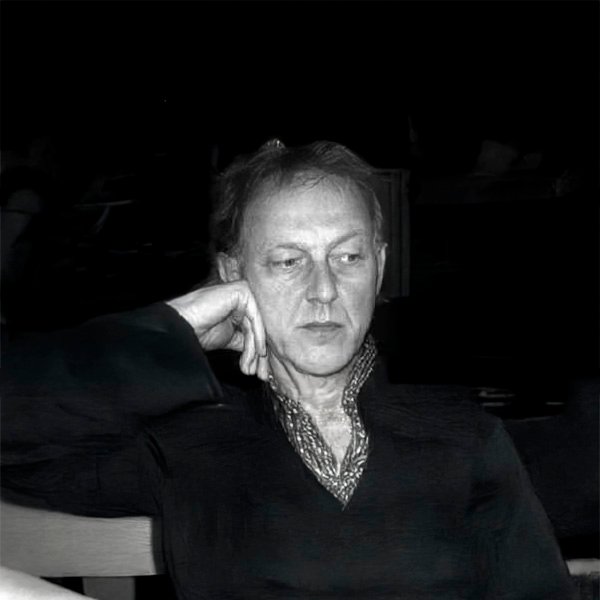
Professor Chossudovsky joined TFF as adviser in 1999.

Share

Leave a Reply

Your email address will not be published. Required fields are marked *

Related Posts

“En dag som berättigar till fest”, utropade den London-baserade al-Quds al-Arabi efter FN:s eldupphörresolution, “eftersom detta är första gången som Israel accepterar ett FN-beslut från en position som besegrad och inte som segrare”. Att ett arabisk-israeliskt krig för en gångs skull slutat med arabisk seger, är en helt dominerade åsikt i arabiska medier. Al-Quds al-Arabi tillåter sig att drömma om att det israeliska nederlaget skall leda till massflykt från Israel. Men i nästa andetag påminner tidningen om att Israel aldrig brukar genomföra sina internationella åtaganden och varnar för att förlorarna, liksom tidigare, kan hämnas genom att provocera fram inbördeskrig i Libanon. Med tanke på de otaliga massmediala vittnesmålen om det libanesiska folkets eniga motståndskraft förefaller risken för inre stridigheter i det sargade landet just nu liten. Men visst kan man urskilja nyansskillnader i libanesiska tidningar. Vänsterorganet al-Safir uppfattar FN-resolutionen som en komplott i syfte att rädda Israel från ännu större...
A donors’ conference, co-sponsered by the Burundian government, the Belgian government and UNDP will be held in Brussels January 12-13, 2004. This PressInfo offers a perspective on its urgency. See also TFF’s new Burundi Forum. Imagine for a moment that politics is about goodness and generosity. Where could a few million dollars of government aid and a few civil society organisations – guaranteed – win the hearts of extremely poor millions who want peace and already work hard to achieve it after 10 years of war and genocide? The answer is Burundi, the heart-shaped country in the heart of Africa. Burundi makes a good story from Africa. But what does the world know about Burundi, its problems and struggles? Burundi’s tough reality Here are the basic facts. Burundi’s population is about 7 million and it is number 171 out of the 175 countries on the UNDP’s human development index. Their life...
Peace is promoted by constructive proposals and dialogue Four preceding PressInfos have expressed concern over — and criticised — the ongoing, militarisation of the EU. Some will say: but there are no alternatives. We believe that there are always alternatives, that democracies are characterised by alternatives and choice, and that openly discussed alternatives will improve the quality and legitimacy of society’s decision–making. In addition, it is an intellectual and moral challenge to not only criticise but also be constructive. If we only tell people that we think they are wrong, they are not likely to listen. However, if we say: what are your views on this set of ideas and steps? — we may sometimes engage them in dialogue and sow a seed. Most people in power circles live their daily lives in in a time frame and a social space where certain ideas, viewpoints and concepts are just not...

Recent Articles

“En dag som berättigar till fest”, utropade den London-baserade al-Quds al-Arabi efter FN:s eldupphörresolution, “eftersom detta är första gången som Israel accepterar ett FN-beslut från en position som besegrad och inte som segrare”. Att ett arabisk-israeliskt krig för en gångs skull slutat med arabisk seger, är en helt dominerade åsikt i arabiska medier. Al-Quds al-Arabi tillåter sig att drömma om att det israeliska nederlaget skall leda till massflykt från Israel. Men i nästa andetag påminner tidningen om att Israel aldrig brukar genomföra sina internationella åtaganden och varnar för att förlorarna, liksom tidigare, kan hämnas genom att provocera fram inbördeskrig i Libanon. Med tanke på de otaliga massmediala vittnesmålen om det libanesiska folkets eniga motståndskraft förefaller risken för inre stridigheter i det sargade landet just nu liten. Men visst kan man urskilja nyansskillnader i libanesiska tidningar. Vänsterorganet al-Safir uppfattar FN-resolutionen som en komplott i syfte att rädda Israel från ännu större...
Greenland – the world’s largest island, a continent of its own with only 57.000 inhabitants. I visited it for the first time in May 2005. I flew across the inland ice to Nuuk, the tiny capital with some 14.000 inhabitants. I was overwhelmed by the pride and kindness of everyone I met as well as by the unique natural beauty. Unfortunately, due to weather conditions during my ten-day stay I could get nowhere else but Nuuk. Fortunately, however, among those I met was Gitte Arvegaard, a Danish lawyer and negotiator employed by the local government, Greenland Home Rule. She turned out to be an enthusiastic photographer with a lot of pictures taken during various trips around Greenland. So this Greeland series is the result of our cooperative effort. We both hope you enjoy it and are stimulated to visit Greenland – about which you may read more here. Finally, if you want to...
 Jan Oberg’s storyof how he met Sir Paul Liverpool – where else to meet Paul McCartney? Paul’s old class mate and TFF Associate, Jonathan Power introduced me to Paul McCartney in Liverpool at an informal reception. It was held at what used to be their school, now the Liverpool Institute for Performing Arts and we were there to celebrate that Jonathan had written Amnesty International’s 40th Anniversary book. This happy event for “righting wrongs and writing songs” gave me an opportunity to meet Paul and tell him about TFF and get straight to the matter: would he consider making a donation in support of our work for peace? While I was probably the only one with such a wish that day, I was certainly not the only one who wanted to shake hands and talk with him. In the last minutes before Paul was to leave, Jonathan brought us together and we got about three...

TFF on Substack

Discover more from TFF Transnational Foundation & Jan Oberg.

Most Popular

“En dag som berättigar till fest”, utropade den London-baserade al-Quds al-Arabi efter FN:s eldupphörresolution, “eftersom detta är första gången som Israel accepterar ett FN-beslut från en position som besegrad och inte som segrare”. Att ett arabisk-israeliskt krig för en gångs skull slutat med arabisk seger, är en helt dominerade åsikt i arabiska medier. Al-Quds al-Arabi tillåter sig att drömma om att det israeliska nederlaget skall leda till massflykt från Israel. Men i nästa andetag påminner tidningen om att Israel aldrig brukar genomföra sina internationella åtaganden och varnar för att förlorarna, liksom tidigare, kan hämnas genom att provocera fram inbördeskrig i Libanon. Med tanke på de otaliga massmediala vittnesmålen om det libanesiska folkets eniga motståndskraft förefaller risken för inre stridigheter i det sargade landet just nu liten. Men visst kan man urskilja nyansskillnader i libanesiska tidningar. Vänsterorganet al-Safir uppfattar FN-resolutionen som en komplott i syfte att rädda Israel från ännu större...
Greenland – the world’s largest island, a continent of its own with only 57.000 inhabitants. I visited it for the first time in May 2005. I flew across the inland ice to Nuuk, the tiny capital with some 14.000 inhabitants. I was overwhelmed by the pride and kindness of everyone I met as well as by the unique natural beauty. Unfortunately, due to weather conditions during my ten-day stay I could get nowhere else but Nuuk. Fortunately, however, among those I met was Gitte Arvegaard, a Danish lawyer and negotiator employed by the local government, Greenland Home Rule. She turned out to be an enthusiastic photographer with a lot of pictures taken during various trips around Greenland. So this Greeland series is the result of our cooperative effort. We both hope you enjoy it and are stimulated to visit Greenland – about which you may read more here. Finally, if you want to...
 Jan Oberg’s storyof how he met Sir Paul Liverpool – where else to meet Paul McCartney? Paul’s old class mate and TFF Associate, Jonathan Power introduced me to Paul McCartney in Liverpool at an informal reception. It was held at what used to be their school, now the Liverpool Institute for Performing Arts and we were there to celebrate that Jonathan had written Amnesty International’s 40th Anniversary book. This happy event for “righting wrongs and writing songs” gave me an opportunity to meet Paul and tell him about TFF and get straight to the matter: would he consider making a donation in support of our work for peace? While I was probably the only one with such a wish that day, I was certainly not the only one who wanted to shake hands and talk with him. In the last minutes before Paul was to leave, Jonathan brought us together and we got about three...
Read More
Imagen-thumbnail-The-Transnational-1
“En dag som berättigar till fest”, utropade den London-baserade al-Quds al-Arabi efter FN:s eldupphörresolution, “eftersom detta är första gången som Israel accepterar ett FN-beslut från en position som besegrad och inte som segrare”. Att ett arabisk-israeliskt krig för en gångs skull slutat med arabisk seger, är en helt dominerade åsikt i arabiska medier. Al-Quds al-Arabi tillåter sig att drömma om att det israeliska nederlaget skall leda till massflykt från Israel. Men i nästa andetag påminner tidningen om att Israel aldrig brukar genomföra sina internationella åtaganden och varnar för att förlorarna, liksom tidigare, kan hämnas genom att provocera fram inbördeskrig i Libanon. Med tanke på de otaliga massmediala vittnesmålen om det libanesiska folkets eniga motståndskraft förefaller risken för inre stridigheter i det sargade landet just nu liten. Men visst kan man urskilja nyansskillnader i libanesiska tidningar. Vänsterorganet al-Safir uppfattar FN-resolutionen som en komplott i syfte att rädda Israel från ännu större...
Greenland – the world’s largest island, a continent of its own with only 57.000 inhabitants. I visited it for the first time in May 2005. I flew across the inland ice to Nuuk, the tiny capital with some 14.000 inhabitants. I was overwhelmed by the pride and kindness of everyone I met as well as by the unique natural beauty. Unfortunately, due to weather conditions during my ten-day stay I could get nowhere else but Nuuk. Fortunately, however, among those I met was Gitte Arvegaard, a Danish lawyer and negotiator employed by the local government, Greenland Home Rule. She turned out to be an enthusiastic photographer with a lot of pictures taken during various trips around Greenland. So this Greeland series is the result of our cooperative effort. We both hope you enjoy it and are stimulated to visit Greenland – about which you may read more here. Finally, if you want to...
p_mccartney_poem
 Jan Oberg’s storyof how he met Sir Paul Liverpool – where else to meet Paul McCartney? Paul’s old class mate and TFF Associate, Jonathan Power introduced me to Paul McCartney in Liverpool at an informal reception. It was held at what used to be their school, now the Liverpool Institute for Performing Arts and we were there to celebrate that Jonathan had written Amnesty International’s 40th Anniversary book. This happy event for “righting wrongs and writing songs” gave me an opportunity to meet Paul and tell him about TFF and get straight to the matter: would he consider making a donation in support of our work for peace? While I was probably the only one with such a wish that day, I was certainly not the only one who wanted to shake hands and talk with him. In the last minutes before Paul was to leave, Jonathan brought us together and we got about three...
Logo-Transnational
1942James Paul McCartney is born in Liverpool on June 18th. 1956Paul writes his first song, I Lost My Little Girl. 1957Paul meets John Lennon at St. Peter’s Church Fete, Woolton, Liverpool. He joins his first group, The Quarrymen and performs in his first gig at The New Clubmoor Hall, Liverpool, on October 18th. 1960Formation of The Beatles, who play residencies in Hamburg and at The Cavern in Liverpool. 1961First Beatles recordings issued in Germany, as the backing group for Tony Sheridan. 1962The first Beatles Parlophone recording, Love Me Do, reaches number 17 in the British charts. 1963The birth of Beatlemania. Please Please Me gives the group their first British Number 1. She Loves You cements their success. Please Please Me and With The Beatles albums released. 1964First triumphant American tour. The Beatles perform at the Royal Command Performance and release their first film, A Hard Day’s Night. Their single I...
Logo-Transnational
  Back to the series “Bujumbura, Burundi”
By JONATHAN POWER August 16, 2000 LONDON – Remember the summer of ’98? In the sweltering, torpid heat of a Roman august, charged with exhaust fumes, the international community gave its overwhelming approval to the establishment of an International Criminal Court that will enable those accused of “crimes against humanity” to be tried and, if convicted, sentenced. Only seven nations opposed or abstained from the motion, including Israel, China, India and the U.S.A. where the Pentagon had successfully waged bureaucratic guerrilla war to undermine the initially sympathetic stance of President Bill Clinton. Two years on we can now see what an epochal event that was. In a the stroke of 120 pens it changed the climate on political thuggery. After numerous half-starts and false starts ever since the Nuremberg and Tokyo trials that convicted the war criminals of the Second World War, the world at last had agreed en masse a common...


