
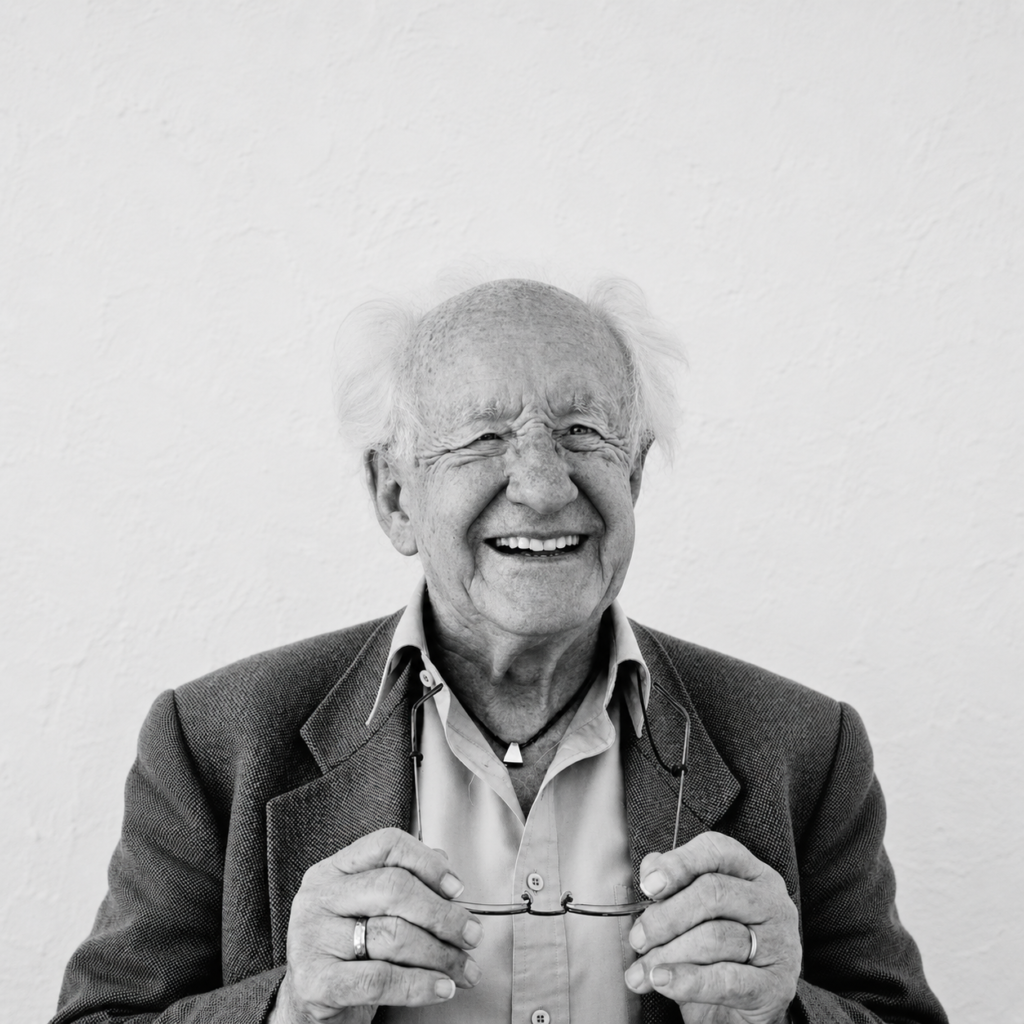
Living longer, but less meaningful lives?

johangaltung

On UN Day and his own 86th birthday

The last one hundred years life expectancy has increased by about 25%-from near 80 to near 100-in some countries. But, instead of increasing playful childhood, education, work and retirement by 25%, the age of retirement has moved much less than the age at death. That deprives masses of older people with experience and wisdom of productive work, of being useful, meeting others constructively; reducing them to being playful–bridge or golf as case may be–and just keeping alive.

Homo sapiens as homo ludens not homo faber. Longer, but emptier lives.

A crime against humanity if there ever was any. However, with two clear remedies: continue working self-employed with pension as salary, or find meaning in dedication to something beyond oneself, some cause, volunteer work. That should be planned well in advance before entering a “career” that peaks before, or at, retirement; the rest being downhill even steeply.

Life is expansion from a fertilized egg to a mature human being and contraction to ever narrower space around oneself till time is up. Western history has many narratives about expansion from some little point to a full-blown empire and contraction to ever narrower spaces. The two model each other with empire expansion giving meaning to life, and contraction, death of empires making life meaningless, with waves of massive suicide ending the Habsburg, Nazi, Apartheid empires. Hitler, in 1940 the head of the largest European empire ever, in 1945 only of his bunker, may have been a suicide model. But it was deeper.

We are now living the accelerating history of the end of the US empire, in the wake of about 11 in Europe; and the general decline and fall of Western hegemony. Suicide waves on both sides of the Atlantic?

To the contrary, EU creates an EU Army HQ, USA elects a president known for belligerence, Brexit England revives symbols of an empire long since gone; finding meaning in war and domination. Far better would have been for all three to lift up the bottom living in misery.

But are we not at least living healthier lives, with lower mortality, and also with lower morbidity? The World Health Assembly of WHO in Geneva 23-28 May 2016 sheds some doubts on that.

The Director-General Dr Chan celebrates declines in infant and maternal mortality and in death from TBC and HIV. But on the dark side are air pollution and climate change, drug-resistant pathogens, resurgence of emerging and re-emerging infectious diseases, antimicrobial resistance, chronic non-communicable disease, chemicals such as lead, pesticides, obesity, inappropriate marketing of unhealthy, sweetened food with gifts and free samples, and lack of access to affordable medicines and vaccines.

We sense profit before/above health, as evidenced by BRICS speakers mentioning TPP; and behind the waning US empire. Shall we die from all of the above, to save the West from transatlantic suicide waves?

From neither. There are good solutions, some medical-technical, some based on state power–laws, taxation, subsidies–some based on people defending themselves with information, boycotts, alternatives. And the USA may even join the world, leaving global hegemony behind.

However, “meaningful vs empty” goes deeper. Take the Internet; very much meaning can be derived from the screen. Or, is there a snag?

Wendy HK Chun from “In the Depths of the Digital Age” (NYRB 23 Jun 2016):

“When you read on paper, you are more likely to follow the thread of a narrative or argument, whereas when you read on screen you are more likely to scan for keywords–and may end up with stronger feelings /like anger/ about them, not with the potentially different ideas”.

But cannot anger be as meaningful as ideas? Sure, but anger may produce more anger in a destructive polarization while ideas produce ideas in a constructive cooperation. More meaningful in the long run.

The review calls attention to software in “smart watches” telling the state of health. Useful, but it reduces the wearer to an object rather than a subject, with “meaning” imposed, not proposed.

And among the leading diseases (Nºs 1 and 4) according to WHO, are increasing uni- and bi-polar depression, both meaning-killers.

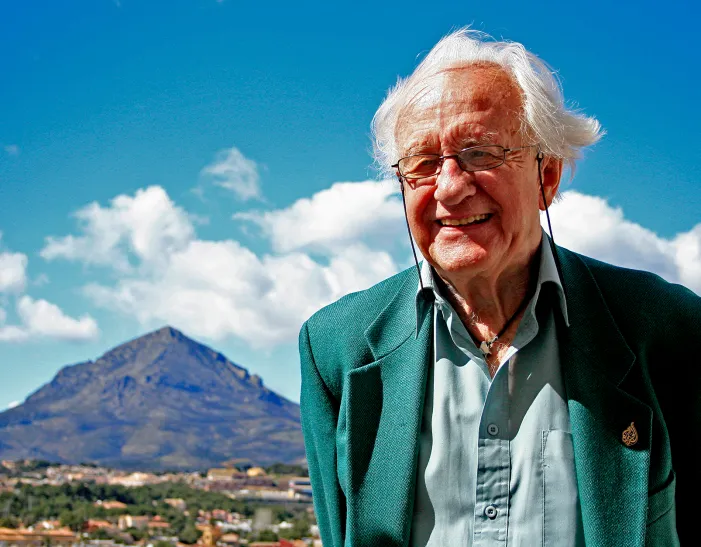
Let me share experiences getting older, 86 on the day this is published.

No doubt outer life, like work far from home, contracts, eg. to Skype. The circles grow smaller around the home. Work filling it with comfort, beauty and meaning is well spent. But inner life expands if not too much energy goes into health concerns.

I am reminded of Bertrand Russell’s article in The Observer, “On Turning 90”: the disadvantages are obvious, but there is the overview, that long-time perspective from having lived long. Events, processes, the non-changes experienced accumulate. Their synergies come forth as wisdom.

“What did I learn from that” comes up frequently. Positive, inspiring answers may give more meaning than warnings. And younger people beware, we older know a little bit about love and all that.

When younger, I asked myself how I can, when older, live without such exciting activities; getting older I now ask how I could live with them. A life not disturbing endless mental and spiritual vitality opens for deep contemplation.

Togetherness with a spouse multiplies the richness: jointly enjoying nature, changing climates, wonderful people, delicious food, culture, in town or at home.

Consciousness, a little work, much gratitude are needed. The happiest years of my life.

Childhood, adolescence, early adulthood pass review in thoughts and dreams; to be explored for positive messages, and for something that went wrong and can be remedied. I dream summer and good weather, travel, some kind of mission, something going wrong and being fixed or in the process–in short, a life review. That enriches life by living two of them together, here-and-now and there-and-then. Fascinating.

And the bad things that happened? They are there but go beyond, into here-and-now. Of course writing helps the processing and the search for new horizons. Also looking at a screen, without looking back in anger. But maybe with a deeper understanding pointing forward to one more tomorrow, in that wonderful flow of expanding inner lives.

Originally published at Transcend Media Service, TMS, here.
Share

Leave a Reply

Your email address will not be published. Required fields are marked *

Related Posts

Lena Petrova of “World Affairs In Context” with more than half a million subscribers on YouTube wanted to explore what a peace researcher like me has to say about, among other things, the First and the Second Cold War and why eethics has disappeared from politics. I am particularly happy about this conversation that also yielded an amazing number of very appreciative comments on YouTube. No doubt, people are longing for alternatives, including peace perspectives.
Jan Oberg, TFF director April 28, 2026 In this third TFF Peace Pulse, I make the important distinction between the violence and the conflict that violence is a symptom of. If you want peace, focus on the underlying conflict because that is the key to resolution, peacemaking, and a better future for the parties. The West is obsessed with violence, just look around you – and 90+ per cent of the public debate is about military issues and other violence – totally wasted for peace. These Peace Pulses will only be published here a few times. You will also not find them on YouTube and Vimeo because both platforms have blocked TFF and me; you know, peace is dangerous these days. Most TFF’s videos since 2007 are now on Rumble.
In contrast to most, we’ll bring alternatives, solutions, hope and strategies for a better future. Times are dangerous, yes, but that only intensifies the need for constructive thinking and action! Jan Oberg, TFF director April 13, 2026 The new TFF Peace Pulse uses video messages in a new way: Max 3-5-minute-long comments, ideas or perhaps mini-lectures, all about peace – positive peace. We launch them today on April 13, 2026 with a carefully crafted visual aesthetic fitting the content. We hope to publish them regularly from now on. We launch Peace Pulse (PP) – for a number of reasons. The world is in chaos, and there are countless reasons to feel concerned, frustrated, even angry. The atmosphere is saturated with doom and gloom, with negative energy and rear‑mirror thinking, while vision, imagination, alternatives, strategies and genuine future‑mindedness remain in short supply. And without them, we simply can’t save the world. Looking at problems from a hundred angles will...

Recent Articles

Greenland – the world’s largest island, a continent of its own with only 57.000 inhabitants. I visited it for the first time in May 2005. I flew across the inland ice to Nuuk, the tiny capital with some 14.000 inhabitants. I was overwhelmed by the pride and kindness of everyone I met as well as by the unique natural beauty. Unfortunately, due to weather conditions during my ten-day stay I could get nowhere else but Nuuk. Fortunately, however, among those I met was Gitte Arvegaard, a Danish lawyer and negotiator employed by the local government, Greenland Home Rule. She turned out to be an enthusiastic photographer with a lot of pictures taken during various trips around Greenland. So this Greeland series is the result of our cooperative effort. We both hope you enjoy it and are stimulated to visit Greenland – about which you may read more here. Finally, if you want to...
 Jan Oberg’s storyof how he met Sir Paul Liverpool – where else to meet Paul McCartney? Paul’s old class mate and TFF Associate, Jonathan Power introduced me to Paul McCartney in Liverpool at an informal reception. It was held at what used to be their school, now the Liverpool Institute for Performing Arts and we were there to celebrate that Jonathan had written Amnesty International’s 40th Anniversary book. This happy event for “righting wrongs and writing songs” gave me an opportunity to meet Paul and tell him about TFF and get straight to the matter: would he consider making a donation in support of our work for peace? While I was probably the only one with such a wish that day, I was certainly not the only one who wanted to shake hands and talk with him. In the last minutes before Paul was to leave, Jonathan brought us together and we got about three...
1942James Paul McCartney is born in Liverpool on June 18th. 1956Paul writes his first song, I Lost My Little Girl. 1957Paul meets John Lennon at St. Peter’s Church Fete, Woolton, Liverpool. He joins his first group, The Quarrymen and performs in his first gig at The New Clubmoor Hall, Liverpool, on October 18th. 1960Formation of The Beatles, who play residencies in Hamburg and at The Cavern in Liverpool. 1961First Beatles recordings issued in Germany, as the backing group for Tony Sheridan. 1962The first Beatles Parlophone recording, Love Me Do, reaches number 17 in the British charts. 1963The birth of Beatlemania. Please Please Me gives the group their first British Number 1. She Loves You cements their success. Please Please Me and With The Beatles albums released. 1964First triumphant American tour. The Beatles perform at the Royal Command Performance and release their first film, A Hard Day’s Night. Their single I...

TFF on Substack

Discover more from TFF Transnational Foundation & Jan Oberg.

Most Popular

Greenland – the world’s largest island, a continent of its own with only 57.000 inhabitants. I visited it for the first time in May 2005. I flew across the inland ice to Nuuk, the tiny capital with some 14.000 inhabitants. I was overwhelmed by the pride and kindness of everyone I met as well as by the unique natural beauty. Unfortunately, due to weather conditions during my ten-day stay I could get nowhere else but Nuuk. Fortunately, however, among those I met was Gitte Arvegaard, a Danish lawyer and negotiator employed by the local government, Greenland Home Rule. She turned out to be an enthusiastic photographer with a lot of pictures taken during various trips around Greenland. So this Greeland series is the result of our cooperative effort. We both hope you enjoy it and are stimulated to visit Greenland – about which you may read more here. Finally, if you want to...
 Jan Oberg’s storyof how he met Sir Paul Liverpool – where else to meet Paul McCartney? Paul’s old class mate and TFF Associate, Jonathan Power introduced me to Paul McCartney in Liverpool at an informal reception. It was held at what used to be their school, now the Liverpool Institute for Performing Arts and we were there to celebrate that Jonathan had written Amnesty International’s 40th Anniversary book. This happy event for “righting wrongs and writing songs” gave me an opportunity to meet Paul and tell him about TFF and get straight to the matter: would he consider making a donation in support of our work for peace? While I was probably the only one with such a wish that day, I was certainly not the only one who wanted to shake hands and talk with him. In the last minutes before Paul was to leave, Jonathan brought us together and we got about three...
1942James Paul McCartney is born in Liverpool on June 18th. 1956Paul writes his first song, I Lost My Little Girl. 1957Paul meets John Lennon at St. Peter’s Church Fete, Woolton, Liverpool. He joins his first group, The Quarrymen and performs in his first gig at The New Clubmoor Hall, Liverpool, on October 18th. 1960Formation of The Beatles, who play residencies in Hamburg and at The Cavern in Liverpool. 1961First Beatles recordings issued in Germany, as the backing group for Tony Sheridan. 1962The first Beatles Parlophone recording, Love Me Do, reaches number 17 in the British charts. 1963The birth of Beatlemania. Please Please Me gives the group their first British Number 1. She Loves You cements their success. Please Please Me and With The Beatles albums released. 1964First triumphant American tour. The Beatles perform at the Royal Command Performance and release their first film, A Hard Day’s Night. Their single I...
Read More
Greenland – the world’s largest island, a continent of its own with only 57.000 inhabitants. I visited it for the first time in May 2005. I flew across the inland ice to Nuuk, the tiny capital with some 14.000 inhabitants. I was overwhelmed by the pride and kindness of everyone I met as well as by the unique natural beauty. Unfortunately, due to weather conditions during my ten-day stay I could get nowhere else but Nuuk. Fortunately, however, among those I met was Gitte Arvegaard, a Danish lawyer and negotiator employed by the local government, Greenland Home Rule. She turned out to be an enthusiastic photographer with a lot of pictures taken during various trips around Greenland. So this Greeland series is the result of our cooperative effort. We both hope you enjoy it and are stimulated to visit Greenland – about which you may read more here. Finally, if you want to...
p_mccartney_poem
 Jan Oberg’s storyof how he met Sir Paul Liverpool – where else to meet Paul McCartney? Paul’s old class mate and TFF Associate, Jonathan Power introduced me to Paul McCartney in Liverpool at an informal reception. It was held at what used to be their school, now the Liverpool Institute for Performing Arts and we were there to celebrate that Jonathan had written Amnesty International’s 40th Anniversary book. This happy event for “righting wrongs and writing songs” gave me an opportunity to meet Paul and tell him about TFF and get straight to the matter: would he consider making a donation in support of our work for peace? While I was probably the only one with such a wish that day, I was certainly not the only one who wanted to shake hands and talk with him. In the last minutes before Paul was to leave, Jonathan brought us together and we got about three...
Logo-Transnational
1942James Paul McCartney is born in Liverpool on June 18th. 1956Paul writes his first song, I Lost My Little Girl. 1957Paul meets John Lennon at St. Peter’s Church Fete, Woolton, Liverpool. He joins his first group, The Quarrymen and performs in his first gig at The New Clubmoor Hall, Liverpool, on October 18th. 1960Formation of The Beatles, who play residencies in Hamburg and at The Cavern in Liverpool. 1961First Beatles recordings issued in Germany, as the backing group for Tony Sheridan. 1962The first Beatles Parlophone recording, Love Me Do, reaches number 17 in the British charts. 1963The birth of Beatlemania. Please Please Me gives the group their first British Number 1. She Loves You cements their success. Please Please Me and With The Beatles albums released. 1964First triumphant American tour. The Beatles perform at the Royal Command Performance and release their first film, A Hard Day’s Night. Their single I...
Logo-Transnational
  Back to the series “Bujumbura, Burundi”
By JONATHAN POWER August 16, 2000 LONDON – Remember the summer of ’98? In the sweltering, torpid heat of a Roman august, charged with exhaust fumes, the international community gave its overwhelming approval to the establishment of an International Criminal Court that will enable those accused of “crimes against humanity” to be tried and, if convicted, sentenced. Only seven nations opposed or abstained from the motion, including Israel, China, India and the U.S.A. where the Pentagon had successfully waged bureaucratic guerrilla war to undermine the initially sympathetic stance of President Bill Clinton. Two years on we can now see what an epochal event that was. In a the stroke of 120 pens it changed the climate on political thuggery. After numerous half-starts and false starts ever since the Nuremberg and Tokyo trials that convicted the war criminals of the Second World War, the world at last had agreed en masse a common...
By Jonathan Power April 8th 2004 LONDON – There is a widely held opinion abroad that Brazil never had the chance of profoundly changing for the better- shedding its widespread poverty and dire income distribution- until Lula (President Luiz Inácio da Silva) came along last year. This is not entirely false, but neither is it entirely true. Brazil has long made a kind of progress- in the last century it was second only to Taiwan as the fastest growing economy in the world- but it has been appallingly uneven. Part of the story of contemporary Brazil is clear to the eye in this small village of 7,000 people in the arid north east, along with the Amazon the poorest part of this vast country. Twenty five years or so ago I used to come to Pilõezinhos regularly when I had a close friend living here, Valéria Rezende, a radical, grass roots-stirring...

