
Kosovo: the First to Get it Right

LONDON- What an anniversary that was! The first birthday marking Nato’s bombing of Yugoslavia brought forth a torrent of articles both pro and against. Yet not one came close to matching for lucidity and perceptiveness, delivered in an icily ironic style, the essay penned at the time of the war by the former Swedish prime minister, Carl Bildt, in the cerebral British monthly, Prospect. Bildt, who is presently the UN Secretary-General’s Special Envoy for the Balkans, is a man of political leanings, if elections are anything to go by, too far to the right for most of his countrymen. His instinct is to support Nato, to be close to America, to wind back the welfare state and to argue the case for the use of force and intervention. But something happened to him on the road to Belgrade.

“The Baby Bombers”, as the editor headlined the piece, was a wake-up call for the baby-boomers, now in the higher reaches of western political power, “who have never learnt about war and power the hard way” and who, with their “smart wars- high rhetoric, high altitude and high technology; smart bombs for smart politicians”, believe there is a “third way in war”. Bildt wrote of meeting Gerd Schmueckle, a retired German general who was wounded six times on the Russian front during the Second World war, but then served in the highest positions inside Nato. Perhaps, said the general, it is a question of generations. While the war veterans are losing their hair and teeth, the new generation suddenly has a different attitude towards war.

“For Schmueckle, war was associated with horror beyond imagination, leaving deep psychological scars on individuals and nations. Bombs, he said, do not create peace; instead they breed hatred for years, perhaps for generations.”

A year on we can see the truth of this in Yugoslavia. The bombing did not forestall ethnic cleansing, it appeared to precipitate it. And it has bequeathed a cauldron of mutual hatred and a political potage that no amount of Nato and UN policing and Western economic aid can clear up, even if it were forthcoming in something like the quantities promised- another example of the war time rhetoric that misled the public. Reading the public statements of Bernard Kouchner, the UN man responsible for the reconstruction of Kosovo and General Klaus Reinhardt, the local Nato commander, is to sense that they are often close to despair.

Aficionados of Carl Bildt now have the chance to pursue his thinking, one year after the bombing, in the new issue of Survival, the quarterly journal of the International Institute for Strategic Studies. This is a much more lengthy discourse on the limits of force, and looks not just at Kosovo but at Bosnia before. It’s essense is to challenge what has now achieved the status of conventional wisdom- the idea of the supremacy of air-power.

Bildt argues that the Dayton agreement that brought an end to the fighting in Bosnia was “far more a victory for diplomacy than a victory for force”. He certainly doesn’t exclude that the Nato air operation, initiated on September 30th, 1995, “had a significant psychological impact during its first few days”, but the political momentum that led to the accord came about primarily because of a new diplomatic approach. “The essential diplomatic innovation was the willingness of the U.S. to accept some of the core demands of the Bosnian Serbs; demands that the U.S. previously had refused even to contemplate. In particular the Bosnian Serbs had consistently demanded a separate Republika Srpska inside a weak Bosnian framework”.

After Dayton there was an unforgivable lull in Western diplomatic activity. Neither the European Union nor the U.S. were willing to launch any serious diplomatic initiatives to head off the brewing crisis in Kosovo. Albanian opinion inside Kosovo, once more fluid and open to diplomatic options, was allowed to harden, leading to the birth of an armed insurrection and driving the population into the embrace of the Kosovo Liberation Army.

The West, misreading the lesson of Bosnia, tried to head off Serbian repression with the threat of air power. Thus when diplomacy failed- and the Rambouillet agreement demanded much more from Slobodan Milosevic than the “peace agreement” which ended the war- the West had little choice but to make good on its threats.

The air operation, however, could not prevent a major humanitarian disaster. Whether it triggered it, Bildt more cautious than I, just says “will remain a subject of debate”. But he adds scathingly, “despite all the talk about a revolution in military affairs, Kosovo brutally demonstrated that the axe remains the superior short-range-precision-guided weapon when it comes to one man killing another; there is very little that increasingly long-range and high tech weaponry can do about it.”

A year on we have to live with the now seemingly insoluble Kosovo problem handed over to the UN, to the world. Poor old rest of the world. (That was its reward for kicking up a fuss about the UN Charter being abused by the West’s unilateral decision to bomb.) The UN is supposed to find the peace that Western bombs could not deliver, even though, in Bildt’s view, “there is no agreed framework for either the internal or external order of Kosovo.”

What the West needs if it is to progress, never mind Kosovo, and grow out of its baby-bomber lifestyle, is a little less Bill Clinton and Tony Blair and rather more Carl Bildt. His two essays should be their compulsory reading before, once again in some new imbroglio, they are tempted by the quick but elusive fix of air power.
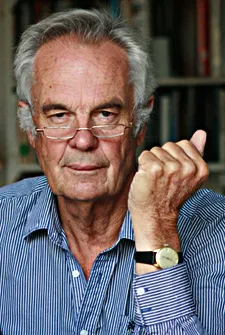

Foreign affairs columnist, film-maker and author

Share

Leave a Reply

Your email address will not be published. Required fields are marked *

Related Posts

A donors’ conference, co-sponsered by the Burundian government, the Belgian government and UNDP will be held in Brussels January 12-13, 2004. This PressInfo offers a perspective on its urgency. See also TFF’s new Burundi Forum. Imagine for a moment that politics is about goodness and generosity. Where could a few million dollars of government aid and a few civil society organisations – guaranteed – win the hearts of extremely poor millions who want peace and already work hard to achieve it after 10 years of war and genocide? The answer is Burundi, the heart-shaped country in the heart of Africa. Burundi makes a good story from Africa. But what does the world know about Burundi, its problems and struggles? Burundi’s tough reality Here are the basic facts. Burundi’s population is about 7 million and it is number 171 out of the 175 countries on the UNDP’s human development index. Their life...
The fact that the outlandish and quackish Trump “peace” plan for the genocided Gaza was passed by the UN Security Council defines the end of every understanding of true peace. Jan Oberg November 18, 2025 The UN Security Council adopted a U.S.-drafted resolution on November 17, 2025, endorsing Donald Trump’s Gaza peace plan. It authorised an International Stabilisation Force (ISF), backed a transitional governing body called the “Board of Peace”, and declared that conditions may now exist for a credible pathway to Palestinian self-determination and eventual statehood. The vote passed 13–0, with Russia and China abstaining. This is UN SC Resolution 2803. This goes against everything the UN stands for. Of course, China and Russia wisely abstained. They want no involvement and co-responsibility with this fake peace plan and are smart enough to see that it will never lead to true peace. I ask myself – did the Trump Regime give the UN its death knell yesterday? It...
In October 2025, I attended two major academic conferences in Shanghai—both by invitation, and, curiously, as the only scholar from Scandinavia. That absence felt unjust to the more experienced Nordic experts in China studies who deserve a seat at such global forums. What unfolded was a journey through two distinct but interwoven events—each offering a lens into China’s intellectual landscape and its evolving role in the world. The 2nd World Conference on China Studies The first event, the 2nd World Conference on China Studies, brought together over 500 scholars from 50 countries under the theme “Historical and Contemporary China: A Global Perspective.” I participated in the sub-forum titled “China in Global Context: Continuity and Innovation of Civilisation.” It was a masterfully orchestrated gathering… Continue reading here on TFF Substack… Remember to subscribe when you are there. Then you will also automatically get TFF PressInfo and not miss any of what we say and do.

Recent Articles

Jan Oberg May 15, 2026 Go to this Fox News page and scroll the whole way down: President Donald Trump tells the world that his meeting with President Xi Jinping yielded a lot of very concrete political and economic results – of course, only where the Chinese side, according to him, agreed with him. He does not mention the Taiwan issue, but Secretary of State, Marco Rubio, says that it did not feature prominently in their talks and that the US policy on Taiwan has not changed. Then go to China Daily – or Global Times – and you will see that for the Chinese it is framework, principles, structure of cooperation etc. that matters – all embedded in the overall idea of “constructive bilateral relationship of strategic stability.” Nowhere is any concrete agreement or deal – all that Trump refers to – mentioned. At the general level, this gives you insights into the very different social...
Lena Petrova of “World Affairs In Context” with more than half a million subscribers on YouTube wanted to explore what a peace researcher like me has to say about, among other things, the First and the Second Cold War and why eethics has disappeared from politics. I am particularly happy about this conversation that also yielded an amazing number of very appreciative comments on YouTube. No doubt, people are longing for alternatives, including peace perspectives.
The MIMAC – Military-Industrial-Media-Academic Complex – drives the world’s rampant militarism and wars without end. Here is a short reflection of how it works against all interests of humanity. #5 deals with why there is no real enemy or threat images/analysis. It’s all ex-post constructions. And, btw, theTFF Peace Pulse is now on Rumble.

TFF on Substack

Discover more from TFF Transnational Foundation & Jan Oberg.

Most Popular

Jan Oberg May 15, 2026 Go to this Fox News page and scroll the whole way down: President Donald Trump tells the world that his meeting with President Xi Jinping yielded a lot of very concrete political and economic results – of course, only where the Chinese side, according to him, agreed with him. He does not mention the Taiwan issue, but Secretary of State, Marco Rubio, says that it did not feature prominently in their talks and that the US policy on Taiwan has not changed. Then go to China Daily – or Global Times – and you will see that for the Chinese it is framework, principles, structure of cooperation etc. that matters – all embedded in the overall idea of “constructive bilateral relationship of strategic stability.” Nowhere is any concrete agreement or deal – all that Trump refers to – mentioned. At the general level, this gives you insights into the very different social...
Lena Petrova of “World Affairs In Context” with more than half a million subscribers on YouTube wanted to explore what a peace researcher like me has to say about, among other things, the First and the Second Cold War and why eethics has disappeared from politics. I am particularly happy about this conversation that also yielded an amazing number of very appreciative comments on YouTube. No doubt, people are longing for alternatives, including peace perspectives.
The MIMAC – Military-Industrial-Media-Academic Complex – drives the world’s rampant militarism and wars without end. Here is a short reflection of how it works against all interests of humanity. #5 deals with why there is no real enemy or threat images/analysis. It’s all ex-post constructions. And, btw, theTFF Peace Pulse is now on Rumble.
Read More
Screenshot-2026-05-15-103534
Jan Oberg May 15, 2026 Go to this Fox News page and scroll the whole way down: President Donald Trump tells the world that his meeting with President Xi Jinping yielded a lot of very concrete political and economic results – of course, only where the Chinese side, according to him, agreed with him. He does not mention the Taiwan issue, but Secretary of State, Marco Rubio, says that it did not feature prominently in their talks and that the US policy on Taiwan has not changed. Then go to China Daily – or Global Times – and you will see that for the Chinese it is framework, principles, structure of cooperation etc. that matters – all embedded in the overall idea of “constructive bilateral relationship of strategic stability.” Nowhere is any concrete agreement or deal – all that Trump refers to – mentioned. At the general level, this gives you insights into the very different social...
Screenshot-2026-05-12-104023
Lena Petrova of “World Affairs In Context” with more than half a million subscribers on YouTube wanted to explore what a peace researcher like me has to say about, among other things, the First and the Second Cold War and why eethics has disappeared from politics. I am particularly happy about this conversation that also yielded an amazing number of very appreciative comments on YouTube. No doubt, people are longing for alternatives, including peace perspectives.
Screenshot-2026-04-13-154551 (2)
The MIMAC – Military-Industrial-Media-Academic Complex – drives the world’s rampant militarism and wars without end. Here is a short reflection of how it works against all interests of humanity. #5 deals with why there is no real enemy or threat images/analysis. It’s all ex-post constructions. And, btw, theTFF Peace Pulse is now on Rumble.
Screenshot-2026-04-13-154551 (1)
Jan Oberg, TFF director April 28, 2026 In this third TFF Peace Pulse, I make the important distinction between the violence and the conflict that violence is a symptom of. If you want peace, focus on the underlying conflict because that is the key to resolution, peacemaking, and a better future for the parties. The West is obsessed with violence, just look around you – and 90+ per cent of the public debate is about military issues and other violence – totally wasted for peace. These Peace Pulses will only be published here a few times. You will also not find them on YouTube and Vimeo because both platforms have blocked TFF and me; you know, peace is dangerous these days. Most TFF’s videos since 2007 are now on Rumble.
Screenshot-2026-04-13-154551
In contrast to most, we’ll bring alternatives, solutions, hope and strategies for a better future. Times are dangerous, yes, but that only intensifies the need for constructive thinking and action! Jan Oberg, TFF director April 13, 2026 The new TFF Peace Pulse uses video messages in a new way: Max 3-5-minute-long comments, ideas or perhaps mini-lectures, all about peace – positive peace. We launch them today on April 13, 2026 with a carefully crafted visual aesthetic fitting the content. We hope to publish them regularly from now on. We launch Peace Pulse (PP) – for a number of reasons. The world is in chaos, and there are countless reasons to feel concerned, frustrated, even angry. The atmosphere is saturated with doom and gloom, with negative energy and rear‑mirror thinking, while vision, imagination, alternatives, strategies and genuine future‑mindedness remain in short supply. And without them, we simply can’t save the world. Looking at problems from a hundred angles will...
IMG_5165 (1)
PART II — Publishing Peace in a System That Prioritises Militarism Jan Oberg, TFF director April 10, 2026 How TFF Maintains a Daily Voice in a Digital World Built for Noise This article is part of the series “TFF at 40″ and it invites you to learn about Four Decades of Publishing Peace. It takes a look at how a small, people‑financed peace foundation has communicated across four generations of technology — from wax stencils and fax machines to mass email and Substack — and why TFF continues to publish every single day in a system that rewards noise, conflict, and militarism. ◆ What it means to publish peace every single day in a digital system built for 24/7 news and other noise, confrontation, and militarism. How TFF’s independence, continuity, and global readership defy algorithms, donor cycles, and Western media censorhip — and why the Majority World keeps listening. When the...

