

Jeffrey Sachs: Blood in the Sand

Jeffrey D. Sachs

September 29, 2021

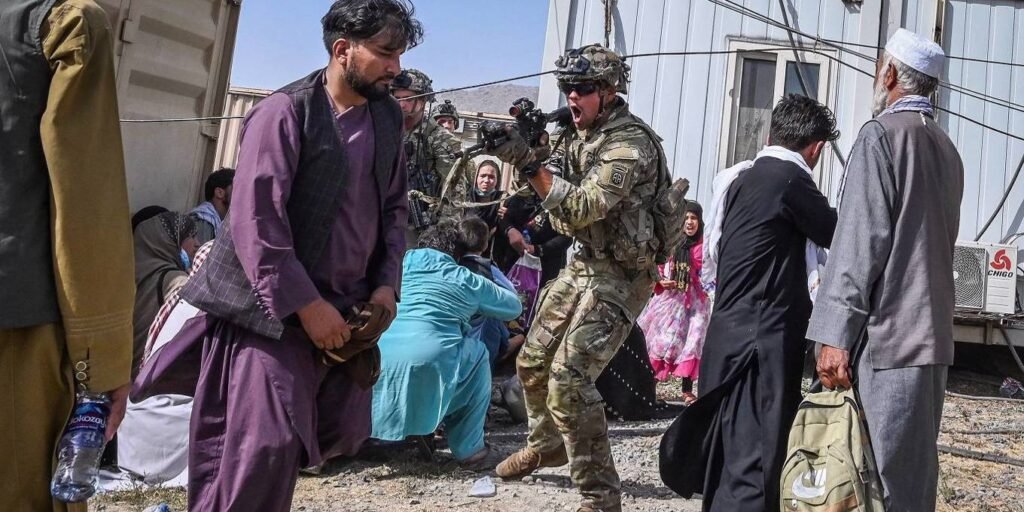
For decades, the American political class has intervened relentlessly and recklessly in countries whose people they hold in contempt. And once again they are being aided by America’s credulous mass media, which is uniformly blaming the Taliban victory on Afghanistan’s incorrigible corruption.

Originally posted on Project Syndicate on August 17, 2021

NEW YORK – The magnitude of the United States’ failure in Afghanistan is breathtaking. It is not a failure of Democrats or Republicans, but an abiding failure of American political culture, reflected in US policymakers’ lack of interest in understanding different societies. And it is all too typical.

Almost every modern US military intervention in the developing world has come to rot. It’s hard to think of an exception since the Korean War. In the 1960s and first half of the 1970s, the US fought in Indochina – Vietnam, Laos, and Cambodia – eventually withdrawing in defeat after a decade of grotesque carnage. President Lyndon B. Johnson, a Democrat, and his successor, the Republican Richard Nixon, share the blame.

In roughly the same years, the US installed dictators throughout Latin America and parts of Africa, with disastrous consequences that lasted decades. Think of the Mobutu dictatorship in the Democratic Republic of Congo after the CIA-backed assassination of Patrice Lumumba in early 1961, or of General Augusto Pinochet’s murderous military junta in Chile after the US-backed overthrow of Salvador Allende in 1973.

In the 1980s, the US under Ronald Reagan ravaged Central America in proxy wars to forestall or topple leftist governments. The region still has not healed.

Since 1979, the Middle East and Western Asia have felt the brunt of US foreign policy’s foolishness and cruelty. The Afghanistan war started 42 years ago, in 1979, when President Jimmy Carter’s administration covertly supported Islamic jihadists to fight a Soviet-backed regime. Soon, the CIA-backed mujahedeen helped to provoke a Soviet invasion, trapping the Soviet Union in a debilitating conflict, while pushing Afghanistan into what became a forty-year-long downward spiral of violence and bloodshed.

Across the region, US foreign policy produced growing mayhem. In response to the 1979 toppling of the Shah of Iran (another US-installed dictator), the Reagan administration armed Iraqi dictator Saddam Hussein in his war on Iran’s fledgling Islamic Republic. Mass bloodshed and US-backed chemical warfare ensued. This bloody episode was followed by Saddam’s invasion of Kuwait, and then two US-led Gulf Wars, in 1990 and 2003.

The latest round of the Afghan tragedy began in 2001. Barely a month after the terror attacks of September 11, President George W. Bush ordered a US-led invasion to overthrow the Islamic jihadists that the US had backed previously. His Democratic successor, President Barack Obama, not only continued the war and added more troops, but also ordered the CIA to work with Saudi Arabia to topple Syrian President Bashar al-Assad, leading to a vicious Syrian civil war that continues to this day. As if that was not enough, Obama ordered NATO to oust Libyan leader Muammar el-Qaddafi, inciting a decade of instability in that country and its neighbors (including Mali, which has been destabilized by inflows of fighters and weapons from Libya).

What these cases have in common is not just policy failure. Underlying all of them is the US foreign-policy establishment’s belief that the solution to every political challenge is military intervention or CIA-backed destabilization.

That belief speaks to the US foreign-policy elite’s utter disregard of other countries’ desire to escape grinding poverty. Most US military and CIA interventions have occurred in countries that are struggling to overcome severe economic deprivation. Yet instead of alleviating suffering and winning public support, the US typically blows up the small amount of infrastructure the country possesses, while causing the educated professionals to flee for their lives.

Even a cursory look at America’s spending in Afghanistan reveals the stupidity of its policy there. According to a recent report by the Special Inspector General for Afghanistan Reconstruction, the US invested roughly $946 billion between 2001 and 2021. Yet almost $1 trillion in outlays won the US few hearts and minds.

Here’s why. Of that $946 billion, fully $816 billion, or 86%, went to military outlays for US troops. And the Afghan people saw little of the remaining $130 billion, with $83 billion going to the Afghan Security Forces. Another $10 billion or so was spent on drug interdiction operations, while $15 billion was for US agencies operating in Afghanistan. That left a meager $21 billion in “economic support” funding. Yet even much of this spending left little if any development on the ground, because the programs actually “support counterterrorism; bolster national economies; and assist in the development of effective, accessible, and independent legal systems.”

In short, less than 2% of the US spending on Afghanistan, and probably far less than 2%, reached the Afghan people in the form of basic infrastructure or poverty-reducing services. The US could have invested in clean water and sanitation, school buildings, clinics, digital connectivity, agricultural equipment and extension, nutrition programs, and many other programs to lift the country from economic deprivation. Instead, it leaves behind a country with a life expectancy of 63 years, a maternal mortality rate of 638 per 100,000 births, and a child stunting rate of 38%.

Please think of supporting TFF so we can bring you more genuine materials – like the above – on problems and on peace as well as remain 100% people-financed and therefore independent and politically non-correct…
Jeffrey D. Sachs, University Professor at Columbia University, is Director of the Center for Sustainable Development at Columbia University and President of the UN Sustainable Development Solutions Network. He has served as adviser to three UN Secretaries-General, and currently serves as an SDG Advocate under Secretary-General António Guterres. His books include The End of PovertyCommon WealthThe Age of Sustainable DevelopmentBuilding the New American EconomyA New Foreign Policy: Beyond American Exceptionalism, and, most recently, The Ages of Globalization.

Share

Leave a Reply

Your email address will not be published. Required fields are marked *

Related Posts

By Jan ObergTFF co-founder and director February 11, 2026 PART 3 — ECONOMICS, TRADE & FINANCIAL SOVEREIGNTY A. Trade Measures & Market Signaling Economic pressure can be applied instantly and scaled without violence. Immediate Measures (within a week) Government boycott US goods and services  A very powerful signal which over time will be felt. Targeted tariffs on selected U.S. goods Symbolic but high-visibility sectors send a clear message. Suspend trade facilitation talks A peaceful pause that signals deep concern. Freeze U.S. participation in public procurement – military procurement in particular A nonviolent way to reduce influence. Competition law review of U.S. corporations A legal tool to scrutinise market dominance. Longer-Term Measures EU–Asia–Africa trade corridors Reducing reliance on U.S. markets. European supply chains for critical minerals Strategic autonomy in resource access. European Strategic Trade Authority Monitoring coercive practices globally. Euro-denominated commodity markets Weakening the dollar’s pricing monopoly. The EU must resume contacts and negotiations with Russia, focusing on energy cooperation To...
PART 2 — Diplomacy, Law and Nonviolent Power By Jan ObergTFF co-founder and director January 26, 2026 This is the second of four TFF-created idea portfolios designed to curb the global reach of the United States and, in both the short and long term, help catalyse a worldwide nonviolent resistance to what many observers describe as the Trump administration’s uniquely confrontational, destructive and world-threatening policies. These portfolios outline what governments and citizens across the world can do through dynamic diplomacy, creative initiatives, and strictly nonviolent means. They are typical TFF works in that we do not only tell what the problem is and how bad it will go – as 90+% of all commentators, experts and scholars do – we tell what we think can be done, inviting you to think of what you think you can do. It seems painfully clear to me that the current political dynamics in Washington increasingly resemble the most dangerous...
PART 1 — Media, Culture and Information Sovereignty By Jan ObergTFF co-founder and director January 20, 2026 This is the first of four TFF-created idea portfolios designed to curb the global reach of the United States and, in both the short and long term, help catalyse a worldwide nonviolent resistance to what many observers describe as the Trump administration’s uniquely confrontational, destructive and world-threatening policies. These portfolios outline what governments and citizens across the world can do through dynamic diplomacy, creative initiatives, and strictly nonviolent means. They are typical TFF works in that we do not only tell what the problem is and how bad it will go – as 90+% of all commentators, experts and scholars do – we tell what we think can be done, inviting you to think of what you think you can do. It seems painfully clear to me that the current political dynamics in Washington increasingly resemble the most...

Recent Articles

“En dag som berättigar till fest”, utropade den London-baserade al-Quds al-Arabi efter FN:s eldupphörresolution, “eftersom detta är första gången som Israel accepterar ett FN-beslut från en position som besegrad och inte som segrare”. Att ett arabisk-israeliskt krig för en gångs skull slutat med arabisk seger, är en helt dominerade åsikt i arabiska medier. Al-Quds al-Arabi tillåter sig att drömma om att det israeliska nederlaget skall leda till massflykt från Israel. Men i nästa andetag påminner tidningen om att Israel aldrig brukar genomföra sina internationella åtaganden och varnar för att förlorarna, liksom tidigare, kan hämnas genom att provocera fram inbördeskrig i Libanon. Med tanke på de otaliga massmediala vittnesmålen om det libanesiska folkets eniga motståndskraft förefaller risken för inre stridigheter i det sargade landet just nu liten. Men visst kan man urskilja nyansskillnader i libanesiska tidningar. Vänsterorganet al-Safir uppfattar FN-resolutionen som en komplott i syfte att rädda Israel från ännu större...
Greenland – the world’s largest island, a continent of its own with only 57.000 inhabitants. I visited it for the first time in May 2005. I flew across the inland ice to Nuuk, the tiny capital with some 14.000 inhabitants. I was overwhelmed by the pride and kindness of everyone I met as well as by the unique natural beauty. Unfortunately, due to weather conditions during my ten-day stay I could get nowhere else but Nuuk. Fortunately, however, among those I met was Gitte Arvegaard, a Danish lawyer and negotiator employed by the local government, Greenland Home Rule. She turned out to be an enthusiastic photographer with a lot of pictures taken during various trips around Greenland. So this Greeland series is the result of our cooperative effort. We both hope you enjoy it and are stimulated to visit Greenland – about which you may read more here. Finally, if you want to...
 Jan Oberg’s storyof how he met Sir Paul Liverpool – where else to meet Paul McCartney? Paul’s old class mate and TFF Associate, Jonathan Power introduced me to Paul McCartney in Liverpool at an informal reception. It was held at what used to be their school, now the Liverpool Institute for Performing Arts and we were there to celebrate that Jonathan had written Amnesty International’s 40th Anniversary book. This happy event for “righting wrongs and writing songs” gave me an opportunity to meet Paul and tell him about TFF and get straight to the matter: would he consider making a donation in support of our work for peace? While I was probably the only one with such a wish that day, I was certainly not the only one who wanted to shake hands and talk with him. In the last minutes before Paul was to leave, Jonathan brought us together and we got about three...

TFF on Substack

Discover more from TFF Transnational Foundation & Jan Oberg.

Most Popular

“En dag som berättigar till fest”, utropade den London-baserade al-Quds al-Arabi efter FN:s eldupphörresolution, “eftersom detta är första gången som Israel accepterar ett FN-beslut från en position som besegrad och inte som segrare”. Att ett arabisk-israeliskt krig för en gångs skull slutat med arabisk seger, är en helt dominerade åsikt i arabiska medier. Al-Quds al-Arabi tillåter sig att drömma om att det israeliska nederlaget skall leda till massflykt från Israel. Men i nästa andetag påminner tidningen om att Israel aldrig brukar genomföra sina internationella åtaganden och varnar för att förlorarna, liksom tidigare, kan hämnas genom att provocera fram inbördeskrig i Libanon. Med tanke på de otaliga massmediala vittnesmålen om det libanesiska folkets eniga motståndskraft förefaller risken för inre stridigheter i det sargade landet just nu liten. Men visst kan man urskilja nyansskillnader i libanesiska tidningar. Vänsterorganet al-Safir uppfattar FN-resolutionen som en komplott i syfte att rädda Israel från ännu större...
Greenland – the world’s largest island, a continent of its own with only 57.000 inhabitants. I visited it for the first time in May 2005. I flew across the inland ice to Nuuk, the tiny capital with some 14.000 inhabitants. I was overwhelmed by the pride and kindness of everyone I met as well as by the unique natural beauty. Unfortunately, due to weather conditions during my ten-day stay I could get nowhere else but Nuuk. Fortunately, however, among those I met was Gitte Arvegaard, a Danish lawyer and negotiator employed by the local government, Greenland Home Rule. She turned out to be an enthusiastic photographer with a lot of pictures taken during various trips around Greenland. So this Greeland series is the result of our cooperative effort. We both hope you enjoy it and are stimulated to visit Greenland – about which you may read more here. Finally, if you want to...
 Jan Oberg’s storyof how he met Sir Paul Liverpool – where else to meet Paul McCartney? Paul’s old class mate and TFF Associate, Jonathan Power introduced me to Paul McCartney in Liverpool at an informal reception. It was held at what used to be their school, now the Liverpool Institute for Performing Arts and we were there to celebrate that Jonathan had written Amnesty International’s 40th Anniversary book. This happy event for “righting wrongs and writing songs” gave me an opportunity to meet Paul and tell him about TFF and get straight to the matter: would he consider making a donation in support of our work for peace? While I was probably the only one with such a wish that day, I was certainly not the only one who wanted to shake hands and talk with him. In the last minutes before Paul was to leave, Jonathan brought us together and we got about three...
Read More
Imagen-thumbnail-The-Transnational-1
“En dag som berättigar till fest”, utropade den London-baserade al-Quds al-Arabi efter FN:s eldupphörresolution, “eftersom detta är första gången som Israel accepterar ett FN-beslut från en position som besegrad och inte som segrare”. Att ett arabisk-israeliskt krig för en gångs skull slutat med arabisk seger, är en helt dominerade åsikt i arabiska medier. Al-Quds al-Arabi tillåter sig att drömma om att det israeliska nederlaget skall leda till massflykt från Israel. Men i nästa andetag påminner tidningen om att Israel aldrig brukar genomföra sina internationella åtaganden och varnar för att förlorarna, liksom tidigare, kan hämnas genom att provocera fram inbördeskrig i Libanon. Med tanke på de otaliga massmediala vittnesmålen om det libanesiska folkets eniga motståndskraft förefaller risken för inre stridigheter i det sargade landet just nu liten. Men visst kan man urskilja nyansskillnader i libanesiska tidningar. Vänsterorganet al-Safir uppfattar FN-resolutionen som en komplott i syfte att rädda Israel från ännu större...
Greenland – the world’s largest island, a continent of its own with only 57.000 inhabitants. I visited it for the first time in May 2005. I flew across the inland ice to Nuuk, the tiny capital with some 14.000 inhabitants. I was overwhelmed by the pride and kindness of everyone I met as well as by the unique natural beauty. Unfortunately, due to weather conditions during my ten-day stay I could get nowhere else but Nuuk. Fortunately, however, among those I met was Gitte Arvegaard, a Danish lawyer and negotiator employed by the local government, Greenland Home Rule. She turned out to be an enthusiastic photographer with a lot of pictures taken during various trips around Greenland. So this Greeland series is the result of our cooperative effort. We both hope you enjoy it and are stimulated to visit Greenland – about which you may read more here. Finally, if you want to...
p_mccartney_poem
 Jan Oberg’s storyof how he met Sir Paul Liverpool – where else to meet Paul McCartney? Paul’s old class mate and TFF Associate, Jonathan Power introduced me to Paul McCartney in Liverpool at an informal reception. It was held at what used to be their school, now the Liverpool Institute for Performing Arts and we were there to celebrate that Jonathan had written Amnesty International’s 40th Anniversary book. This happy event for “righting wrongs and writing songs” gave me an opportunity to meet Paul and tell him about TFF and get straight to the matter: would he consider making a donation in support of our work for peace? While I was probably the only one with such a wish that day, I was certainly not the only one who wanted to shake hands and talk with him. In the last minutes before Paul was to leave, Jonathan brought us together and we got about three...
Logo-Transnational
1942James Paul McCartney is born in Liverpool on June 18th. 1956Paul writes his first song, I Lost My Little Girl. 1957Paul meets John Lennon at St. Peter’s Church Fete, Woolton, Liverpool. He joins his first group, The Quarrymen and performs in his first gig at The New Clubmoor Hall, Liverpool, on October 18th. 1960Formation of The Beatles, who play residencies in Hamburg and at The Cavern in Liverpool. 1961First Beatles recordings issued in Germany, as the backing group for Tony Sheridan. 1962The first Beatles Parlophone recording, Love Me Do, reaches number 17 in the British charts. 1963The birth of Beatlemania. Please Please Me gives the group their first British Number 1. She Loves You cements their success. Please Please Me and With The Beatles albums released. 1964First triumphant American tour. The Beatles perform at the Royal Command Performance and release their first film, A Hard Day’s Night. Their single I...
Logo-Transnational
  Back to the series “Bujumbura, Burundi”
By JONATHAN POWER August 16, 2000 LONDON – Remember the summer of ’98? In the sweltering, torpid heat of a Roman august, charged with exhaust fumes, the international community gave its overwhelming approval to the establishment of an International Criminal Court that will enable those accused of “crimes against humanity” to be tried and, if convicted, sentenced. Only seven nations opposed or abstained from the motion, including Israel, China, India and the U.S.A. where the Pentagon had successfully waged bureaucratic guerrilla war to undermine the initially sympathetic stance of President Bill Clinton. Two years on we can now see what an epochal event that was. In a the stroke of 120 pens it changed the climate on political thuggery. After numerous half-starts and false starts ever since the Nuremberg and Tokyo trials that convicted the war criminals of the Second World War, the world at last had agreed en masse a common...

