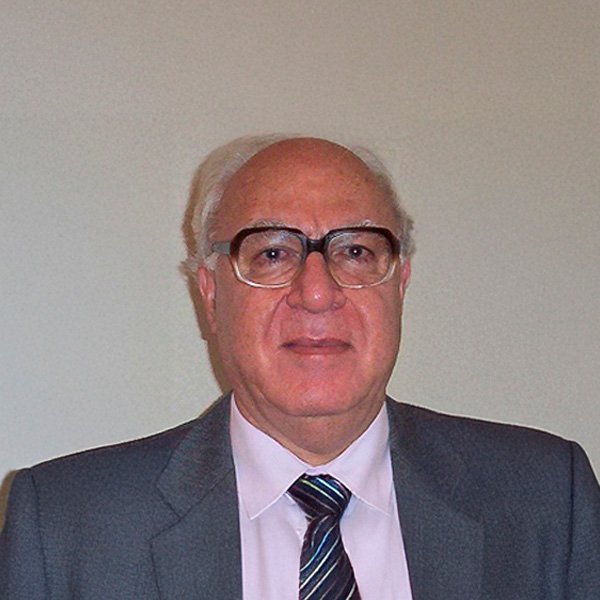
By Farhang Jahanpour

A shorter version of this article has been published by IPS
When ISIS suddenly emerged in Iraq it declared as one of its first targets the Shi’is and what it called the Safavids. The Safavid dynasty (1501-1736) was one of the most powerful Iranian dynasties after the Islamic conquest.
At its height, it ruled an area nearly twice the size of modern Iran, including large parts of modern Iraq, Kuwait, Bahrain, Eastern parts of Turkey and Syria, and large areas of Western Afghanistan and Baluchestan, the North Caucasus, as well as parts of Turkmenistan and Uzbekistan.
However, what irks the Sunni jihadists most is the fact that the Safavids made the Twelver School of Shi’ism Iran’s official religion, something that has continued to the present time.
The interesting point is that the Safavid dynasty had its origin in a Sunni Sufi order, but at some point they converted to Shi’ism and then used their new zeal as a way of subduing most of Iran. Although there had been some minor Shi’a dynasties in the past, nearly all other major Iranian dynasties, as well as the bulk of the Iranian population, had been Sunnis. Indeed, when the Safavids came to power there were so few Shi’a scholars and clerics in Iran that they had to import some from Lebanon.
The Shi’a zeal of the Safavids was partly due to the fact that they were fighting against the Sunni Ottoman Empire, and therefore their adherence to Shi’ism was mainly political, in order to set them apart from the Ottomans who also carried the title of Sunni caliphs. The Safavids made their capital, Isfahan, into one of the most beautiful cities in Iran and the Middle East as a whole.
The Iranian Constitutional Revolution (1905-11) laid the foundations of modern Iran, with a constitutional monarchy. The two Pahlavi kings (1925-1979), while ruling as absolute monarchs, were militantly secular and tried to modernize Iran and turn it into a Western-style country.
The 1979 Revolution in Iran
However, not only did the 1979 Islamic revolution end that period of secular reforms, but it also put an end to a 2,600 year-old Iranian monarchy, and replaced it with a clerical regime based on the principle of Velayat-e Faqih, or the guardianship of Shi’a jurisprudent.
What makes the Islamic revolution unique is that for the first time in the history of Iran, and indeed in the history of Islam, it brought clerics to power.
Although Ayatollah Ruhollah Khomeini (1902-1989) called his revolution an Islamic revolution, in reality it was a Shi’a revolution and it derived its legitimacy from the Shi’a concept of the Imamate.
According to the Shi’is, the true succession to Prophet Muhammad belonged not to the Orthodox Caliphs, but to the Shi’a Imams, starting from the first Imam, Ali bin-Abu Talib and ending with the 12th Imam who allegedly went into hiding and who would appear in the End of Days to establish the reign of justice in the world.
After Imam Ali who was assassinated by a member of the fanatical breakaway group, the Khawarij, his oldest son Imam Hasan led a quietist life and decided not to challenge Mu’awiyya who had established the Umayyad Caliphate. However, after Hassan’s death in 669, his younger brother Hussein, who is regarded as the Third Shi’i Imam, rebelled against Mu’awiyya’s son Yazid who had succeeded him as caliph.
In a battle against Yazid’s forces in Karbala, Imam Hussein was martyred on 10th Muharram AH 61 (10 October 680) with 72 of his relatives and companions; an event that is still marked with great sadness and self-flagellation by Shi’is throughout the world.
After Imam Hussein’s martyrdom, the rest of the Shi’i Imams continued to lead quietist lives, mainly acting as spiritual leaders of their followers, rather than challenging the Sunni rulers. One of the most important concepts set forth by the sixth Shi’i Imam, Imam Ja’far alSadiq, who did most to elaborate and codify the Shi’i doctrine, was the separation of religion and politics.
He conceded that the Caliphs possessed temporal power, but he argued that the Imams were spiritual teachers of the society, and their inability to seize power should not be regarded as a sign of failure. He emphasized the importance of nass (designation) and ‘ilm (knowledge) as the hallmarks of the Imams. This has been the interpretation of the role of the Imams – as opposed to the role of the Caliphs – by the vast majority of Shi’i scholars throughout the ages.
Indeed, the Shi’a theory of government laid the foundations of the idea of monarchical absolutism. (1) Shi’i scholars argued that absolute monarchy constituted a necessity and hence the absolute monarch was alone the true vicegerent of God. (2)
Many leading Shi’i scholars, such as Najm alDin Razi and Fakhr alDin Razi in the thirteenth century, described the kings as the “representatives of the Hidden Imam” and the “shadow of God on earth.” After the establishment of the Safavid state in 1501, a number of Shi’i thinkers argued that the monarchs were the Na’ibs or viceregents of the Hidden Imam.
In his earliest book, Kashf al-Asrar (Uncovering of Secrets), Ayatollah Khomeini had supported monarchy. However, in his later works, not only did he reject monarchical rule, he even replaced it with the rule of the clerics as the representatives of the Hidden Imam. In view of the importance of the role of the Hidden Imam as the source of the legitimacy for the present clerical regime in Iran, it is important to say a few words about this complex issue.
Although after the death of almost every Imam the Shi’i community split into various factions and sects, the sect predominant in Iran is the Ithna ‘Ashari or Twelver Shi’ism. The ninth Shi’i Imam, Muhammad alTaqi was only seven when his father ‘Ali arRida died and he assumed the position of Imam; and he was only 23 when he died in 833 AD.
Similarly the Tenth Imam, ‘Ali alHadi, was also seven when he assumed the Imamate. The Eleventh Imam, Hasan al’Askari, was 22 when he became Imam and he died in 873 AD at the age of 27.
Due to their young age, these Imams were very rarely seen by the public, and were in effective occultation and they communicated with their followers through agents or intermediaries. When the Eleventh Imam died at the age of 27, he apparently did not have any children. His brother Ja’far who firmly stated that Imam Hasan al’Askari had died childless has been vilified by generations of Shi’is as Kazzab, the Liar.
This break with the Imamate threw the Shi’i community into confusion, and the Shi’is broke up into various sects. Some were prepared to accept the deceased Imam’s brother, Ja’far, as the Twelfth Imam, while others believed that the Eleventh Imam himself had gone into occultation.
However, the version accepted by the orthodox Twelver Shi’is is the one put forward by ‘Uthman al’Amri who had acted as secretary and intermediary to both the Tenth and the Eleventh Imams, and who had also received the religious dues paid by the faithful on behalf of the Imams.
According to al’Amri, the Eleventh Imam had a young child called Muhammad who was in hiding due to his young age. When many years passed and still the Twelfth Imam did not reveal himself, the followers demanded to see him. At this point, al-‘Amri said that the period of “Minor Occultation” had ended and the Hidden Imam had started his “Major Occultation” that would last till the End of Days when he would return to establish the era of justice and give triumph to his faithful followers.
Various supernatural and miraculous stories have surrounded the history of the birth of the Twelfth Imam. There are also many contradictions and unexplained facts regarding him. The mother of the Twelfth Imam has been variously called NarjisKhatun (a combination of a Persian and a Turkish word), or Sawsan, or Rayhana. NarjisKhatun is said to be a Byzantine slave girl or, according to other traditions, a black slave from Africa.
According to some accounts, NarjisKhatun was the daughter of an unspecified Byzantine Emperor who saw Imam Hasan al’Askari in a dream and fell in love with him They were married in another dream by the Prophet of Islam himself. She was told in yet another dream to take part in a battle between the Muslim and Byzantine forces dressed as a boy. She was told that she would be captured by Muslim forces and brought to the Eleventh Imam. She did as she was told in the dream, and soon after being united with the Imam she bore him a child in Samarra between 868 and 873 AD. Most accounts put his birth in 869.
At birth, the infant began to speak and made the profession of faith. At the death of his father, he was a young child, although according to other accounts he had miraculously grown to be a mature man. His only contact with his followers was through Uthman al’Amri who had been asked by the Hidden Imam to continue his position of intermediary which he had held under the two previous Imams. (3)
The Hidden Imam
The Hidden Imam is said to be hiding either in Samarra in Iraq, or in a well in Jamkaran, near Qom in Iran, a site that was often visited by the former President Mahmud Ahmadinezhad and members of his cabinet where they prayed for his return.
Both Ayatollah Ruhollah Khomeini and the present Supreme Leader Ayatollah Ali Khamenei base their legitimacy on being the rightful representatives of the Hidden Imam until he returns. This is why the views of former President Mahmud Ahmadinezhad and his close friend Esfandiar Rahim Masha’i about the imminent return of the Hidden Imam caused such anger and consternation among the leading clerics, because if the Hidden Imam were to return soon it would undercut the authority of the ruling clerics.
Khomeini expounded his views about the role of the clerics in an Islamic government in a series of lectures he gave in Najaf between 21 January and 8 February 1970 on the issue of Velayate Faqih (The Governance or Guardianship of Jurisprudent), later compiled and published under the title of Hukumati Islami (Islamic Government). (4)
Having boldly asserted in the very first sentence of the book that “The governance of the faqih is a subject that in itself elicits immediate assent and has little need of demonstration” (5) Khomeini goes on to say in the second paragraph: “From the very beginning, the historical movement of Islam has had to contend with the Jews, for it was they who first established antiIslamic propaganda and engaged in various stratagems, and as you can see, this activity continues down to the present.”
By skipping an entire millennium, Khomeini goes on to add: “Later they were joined by other groups, who were in certain respects more satanic than they. These new groups began their imperialist penetration of the Muslim countries about three hundred years ago, and they regarded it as necessary to work for the extirpation of Islam in order to attain their ultimate goals.”
After further accusations against Western imperialists and their local agents for distorting Islamic teachings and propagating the erroneous idea that Islam is purely concerned with spiritual and devotional matters, or insinuating that Islamic injunctions are defective, Khomeini states: “There is not a single topic in human life for which Islam has not provided instruction and established a norm.” (6)
Khomeini goes into great detail showing that the Prophet did not merely promulgate laws, but was also an executor of the law and acted in the capacity of a ruler: “For example, he implemented the penal provisions of Islam: he cut off the hand of the thief and administered lashings and stonings. The successors to the Prophet must do the same.” (7)
Khomeini believes that the fuqaha, or Muslim jurisprudents, are the only people qualified to rule. “It is an established principle,” he asserts “that the faqih has authority over the ruler. If the ruler adheres to Islam, he must necessarily submit to the faqih, asking him about the laws and ordinances of Islam in order to implement them. This being the case, the true rulers are fuqaha themselves, and rule ought officially to be theirs.” (8)
Khomeini quotes a large number of hadith (traditions or sayings attributed to the Prophet and the Imams), including one from the Hidden Imam himself, which allegedly support his argument that the fuqaha should be the rulers of Islamic societies. However, he makes it quite clear that the fuqaha have no right to make laws and have no authority except to implement the laws of the Koran. He says “Islamic government may therefore be defined as the rule of divine laws over men… The Sacred Legislator of Islam is the sole legislative power. No one has the right to legislate and no law may be executed except the law of Divine Legislator.” (9)
Khomeini strongly criticizes the secular governments that are in power in some Islamic lands and he also attacks the imported laws that form the basis of national constitutions and the judicial systems of most Islamic countries. He is critical of the Iranian Parliament prior to the revolution, because according to him all the necessary laws are laid down in Islam and the duty of Islamic governments is merely to execute them. “It is for this reason,” he continues, “that in an Islamic government, a simple planning body takes the place of the legislative assembly that is one of the three branches of the government.” (10)
Thus started the birth of the Islamic Republic of Iran in February 1979, based on the concept of Velayat-e Faqih, which continues to the present time. (11) Ayatollah Khomeini declared that he wanted to export his revolution to the entire Muslim world, but being strongly Shi’a in nature and ideology the Iranian revolution was not very popular with the majority of Muslims who are Sunnis.
It should be added that Ayatollah Khomeini’s views about Velayat-e Faqih were opposed by almost leading clerics or grand ayatollahs in Iran. In fact, the preeminent “source of emulation” in Iran prior to Khomeini’s return, Ayatollah Seyyed Kazem Shari’atmadari openly opposed that concept, and despite his earlier support for Khomeini he was defrocked and put under house arrest.
The eminent grand ayatollahs in Najaf, Abu al-Qasim al-Kho’i and Sayyid Abul-Ma’ali Shahab ad-Din Muhammad Hussein Mar’ashi-Najafi who had a massive following not only in Iraq but also in Iran and among Shi’is from other countries, as well as the current Grand Ayatollah Ali Sistani have rejected that interpretation of Velayat-e Faqih.
The glory of Iranian Islam was reflected in beautiful mystical literature written in Persian by great Sufi poets such as Attar, Rumi, Sa’di, Hafiz and many others who produced the most tolerant, the most profound and the most humane form of mysticism perhaps in any language.
However, the Islamic Republic represents an austere, dogmatic and narrow interpretation of Islam. It has been responsible for the highest number of per capita executions in the world, intolerance towards religious and ethnic minorities, forcing women to wear veil, stoning women to death on charges of adultery, lashings and other inhumane practices. Its dogmatic adherence to Shi’a Islam has not been helpful either to Iran or to the cause of Islam in the world.
The Iran-Iraq War
The devastating eight-year Iran-Iraq war waged by Saddam Hussein, which was massively supported by the Gulf Cooperation Council to the tune of tens of billions of dollars, killed and wounded nearly a million Iranians and Iraqis.
The war was partly motivated by the fear that the Iranian revolution and the ideas of Ayatollah Khomeini would inspire insurgency among Iraq’s Shi’a majority population.
Saddam often stressed the hostility between the Sunnis and the Shi’is, and in fact he dubbed his invasion of Iran as “Saddam’s Qadisiyyah”, referring to the decisive battle fought in 636 AD between the invading Arab armies and Iranians during the first wave of Muslim expansion that put an end to the Sassanid Empire. The bitter memories of the Iran-Iraq war still linger in the minds of the people in both countries.
Since 2003, when the US-led coalition defeated and deposed Saddam Hussein and replaced him with a government led by the Shi’is who hold a majority of the Iraqi population, Saddam’s supporters in Iraq and in the Persian Gulf littoral states have not forgotten or forgiven the loss of power by the Sunnis. Saudi Arabia has refused to recognize the new Iraqi governments or to send an ambassador to Baghdad.
The present ISIS uprising, with the assistance of tens of thousands of former Ba’thist officers and soldiers in Saddam’s army that Paul Bremer, the American administrator of Iraq, fired is a most violent form of revenge against the Iraqi Shi’is and ultimately against Iran for what they regard as the loss of Sunni rule and Iran’s growing influence in Iraq.
Today’s ISIS – and the urgent need for Shia-Sunni dialogue
If Iranian and Arab leaders wish to save the region from a devastating sectarian war that will have no end, they should as a matter of urgency, convene a joint conference on Sunni-Shi’a dialog. After all, the two sects have a great deal in common, and there are relatively few points that divide them, and those points mainly came later on in the history of Islam and were of political nature.
If after centuries of fighting and bloodshed various Christian denominations could come together and form an ecumenical movement, there is no reason why the Sunnis and Shi’is who have so much in common cannot get together and work for the unity of all Muslims and hopefully for unity of all religions.
Notes
1. Ann K. S. Lambton, “Quis Custodiet Custodes?”, I, Studia Islamica, V (1956), p. 137.
2. ibid, p. 138
3. ibid, p. 138
4. For a translation of this work see: Imam Khomeini, Islam and Revolution: Writings and Declarations, translated and annotated by Hamid Algar (KPI Ltd, London, 1985), pp. 27166. 5- ibid, p. 27
6. ibid, p. 30
7. ibid, p. 37
8. ibid, p. 60
9. ibid, p. 56
10. ibid, p. 56
11. Velayat also means viceregency, and both meanings of the word are intended here; namely, the faq’ih should rule as the guardian and executor of the Shari’a and a viceregent of the Hidden Imam.