
Dario Rivolta
10 October, 2022
The European sanctions on Russia would have expired on 31 January 2017. They were imposed at a time as one insinuated that the Russian side had a hostile attitude in the question of Ukraine. These sanctions have been extended for six months at an early stage. Certainly, the reason for this was some fear that the new American President Donald Trump could lift them and urge Europe to do the same. Recently, the American President has stated that at the moment nothing in this direction would be undertaken, but everyone knows his desire to establish good relations with Moscow.
As the NATO and Europe support the current Government in Kiev and accuse Russia, to be blamed for the current crisis, one has to remember in the name of truth how it all started.
Originally published by the Swiss journal Current Concerns in April 2017
Ukraine crisis: How it all started
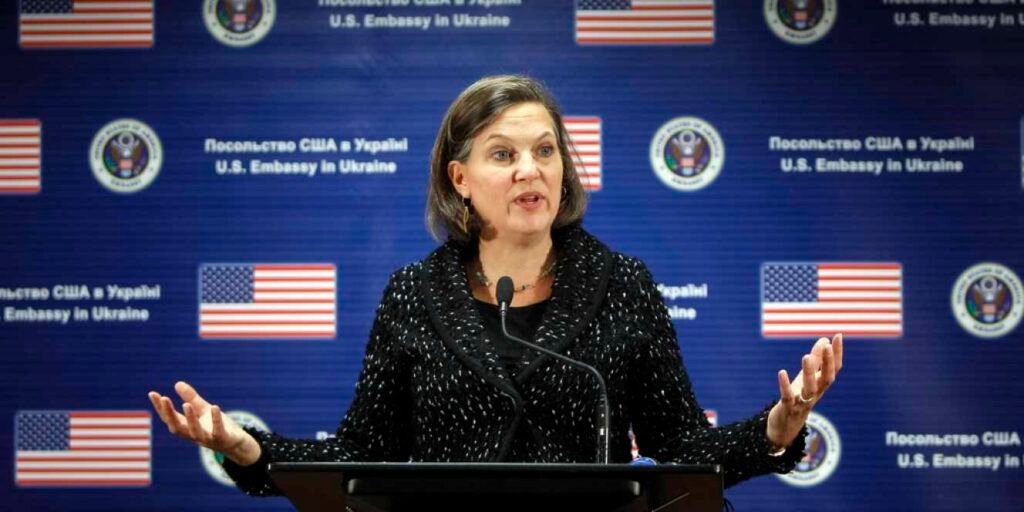
“Since Ukraine’s independence in 1991, the United States has supported Ukrainians as they build democratic skills and institutions, as they promote civic participation and good governance, all of which are preconditions for Ukraine to achieve its European aspirations. We have invested over $5 billion dollars in assisting Ukraine in these and other goals that will ensure a secure and prosperous and democratic Ukraine”, stated Viktoria Nuland, the American Assistant Secretary of State, entrusted with European and Asian Affairs, on 13 December 2013 at the International Conference on Ukraine in the National Press Club in Washington.
“I’m coming from Kyiv (the third time in 5 weeks),” she added. To confirm once again that this American project is supposed to run up to the end, she also confirmed that the United States would not accept a work of 5 years to end from one moment to the next.1 Some days before, on 24 November, during one of her previous trips, 100,000 kept the streets of Kyiv occupied, protesting against the decision of President Yanukovych, not to participate in the meeting and to sign the Association Agreement, that had been organised by the European Union in Vilnius.
Questionable association agreement with the EU
In fact, at this moment it would have been a big surprise if the Ukrainian Government would have done the opposite. It’s enough to recall the scope of the economic relations with Russia on the one hand and the EU on the other hand. Moscow had already indicated that an economic union with the EU would result in reintroducing customs controls with Russia and Belarus protecting their markets from European products in a triangle trade. One should think also of the debt of Kyiv and the gas supplies to Ukraine before cutting the connections with the biggest former trading partner.
Until then, Kyiv could have stayed neutral between NATO and the Organization of the Treaty on Collective Security (CSTO) under the hegemony of the Russian opponent.
Yanukovych incurred the enmity of some Western Governments
Yanukovych’s decision has incurred him the enmity of some Western Governments, especially of the United States and Poland, and also the Ukrainians were disappointed, as they had imagined, that an association with the EU would let the general corruption disappear, like magic, and bring the richness of European households to their homes.
What interest the EU had in this association agreement, we will analyse later. At the moment it is enough to listen to Mrs Nuland. She answered her Ambassador in Kyiv, who spoke to her on the phone about a certain European restraint in this issue, literally: “… and you know fuck the EU.” (The conversation was intercepted by some officially not identified services. You can listen to the conversation here).
US influence on the Ukraine since 2003
The fact that the United States was heavily involved, is proven by the programs of USAID and other American organizations, who worked more or less officially in Ukraine since 2003. Here are a few programs, as listed on the official website of USAID [US Agency for International Development]:
- May 2013 until December 2016: program to fight corruption. It is formally dealing with admission tests of students and teachers to the university.
- July 2004 until January 2018: program against slave trade. Formally dealing with training in public bodies and NGOs to fight the forced transit of migrants through the Ukraine.
- October 2008 until September 2016: program to strengthen the civil society. On the participation of citizens in the process of integration into the European Union, the monitoring of elections and the participation of young people in the struggle for civil rights and human rights.
- July 2013 until September 2017: program in conjunction with the Ukrainian Peace Corps. Delivery of additional and special financial support to NGO engaged in the support of democracy and keeping track of the decisions of the Government.
- October 2009 until December 2016: program to enforce the political process in Ukraine.
- September 2011 until February 2017: emergency program to enlarge the capacities to finance the local communities.
- October 2011 until September 2016: program in the field of Justice. Primacy of law and of human rights.
- October 2011 until September 2016: program to promote development of the media so that information and messages can better be spread (to whom?).
- April 2013 until April 2018: program to promote a strategic vision of a stable, democratic, prosperous and Ukraine integrated in Europe.
- November 2013 until November 2018: program for a responsible, democratic and efficient parliament. Support for the work of parliamentarians.
The headings are deceptive
One could go on this infinitely as the USAID programs in Ukraine were and are still numerous. If you read the official program descriptions, you’d think it was simply to help, to support civil society and the progress of the country. But if you look at the type and timing of the interventions, one can easily imagine, that it is a covert way to win converts and to penetrate all sectors of society, which could be useful at the right moment. At the same time, it concerned a minimal consensus on the distribution of wages and promises.
Critical voices also from the United States
The critical observers are not only enemies of the United States. Here is what Dennis Kucinich, a long-time parliamentarian and presidential candidate, who in March 2014 (as the coup d’état against Yanukovych was already successful) replied during the primary election of the Democratic Party to a Fox News question about what he would do in Ukraine if elected to the US President: “What I’d do is to not have USAID and the National Endowment for Democracy working with US taxpayers’ money to knock off an elected government in Ukraine, which is what they did. […] I wouldn’t try to force the people of Ukraine into a deal with NATO against their interest or into a deal with the European Union, which is against their economic interest.” Kucinich added that the CIA was actively involved in the actions of the American Government, which aimed to “stir up trouble in Ukraine …”.
NATO East-enlargement in the interest of the military-industrial complex
Just as interesting is the opinion of Lawrence Wilkerson expressed in an interview with TV MSNBC. Wilkerson was well informed after his work as a University Professor and head of the Cabinet of Colin Powell. In the aforementioned interview, he reminded the viewers that at the end of the cold war, Bush senior and James Baker calmed Shevardnadze and Gorbachev down by promising that NATO would not penetrate eastward. Georgia and Ukraine should have been already NATO members at the instigation of Lockheed Martin and other companies interested in selling weapons to Central and Eastern Europe. And do not forget that it was only due to the opposition of some European countries, that Bush Junior could not announce his plan of membership of these two countries in the Atlantic organization at the NATO annual general meeting in April 2008 in Bucharest.
Russian reaction to Western Ukraine policy was foreseeable
In the course of the interview, Wilkerson added: “Anyone who knows Russian history, anyone who knows the history of empire, anyone who knows about the raw politics of raw power, could have guessed that President Putin would move into Ukraine once we had formed a group there led by the NED [National Endowment for Democracy] and its affiliates that effectively pulled off a coup.” Then he concluded with admirable intellectual honesty: “If I were Putin, I would have done exactly what Putin did, and anyone who says they couldn’t predict this was either a fool or lying.”
Also US against EU
In the course of her conversation with Geoffrey Pyatt, the American Ambassador in Kyiv, Mrs Nuland has mentioned the names of those who should be members of the new Ukrainian government if one had to choose someone out of this “racket”. (These are her own words!) As far as the attitude of the European countries is concerned, she has judged them as “incompetent interference”, hence her insulting parlance.
In her opinion, there was some reason for her estimate because Germany and France were seeking a compromise instead of the removal of Yanukovych, a kind of “solution” with elections, something the Americans did not want.
In fact, the European countries and Great Britain wanted a radical change of government, but they were preparing a slow process to preserve the appearance.
German influencing against all diplomatic practices
It must be noted here that Germany has a party-funding system running through foundations, and that all German parties have at least one reference structure of this type. The Social Democrats count on the Friedrich Ebert Foundation, the Christian Democrats on the Konrad Adenauer Foundation. This latter was the most active in Ukraine from 2011, after a treaty (with tied-up funding) was concluded with the Ukrainian Democratic Alliance for Reform (UDAR), an opposition party led by the former professional boxer Vitali Klitschko. He was chosen by the Germans as a future leader of the country.
But the Americans had other plans. Thus, “only” for the second time, he had become the mayor of Kyiv and president of the political favorite party of Poroshenko.
The interference of the Konrad Adenauer Foundation in the affairs of Ukraine was openly hostile to the government at that time, that went so far that Klitschko was invited to the CDU party conference in December 2012 as an honorary guest, and numerous encounters and meetings with journalists and political personalities were organised for him.
On this occasion, he also met the then-German Foreign Minister, Guido Westerwelle, as well as Christoph Heusgen the foreign policy adviser of Merkel. These encounters have been repeated several times until Westerwelle has even gone to Kyiv to meet him at a time when the uprisings were already underway.
During this period the German minister, like Mrs Nuland, violated all diplomatic practices; before meeting the legitimate representatives of the existing government, he has gone to the Maidan to assure the demonstrators of his support.
Snipers on the Maidan – trained in Poland
The Germans were not the only ones who deliberately interfered in the internal affairs of Ukraine without being invited to do so. Even French Foreign Minister Laurent Fabius has officially invited the boxer to Paris, but because of the expansion of the uprisings, this meeting has never been held and was replaced by a telephone call.
The Poles, on the other hand, have gone much further. They have not only supported the demonstrators (Foreign Minister Sikorski even went so far as to compare Klitschko with Walesa), but it also seems that they have deployed agents provocateurs, which should mix among the people in public places. This was revealed by Janusz Korwin-Mikke, one of the candidates at the last presidential election in Poland: “The Maidan was also our operation. Snipers were trained in Poland, and their goal was to cause further unrest.”
Thus he indicated the connection between the shots on the policemen and the crowd, which had been given by individuals, who had never officially been identified, killing several people, and thus sped up the events.
Never before witnessed “spontaneous” demonstrations that well organised
An American journalist, who had stayed in Kyiv during the uprisings for professional reasons, later told me he had never witnessed such well-organised, “spontaneous” demonstrations before. One should ask how and by whom the numerous tents and the food that was distributed with care and on a regular basis to the demonstrators were paid.
The fact that none of these events were spontaneous and that the fall of Yanukovych was part of a long-planned initiative by the US is well-known today. The question remains why anyone – in Europe as well – would participate in these events and take the risk of creating preconditions for a conflict that potentially could spread beyond local geographical borders.
Anyone knowledgeable about politics knows that Ukraine is of no strategic significance to European countries. Its historical roots lie within Russia, and it’s an indispensable “buffer state” for European security.
Why is Ukraine supposed to be a member state of the EU at all costs?
Although most Europeans feel sympathy for Ukrainians, nobody can really imagine why they should implicitly be members of the European Union. It’s a country of approximately 50 million inhabitants with very low incomes and an economy mostly focused on the Russian market, with local products that most certainly would not fare well in a shared market with other European countries.
In light of the huge economic and financial difficulties of Southern Europe – why on Earth should one burden oneself with an enormous state debt and an infrastructure hardly compatible with ours? Why create problems with Russia that, on the other hand, is promising as a market for our products and our know-how?
Europe is being blackmailed
Poland and the Baltic countries want to protect themselves against Russia’s presence at all costs because they fear potentially aggressive ambitions. With American support, they were able to blackmail the rest of Europe and pushed for a “partnership”, whose rejection sparked demonstrations by the population.
In any case, it is clear to any honest observer equipped with common sense that not only the Russians are not interested, but more importantly, that they also cannot afford to attempt an attack on a country already a member of the European Union.
German duplicity
Regarding Ukraine, Germans and others have always been duplicitous: On the one hand, they seek to exert economic and political hegemony over Eastern Europe, so naturally, they are in competition with Russia over this issue. On the other hand, Russia is a very important economic partner. Consequently, they try to please everybody.
Merkel continuously emphasises the absolute necessity to keep up the sanctions, while vice chancellor Sigmar Gabriel and former foreign minister Frank Walter Steinmeier have participated in every conference in Russia and continue to confirm that cooperation between the two countries remains indispensable and necessary.
Trapped between the Germans’ game and the Baltic states’ and Poland’s hysteria, the other European countries lack a great statesman which in turn makes them susceptible to other powers’ wills and interests.
In the meantime, the economy suffers and arms dealers rub their hands and think about their future deals.
- See “Victoria Nuland Admits: US Has Invested $5 Billion In The Development of Ukrainian, ‘Democratic Institutions’.” 13.12.2013 – according to the Information Clearing House.
(Translation Current Concerns)
Please help TFF remain truly independent by contributing if you benefited from this article
[paypal-donation]
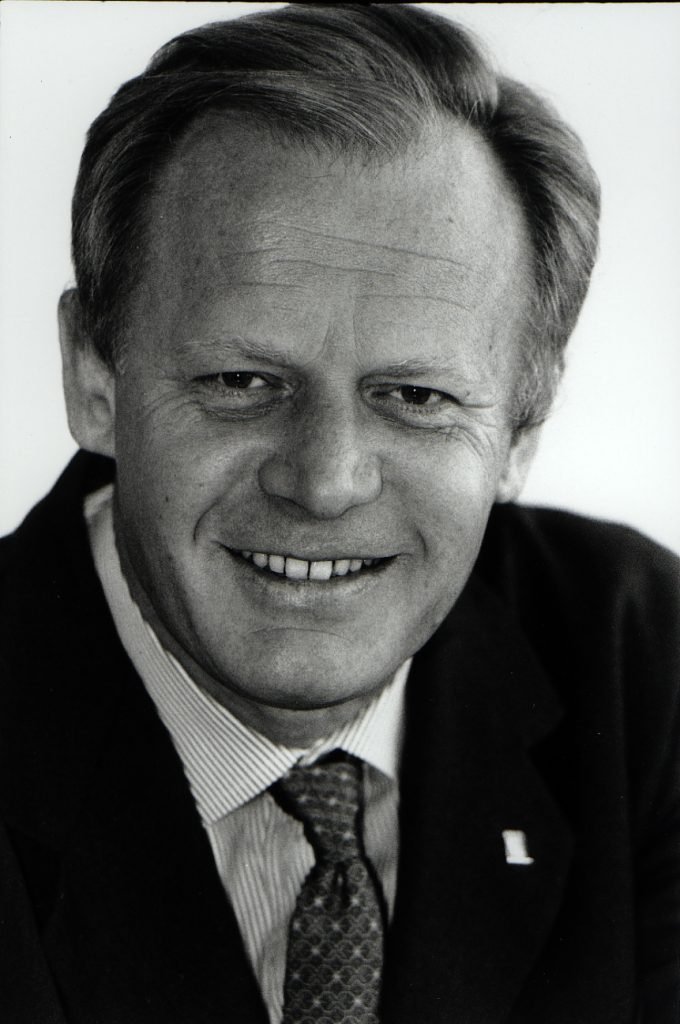
Dario Rivolta is an international political news columnist and an international trade consultant. He is a political scientist with area of expertise in social psychology. From 2001 to 2008, he was a member of the Italian Parliament. He was vice-president of the Foreign Affairs Commission, representative of the Italian Parliament at the European Council as well as at the Assembly of the Western European Union.


