
Challenging the United Nations

Kofi Annan was certainly correct to repudiate President Bush’s contention that unless the Security Council lends support to American warmaking, it will follow the League of Nations down the path to futility. Indeed, the greater danger to the UN is to go along with the US demands or even to respond to the impending war with calculated indifference. It should be remembered that the League failed primarily because of its impotence in the face of aggressive warmaking by Japan, Italy, and Germany during the 1930s that led to the subjugation of such weaker states as Manchuria, Abyssinia (later Ethiopia), and Czechoslovakia. In the end, the UN will rise or fall to the extent that it opposes uses of international force that are in violation of the UN Charter, whether these uses are by large countries or smaller ones.

It is not the moment to commend the UN uncritically for seeming to stand up against the US global juggernaut. It needs to be remembered that the plausibility of mounting this war threat derives from imposing a punitive peace on Iraq after the end of the Gulf War in the form of Security Council Resolution 687. It was part of this “peace” that validated the continuation of harsh sanctions on an Iraqi people already devastated by war, with its water purification system deliberately destroyed. Sanctions in such an atmosphere produced hundreds of thousands of deaths among innocent children over the course of the 1990s, leading successive UN relief administrators of high repute (Denis Halliday, Hans von Sponeck) to resign in Iraq as a protest against UN endorsed policies deemed “genocidal” in their impact.

The UNSC has been in the last several weeks seeking to rein in the US Government without taking a principled stand. It fifteen members unanimously endorsed SC Res. 1441 that has set the stage for the debate about inspections as a prelude to a war against Iraq without ever facing the fundamental question as to whether the Charter authorizes such a recourse to war even if Iraq fails to disarm. After all, Iraq’s sovereignty has been continually violated since 1991, including by unauthorized bombing runs in the “no-fly zones” unilaterally established by the US/UK, and many other countries have developed weapons of mass destruction without becoming the target of coercive disarmament. To deny Iraq the option to defend itself under the pressure of American threats seems to deny a country its most sovereign rights.

True, the Baghdad regime has committed Crimes Against Humanity and Crimes Against Peace, and in an ideal world its leaders would be apprehended, punished, and removed from power, but that does not make the case for war, especially at this time. These past crimes were mainly committed when Iraq was treated by Washington as a strategic ally, and although this does not operate as an excuse, it helps us get a sense of proportion. There is no urgency of the sort that seemed to justify the Kosovo War in 1999 to save the Albanian Kosovars from a growing Serb threat of ethnic cleansing. Beyond this, the scale and tactics of an Iraq War are likely to inflict massive civilian casualties, and produce dangerous instabilities in the region and beyond.

It seems reasonable to expect more from the Security Council than a green or yellow light when it comes to warmaking that cannot be convincingly justified as self-defense in accordance with Article 51 of the Charter. The Security Council all along should have indicated its refusal to authorize war as a solution to the Iraq Crisis, and coupled the renewal of inspections with an explicit reservation relating to the authorization of the use of force. Of course, a principled UNSC stand would have undoubtedly led the US Government to proceed to war without a UN mandate, its earlier predisposition in any event. It should be remembered that when Bush unveiled the preemptive war doctrine in June 2002 at West Point he never even mentioned the UN, the American strategic move being designed from the beginning to be based on “a coalition of the willing and the coerced” managed directly from the White House and Pentagon. The UN detour came about when Republican stalwarts warned Bush that there would be political trouble without a stronger case for casis belli, and encouraged the new president to demand coercive inspection via the UN, and if refused or resisted, to be in possession of a better political basis for war than what would have existed if no effort was made to gain UN backing.

Taking this indirect path to war was always controversial among the Bush inner circle, which never for a moment was prepared to submit their Iraq policy to the discipline of international law or the independent authority of the United Nations. Finally, a compromise was adopted within the US Government: a diktat to the UN to give Washington a green light with respect to the war or the US would go to war on its own and declare the UN “irrelevant.” The UNSC responded timidly with its own opportunistic compromise in the form of 1441, seeking to preserve their relevance by imposing some conditions on the authorization to make war, but never quite saying so. The US Government retained the option, which it is likely to use, that Iraq was warned in 1441 of “serious consequences” in the event of “material breach,” and that this language provides a sufficient mandate. Others will object, but the assumption is that the American public will go along once the war commences, especially if it manages a quick victory with few American casualties.

I think the peoples of the world are entitled to expect more from the UN in such a situation. The reliance on leading governments to resist an abandonment of international law and the Charter guidelines has been shown to be a precarious way to uphold the primary role of the UN as the principal agency of war prevention in the world community. The quality of the Security Council debate, as well as the inadequacy of 1441 as a framework for war/peace decisions, suggests the importance of giving the peoples of the world a more democratic voice on the global stage than what is now provided by governmental representation. Such governments as Spain, Italy, and Britain are defying huge multiparty majorities to gain geopolitical favors by supporting the United States. A genuine Global Peoples Assembly, within or without the UN, would give an entirely different slant to the Iraq debate, and greatly strengthen the political weight of an advocacy of peace. If there is one lesson to be learned from the impending catastrophe of the Iraq War it is the need for global democracy that conceives of the global rule of law as a vital source of restraint for the well being of the peoples of the world, and is prepared to mount a civil struggle on behalf of such a law-governed world.

© TFF & the author 2003
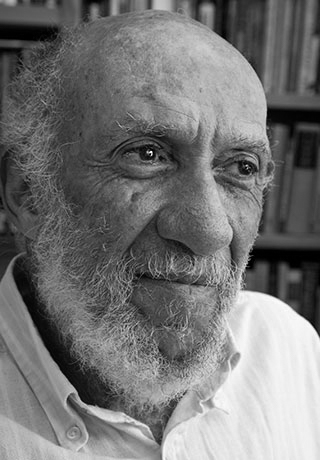
Professor Falk became an adviser to TFF when it was established in 1985.

Share

Leave a Reply

Your email address will not be published. Required fields are marked *

Related Posts

“En dag som berättigar till fest”, utropade den London-baserade al-Quds al-Arabi efter FN:s eldupphörresolution, “eftersom detta är första gången som Israel accepterar ett FN-beslut från en position som besegrad och inte som segrare”. Att ett arabisk-israeliskt krig för en gångs skull slutat med arabisk seger, är en helt dominerade åsikt i arabiska medier. Al-Quds al-Arabi tillåter sig att drömma om att det israeliska nederlaget skall leda till massflykt från Israel. Men i nästa andetag påminner tidningen om att Israel aldrig brukar genomföra sina internationella åtaganden och varnar för att förlorarna, liksom tidigare, kan hämnas genom att provocera fram inbördeskrig i Libanon. Med tanke på de otaliga massmediala vittnesmålen om det libanesiska folkets eniga motståndskraft förefaller risken för inre stridigheter i det sargade landet just nu liten. Men visst kan man urskilja nyansskillnader i libanesiska tidningar. Vänsterorganet al-Safir uppfattar FN-resolutionen som en komplott i syfte att rädda Israel från ännu större...
A donors’ conference, co-sponsered by the Burundian government, the Belgian government and UNDP will be held in Brussels January 12-13, 2004. This PressInfo offers a perspective on its urgency. See also TFF’s new Burundi Forum. Imagine for a moment that politics is about goodness and generosity. Where could a few million dollars of government aid and a few civil society organisations – guaranteed – win the hearts of extremely poor millions who want peace and already work hard to achieve it after 10 years of war and genocide? The answer is Burundi, the heart-shaped country in the heart of Africa. Burundi makes a good story from Africa. But what does the world know about Burundi, its problems and struggles? Burundi’s tough reality Here are the basic facts. Burundi’s population is about 7 million and it is number 171 out of the 175 countries on the UNDP’s human development index. Their life...
Peace is promoted by constructive proposals and dialogue Four preceding PressInfos have expressed concern over — and criticised — the ongoing, militarisation of the EU. Some will say: but there are no alternatives. We believe that there are always alternatives, that democracies are characterised by alternatives and choice, and that openly discussed alternatives will improve the quality and legitimacy of society’s decision–making. In addition, it is an intellectual and moral challenge to not only criticise but also be constructive. If we only tell people that we think they are wrong, they are not likely to listen. However, if we say: what are your views on this set of ideas and steps? — we may sometimes engage them in dialogue and sow a seed. Most people in power circles live their daily lives in in a time frame and a social space where certain ideas, viewpoints and concepts are just not...

Recent Articles

“En dag som berättigar till fest”, utropade den London-baserade al-Quds al-Arabi efter FN:s eldupphörresolution, “eftersom detta är första gången som Israel accepterar ett FN-beslut från en position som besegrad och inte som segrare”. Att ett arabisk-israeliskt krig för en gångs skull slutat med arabisk seger, är en helt dominerade åsikt i arabiska medier. Al-Quds al-Arabi tillåter sig att drömma om att det israeliska nederlaget skall leda till massflykt från Israel. Men i nästa andetag påminner tidningen om att Israel aldrig brukar genomföra sina internationella åtaganden och varnar för att förlorarna, liksom tidigare, kan hämnas genom att provocera fram inbördeskrig i Libanon. Med tanke på de otaliga massmediala vittnesmålen om det libanesiska folkets eniga motståndskraft förefaller risken för inre stridigheter i det sargade landet just nu liten. Men visst kan man urskilja nyansskillnader i libanesiska tidningar. Vänsterorganet al-Safir uppfattar FN-resolutionen som en komplott i syfte att rädda Israel från ännu större...
Greenland – the world’s largest island, a continent of its own with only 57.000 inhabitants. I visited it for the first time in May 2005. I flew across the inland ice to Nuuk, the tiny capital with some 14.000 inhabitants. I was overwhelmed by the pride and kindness of everyone I met as well as by the unique natural beauty. Unfortunately, due to weather conditions during my ten-day stay I could get nowhere else but Nuuk. Fortunately, however, among those I met was Gitte Arvegaard, a Danish lawyer and negotiator employed by the local government, Greenland Home Rule. She turned out to be an enthusiastic photographer with a lot of pictures taken during various trips around Greenland. So this Greeland series is the result of our cooperative effort. We both hope you enjoy it and are stimulated to visit Greenland – about which you may read more here. Finally, if you want to...
 Jan Oberg’s storyof how he met Sir Paul Liverpool – where else to meet Paul McCartney? Paul’s old class mate and TFF Associate, Jonathan Power introduced me to Paul McCartney in Liverpool at an informal reception. It was held at what used to be their school, now the Liverpool Institute for Performing Arts and we were there to celebrate that Jonathan had written Amnesty International’s 40th Anniversary book. This happy event for “righting wrongs and writing songs” gave me an opportunity to meet Paul and tell him about TFF and get straight to the matter: would he consider making a donation in support of our work for peace? While I was probably the only one with such a wish that day, I was certainly not the only one who wanted to shake hands and talk with him. In the last minutes before Paul was to leave, Jonathan brought us together and we got about three...

TFF on Substack

Discover more from TFF Transnational Foundation & Jan Oberg.

Most Popular

“En dag som berättigar till fest”, utropade den London-baserade al-Quds al-Arabi efter FN:s eldupphörresolution, “eftersom detta är första gången som Israel accepterar ett FN-beslut från en position som besegrad och inte som segrare”. Att ett arabisk-israeliskt krig för en gångs skull slutat med arabisk seger, är en helt dominerade åsikt i arabiska medier. Al-Quds al-Arabi tillåter sig att drömma om att det israeliska nederlaget skall leda till massflykt från Israel. Men i nästa andetag påminner tidningen om att Israel aldrig brukar genomföra sina internationella åtaganden och varnar för att förlorarna, liksom tidigare, kan hämnas genom att provocera fram inbördeskrig i Libanon. Med tanke på de otaliga massmediala vittnesmålen om det libanesiska folkets eniga motståndskraft förefaller risken för inre stridigheter i det sargade landet just nu liten. Men visst kan man urskilja nyansskillnader i libanesiska tidningar. Vänsterorganet al-Safir uppfattar FN-resolutionen som en komplott i syfte att rädda Israel från ännu större...
Greenland – the world’s largest island, a continent of its own with only 57.000 inhabitants. I visited it for the first time in May 2005. I flew across the inland ice to Nuuk, the tiny capital with some 14.000 inhabitants. I was overwhelmed by the pride and kindness of everyone I met as well as by the unique natural beauty. Unfortunately, due to weather conditions during my ten-day stay I could get nowhere else but Nuuk. Fortunately, however, among those I met was Gitte Arvegaard, a Danish lawyer and negotiator employed by the local government, Greenland Home Rule. She turned out to be an enthusiastic photographer with a lot of pictures taken during various trips around Greenland. So this Greeland series is the result of our cooperative effort. We both hope you enjoy it and are stimulated to visit Greenland – about which you may read more here. Finally, if you want to...
 Jan Oberg’s storyof how he met Sir Paul Liverpool – where else to meet Paul McCartney? Paul’s old class mate and TFF Associate, Jonathan Power introduced me to Paul McCartney in Liverpool at an informal reception. It was held at what used to be their school, now the Liverpool Institute for Performing Arts and we were there to celebrate that Jonathan had written Amnesty International’s 40th Anniversary book. This happy event for “righting wrongs and writing songs” gave me an opportunity to meet Paul and tell him about TFF and get straight to the matter: would he consider making a donation in support of our work for peace? While I was probably the only one with such a wish that day, I was certainly not the only one who wanted to shake hands and talk with him. In the last minutes before Paul was to leave, Jonathan brought us together and we got about three...
Read More
Imagen-thumbnail-The-Transnational-1
“En dag som berättigar till fest”, utropade den London-baserade al-Quds al-Arabi efter FN:s eldupphörresolution, “eftersom detta är första gången som Israel accepterar ett FN-beslut från en position som besegrad och inte som segrare”. Att ett arabisk-israeliskt krig för en gångs skull slutat med arabisk seger, är en helt dominerade åsikt i arabiska medier. Al-Quds al-Arabi tillåter sig att drömma om att det israeliska nederlaget skall leda till massflykt från Israel. Men i nästa andetag påminner tidningen om att Israel aldrig brukar genomföra sina internationella åtaganden och varnar för att förlorarna, liksom tidigare, kan hämnas genom att provocera fram inbördeskrig i Libanon. Med tanke på de otaliga massmediala vittnesmålen om det libanesiska folkets eniga motståndskraft förefaller risken för inre stridigheter i det sargade landet just nu liten. Men visst kan man urskilja nyansskillnader i libanesiska tidningar. Vänsterorganet al-Safir uppfattar FN-resolutionen som en komplott i syfte att rädda Israel från ännu större...
Greenland – the world’s largest island, a continent of its own with only 57.000 inhabitants. I visited it for the first time in May 2005. I flew across the inland ice to Nuuk, the tiny capital with some 14.000 inhabitants. I was overwhelmed by the pride and kindness of everyone I met as well as by the unique natural beauty. Unfortunately, due to weather conditions during my ten-day stay I could get nowhere else but Nuuk. Fortunately, however, among those I met was Gitte Arvegaard, a Danish lawyer and negotiator employed by the local government, Greenland Home Rule. She turned out to be an enthusiastic photographer with a lot of pictures taken during various trips around Greenland. So this Greeland series is the result of our cooperative effort. We both hope you enjoy it and are stimulated to visit Greenland – about which you may read more here. Finally, if you want to...
p_mccartney_poem
 Jan Oberg’s storyof how he met Sir Paul Liverpool – where else to meet Paul McCartney? Paul’s old class mate and TFF Associate, Jonathan Power introduced me to Paul McCartney in Liverpool at an informal reception. It was held at what used to be their school, now the Liverpool Institute for Performing Arts and we were there to celebrate that Jonathan had written Amnesty International’s 40th Anniversary book. This happy event for “righting wrongs and writing songs” gave me an opportunity to meet Paul and tell him about TFF and get straight to the matter: would he consider making a donation in support of our work for peace? While I was probably the only one with such a wish that day, I was certainly not the only one who wanted to shake hands and talk with him. In the last minutes before Paul was to leave, Jonathan brought us together and we got about three...
Logo-Transnational
1942James Paul McCartney is born in Liverpool on June 18th. 1956Paul writes his first song, I Lost My Little Girl. 1957Paul meets John Lennon at St. Peter’s Church Fete, Woolton, Liverpool. He joins his first group, The Quarrymen and performs in his first gig at The New Clubmoor Hall, Liverpool, on October 18th. 1960Formation of The Beatles, who play residencies in Hamburg and at The Cavern in Liverpool. 1961First Beatles recordings issued in Germany, as the backing group for Tony Sheridan. 1962The first Beatles Parlophone recording, Love Me Do, reaches number 17 in the British charts. 1963The birth of Beatlemania. Please Please Me gives the group their first British Number 1. She Loves You cements their success. Please Please Me and With The Beatles albums released. 1964First triumphant American tour. The Beatles perform at the Royal Command Performance and release their first film, A Hard Day’s Night. Their single I...
Logo-Transnational
  Back to the series “Bujumbura, Burundi”
By JONATHAN POWER August 16, 2000 LONDON – Remember the summer of ’98? In the sweltering, torpid heat of a Roman august, charged with exhaust fumes, the international community gave its overwhelming approval to the establishment of an International Criminal Court that will enable those accused of “crimes against humanity” to be tried and, if convicted, sentenced. Only seven nations opposed or abstained from the motion, including Israel, China, India and the U.S.A. where the Pentagon had successfully waged bureaucratic guerrilla war to undermine the initially sympathetic stance of President Bill Clinton. Two years on we can now see what an epochal event that was. In a the stroke of 120 pens it changed the climate on political thuggery. After numerous half-starts and false starts ever since the Nuremberg and Tokyo trials that convicted the war criminals of the Second World War, the world at last had agreed en masse a common...


