
Added Responses to the Turkish Daily News

Added responses to questions of the Turkish Daily News (VIII/6/2003)

Question 16: What is your view of the current conditions of Greek/Turkish relations? Is the conflict likely to be resolved peacefully?

My impression of the current Turkish/Greek conflict is based on visits to both countries over the years. I was particularly convinced after a visit to Greece a few weeks ago to give some talks at two conferences that a sea change in the Greek approach to its relationship with Turkey had occurred. Previously Turkey had been a preoccupation of Greeks and Greece. Only several years earlier the sense of Greek grievance with respect to Turkey was always present in serious discussions, during which the participants often exhibited an obsessive concern with the allegedly illegal Turkish occupation of Northern Cyprus, but also were quite ready to discuss the Greek their highly emotional understanding of the events after World War I that led to the departure of most Greek inhabitants from Turkish territory and an elaborate arrangement for the transfer of population in both directions. Now Greek intellectual and political figures seem far less interested in the Cyprus conflict, and when it emerges in conversation, their views about its resolution are generally hopeful and balanced, being especially positive about the recent opening of the Cypriot borders leading to the surprisingly successful moves of Cypriots in both directions without any the violent incidents predicted by pessimists. On the Turkish side there seems a comparable shift in outlook, but it is less dramatic. The tensions with Greece were never as important to Turkey as the other way around, as Turkey had a range of other regional concerns, held most of the cards in relation to the Greek conflict, and was in fact a far bigger country with greater weight in international relations

Of course, in the realm of diplomacy, especially if over-laden with contradictory historical memories as is the case for Greece and Turkey and perceptions of fair solutions confused by intense nationalist pride on both sides there is still much room for slippage in the relationship. Diplomats in Turkey and Greece should not assume that the present window of opportunity will remain open forever. It is important to maintain the impression of forward momentum by taking further positive steps. If the Annan UN-backed plan for Cyprus seems too detailed and inflexible, then the Turkish government should come forward with specific responses or alternative ideas that seem sensitive to the concerns of sensitive and reasonable Greek officials. It needs to be appreciated that there will always be extremists on both sides that will never agree to a compromise, but for this reason it is more important than ever not to allow such views to shape the dynamics of diplomacy.

The secondary issues that have served as flashpoints in past Turkish/Greek relations, such as those involving security zones in the Aegean Sea, the territorial waters of Greek islands, the authority over and width of the continental shelf of the two countries in the Aegean, and the status of unoccupied islets, are manageable or not depending on the overall relationship between the two countries. If the bilateral relations are generally good, and the leadership in Ankara and Athens wants them to get better, then these Aegean problems can be handled by imaginative diplomacy to the satisfaction of both countries, but if the political climate is negative then any of these questions that seem technical and somewhat peripheral could flare up in a crisis and even become a casus belli between the two countries. Actually, Turkey and Greece have much common ground, geographically, culturally, and economically, and share an Eastern Mediterranean relationship to the growing relevance of a Greater Europe, a commonality that will become more pronounced as Turkey moves closer to European Union membership in the coming years. It is my further impression that for a variety of reasons the Greek mainstream political leadership believes it is more beneficial at this point to have Turkey within the EU than without. Of course, should Turkey find the European door slammed closed for whatever reason, it could turn toward its Central Asian hinterland, and embark on a Greater Turkey project that would be received as an unwelcome geopolitical turn by Turkey, but one that does not seem likely at this point.

If one moves from the level of political relations to that of human relations there is an impressive confirmation of my sense that a favorable wind blows in both countries at this time. In Greece with my Turkish wife, Hilal Elver, accentuated this observation. As soon as our Greek contacts discovered that Hilal was Turkish their faces lit up, and an additional surge of warmth and hospitality was exhibited. It was quite moving, and again different from my experience in earlier years where personal interactions among representatives of the two peoples could often, although not invariably, be as frosty as the diplomatic relations between the two countries. Both countries will be prominent on the global stage during 2003, Turkey with the Year of Turkey in Europe being celebrated and Greece with the summer Olympics. Would it not be a fine historical moment to celebrate a resolution of the Cyprus conflict? And would not such a resolution have an uplifting effect on future prospects for both of these great peoples?

17. What about the future of Turkey in relation to Europe? Will Turkey be welcomed into the EU in the years ahead? What are the visible and what are the invisible obstacles?

It is evident that the European pull on the Turkish future is strong at present. I think several forces are pulling Turkey in the same direction: the practical economic advantages about being part of the European market for goods, services, and labor; the important political benefits of having a European alternative to the sort of bilateral relationship with the United States that has so shaped Turkish security policy for the past several decades; and the enormous political and economic gains for domestic life in Turkey by accepting European guidelines on human rights, civil/military relations, democratic governing procedures, environmental safety, and fiscal and monetary policy. The self-disciplining influence of this European framework can help Turkey achieving its full potential as a sovereign state among states, giving Turkey a clearer image of its own positive future just as the recovery of the Ottoman heritage gives Turkey a better appreciation of its own positive past.

But there are obstacles to this optimistic picture, both internal and external obstacles. It may be that there exist strong internal pressures to resist the European guidelines either based on traditional ideas of the relevance of religion to the practice of politics, arising from anxieties that distinctive elements of Turkish cultural identity would be lost if Turkey becomes part of Europe, associated with a feared further fraying of relations with the United States, and arising from vested interests in the present arrangements of wealth and power, including even the operations of hyper-inflation, and a laughably debased currency. There may also be deep pockets of bureaucratic resistance to the European scenario associated with the prison system, the military establishment, parts of the civil service.

But the external obstacles seem no less daunting. Europe may impose such exacting requirements on Turkish entry as to make it impossible to comply, or it may interpret Turkish compliance as unsatisfactory in response to unacknowledged racist and discriminatory beliefs that exhibit discomfort at the prospect of having a country of more than 70 million Muslims in its midst. European identity is surely challenged by Turkey. Will Europe remain overwhelmingly Christian, with large non-Christian minorities, or will Europe become as cosmopolitan in its practices as its overall worldview claims to be? And how will European leaders and their citizens interpret the economic gains and losses of Turkish membership, increased labor and tourist mobility, as well as an enlargement that implicates Europe more directly in the future of the Middle East?

These are momentous issues whose resolution will affect deeply both Europe and the Middle East, as well as determine whether and to what extent Turkey pursues its Asian option, modifies its American relationship, affirms its Islamic identity, and shapes its domestic, regional, and global policy priorities and grand strategy in the coming years.
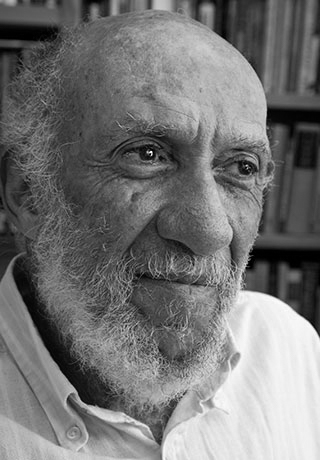

Professor Falk became an adviser to TFF when it was established in 1985.

Share

Leave a Reply

Your email address will not be published. Required fields are marked *

Related Posts

“En dag som berättigar till fest”, utropade den London-baserade al-Quds al-Arabi efter FN:s eldupphörresolution, “eftersom detta är första gången som Israel accepterar ett FN-beslut från en position som besegrad och inte som segrare”. Att ett arabisk-israeliskt krig för en gångs skull slutat med arabisk seger, är en helt dominerade åsikt i arabiska medier. Al-Quds al-Arabi tillåter sig att drömma om att det israeliska nederlaget skall leda till massflykt från Israel. Men i nästa andetag påminner tidningen om att Israel aldrig brukar genomföra sina internationella åtaganden och varnar för att förlorarna, liksom tidigare, kan hämnas genom att provocera fram inbördeskrig i Libanon. Med tanke på de otaliga massmediala vittnesmålen om det libanesiska folkets eniga motståndskraft förefaller risken för inre stridigheter i det sargade landet just nu liten. Men visst kan man urskilja nyansskillnader i libanesiska tidningar. Vänsterorganet al-Safir uppfattar FN-resolutionen som en komplott i syfte att rädda Israel från ännu större...
A donors’ conference, co-sponsered by the Burundian government, the Belgian government and UNDP will be held in Brussels January 12-13, 2004. This PressInfo offers a perspective on its urgency. See also TFF’s new Burundi Forum. Imagine for a moment that politics is about goodness and generosity. Where could a few million dollars of government aid and a few civil society organisations – guaranteed – win the hearts of extremely poor millions who want peace and already work hard to achieve it after 10 years of war and genocide? The answer is Burundi, the heart-shaped country in the heart of Africa. Burundi makes a good story from Africa. But what does the world know about Burundi, its problems and struggles? Burundi’s tough reality Here are the basic facts. Burundi’s population is about 7 million and it is number 171 out of the 175 countries on the UNDP’s human development index. Their life...
Peace is promoted by constructive proposals and dialogue Four preceding PressInfos have expressed concern over — and criticised — the ongoing, militarisation of the EU. Some will say: but there are no alternatives. We believe that there are always alternatives, that democracies are characterised by alternatives and choice, and that openly discussed alternatives will improve the quality and legitimacy of society’s decision–making. In addition, it is an intellectual and moral challenge to not only criticise but also be constructive. If we only tell people that we think they are wrong, they are not likely to listen. However, if we say: what are your views on this set of ideas and steps? — we may sometimes engage them in dialogue and sow a seed. Most people in power circles live their daily lives in in a time frame and a social space where certain ideas, viewpoints and concepts are just not...

Recent Articles

“En dag som berättigar till fest”, utropade den London-baserade al-Quds al-Arabi efter FN:s eldupphörresolution, “eftersom detta är första gången som Israel accepterar ett FN-beslut från en position som besegrad och inte som segrare”. Att ett arabisk-israeliskt krig för en gångs skull slutat med arabisk seger, är en helt dominerade åsikt i arabiska medier. Al-Quds al-Arabi tillåter sig att drömma om att det israeliska nederlaget skall leda till massflykt från Israel. Men i nästa andetag påminner tidningen om att Israel aldrig brukar genomföra sina internationella åtaganden och varnar för att förlorarna, liksom tidigare, kan hämnas genom att provocera fram inbördeskrig i Libanon. Med tanke på de otaliga massmediala vittnesmålen om det libanesiska folkets eniga motståndskraft förefaller risken för inre stridigheter i det sargade landet just nu liten. Men visst kan man urskilja nyansskillnader i libanesiska tidningar. Vänsterorganet al-Safir uppfattar FN-resolutionen som en komplott i syfte att rädda Israel från ännu större...
Greenland – the world’s largest island, a continent of its own with only 57.000 inhabitants. I visited it for the first time in May 2005. I flew across the inland ice to Nuuk, the tiny capital with some 14.000 inhabitants. I was overwhelmed by the pride and kindness of everyone I met as well as by the unique natural beauty. Unfortunately, due to weather conditions during my ten-day stay I could get nowhere else but Nuuk. Fortunately, however, among those I met was Gitte Arvegaard, a Danish lawyer and negotiator employed by the local government, Greenland Home Rule. She turned out to be an enthusiastic photographer with a lot of pictures taken during various trips around Greenland. So this Greeland series is the result of our cooperative effort. We both hope you enjoy it and are stimulated to visit Greenland – about which you may read more here. Finally, if you want to...
 Jan Oberg’s storyof how he met Sir Paul Liverpool – where else to meet Paul McCartney? Paul’s old class mate and TFF Associate, Jonathan Power introduced me to Paul McCartney in Liverpool at an informal reception. It was held at what used to be their school, now the Liverpool Institute for Performing Arts and we were there to celebrate that Jonathan had written Amnesty International’s 40th Anniversary book. This happy event for “righting wrongs and writing songs” gave me an opportunity to meet Paul and tell him about TFF and get straight to the matter: would he consider making a donation in support of our work for peace? While I was probably the only one with such a wish that day, I was certainly not the only one who wanted to shake hands and talk with him. In the last minutes before Paul was to leave, Jonathan brought us together and we got about three...

TFF on Substack

Discover more from TFF Transnational Foundation & Jan Oberg.

Most Popular

“En dag som berättigar till fest”, utropade den London-baserade al-Quds al-Arabi efter FN:s eldupphörresolution, “eftersom detta är första gången som Israel accepterar ett FN-beslut från en position som besegrad och inte som segrare”. Att ett arabisk-israeliskt krig för en gångs skull slutat med arabisk seger, är en helt dominerade åsikt i arabiska medier. Al-Quds al-Arabi tillåter sig att drömma om att det israeliska nederlaget skall leda till massflykt från Israel. Men i nästa andetag påminner tidningen om att Israel aldrig brukar genomföra sina internationella åtaganden och varnar för att förlorarna, liksom tidigare, kan hämnas genom att provocera fram inbördeskrig i Libanon. Med tanke på de otaliga massmediala vittnesmålen om det libanesiska folkets eniga motståndskraft förefaller risken för inre stridigheter i det sargade landet just nu liten. Men visst kan man urskilja nyansskillnader i libanesiska tidningar. Vänsterorganet al-Safir uppfattar FN-resolutionen som en komplott i syfte att rädda Israel från ännu större...
Greenland – the world’s largest island, a continent of its own with only 57.000 inhabitants. I visited it for the first time in May 2005. I flew across the inland ice to Nuuk, the tiny capital with some 14.000 inhabitants. I was overwhelmed by the pride and kindness of everyone I met as well as by the unique natural beauty. Unfortunately, due to weather conditions during my ten-day stay I could get nowhere else but Nuuk. Fortunately, however, among those I met was Gitte Arvegaard, a Danish lawyer and negotiator employed by the local government, Greenland Home Rule. She turned out to be an enthusiastic photographer with a lot of pictures taken during various trips around Greenland. So this Greeland series is the result of our cooperative effort. We both hope you enjoy it and are stimulated to visit Greenland – about which you may read more here. Finally, if you want to...
 Jan Oberg’s storyof how he met Sir Paul Liverpool – where else to meet Paul McCartney? Paul’s old class mate and TFF Associate, Jonathan Power introduced me to Paul McCartney in Liverpool at an informal reception. It was held at what used to be their school, now the Liverpool Institute for Performing Arts and we were there to celebrate that Jonathan had written Amnesty International’s 40th Anniversary book. This happy event for “righting wrongs and writing songs” gave me an opportunity to meet Paul and tell him about TFF and get straight to the matter: would he consider making a donation in support of our work for peace? While I was probably the only one with such a wish that day, I was certainly not the only one who wanted to shake hands and talk with him. In the last minutes before Paul was to leave, Jonathan brought us together and we got about three...
Read More
Imagen-thumbnail-The-Transnational-1
“En dag som berättigar till fest”, utropade den London-baserade al-Quds al-Arabi efter FN:s eldupphörresolution, “eftersom detta är första gången som Israel accepterar ett FN-beslut från en position som besegrad och inte som segrare”. Att ett arabisk-israeliskt krig för en gångs skull slutat med arabisk seger, är en helt dominerade åsikt i arabiska medier. Al-Quds al-Arabi tillåter sig att drömma om att det israeliska nederlaget skall leda till massflykt från Israel. Men i nästa andetag påminner tidningen om att Israel aldrig brukar genomföra sina internationella åtaganden och varnar för att förlorarna, liksom tidigare, kan hämnas genom att provocera fram inbördeskrig i Libanon. Med tanke på de otaliga massmediala vittnesmålen om det libanesiska folkets eniga motståndskraft förefaller risken för inre stridigheter i det sargade landet just nu liten. Men visst kan man urskilja nyansskillnader i libanesiska tidningar. Vänsterorganet al-Safir uppfattar FN-resolutionen som en komplott i syfte att rädda Israel från ännu större...
Greenland – the world’s largest island, a continent of its own with only 57.000 inhabitants. I visited it for the first time in May 2005. I flew across the inland ice to Nuuk, the tiny capital with some 14.000 inhabitants. I was overwhelmed by the pride and kindness of everyone I met as well as by the unique natural beauty. Unfortunately, due to weather conditions during my ten-day stay I could get nowhere else but Nuuk. Fortunately, however, among those I met was Gitte Arvegaard, a Danish lawyer and negotiator employed by the local government, Greenland Home Rule. She turned out to be an enthusiastic photographer with a lot of pictures taken during various trips around Greenland. So this Greeland series is the result of our cooperative effort. We both hope you enjoy it and are stimulated to visit Greenland – about which you may read more here. Finally, if you want to...
p_mccartney_poem
 Jan Oberg’s storyof how he met Sir Paul Liverpool – where else to meet Paul McCartney? Paul’s old class mate and TFF Associate, Jonathan Power introduced me to Paul McCartney in Liverpool at an informal reception. It was held at what used to be their school, now the Liverpool Institute for Performing Arts and we were there to celebrate that Jonathan had written Amnesty International’s 40th Anniversary book. This happy event for “righting wrongs and writing songs” gave me an opportunity to meet Paul and tell him about TFF and get straight to the matter: would he consider making a donation in support of our work for peace? While I was probably the only one with such a wish that day, I was certainly not the only one who wanted to shake hands and talk with him. In the last minutes before Paul was to leave, Jonathan brought us together and we got about three...
Logo-Transnational
1942James Paul McCartney is born in Liverpool on June 18th. 1956Paul writes his first song, I Lost My Little Girl. 1957Paul meets John Lennon at St. Peter’s Church Fete, Woolton, Liverpool. He joins his first group, The Quarrymen and performs in his first gig at The New Clubmoor Hall, Liverpool, on October 18th. 1960Formation of The Beatles, who play residencies in Hamburg and at The Cavern in Liverpool. 1961First Beatles recordings issued in Germany, as the backing group for Tony Sheridan. 1962The first Beatles Parlophone recording, Love Me Do, reaches number 17 in the British charts. 1963The birth of Beatlemania. Please Please Me gives the group their first British Number 1. She Loves You cements their success. Please Please Me and With The Beatles albums released. 1964First triumphant American tour. The Beatles perform at the Royal Command Performance and release their first film, A Hard Day’s Night. Their single I...
Logo-Transnational
  Back to the series “Bujumbura, Burundi”
By JONATHAN POWER August 16, 2000 LONDON – Remember the summer of ’98? In the sweltering, torpid heat of a Roman august, charged with exhaust fumes, the international community gave its overwhelming approval to the establishment of an International Criminal Court that will enable those accused of “crimes against humanity” to be tried and, if convicted, sentenced. Only seven nations opposed or abstained from the motion, including Israel, China, India and the U.S.A. where the Pentagon had successfully waged bureaucratic guerrilla war to undermine the initially sympathetic stance of President Bill Clinton. Two years on we can now see what an epochal event that was. In a the stroke of 120 pens it changed the climate on political thuggery. After numerous half-starts and false starts ever since the Nuremberg and Tokyo trials that convicted the war criminals of the Second World War, the world at last had agreed en masse a common...

