
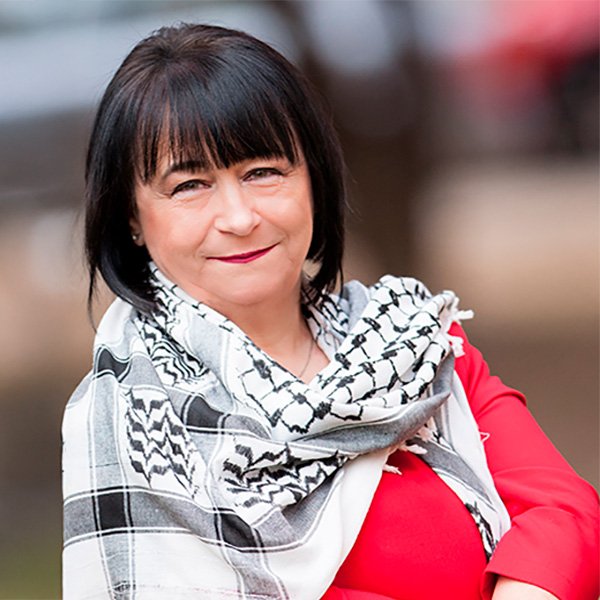
TFF Adviser Biljana Vankovska on the Situation in Macedonia

Interview with Dr. Biljana Vankovska from the University of Skopje for the Belgrade newspapers “POLITIKA”

Q: In spite of the condemnations that come from the international community and especially NATO, the Albanian terrorists have not ceased armed attacks in southern Serbia and northern Macedonia. The whole region is heavily destabilised. According to your opinion are we facing one more war in the Balkans or we can expect elimination of the tensions?

A: First of all, something like “international community” does not exist. It is euphemism and the real question is who has legitimacy to represent the states and nations in the world. The role of this so-called international community in regard to the current crisis in the Balkans is just declaratory and symbolic. It is quite absurd that UN Security Council who once authorised the unique mission of UNPREDEP in Macedonia (i.e. deployed its forces BEFORE the outbreak of any violence), now when that violence is reality &endash; has nothing to say but looks towards Brussels and waits for a decision to come from there. Your observation that we are coping with a regional problem here is very accurate, and I do think that both governments (of FR Yugoslavia and Macedonia) should undertake a joint action before the international forums and ask for coordinated measures. During the 1999 NATO intervention in Yugoslavia I was repeatedly speaking that Macedonia had become one of NATO’s ‘collateral damages’. I was also warning that soon one could expect spilling over effect in Macedonia (known as an ‘oasis of peace’). Certainly, the international community is ‘surprised’ (once again!) with the developments. Macedonia has always had its internal conflict structure and potential, so it was enough something bad to happen and to take a role of a catalyst (in negative sense of the word) of the conflict cycle. I wish I could believe that the situation would be stabilised soon, especially having in mind the newly signed cease-fire agreement in southern Serbia. However, I am not so sure about the developments in Macedonia. The basic preconditions for peaceful solution are wisdom, knowledge and courage to abstinence violent responses. Unfortunately, at the time being I am simply not able to identify internal actors who would be willing and able to promote the culture of non-violence. The tensions are growing with incredible speed, and any reluctance to undertake resolute actions just worsens the situation.

Q: Are Macedonian security forces capable to control the conflict points in a long run, or even the predominantly Albanian-populated areas?

A: The crucial security problem is not the border one, in spite of the whole seriousness of the situation (i.e. swift spreading of the clashes from one village into several others, killed people, etc.). The problem is not of a military nature and cannot be perceived through the prism of human and technical capabilities of the Macedonian security forces. The prolonged crisis on the border has had a strong echo in society, which is splitting from inside and becomes paranoiac in terms of the distrust between the ethnic groups, the loud cries for discrimination, state terror, more rights for Albanian minority etc. Counter-reaction on the Macedonian side is as expected: there are lot of talks about ‘granted enormous rights’, that there must not be any other steps on expense of the Macedonians, that Macedonians have no other state in reserve etc. In media there is a lot of hate speech, and people are more concerned not about the things that are said bit about the things that are not said explicitly. The state apparatus can keep certain control over the situation for some time, but under such conditions there cannot be any talk about human rights, democracy, and peace. I would not like Macedonia to pay such a high price for its existence.

Q: What is really going on within the Albanian ethnic community in Macedonia right now? Some are engaged in military resistance, others stage peace marches, while the rest calls for federalisation of Macedonia…

A: It is very true that something is going on within the Albanian community. Therefore the leader of the Albanian party (DPA) that is a partner in the governing coalition, Mr. Arabian Hxaferi has evaluated this current problem as internal problem of the Albanians, which should be resolved among them alone. There is a lot of rivalry, both in political and para-military terms, and what makes things very dramatic is that each faction blames the others for copying its own political agenda, which has been promoted since long ago. That agenda includes, certainly, more collective rights for Albanians, change of the constitution and federalisation of the state, bi-lingual official communication etc.). Unfortunately, none of the political parties claims to be a citizen-based party, because it is probably seen as a political suicide. DPA, the member of the governing coalition, is in an enviable situation between a hammer and an anvil: on one hand, it faces open accusations by the armed rebels that they have not achieved anything in terms of declared Albanian cause (the story that reminds a bit on the rise of Kosovo UCK and Ibrahim Rugova), while on the other side with similar accusations stand their political opposition and the Albanian part of ‘civil society’. Because of its weird position DPA staged a peace march with dubious motto “For peace and justice”. In other words, it was balancing between promoting peaceful solutions for the problems and keeping the integrity of the Macedonian state (which behaviour the international community expects from them), and from the other hand &endash; it was flirting with the demands for ‘justice’ (which implied that there were injustices against Albanians in Macedonia). The most absurd aspect of the current situation in misuse of the concepts of human rights, justice and democracy as a mask behind which there are down-to-earth interests and agendas.

Q: It seems that Macedonia is rapidly transforming from ‘oasis of peace’ into a ‘powder keg’. How do you see the future of the Macedonian state?

A: The ‘oasis of peace’ has always been more a metaphor than reality, which brought good image to Macedonian state in the international community especially during the period of struggle for international recognition. On the other hand, it is also true that for ten years there has been a process of building of multiethnic society, a slow but persistent one. Regardless the fact that the achievements were maybe modest, they deserved whole praise because of the opposite developments in the other parts of the former Yugoslavia. In my view, Macedonia is losing its ‘virginity’ and is again transforming into a powder keg (i.e. re-gains its old historical attribute). However, today this powder keg is not related to the rivalry of the neighbouring Balkan states over the Macedonian population and territory. The danger of implosion of Macedonian society is far bigger. The Macedonian state can have future only under peaceful framework. Therefore the crucial question is whether the society has enough internal strength to resolve problems by peaceful means. Certainly, this approach calls for prevention of the negative external influences. It means that the violence should be stopped where it has its origins (i.e. in Kosovo), but also to stop wrong moves of the so-called international community.

Q: You have joined critics against the biased reporting by some international media about the currents in Macedonia? Also you are well known as a consistent criticiser of the role of the international community in the Balkan conflicts. According to your opinion, what should be the appropriate contribution from the side of the international community in regard to the handling the situation and what should they do in long run. And what should we from the region do all together?

A: I would not pose the question about long term steps because the situation is more than urgent. Unfortunately the measure of time differs a lot in the Balkans. It is something that the so-called international community never understood. On the other hand, I would not rely too much on the solutions imposed from outside. I may sound too cynical but what we have seen so far in this region has been a classical example of conflict mismanagement and there was no single success story. That success story should have been Macedonia but there is nothing left from that image now. The international forces in Kosovo has become hostages and they are mostly afraid of their former ‘protégés’ that they are not able to control. It is well known how sensitive is the American public when it comes to coffins. Having in mind the electoral promises of the President Bush, then it becomes clear how absurd is the position of the American troops in Kosovo. It is very indicative that the newly promoted UCK commanders in Macedonia (could be seen on CNN, BBC reports) have sent a clear message to the American people not to be afraid for their soldiers and that their struggle is only directed towards the Macedonian state. As long any of the conflict parties perceives the external forces, as allies (or enemies) peace cannot get a chance.

Share

Leave a Reply

Your email address will not be published. Required fields are marked *

Related Posts

“En dag som berättigar till fest”, utropade den London-baserade al-Quds al-Arabi efter FN:s eldupphörresolution, “eftersom detta är första gången som Israel accepterar ett FN-beslut från en position som besegrad och inte som segrare”. Att ett arabisk-israeliskt krig för en gångs skull slutat med arabisk seger, är en helt dominerade åsikt i arabiska medier. Al-Quds al-Arabi tillåter sig att drömma om att det israeliska nederlaget skall leda till massflykt från Israel. Men i nästa andetag påminner tidningen om att Israel aldrig brukar genomföra sina internationella åtaganden och varnar för att förlorarna, liksom tidigare, kan hämnas genom att provocera fram inbördeskrig i Libanon. Med tanke på de otaliga massmediala vittnesmålen om det libanesiska folkets eniga motståndskraft förefaller risken för inre stridigheter i det sargade landet just nu liten. Men visst kan man urskilja nyansskillnader i libanesiska tidningar. Vänsterorganet al-Safir uppfattar FN-resolutionen som en komplott i syfte att rädda Israel från ännu större...
A donors’ conference, co-sponsered by the Burundian government, the Belgian government and UNDP will be held in Brussels January 12-13, 2004. This PressInfo offers a perspective on its urgency. See also TFF’s new Burundi Forum. Imagine for a moment that politics is about goodness and generosity. Where could a few million dollars of government aid and a few civil society organisations – guaranteed – win the hearts of extremely poor millions who want peace and already work hard to achieve it after 10 years of war and genocide? The answer is Burundi, the heart-shaped country in the heart of Africa. Burundi makes a good story from Africa. But what does the world know about Burundi, its problems and struggles? Burundi’s tough reality Here are the basic facts. Burundi’s population is about 7 million and it is number 171 out of the 175 countries on the UNDP’s human development index. Their life...
Peace is promoted by constructive proposals and dialogue Four preceding PressInfos have expressed concern over — and criticised — the ongoing, militarisation of the EU. Some will say: but there are no alternatives. We believe that there are always alternatives, that democracies are characterised by alternatives and choice, and that openly discussed alternatives will improve the quality and legitimacy of society’s decision–making. In addition, it is an intellectual and moral challenge to not only criticise but also be constructive. If we only tell people that we think they are wrong, they are not likely to listen. However, if we say: what are your views on this set of ideas and steps? — we may sometimes engage them in dialogue and sow a seed. Most people in power circles live their daily lives in in a time frame and a social space where certain ideas, viewpoints and concepts are just not...

Recent Articles

“En dag som berättigar till fest”, utropade den London-baserade al-Quds al-Arabi efter FN:s eldupphörresolution, “eftersom detta är första gången som Israel accepterar ett FN-beslut från en position som besegrad och inte som segrare”. Att ett arabisk-israeliskt krig för en gångs skull slutat med arabisk seger, är en helt dominerade åsikt i arabiska medier. Al-Quds al-Arabi tillåter sig att drömma om att det israeliska nederlaget skall leda till massflykt från Israel. Men i nästa andetag påminner tidningen om att Israel aldrig brukar genomföra sina internationella åtaganden och varnar för att förlorarna, liksom tidigare, kan hämnas genom att provocera fram inbördeskrig i Libanon. Med tanke på de otaliga massmediala vittnesmålen om det libanesiska folkets eniga motståndskraft förefaller risken för inre stridigheter i det sargade landet just nu liten. Men visst kan man urskilja nyansskillnader i libanesiska tidningar. Vänsterorganet al-Safir uppfattar FN-resolutionen som en komplott i syfte att rädda Israel från ännu större...
Greenland – the world’s largest island, a continent of its own with only 57.000 inhabitants. I visited it for the first time in May 2005. I flew across the inland ice to Nuuk, the tiny capital with some 14.000 inhabitants. I was overwhelmed by the pride and kindness of everyone I met as well as by the unique natural beauty. Unfortunately, due to weather conditions during my ten-day stay I could get nowhere else but Nuuk. Fortunately, however, among those I met was Gitte Arvegaard, a Danish lawyer and negotiator employed by the local government, Greenland Home Rule. She turned out to be an enthusiastic photographer with a lot of pictures taken during various trips around Greenland. So this Greeland series is the result of our cooperative effort. We both hope you enjoy it and are stimulated to visit Greenland – about which you may read more here. Finally, if you want to...
 Jan Oberg’s storyof how he met Sir Paul Liverpool – where else to meet Paul McCartney? Paul’s old class mate and TFF Associate, Jonathan Power introduced me to Paul McCartney in Liverpool at an informal reception. It was held at what used to be their school, now the Liverpool Institute for Performing Arts and we were there to celebrate that Jonathan had written Amnesty International’s 40th Anniversary book. This happy event for “righting wrongs and writing songs” gave me an opportunity to meet Paul and tell him about TFF and get straight to the matter: would he consider making a donation in support of our work for peace? While I was probably the only one with such a wish that day, I was certainly not the only one who wanted to shake hands and talk with him. In the last minutes before Paul was to leave, Jonathan brought us together and we got about three...

TFF on Substack

Discover more from TFF Transnational Foundation & Jan Oberg.

Most Popular

“En dag som berättigar till fest”, utropade den London-baserade al-Quds al-Arabi efter FN:s eldupphörresolution, “eftersom detta är första gången som Israel accepterar ett FN-beslut från en position som besegrad och inte som segrare”. Att ett arabisk-israeliskt krig för en gångs skull slutat med arabisk seger, är en helt dominerade åsikt i arabiska medier. Al-Quds al-Arabi tillåter sig att drömma om att det israeliska nederlaget skall leda till massflykt från Israel. Men i nästa andetag påminner tidningen om att Israel aldrig brukar genomföra sina internationella åtaganden och varnar för att förlorarna, liksom tidigare, kan hämnas genom att provocera fram inbördeskrig i Libanon. Med tanke på de otaliga massmediala vittnesmålen om det libanesiska folkets eniga motståndskraft förefaller risken för inre stridigheter i det sargade landet just nu liten. Men visst kan man urskilja nyansskillnader i libanesiska tidningar. Vänsterorganet al-Safir uppfattar FN-resolutionen som en komplott i syfte att rädda Israel från ännu större...
Greenland – the world’s largest island, a continent of its own with only 57.000 inhabitants. I visited it for the first time in May 2005. I flew across the inland ice to Nuuk, the tiny capital with some 14.000 inhabitants. I was overwhelmed by the pride and kindness of everyone I met as well as by the unique natural beauty. Unfortunately, due to weather conditions during my ten-day stay I could get nowhere else but Nuuk. Fortunately, however, among those I met was Gitte Arvegaard, a Danish lawyer and negotiator employed by the local government, Greenland Home Rule. She turned out to be an enthusiastic photographer with a lot of pictures taken during various trips around Greenland. So this Greeland series is the result of our cooperative effort. We both hope you enjoy it and are stimulated to visit Greenland – about which you may read more here. Finally, if you want to...
 Jan Oberg’s storyof how he met Sir Paul Liverpool – where else to meet Paul McCartney? Paul’s old class mate and TFF Associate, Jonathan Power introduced me to Paul McCartney in Liverpool at an informal reception. It was held at what used to be their school, now the Liverpool Institute for Performing Arts and we were there to celebrate that Jonathan had written Amnesty International’s 40th Anniversary book. This happy event for “righting wrongs and writing songs” gave me an opportunity to meet Paul and tell him about TFF and get straight to the matter: would he consider making a donation in support of our work for peace? While I was probably the only one with such a wish that day, I was certainly not the only one who wanted to shake hands and talk with him. In the last minutes before Paul was to leave, Jonathan brought us together and we got about three...
Read More
Imagen-thumbnail-The-Transnational-1
“En dag som berättigar till fest”, utropade den London-baserade al-Quds al-Arabi efter FN:s eldupphörresolution, “eftersom detta är första gången som Israel accepterar ett FN-beslut från en position som besegrad och inte som segrare”. Att ett arabisk-israeliskt krig för en gångs skull slutat med arabisk seger, är en helt dominerade åsikt i arabiska medier. Al-Quds al-Arabi tillåter sig att drömma om att det israeliska nederlaget skall leda till massflykt från Israel. Men i nästa andetag påminner tidningen om att Israel aldrig brukar genomföra sina internationella åtaganden och varnar för att förlorarna, liksom tidigare, kan hämnas genom att provocera fram inbördeskrig i Libanon. Med tanke på de otaliga massmediala vittnesmålen om det libanesiska folkets eniga motståndskraft förefaller risken för inre stridigheter i det sargade landet just nu liten. Men visst kan man urskilja nyansskillnader i libanesiska tidningar. Vänsterorganet al-Safir uppfattar FN-resolutionen som en komplott i syfte att rädda Israel från ännu större...
Greenland – the world’s largest island, a continent of its own with only 57.000 inhabitants. I visited it for the first time in May 2005. I flew across the inland ice to Nuuk, the tiny capital with some 14.000 inhabitants. I was overwhelmed by the pride and kindness of everyone I met as well as by the unique natural beauty. Unfortunately, due to weather conditions during my ten-day stay I could get nowhere else but Nuuk. Fortunately, however, among those I met was Gitte Arvegaard, a Danish lawyer and negotiator employed by the local government, Greenland Home Rule. She turned out to be an enthusiastic photographer with a lot of pictures taken during various trips around Greenland. So this Greeland series is the result of our cooperative effort. We both hope you enjoy it and are stimulated to visit Greenland – about which you may read more here. Finally, if you want to...
p_mccartney_poem
 Jan Oberg’s storyof how he met Sir Paul Liverpool – where else to meet Paul McCartney? Paul’s old class mate and TFF Associate, Jonathan Power introduced me to Paul McCartney in Liverpool at an informal reception. It was held at what used to be their school, now the Liverpool Institute for Performing Arts and we were there to celebrate that Jonathan had written Amnesty International’s 40th Anniversary book. This happy event for “righting wrongs and writing songs” gave me an opportunity to meet Paul and tell him about TFF and get straight to the matter: would he consider making a donation in support of our work for peace? While I was probably the only one with such a wish that day, I was certainly not the only one who wanted to shake hands and talk with him. In the last minutes before Paul was to leave, Jonathan brought us together and we got about three...
Logo-Transnational
1942James Paul McCartney is born in Liverpool on June 18th. 1956Paul writes his first song, I Lost My Little Girl. 1957Paul meets John Lennon at St. Peter’s Church Fete, Woolton, Liverpool. He joins his first group, The Quarrymen and performs in his first gig at The New Clubmoor Hall, Liverpool, on October 18th. 1960Formation of The Beatles, who play residencies in Hamburg and at The Cavern in Liverpool. 1961First Beatles recordings issued in Germany, as the backing group for Tony Sheridan. 1962The first Beatles Parlophone recording, Love Me Do, reaches number 17 in the British charts. 1963The birth of Beatlemania. Please Please Me gives the group their first British Number 1. She Loves You cements their success. Please Please Me and With The Beatles albums released. 1964First triumphant American tour. The Beatles perform at the Royal Command Performance and release their first film, A Hard Day’s Night. Their single I...
Logo-Transnational
  Back to the series “Bujumbura, Burundi”
By JONATHAN POWER August 16, 2000 LONDON – Remember the summer of ’98? In the sweltering, torpid heat of a Roman august, charged with exhaust fumes, the international community gave its overwhelming approval to the establishment of an International Criminal Court that will enable those accused of “crimes against humanity” to be tried and, if convicted, sentenced. Only seven nations opposed or abstained from the motion, including Israel, China, India and the U.S.A. where the Pentagon had successfully waged bureaucratic guerrilla war to undermine the initially sympathetic stance of President Bill Clinton. Two years on we can now see what an epochal event that was. In a the stroke of 120 pens it changed the climate on political thuggery. After numerous half-starts and false starts ever since the Nuremberg and Tokyo trials that convicted the war criminals of the Second World War, the world at last had agreed en masse a common...

