
An American fiasco, an Iraqi tragedy

A year or so ago, it was still possible to avoid the worst in Iraq. It made sense for the United States to set a timetable for withdrawal, and use its leverage to encourage Iraqi political rivals to seek an accommodation as the alternative to a bloody civil war that might have either lasted indefinitely or produced what would have amounted to an oppressive re-Baathification of the country.

It is still likely even now that if the American and British forces leave Iraq over a period of some months one of these two alternatives will shape the future of the country.

But with each passing month and regional conflagration the more positive outcome of accommodation becomes less likely, civil war has already become a fact of life in Iraq, and a wider regional conflagration can happen at any time. If this is so, Iraq probably faces a long violent political stalemate involving a tangle of ethnic, sectarian, geographic, and interventionary fault lines. If the Kurds are lucky and smart they will be able to remain mostly on the sidelines, doing their best to consolidate their position in the North without agitating their Turkish neighbor, and await the political outcome in the rest of Iraq.

Unfortunately, the more positive set of Iraqi futures depends on a willingness of the United States to commit itself at the earliest possible moment unconditionally to phased withdrawal over a period of a year or less. American willingness to withdraw is not likely, despite the repudiation of the policies in Iraq being pursued by the Bush/Cheney presidency in the American elections that surprisingly handed over control of Congress to the Democratic Party.

But George W. Bush remains president and commander-in-chief, and the Democrats are split on every aspect of Iraq policy except to assert that a change is needed. Bush has so often insisted that withdrawal is not an option that it is difficult to envision a political scenario in which the White House does an about face, adopting withdrawal as its policy.

Many observers place their hopes on the Baker/Hamilton ‘Iraq Study Group’ that is expected to propose a number of pragmatic adjustments, including an effort to enlist regional actors, including Iran and Syria, and hopefully, Turkey, in a major diplomatic conference. Such a step would be welcome, but it is unlikely to make much of a difference unless it is linked to American withdrawal. The depth and intensity of the civil war now ravaging Iraq cannot be settled by outsiders ever, and it is highly unlikely to be resolved by insiders so long as the country is occupied, a consensus of the population supports a war of resistance, and the most respected religious leaders appear to prefer resistance to occupation.

Besides, it is far from clear that President Bush will go along even with the Baker/Hamilton recommendations, which are likely to be modest, far short of what is needed to have some realistic hope of restoring normalcy to Iraq in the near future. The White House has also encouraged independent studies to be produced by the Pentagon and the intelligence community. It is likely that it will pick and choose in such a way as to blunt the recommendations calling for a reversal of policy, while essentially persisting with its increasingly pathetic efforts to nurture Iraqi ‘democracy’ amid the bombings and fires.

Vietnam was “the exact opposite”

There are many comparisons with Vietnam being drawn these days, including even by President Bush after his recent visit there. If the situation in Iraq was not an unfolding tragedy, we could smile knowingly in response to Bush’s comic misreading of history, claiming that the American experience in Vietnam lent support to his claim that ‘staying the course’ eventually produces positive results. Of course what took place in Vietnam was the exact opposite, the American refusal to change course by acknowledging defeat, producing years of heavy casualties after the realities of failure were obvious.

Finally, the United States abandoned South Vietnam in a humiliating fashion, with a defining image of Vietnamese collaborators hanging onto to the rails of a helicopter taking flight from the roof of the American embassy in Saigon (now Ho Chi Minh City). Those in Vietnam that Washington had backed were utterly defeated, North Vietnam prevailed, and the war was decisively lost. If the United States had announced its withdrawal a few years earlier tens of thousands of lives would have been saved, and the outcome would have been seen as an example of brave and prudent diplomacy because the leaders at the time would have admitted the failure of the policy, and taken responsibility for an abrupt change of course.


Would you be reading this now,
if it wasn’t useful to you?
Then please make an honour payment to TFF

But there is one sense in which the Vietnam story might be helpful. Despite the outcome of the war, and the extraordinary death and devastation over a period of more than a decade (not counting the earlier anti-colonial war against the French), Vietnam has recovered, and is now flourishing.

This was the irony underneath Bush’s false analogy drawn between Iraq and Vietnam. But what should be also encouraging is that the United States is today Vietnam’s leading trading partner, that relations between the two countries are friendly and positive, and that the political difference between winning and losing in Vietnam is happily blurred in the mists of historical memory.

Against this background, what is the best way forward?

As argued, the way forward seems rather decisively blocked by the American refusal to withdraw combined with a double political move: encouraging internal compromise within Iraq and convening an ambitious gathering of regional actors that will connect Iraq with the precarious situation in Lebanon, the ordeal of the Palestinian people, the risks of confrontation with Iran, a regional nuclear arms race, and the distinct possibility that sectarian violence in Iraq will spill over the borders, igniting an ugly struggle between Sunnis and Shi’ia throughout the Middle East.

This is a formidable agenda, but acknowledging these policy challenges is the first step toward alleviating the severe risks that are present and growing. Such a regional initiative would have to include all the players in the region, including Israel, Turkey, and Palestinian representation, and the major external actors with regional interests, including the United States, Europe, Russia, and possibly India and China.

It would be foolish to expect solutions to flow immediately from such a regional conference, but if the convening parties could be seen as seriously committed to addressing the legitimate grievances that beset the region, especially finding a way to bring stability to Iraq and produce viable statehood for Palestine, the whole atmosphere in the Middle East might change for the better, and the various escalating pressures might begin to diminish giving rise to hope for the future.

Of course, this kind of regional conference contains many risks if it ever did get off the ground, which is unlikely, but it also offers the only possibility of the comprehensive approach to the inter-connected problems region that alone offers hope of a better future. It is should be clear that such a regional approach goes far beyond the Baker-Hamilton proposal to enlist regional actors to bring stability to Iraq.

Calling for such a regional conclave seems like a pipedream at present. Yet the region is at a tipping-point, and requires urgent and drastic diplomatic initiatives to avert catastrophe.

Alternative: the Middle East as a gigantic war zone

The Middle East is at risk of becoming a gigantic war zone. The Lebanon War of last summer suggests one dimension of the worsening security environment. The inflamed relations between Iran, Israel, and the United States may be the greatest menace of all. As the civil tensions in Iraq intensify, with mass religious massacres occurring with alarming frequency, the prospect of repercussions beyond Iraq are daily growing.

At such a tipping-point the choices are stark: either allow the lethal drift continue or acknowledge urgency by undertaking a drastic change of course.

It may not be wise in such circumstance to wait until Washington is ready, or put differently, waiting for Washington appears to be waiting for Godot!
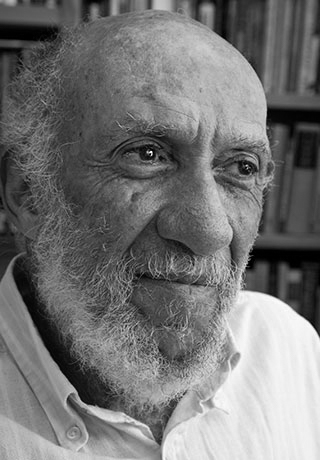

Professor Falk became an adviser to TFF when it was established in 1985.

Share

Leave a Reply

Your email address will not be published. Required fields are marked *

Related Posts

“En dag som berättigar till fest”, utropade den London-baserade al-Quds al-Arabi efter FN:s eldupphörresolution, “eftersom detta är första gången som Israel accepterar ett FN-beslut från en position som besegrad och inte som segrare”. Att ett arabisk-israeliskt krig för en gångs skull slutat med arabisk seger, är en helt dominerade åsikt i arabiska medier. Al-Quds al-Arabi tillåter sig att drömma om att det israeliska nederlaget skall leda till massflykt från Israel. Men i nästa andetag påminner tidningen om att Israel aldrig brukar genomföra sina internationella åtaganden och varnar för att förlorarna, liksom tidigare, kan hämnas genom att provocera fram inbördeskrig i Libanon. Med tanke på de otaliga massmediala vittnesmålen om det libanesiska folkets eniga motståndskraft förefaller risken för inre stridigheter i det sargade landet just nu liten. Men visst kan man urskilja nyansskillnader i libanesiska tidningar. Vänsterorganet al-Safir uppfattar FN-resolutionen som en komplott i syfte att rädda Israel från ännu större...
A donors’ conference, co-sponsered by the Burundian government, the Belgian government and UNDP will be held in Brussels January 12-13, 2004. This PressInfo offers a perspective on its urgency. See also TFF’s new Burundi Forum. Imagine for a moment that politics is about goodness and generosity. Where could a few million dollars of government aid and a few civil society organisations – guaranteed – win the hearts of extremely poor millions who want peace and already work hard to achieve it after 10 years of war and genocide? The answer is Burundi, the heart-shaped country in the heart of Africa. Burundi makes a good story from Africa. But what does the world know about Burundi, its problems and struggles? Burundi’s tough reality Here are the basic facts. Burundi’s population is about 7 million and it is number 171 out of the 175 countries on the UNDP’s human development index. Their life...
Peace is promoted by constructive proposals and dialogue Four preceding PressInfos have expressed concern over — and criticised — the ongoing, militarisation of the EU. Some will say: but there are no alternatives. We believe that there are always alternatives, that democracies are characterised by alternatives and choice, and that openly discussed alternatives will improve the quality and legitimacy of society’s decision–making. In addition, it is an intellectual and moral challenge to not only criticise but also be constructive. If we only tell people that we think they are wrong, they are not likely to listen. However, if we say: what are your views on this set of ideas and steps? — we may sometimes engage them in dialogue and sow a seed. Most people in power circles live their daily lives in in a time frame and a social space where certain ideas, viewpoints and concepts are just not...

Recent Articles

“En dag som berättigar till fest”, utropade den London-baserade al-Quds al-Arabi efter FN:s eldupphörresolution, “eftersom detta är första gången som Israel accepterar ett FN-beslut från en position som besegrad och inte som segrare”. Att ett arabisk-israeliskt krig för en gångs skull slutat med arabisk seger, är en helt dominerade åsikt i arabiska medier. Al-Quds al-Arabi tillåter sig att drömma om att det israeliska nederlaget skall leda till massflykt från Israel. Men i nästa andetag påminner tidningen om att Israel aldrig brukar genomföra sina internationella åtaganden och varnar för att förlorarna, liksom tidigare, kan hämnas genom att provocera fram inbördeskrig i Libanon. Med tanke på de otaliga massmediala vittnesmålen om det libanesiska folkets eniga motståndskraft förefaller risken för inre stridigheter i det sargade landet just nu liten. Men visst kan man urskilja nyansskillnader i libanesiska tidningar. Vänsterorganet al-Safir uppfattar FN-resolutionen som en komplott i syfte att rädda Israel från ännu större...
Greenland – the world’s largest island, a continent of its own with only 57.000 inhabitants. I visited it for the first time in May 2005. I flew across the inland ice to Nuuk, the tiny capital with some 14.000 inhabitants. I was overwhelmed by the pride and kindness of everyone I met as well as by the unique natural beauty. Unfortunately, due to weather conditions during my ten-day stay I could get nowhere else but Nuuk. Fortunately, however, among those I met was Gitte Arvegaard, a Danish lawyer and negotiator employed by the local government, Greenland Home Rule. She turned out to be an enthusiastic photographer with a lot of pictures taken during various trips around Greenland. So this Greeland series is the result of our cooperative effort. We both hope you enjoy it and are stimulated to visit Greenland – about which you may read more here. Finally, if you want to...
 Jan Oberg’s storyof how he met Sir Paul Liverpool – where else to meet Paul McCartney? Paul’s old class mate and TFF Associate, Jonathan Power introduced me to Paul McCartney in Liverpool at an informal reception. It was held at what used to be their school, now the Liverpool Institute for Performing Arts and we were there to celebrate that Jonathan had written Amnesty International’s 40th Anniversary book. This happy event for “righting wrongs and writing songs” gave me an opportunity to meet Paul and tell him about TFF and get straight to the matter: would he consider making a donation in support of our work for peace? While I was probably the only one with such a wish that day, I was certainly not the only one who wanted to shake hands and talk with him. In the last minutes before Paul was to leave, Jonathan brought us together and we got about three...

TFF on Substack

Discover more from TFF Transnational Foundation & Jan Oberg.

Most Popular

“En dag som berättigar till fest”, utropade den London-baserade al-Quds al-Arabi efter FN:s eldupphörresolution, “eftersom detta är första gången som Israel accepterar ett FN-beslut från en position som besegrad och inte som segrare”. Att ett arabisk-israeliskt krig för en gångs skull slutat med arabisk seger, är en helt dominerade åsikt i arabiska medier. Al-Quds al-Arabi tillåter sig att drömma om att det israeliska nederlaget skall leda till massflykt från Israel. Men i nästa andetag påminner tidningen om att Israel aldrig brukar genomföra sina internationella åtaganden och varnar för att förlorarna, liksom tidigare, kan hämnas genom att provocera fram inbördeskrig i Libanon. Med tanke på de otaliga massmediala vittnesmålen om det libanesiska folkets eniga motståndskraft förefaller risken för inre stridigheter i det sargade landet just nu liten. Men visst kan man urskilja nyansskillnader i libanesiska tidningar. Vänsterorganet al-Safir uppfattar FN-resolutionen som en komplott i syfte att rädda Israel från ännu större...
Greenland – the world’s largest island, a continent of its own with only 57.000 inhabitants. I visited it for the first time in May 2005. I flew across the inland ice to Nuuk, the tiny capital with some 14.000 inhabitants. I was overwhelmed by the pride and kindness of everyone I met as well as by the unique natural beauty. Unfortunately, due to weather conditions during my ten-day stay I could get nowhere else but Nuuk. Fortunately, however, among those I met was Gitte Arvegaard, a Danish lawyer and negotiator employed by the local government, Greenland Home Rule. She turned out to be an enthusiastic photographer with a lot of pictures taken during various trips around Greenland. So this Greeland series is the result of our cooperative effort. We both hope you enjoy it and are stimulated to visit Greenland – about which you may read more here. Finally, if you want to...
 Jan Oberg’s storyof how he met Sir Paul Liverpool – where else to meet Paul McCartney? Paul’s old class mate and TFF Associate, Jonathan Power introduced me to Paul McCartney in Liverpool at an informal reception. It was held at what used to be their school, now the Liverpool Institute for Performing Arts and we were there to celebrate that Jonathan had written Amnesty International’s 40th Anniversary book. This happy event for “righting wrongs and writing songs” gave me an opportunity to meet Paul and tell him about TFF and get straight to the matter: would he consider making a donation in support of our work for peace? While I was probably the only one with such a wish that day, I was certainly not the only one who wanted to shake hands and talk with him. In the last minutes before Paul was to leave, Jonathan brought us together and we got about three...
Read More
Imagen-thumbnail-The-Transnational-1
“En dag som berättigar till fest”, utropade den London-baserade al-Quds al-Arabi efter FN:s eldupphörresolution, “eftersom detta är första gången som Israel accepterar ett FN-beslut från en position som besegrad och inte som segrare”. Att ett arabisk-israeliskt krig för en gångs skull slutat med arabisk seger, är en helt dominerade åsikt i arabiska medier. Al-Quds al-Arabi tillåter sig att drömma om att det israeliska nederlaget skall leda till massflykt från Israel. Men i nästa andetag påminner tidningen om att Israel aldrig brukar genomföra sina internationella åtaganden och varnar för att förlorarna, liksom tidigare, kan hämnas genom att provocera fram inbördeskrig i Libanon. Med tanke på de otaliga massmediala vittnesmålen om det libanesiska folkets eniga motståndskraft förefaller risken för inre stridigheter i det sargade landet just nu liten. Men visst kan man urskilja nyansskillnader i libanesiska tidningar. Vänsterorganet al-Safir uppfattar FN-resolutionen som en komplott i syfte att rädda Israel från ännu större...
Greenland – the world’s largest island, a continent of its own with only 57.000 inhabitants. I visited it for the first time in May 2005. I flew across the inland ice to Nuuk, the tiny capital with some 14.000 inhabitants. I was overwhelmed by the pride and kindness of everyone I met as well as by the unique natural beauty. Unfortunately, due to weather conditions during my ten-day stay I could get nowhere else but Nuuk. Fortunately, however, among those I met was Gitte Arvegaard, a Danish lawyer and negotiator employed by the local government, Greenland Home Rule. She turned out to be an enthusiastic photographer with a lot of pictures taken during various trips around Greenland. So this Greeland series is the result of our cooperative effort. We both hope you enjoy it and are stimulated to visit Greenland – about which you may read more here. Finally, if you want to...
p_mccartney_poem
 Jan Oberg’s storyof how he met Sir Paul Liverpool – where else to meet Paul McCartney? Paul’s old class mate and TFF Associate, Jonathan Power introduced me to Paul McCartney in Liverpool at an informal reception. It was held at what used to be their school, now the Liverpool Institute for Performing Arts and we were there to celebrate that Jonathan had written Amnesty International’s 40th Anniversary book. This happy event for “righting wrongs and writing songs” gave me an opportunity to meet Paul and tell him about TFF and get straight to the matter: would he consider making a donation in support of our work for peace? While I was probably the only one with such a wish that day, I was certainly not the only one who wanted to shake hands and talk with him. In the last minutes before Paul was to leave, Jonathan brought us together and we got about three...
Logo-Transnational
1942James Paul McCartney is born in Liverpool on June 18th. 1956Paul writes his first song, I Lost My Little Girl. 1957Paul meets John Lennon at St. Peter’s Church Fete, Woolton, Liverpool. He joins his first group, The Quarrymen and performs in his first gig at The New Clubmoor Hall, Liverpool, on October 18th. 1960Formation of The Beatles, who play residencies in Hamburg and at The Cavern in Liverpool. 1961First Beatles recordings issued in Germany, as the backing group for Tony Sheridan. 1962The first Beatles Parlophone recording, Love Me Do, reaches number 17 in the British charts. 1963The birth of Beatlemania. Please Please Me gives the group their first British Number 1. She Loves You cements their success. Please Please Me and With The Beatles albums released. 1964First triumphant American tour. The Beatles perform at the Royal Command Performance and release their first film, A Hard Day’s Night. Their single I...
Logo-Transnational
  Back to the series “Bujumbura, Burundi”
By JONATHAN POWER August 16, 2000 LONDON – Remember the summer of ’98? In the sweltering, torpid heat of a Roman august, charged with exhaust fumes, the international community gave its overwhelming approval to the establishment of an International Criminal Court that will enable those accused of “crimes against humanity” to be tried and, if convicted, sentenced. Only seven nations opposed or abstained from the motion, including Israel, China, India and the U.S.A. where the Pentagon had successfully waged bureaucratic guerrilla war to undermine the initially sympathetic stance of President Bill Clinton. Two years on we can now see what an epochal event that was. In a the stroke of 120 pens it changed the climate on political thuggery. After numerous half-starts and false starts ever since the Nuremberg and Tokyo trials that convicted the war criminals of the Second World War, the world at last had agreed en masse a common...

