
An American fiasco, an Iraqi tragedy

A year or so ago, it was still possible to avoid the worst in Iraq. It made sense for the United States to set a timetable for withdrawal, and use its leverage to encourage Iraqi political rivals to seek an accommodation as the alternative to a bloody civil war that might have either lasted indefinitely or produced what would have amounted to an oppressive re-Baathification of the country.

It is still likely even now that if the American and British forces leave Iraq over a period of some months one of these two alternatives will shape the future of the country.

But with each passing month and regional conflagration the more positive outcome of accommodation becomes less likely, civil war has already become a fact of life in Iraq, and a wider regional conflagration can happen at any time. If this is so, Iraq probably faces a long violent political stalemate involving a tangle of ethnic, sectarian, geographic, and interventionary fault lines. If the Kurds are lucky and smart they will be able to remain mostly on the sidelines, doing their best to consolidate their position in the North without agitating their Turkish neighbor, and await the political outcome in the rest of Iraq.

Unfortunately, the more positive set of Iraqi futures depends on a willingness of the United States to commit itself at the earliest possible moment unconditionally to phased withdrawal over a period of a year or less. American willingness to withdraw is not likely, despite the repudiation of the policies in Iraq being pursued by the Bush/Cheney presidency in the American elections that surprisingly handed over control of Congress to the Democratic Party.

But George W. Bush remains president and commander-in-chief, and the Democrats are split on every aspect of Iraq policy except to assert that a change is needed. Bush has so often insisted that withdrawal is not an option that it is difficult to envision a political scenario in which the White House does an about face, adopting withdrawal as its policy.

Many observers place their hopes on the Baker/Hamilton ‘Iraq Study Group’ that is expected to propose a number of pragmatic adjustments, including an effort to enlist regional actors, including Iran and Syria, and hopefully, Turkey, in a major diplomatic conference. Such a step would be welcome, but it is unlikely to make much of a difference unless it is linked to American withdrawal. The depth and intensity of the civil war now ravaging Iraq cannot be settled by outsiders ever, and it is highly unlikely to be resolved by insiders so long as the country is occupied, a consensus of the population supports a war of resistance, and the most respected religious leaders appear to prefer resistance to occupation.

Besides, it is far from clear that President Bush will go along even with the Baker/Hamilton recommendations, which are likely to be modest, far short of what is needed to have some realistic hope of restoring normalcy to Iraq in the near future. The White House has also encouraged independent studies to be produced by the Pentagon and the intelligence community. It is likely that it will pick and choose in such a way as to blunt the recommendations calling for a reversal of policy, while essentially persisting with its increasingly pathetic efforts to nurture Iraqi ‘democracy’ amid the bombings and fires.

Vietnam was “the exact opposite”

There are many comparisons with Vietnam being drawn these days, including even by President Bush after his recent visit there. If the situation in Iraq was not an unfolding tragedy, we could smile knowingly in response to Bush’s comic misreading of history, claiming that the American experience in Vietnam lent support to his claim that ‘staying the course’ eventually produces positive results. Of course what took place in Vietnam was the exact opposite, the American refusal to change course by acknowledging defeat, producing years of heavy casualties after the realities of failure were obvious.

Finally, the United States abandoned South Vietnam in a humiliating fashion, with a defining image of Vietnamese collaborators hanging onto to the rails of a helicopter taking flight from the roof of the American embassy in Saigon (now Ho Chi Minh City). Those in Vietnam that Washington had backed were utterly defeated, North Vietnam prevailed, and the war was decisively lost. If the United States had announced its withdrawal a few years earlier tens of thousands of lives would have been saved, and the outcome would have been seen as an example of brave and prudent diplomacy because the leaders at the time would have admitted the failure of the policy, and taken responsibility for an abrupt change of course.


Would you be reading this now,
if it wasn’t useful to you?
Then please make an honour payment to TFF

But there is one sense in which the Vietnam story might be helpful. Despite the outcome of the war, and the extraordinary death and devastation over a period of more than a decade (not counting the earlier anti-colonial war against the French), Vietnam has recovered, and is now flourishing.

This was the irony underneath Bush’s false analogy drawn between Iraq and Vietnam. But what should be also encouraging is that the United States is today Vietnam’s leading trading partner, that relations between the two countries are friendly and positive, and that the political difference between winning and losing in Vietnam is happily blurred in the mists of historical memory.

Against this background, what is the best way forward?

As argued, the way forward seems rather decisively blocked by the American refusal to withdraw combined with a double political move: encouraging internal compromise within Iraq and convening an ambitious gathering of regional actors that will connect Iraq with the precarious situation in Lebanon, the ordeal of the Palestinian people, the risks of confrontation with Iran, a regional nuclear arms race, and the distinct possibility that sectarian violence in Iraq will spill over the borders, igniting an ugly struggle between Sunnis and Shi’ia throughout the Middle East.

This is a formidable agenda, but acknowledging these policy challenges is the first step toward alleviating the severe risks that are present and growing. Such a regional initiative would have to include all the players in the region, including Israel, Turkey, and Palestinian representation, and the major external actors with regional interests, including the United States, Europe, Russia, and possibly India and China.

It would be foolish to expect solutions to flow immediately from such a regional conference, but if the convening parties could be seen as seriously committed to addressing the legitimate grievances that beset the region, especially finding a way to bring stability to Iraq and produce viable statehood for Palestine, the whole atmosphere in the Middle East might change for the better, and the various escalating pressures might begin to diminish giving rise to hope for the future.

Of course, this kind of regional conference contains many risks if it ever did get off the ground, which is unlikely, but it also offers the only possibility of the comprehensive approach to the inter-connected problems region that alone offers hope of a better future. It is should be clear that such a regional approach goes far beyond the Baker-Hamilton proposal to enlist regional actors to bring stability to Iraq.

Calling for such a regional conclave seems like a pipedream at present. Yet the region is at a tipping-point, and requires urgent and drastic diplomatic initiatives to avert catastrophe.

Alternative: the Middle East as a gigantic war zone

The Middle East is at risk of becoming a gigantic war zone. The Lebanon War of last summer suggests one dimension of the worsening security environment. The inflamed relations between Iran, Israel, and the United States may be the greatest menace of all. As the civil tensions in Iraq intensify, with mass religious massacres occurring with alarming frequency, the prospect of repercussions beyond Iraq are daily growing.

At such a tipping-point the choices are stark: either allow the lethal drift continue or acknowledge urgency by undertaking a drastic change of course.

It may not be wise in such circumstance to wait until Washington is ready, or put differently, waiting for Washington appears to be waiting for Godot!
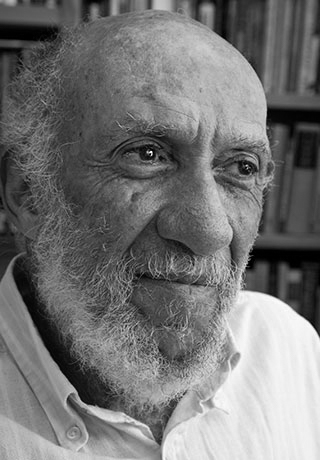

Professor Falk became an adviser to TFF when it was established in 1985.

Share

Leave a Reply

Your email address will not be published. Required fields are marked *

Related Posts

Peace is promoted by constructive proposals and dialogue Four preceding PressInfos have expressed concern over — and criticised — the ongoing, militarisation of the EU. Some will say: but there are no alternatives. We believe that there are always alternatives, that democracies are characterised by alternatives and choice, and that openly discussed alternatives will improve the quality and legitimacy of society’s decision–making. In addition, it is an intellectual and moral challenge to not only criticise but also be constructive. If we only tell people that we think they are wrong, they are not likely to listen. However, if we say: what are your views on this set of ideas and steps? — we may sometimes engage them in dialogue and sow a seed. Most people in power circles live their daily lives in in a time frame and a social space where certain ideas, viewpoints and concepts are just not...
Photos © TFF 2000 Read PressInfo 90 “Lift the Sanctions and Bring More Aid to Yugoslavia” See Pictures from Belgrade © TFF 2000 Please reprint, copy, archive, quote or re-post this item, but please retain the source.
Av FRANK SØHOLM GREVIL 16 augusti 2004  Vi er nu nået til tredje akt i det absurde teaterstykke, der i analogi med de store skueprocesser i Moskva 1936-38 er blevet døbt ‘Grevil-sagen’. Første akt bestod i min anonyme fremlæggelse af egenhændigt nedklassificerede rapporter i Berlingske Tidende i februar og marts. Andet akt udgjordes af min fremtræden med navn og billede i Information i april samt den efterfølgende mediestorm, som uden min direkte medvirken kostede en forsvarsminister taburetten samt en sigtelse for brud på tavshedspligten. Tredje akt bliver en retssag, hvor jeg står tiltalt for at have overtrådt straffelovens bestemmelser om uberettiget videregivelse eller udnyttelse af fortrolige oplysninger. Statsanklageren har ovenikøbet valgt at påberåbe sig særligt skærpende omstændigheder. Da jeg aldrig har modtaget betaling for at stille rapporterne til rådighed eller lade mig interviewe, må det skærpende bestå i, at “videregivelsen eller udnyttelsen er sket under sådanne omstændigheder, at det påfører...

Recent Articles

Jan Oberg May 15, 2026 Go to this Fox News page and scroll the whole way down: President Donald Trump tells the world that his meeting with President Xi Jinping yielded a lot of very concrete political and economic results – of course, only where the Chinese side, according to him, agreed with him. He does not mention the Taiwan issue, but Secretary of State, Marco Rubio, says that it did not feature prominently in their talks and that the US policy on Taiwan has not changed. Then go to China Daily – or Global Times – and you will see that for the Chinese it is framework, principles, structure of cooperation etc. that matters – all embedded in the overall idea of “constructive bilateral relationship of strategic stability.” Nowhere is any concrete agreement or deal – all that Trump refers to – mentioned. At the general level, this gives you insights into the very different social...
Lena Petrova of “World Affairs In Context” with more than half a million subscribers on YouTube wanted to explore what a peace researcher like me has to say about, among other things, the First and the Second Cold War and why eethics has disappeared from politics. I am particularly happy about this conversation that also yielded an amazing number of very appreciative comments on YouTube. No doubt, people are longing for alternatives, including peace perspectives.
The MIMAC – Military-Industrial-Media-Academic Complex – drives the world’s rampant militarism and wars without end. Here is a short reflection of how it works against all interests of humanity. #5 deals with why there is no real enemy or threat images/analysis. It’s all ex-post constructions. And, btw, theTFF Peace Pulse is now on Rumble.

TFF on Substack

Discover more from TFF Transnational Foundation & Jan Oberg.

Most Popular

Jan Oberg May 15, 2026 Go to this Fox News page and scroll the whole way down: President Donald Trump tells the world that his meeting with President Xi Jinping yielded a lot of very concrete political and economic results – of course, only where the Chinese side, according to him, agreed with him. He does not mention the Taiwan issue, but Secretary of State, Marco Rubio, says that it did not feature prominently in their talks and that the US policy on Taiwan has not changed. Then go to China Daily – or Global Times – and you will see that for the Chinese it is framework, principles, structure of cooperation etc. that matters – all embedded in the overall idea of “constructive bilateral relationship of strategic stability.” Nowhere is any concrete agreement or deal – all that Trump refers to – mentioned. At the general level, this gives you insights into the very different social...
Lena Petrova of “World Affairs In Context” with more than half a million subscribers on YouTube wanted to explore what a peace researcher like me has to say about, among other things, the First and the Second Cold War and why eethics has disappeared from politics. I am particularly happy about this conversation that also yielded an amazing number of very appreciative comments on YouTube. No doubt, people are longing for alternatives, including peace perspectives.
The MIMAC – Military-Industrial-Media-Academic Complex – drives the world’s rampant militarism and wars without end. Here is a short reflection of how it works against all interests of humanity. #5 deals with why there is no real enemy or threat images/analysis. It’s all ex-post constructions. And, btw, theTFF Peace Pulse is now on Rumble.
Read More
Screenshot-2026-05-15-103534
Jan Oberg May 15, 2026 Go to this Fox News page and scroll the whole way down: President Donald Trump tells the world that his meeting with President Xi Jinping yielded a lot of very concrete political and economic results – of course, only where the Chinese side, according to him, agreed with him. He does not mention the Taiwan issue, but Secretary of State, Marco Rubio, says that it did not feature prominently in their talks and that the US policy on Taiwan has not changed. Then go to China Daily – or Global Times – and you will see that for the Chinese it is framework, principles, structure of cooperation etc. that matters – all embedded in the overall idea of “constructive bilateral relationship of strategic stability.” Nowhere is any concrete agreement or deal – all that Trump refers to – mentioned. At the general level, this gives you insights into the very different social...
Screenshot-2026-05-12-104023
Lena Petrova of “World Affairs In Context” with more than half a million subscribers on YouTube wanted to explore what a peace researcher like me has to say about, among other things, the First and the Second Cold War and why eethics has disappeared from politics. I am particularly happy about this conversation that also yielded an amazing number of very appreciative comments on YouTube. No doubt, people are longing for alternatives, including peace perspectives.
Screenshot-2026-04-13-154551 (2)
The MIMAC – Military-Industrial-Media-Academic Complex – drives the world’s rampant militarism and wars without end. Here is a short reflection of how it works against all interests of humanity. #5 deals with why there is no real enemy or threat images/analysis. It’s all ex-post constructions. And, btw, theTFF Peace Pulse is now on Rumble.
Screenshot-2026-04-13-154551 (1)
Jan Oberg, TFF director April 28, 2026 In this third TFF Peace Pulse, I make the important distinction between the violence and the conflict that violence is a symptom of. If you want peace, focus on the underlying conflict because that is the key to resolution, peacemaking, and a better future for the parties. The West is obsessed with violence, just look around you – and 90+ per cent of the public debate is about military issues and other violence – totally wasted for peace. These Peace Pulses will only be published here a few times. You will also not find them on YouTube and Vimeo because both platforms have blocked TFF and me; you know, peace is dangerous these days. Most TFF’s videos since 2007 are now on Rumble.
Screenshot-2026-04-13-154551
In contrast to most, we’ll bring alternatives, solutions, hope and strategies for a better future. Times are dangerous, yes, but that only intensifies the need for constructive thinking and action! Jan Oberg, TFF director April 13, 2026 The new TFF Peace Pulse uses video messages in a new way: Max 3-5-minute-long comments, ideas or perhaps mini-lectures, all about peace – positive peace. We launch them today on April 13, 2026 with a carefully crafted visual aesthetic fitting the content. We hope to publish them regularly from now on. We launch Peace Pulse (PP) – for a number of reasons. The world is in chaos, and there are countless reasons to feel concerned, frustrated, even angry. The atmosphere is saturated with doom and gloom, with negative energy and rear‑mirror thinking, while vision, imagination, alternatives, strategies and genuine future‑mindedness remain in short supply. And without them, we simply can’t save the world. Looking at problems from a hundred angles will...
IMG_5165 (1)
PART II — Publishing Peace in a System That Prioritises Militarism Jan Oberg, TFF director April 10, 2026 How TFF Maintains a Daily Voice in a Digital World Built for Noise This article is part of the series “TFF at 40″ and it invites you to learn about Four Decades of Publishing Peace. It takes a look at how a small, people‑financed peace foundation has communicated across four generations of technology — from wax stencils and fax machines to mass email and Substack — and why TFF continues to publish every single day in a system that rewards noise, conflict, and militarism. ◆ What it means to publish peace every single day in a digital system built for 24/7 news and other noise, confrontation, and militarism. How TFF’s independence, continuity, and global readership defy algorithms, donor cycles, and Western media censorhip — and why the Majority World keeps listening. When the...

