
Opening the other eye: Charles Taylor and selective criminal accountability

From all that we know Charles Taylor deserves to be held criminally accountable for his role in the atrocities committed in Sierra Leone during the period 1998-2002. Taylor was then President of Liberia, and did his best to encourage violent uprisings against the governments in neighboring countries so as to finance his own bloody schemes and extend his regional influence.

It was in Sierra Leone that ‘blood diamonds,’ later more judiciously called ‘conflict diamonds’ were to be found in such abundance as to enter into the lucrative world trade, with many of these diamonds finding their way onto the shelves of such signature jewelry stores as Cartier, Bulgari, and Harry Winston, and thereby circumventing some rather weak international initiatives designed to prevent this outcome.

It is fine that Charles Taylor was convicted of 11 counts of aiding and abetting war crimes and crimes against humanity of the rebel militias that committed atrocities of an unspeakable nature, and he will be sentenced in early May. And it may impress some that liberal legal procedures led to Taylor’s acquittal with respect to the more serious charges of ‘command responsibility’ or ‘joint criminal enterprise.’

Surely the circumstantial evidence sufficiently implicated Taylor that it would have seemed reasonable to hold him criminally responsible for the acts performed, and not just for aiding and abetting their commission. In general, it is better not convict defendants involving crimes of state when clear evidence is not available to uphold specific charges beyond any reasonable doubt. In this respect, the Taylor conviction seems restrained, professional, and not vindictive.

But as Christine Cheng has shown in a perceptive article published online in Al Jazeera English there are some elements of this conviction that feed the suspicion that the West is up to its old tricks of seizing the high moral ground while pursuing economic and geopolitical goals that obstruct the political independence and sovereignty of countries that were once their colonies.

The financing of the Special Court on Sierra Leone was almost totally handled by the United States, United Kingdom, the Netherlands, and Canada. In addition, there were reasons to believe that if Taylor were allowed to foment trouble from his base of operations in Liberia he would make it more difficult to restore stability, and begin ‘legitimate’ mining operations, which is what the West wanted for the region.

What is dramatically ironic about the whole picture is that the United States is the number one advocate of international criminal justice for others, while holding itself self-righteously aloof from accountability on the main ground that the process might be tainted by politicized motivations!

The U.S. Congress has even threatened that it would use military force to rescue any Americans that were somehow called to account by the International Criminal Court in The Hague, and has signed agreements with over 100 governments not to hand over American citizens to the ICC.

And yet it is American criminal lawyers and human rights NGOs that have been most loudly applauding the outcome in the Taylor case, and without even a whimper of acknowledgement that there may be some issues relating to double standards.

If aiding and abetting is what the evidence demonstrates, then should there not be at least discussion of whether the jewelry retailers making huge profits by selling these tainted diamonds should not have been investigated, and even prosecuted?

There was a voluntary, self-regulating process established, the Kimberly Process (2001) named after the city in South Africa where the meeting of concerned governments took place. A British NGO, Global Witness, reports that almost none of the prominent diamond retailers took any notice of this cooperative effort that was evidently designed to avoid a civil society backlash of the sort that animal rights activists organized to protest cruelty to animals. But isn’t it interesting that Western corporations are asked to act in a morally responsible manner as a voluntary undertaking while political leaders of sovereign states are subject to the rigors of international criminal law?

These issues are kept out of the Western public discourse. Take the self-satisfied editorial appearing in the Financial Times (April 27, 2012). It starts with words affirming the larger meaning of Taylor’s conviction: “A strong message was sent to tyrants and warlords around the world yesterday. International law may be slow, but even those in the higher ranks of power can be held to account for atrocities committed against the innocent.”

And the editorial ends even more triumphantly, and without bothering to notice the elephant standing in the middle of the room, that leaders “..in states weak and strong — now know that there can be no impunity for national leaders when it comes to human rights.”

Such language needs to be decoded to convey its real message as follows: “national leaders of non-Western countries should realize that if their operations henceforth stand in the way of geopolitical priorities, they will held criminal responsible for any wrongdoing on their part.”

There are several observations that follow:

(1) If non-Western leaders are supportive of Western interests, their atrocities will be overlooked, but if there is a direct confrontation, then the liberal establishment will be encouraged to start ‘war crimes talk’ (thus Milosevic, Saddam Hussein, Qaddafi (killed before proceedings initiated) were charged with crimes, while the crimes of those governing Bahrain, Saudi Arabia, and Israel[1] were ignored);

(2) The great majority of cases dealing with international crimes have been up to this point associated with sub-Saharan Africa, confirming the extent to which this region has been devastated by bitter conflicts, many of which are attributable to the remnants of colonialism (divide and rule; slave trade; arbitrary boundaries separating tribal and ethnic communities; continuing quest for valuable mineral resources by international business interests);

(3) The Western mind is trained so as not to notice, much less acknowledge, either the historical responsibility of the colonial powers or the unwillingness of the West to submit to the same accountability procedures that are being relied upon to impose criminal responsibility on those who stand in the way of Western demands.

The United States is particularly vulnerable from these perspectives. When we hear the names of Guantanamo Bay and Abu Ghraib the immediate association is with American war crimes. When American leaders openly endorse reliance on interrogation techniques that are generally condemned as ‘torture’ we should notice the gaping chasm separating ‘law’ from its consistent implementation.

When a soldier, such as Bradley Manning, exposes the atrocities of the Iraq and Afghanistan wars he is held in humiliating prison circumstances and prosecuted for breaching secrecy, with suggestions that his intent was ‘treasonous,’ intended to help enemies.

At least, if there was a measure of good faith in Washington, it should have been possible to move forward on parallel paths: hold Manning responsible for releasing classified materials, mitigated by his motives and absence of private gain, but vigorously repudiate and investigate the horrible crimes being committed against civilians in Iraq and Afghanistan, as well as the battlefield practices and training programs that give rise to such atrocities.

The Western powers have gone further in sculpting international law to their liking. They have excluded ‘aggressive war’ from the list of international crimes contained in the Rome Treaty that governs the scope of ICC jurisdiction. When the defendants were the losers in World War II, aggressive war was treated at Nuremberg (and Tokyo) as the supreme war crime as it was declared to encompass the others.

The UN Charter was drafted to reflect this outlook by unconditionally prohibiting any recourse to force by a state except in self-defense narrowly defined as a response to a prior armed attack. But in the decades that followed each of the countries that sat in judgment at Nuremberg engaged in aggressive war and made non-defensive uses of force, and so the concept became too contested to be any longer codified as law.

This reversal and regression exemplifies the Janus face of geopolitics when it comes to criminal accountability: when the application of international criminal law serves the cause of the powerful, it will be invoked, extended, celebrated, even institutionalized, but only so long as it is not turned against the powerful. One face of Janus is that of international justice and the rule of law, the other is one of stern look that submits to the rule of power on behalf of the war gods.

Where does this line of reasoning end? Should we be hypocrites and punish those whose crimes offend the geopolitical gatekeepers?

Or should we insist that law to be law must be applied consistently? At least these questions should be asked, a certain humility emerge, especially among liberals in the West.

[1] Of course, Israel is only geographically non-Western, and its leadership enjoys the same kind of impunity available to American leaders and those of allied countries.
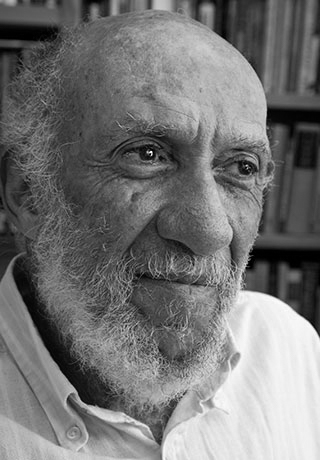

Professor Falk became an adviser to TFF when it was established in 1985.

Share

Leave a Reply

Your email address will not be published. Required fields are marked *

Related Posts

“En dag som berättigar till fest”, utropade den London-baserade al-Quds al-Arabi efter FN:s eldupphörresolution, “eftersom detta är första gången som Israel accepterar ett FN-beslut från en position som besegrad och inte som segrare”. Att ett arabisk-israeliskt krig för en gångs skull slutat med arabisk seger, är en helt dominerade åsikt i arabiska medier. Al-Quds al-Arabi tillåter sig att drömma om att det israeliska nederlaget skall leda till massflykt från Israel. Men i nästa andetag påminner tidningen om att Israel aldrig brukar genomföra sina internationella åtaganden och varnar för att förlorarna, liksom tidigare, kan hämnas genom att provocera fram inbördeskrig i Libanon. Med tanke på de otaliga massmediala vittnesmålen om det libanesiska folkets eniga motståndskraft förefaller risken för inre stridigheter i det sargade landet just nu liten. Men visst kan man urskilja nyansskillnader i libanesiska tidningar. Vänsterorganet al-Safir uppfattar FN-resolutionen som en komplott i syfte att rädda Israel från ännu större...
A donors’ conference, co-sponsered by the Burundian government, the Belgian government and UNDP will be held in Brussels January 12-13, 2004. This PressInfo offers a perspective on its urgency. See also TFF’s new Burundi Forum. Imagine for a moment that politics is about goodness and generosity. Where could a few million dollars of government aid and a few civil society organisations – guaranteed – win the hearts of extremely poor millions who want peace and already work hard to achieve it after 10 years of war and genocide? The answer is Burundi, the heart-shaped country in the heart of Africa. Burundi makes a good story from Africa. But what does the world know about Burundi, its problems and struggles? Burundi’s tough reality Here are the basic facts. Burundi’s population is about 7 million and it is number 171 out of the 175 countries on the UNDP’s human development index. Their life...
This is not another geopolitical commentary on the Arctic. It is a visionary peace proposal that can save the region from militarised rivalry and ecological ruin. A blueprint for shared security, sustainable development, and human dignity — benefitting Greenland, the Arctic, and the rest of us. Jan Oberg TFF director Lund, Sweden, February 17, 2026 I. Four Principles for a New Arctic Vision The Arctic is often framed as a cold arena of rivalry — a place where great powers test each other’s resolve. But this worldview is outdated, unimaginative, and ultimately self‑defeating. The Arctic is not a vacuum waiting to be militarised; it is a living region, a climate stabiliser, and a cultural homeland whose future will shape the future of humanity. If we begin from that understanding, a far more rational Arctic order becomes possible — one that is peaceful, cooperative, and centred on the people who actually live there. This vision rests...

Recent Articles

“En dag som berättigar till fest”, utropade den London-baserade al-Quds al-Arabi efter FN:s eldupphörresolution, “eftersom detta är första gången som Israel accepterar ett FN-beslut från en position som besegrad och inte som segrare”. Att ett arabisk-israeliskt krig för en gångs skull slutat med arabisk seger, är en helt dominerade åsikt i arabiska medier. Al-Quds al-Arabi tillåter sig att drömma om att det israeliska nederlaget skall leda till massflykt från Israel. Men i nästa andetag påminner tidningen om att Israel aldrig brukar genomföra sina internationella åtaganden och varnar för att förlorarna, liksom tidigare, kan hämnas genom att provocera fram inbördeskrig i Libanon. Med tanke på de otaliga massmediala vittnesmålen om det libanesiska folkets eniga motståndskraft förefaller risken för inre stridigheter i det sargade landet just nu liten. Men visst kan man urskilja nyansskillnader i libanesiska tidningar. Vänsterorganet al-Safir uppfattar FN-resolutionen som en komplott i syfte att rädda Israel från ännu större...
Greenland – the world’s largest island, a continent of its own with only 57.000 inhabitants. I visited it for the first time in May 2005. I flew across the inland ice to Nuuk, the tiny capital with some 14.000 inhabitants. I was overwhelmed by the pride and kindness of everyone I met as well as by the unique natural beauty. Unfortunately, due to weather conditions during my ten-day stay I could get nowhere else but Nuuk. Fortunately, however, among those I met was Gitte Arvegaard, a Danish lawyer and negotiator employed by the local government, Greenland Home Rule. She turned out to be an enthusiastic photographer with a lot of pictures taken during various trips around Greenland. So this Greeland series is the result of our cooperative effort. We both hope you enjoy it and are stimulated to visit Greenland – about which you may read more here. Finally, if you want to...
 Jan Oberg’s storyof how he met Sir Paul Liverpool – where else to meet Paul McCartney? Paul’s old class mate and TFF Associate, Jonathan Power introduced me to Paul McCartney in Liverpool at an informal reception. It was held at what used to be their school, now the Liverpool Institute for Performing Arts and we were there to celebrate that Jonathan had written Amnesty International’s 40th Anniversary book. This happy event for “righting wrongs and writing songs” gave me an opportunity to meet Paul and tell him about TFF and get straight to the matter: would he consider making a donation in support of our work for peace? While I was probably the only one with such a wish that day, I was certainly not the only one who wanted to shake hands and talk with him. In the last minutes before Paul was to leave, Jonathan brought us together and we got about three...

TFF on Substack

Discover more from TFF Transnational Foundation & Jan Oberg.

Most Popular

“En dag som berättigar till fest”, utropade den London-baserade al-Quds al-Arabi efter FN:s eldupphörresolution, “eftersom detta är första gången som Israel accepterar ett FN-beslut från en position som besegrad och inte som segrare”. Att ett arabisk-israeliskt krig för en gångs skull slutat med arabisk seger, är en helt dominerade åsikt i arabiska medier. Al-Quds al-Arabi tillåter sig att drömma om att det israeliska nederlaget skall leda till massflykt från Israel. Men i nästa andetag påminner tidningen om att Israel aldrig brukar genomföra sina internationella åtaganden och varnar för att förlorarna, liksom tidigare, kan hämnas genom att provocera fram inbördeskrig i Libanon. Med tanke på de otaliga massmediala vittnesmålen om det libanesiska folkets eniga motståndskraft förefaller risken för inre stridigheter i det sargade landet just nu liten. Men visst kan man urskilja nyansskillnader i libanesiska tidningar. Vänsterorganet al-Safir uppfattar FN-resolutionen som en komplott i syfte att rädda Israel från ännu större...
Greenland – the world’s largest island, a continent of its own with only 57.000 inhabitants. I visited it for the first time in May 2005. I flew across the inland ice to Nuuk, the tiny capital with some 14.000 inhabitants. I was overwhelmed by the pride and kindness of everyone I met as well as by the unique natural beauty. Unfortunately, due to weather conditions during my ten-day stay I could get nowhere else but Nuuk. Fortunately, however, among those I met was Gitte Arvegaard, a Danish lawyer and negotiator employed by the local government, Greenland Home Rule. She turned out to be an enthusiastic photographer with a lot of pictures taken during various trips around Greenland. So this Greeland series is the result of our cooperative effort. We both hope you enjoy it and are stimulated to visit Greenland – about which you may read more here. Finally, if you want to...
 Jan Oberg’s storyof how he met Sir Paul Liverpool – where else to meet Paul McCartney? Paul’s old class mate and TFF Associate, Jonathan Power introduced me to Paul McCartney in Liverpool at an informal reception. It was held at what used to be their school, now the Liverpool Institute for Performing Arts and we were there to celebrate that Jonathan had written Amnesty International’s 40th Anniversary book. This happy event for “righting wrongs and writing songs” gave me an opportunity to meet Paul and tell him about TFF and get straight to the matter: would he consider making a donation in support of our work for peace? While I was probably the only one with such a wish that day, I was certainly not the only one who wanted to shake hands and talk with him. In the last minutes before Paul was to leave, Jonathan brought us together and we got about three...
Read More
Imagen-thumbnail-The-Transnational-1
“En dag som berättigar till fest”, utropade den London-baserade al-Quds al-Arabi efter FN:s eldupphörresolution, “eftersom detta är första gången som Israel accepterar ett FN-beslut från en position som besegrad och inte som segrare”. Att ett arabisk-israeliskt krig för en gångs skull slutat med arabisk seger, är en helt dominerade åsikt i arabiska medier. Al-Quds al-Arabi tillåter sig att drömma om att det israeliska nederlaget skall leda till massflykt från Israel. Men i nästa andetag påminner tidningen om att Israel aldrig brukar genomföra sina internationella åtaganden och varnar för att förlorarna, liksom tidigare, kan hämnas genom att provocera fram inbördeskrig i Libanon. Med tanke på de otaliga massmediala vittnesmålen om det libanesiska folkets eniga motståndskraft förefaller risken för inre stridigheter i det sargade landet just nu liten. Men visst kan man urskilja nyansskillnader i libanesiska tidningar. Vänsterorganet al-Safir uppfattar FN-resolutionen som en komplott i syfte att rädda Israel från ännu större...
Greenland – the world’s largest island, a continent of its own with only 57.000 inhabitants. I visited it for the first time in May 2005. I flew across the inland ice to Nuuk, the tiny capital with some 14.000 inhabitants. I was overwhelmed by the pride and kindness of everyone I met as well as by the unique natural beauty. Unfortunately, due to weather conditions during my ten-day stay I could get nowhere else but Nuuk. Fortunately, however, among those I met was Gitte Arvegaard, a Danish lawyer and negotiator employed by the local government, Greenland Home Rule. She turned out to be an enthusiastic photographer with a lot of pictures taken during various trips around Greenland. So this Greeland series is the result of our cooperative effort. We both hope you enjoy it and are stimulated to visit Greenland – about which you may read more here. Finally, if you want to...
p_mccartney_poem
 Jan Oberg’s storyof how he met Sir Paul Liverpool – where else to meet Paul McCartney? Paul’s old class mate and TFF Associate, Jonathan Power introduced me to Paul McCartney in Liverpool at an informal reception. It was held at what used to be their school, now the Liverpool Institute for Performing Arts and we were there to celebrate that Jonathan had written Amnesty International’s 40th Anniversary book. This happy event for “righting wrongs and writing songs” gave me an opportunity to meet Paul and tell him about TFF and get straight to the matter: would he consider making a donation in support of our work for peace? While I was probably the only one with such a wish that day, I was certainly not the only one who wanted to shake hands and talk with him. In the last minutes before Paul was to leave, Jonathan brought us together and we got about three...
Logo-Transnational
1942James Paul McCartney is born in Liverpool on June 18th. 1956Paul writes his first song, I Lost My Little Girl. 1957Paul meets John Lennon at St. Peter’s Church Fete, Woolton, Liverpool. He joins his first group, The Quarrymen and performs in his first gig at The New Clubmoor Hall, Liverpool, on October 18th. 1960Formation of The Beatles, who play residencies in Hamburg and at The Cavern in Liverpool. 1961First Beatles recordings issued in Germany, as the backing group for Tony Sheridan. 1962The first Beatles Parlophone recording, Love Me Do, reaches number 17 in the British charts. 1963The birth of Beatlemania. Please Please Me gives the group their first British Number 1. She Loves You cements their success. Please Please Me and With The Beatles albums released. 1964First triumphant American tour. The Beatles perform at the Royal Command Performance and release their first film, A Hard Day’s Night. Their single I...
Logo-Transnational
  Back to the series “Bujumbura, Burundi”
By JONATHAN POWER August 16, 2000 LONDON – Remember the summer of ’98? In the sweltering, torpid heat of a Roman august, charged with exhaust fumes, the international community gave its overwhelming approval to the establishment of an International Criminal Court that will enable those accused of “crimes against humanity” to be tried and, if convicted, sentenced. Only seven nations opposed or abstained from the motion, including Israel, China, India and the U.S.A. where the Pentagon had successfully waged bureaucratic guerrilla war to undermine the initially sympathetic stance of President Bill Clinton. Two years on we can now see what an epochal event that was. In a the stroke of 120 pens it changed the climate on political thuggery. After numerous half-starts and false starts ever since the Nuremberg and Tokyo trials that convicted the war criminals of the Second World War, the world at last had agreed en masse a common...

