
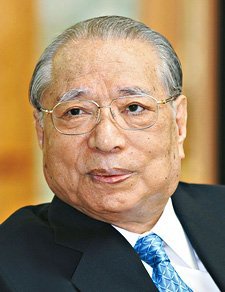
2012 Peace Proposal: Human Security and Sustainability: Sharing reverence for the dignity of life

By Daisaku Ikeda
President of Soka Gakkai International (SGI)
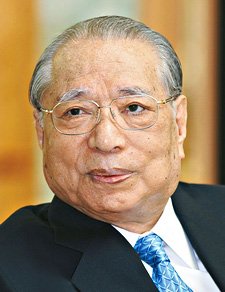
Every year Dr. Ikeda publishes his thoughts on what must be done to secure a better future for us all. He is a true contributor to the TFF pro-peace orientation that emphasizes how important it is to “imagine a better world”.
We are proud to have had this wise, visionary leader of what is probably the world’s largest peace movement, as TFF Associate over many years.
Much more about him here
.

The economist Amartya Sen, a renowned advocate of the methods and approaches of human security, has emphasized “the dangers of sudden deprivation.” Such unanticipated threats can take the form of natural disaster and conflict, and can also arise from economic crises and rapid environmental degradation brought about by climate change. It is crucial that we respond vigorously to such threats, which can grievously undermine people’s lives, livelihoods and dignity.

It is the nature of disasters that they destroy those things that are most precious, necessary and irreplaceable to human life. They inflict the suffering of the loss of friends and family members, the destruction of homes and the shredding of the bonds of community. When disasters strike, society as a whole must be prepared to offer long-term support, sharing the responsibility to assist people in rebuilding their lives.

The treatise “On Establishing the Correct Teaching for the Peace of the Land,” authored by Nichiren (1222-82), whose teachings are the foundation of the belief of members of the Soka Gakkai International (SGI), provides a useful framework for thinking about our contemporary world. Three aspects of this text are especially relevant in light of present-day conditions and the imperatives of human security: the philosophical stance that the highest priority of the state must be the well-being and security of ordinary people; a call for the establishment of a worldview rooted in a vital sense of our interconnectedness; and the insight that the greatest empowerment is realized when, through dialogue, we advance from a shared concern to a shared action-oriented pledge or vow.

Such empowerment is of particular relevance to the restoration of people’s sense of mental equilibrium and health in post-disaster situations, “the recovery of the heart.” Buddhism teaches that whatever our individual circumstances, we can always discover the capacity to help others; it also assures us that those who have suffered the most have the right to the greatest happiness.

Humanitarianism, human rights and sustainability

Turning to specific proposals, three major challenges–natural disasters, environmental degradation and poverty, and nuclear weapons–present future generations with threats and burdens that will only become greater the more we delay. Humanitarianism, human rights and sustainability need to be the core elements of a future vision of:

A world that, refusing to overlook human tragedy wherever it occurs, unites in solidarity to overcome threats;
A world that, based on the empowerment of individuals, gives priority to securing the dignity and right of all people to live in peace;
A world that, remembering the lessons of the past, does not allow unborn generations to inherit the negative legacies of human history and directs all its energies to transforming those legacies.

Disaster risk reduction

Regarding disaster risk reduction, international frameworks to support disaster-affected populations need to be strengthened, specifically by applying a rights-based approach and including such responses in the mandate of the Office of the United Nations High Commissioner for Refugees (UNHCR).

Human rights need to be given a central stress in all relief efforts, focusing on the right of those affected by disasters to live with dignity. We need to create a culture of human rights that champions the dignity of those afflicted by disasters, threats and social injustice. At the same time, it is absolutely vital that people be empowered to transform their own circumstances, and here a focus on women will prove indispensable.

Women bear a disproportionate burden of the deprivations resulting from disasters, and they are often exposed to grievous threats. At the same time, there is a need to afford greater recognition to women’s special capacities to contribute. Women must be empowered as effective change agents in the fields of disaster risk reduction, recovery and reconstruction, in line with similar recognition of their potential roles in conflict prevention, resolution and peacebuilding. Specifically, disaster risk reduction and recovery could be included in the scope of UN Security Council Resolution 1325, or a new resolution could be adopted with a focus on the roles women play in these areas.

Sustainable development

Ahead of the United Nations Conference on Sustainable Development (Rio+20) slated to be held in Rio de Janeiro, Brazil, this June, there have been many calls for the establishment of Sustainable Development Goals.

A set of common goals for a sustainable future should inherit the spirit of the Millennium Development Goals of alleviating the distortions in our global society generated by poverty and income disparities, and should also address the full range of human security issues.

Sustainable energy is also a key issue we need to face. As made painfully clear by the accident at the Fukushima Nuclear Power Plant that accompanied the devastating earthquake and tsunami which struck Japan last March, a rapid transition to an energy policy that is not dependent on nuclear power is urgently required. At the same time, the International Atomic Energy Agency (IAEA) needs to play a central role in responding to nuclear power plant accidents, in the decommissioning of obsolescent nuclear reactors and in handling the back end of the nuclear fuel cycle.

Nuclear abolition

For years, the SGI has promoted a movement to manifest the will of the world’s people for the outlawing of nuclear weapons through the adoption of a Nuclear Weapons Convention (NWC). There are numerous signs that we are now positioned at a tipping point where a “cascade” of governments start supporting adoption of an NWC.

The leading role played by civil society in developing a draft NWC and in actively seeking the start of negotiations demonstrates that the spiritual wellspring and normative source for such a treaty exist as a vital presence in the hearts and minds of the world’s ordinary citizens. What is required now is to take this living, breathing awareness and give it concrete form as a binding legal agreement expressing the shared conscience of humankind.

We must initiate concrete negotiations that will culminate in the realization of an NWC. One way to do this would be to present it as a basic treaty establishing the legal framework of a world without nuclear weapons with a set of associated protocols. The basic treaty would allow signatory states to clearly commit to the goal of a world without nuclear weapons and undertake a process of mutual threat reduction. Separate protocols could enumerate prohibited activities such as development and production, use or threat of use, and establish procedures for decommissioning and verification. NGOs and forward-looking governments should establish an action group to embark on this venture.

We should set a target of 2015 for the release–or better yet, the signing–of an agreed-upon draft of the basic framework treaty. Hiroshima and Nagasaki would provide a suitable venue for this, at a nuclear abolition summit to mark the effective end of the nuclear era. The Nuclear Non-Proliferation Treaty (NPT) Review Conference, scheduled for 2015, provides a good opportunity for such a summit.

The struggle for peace, like the struggle for human rights and humanity, should be thought of as the work of generating an uninterrupted and unstoppable flow of commitment connecting and passed on from one generation to the next. This is the conviction that has supported the SGI’s efforts to help build a better future for all, to promote a movement of empowerment that is of, for and by the people, laying the foundations for a global society of peace and harmonious coexistence.


Originally published here

Share

Leave a Reply

Your email address will not be published. Required fields are marked *

Related Posts

“En dag som berättigar till fest”, utropade den London-baserade al-Quds al-Arabi efter FN:s eldupphörresolution, “eftersom detta är första gången som Israel accepterar ett FN-beslut från en position som besegrad och inte som segrare”. Att ett arabisk-israeliskt krig för en gångs skull slutat med arabisk seger, är en helt dominerade åsikt i arabiska medier. Al-Quds al-Arabi tillåter sig att drömma om att det israeliska nederlaget skall leda till massflykt från Israel. Men i nästa andetag påminner tidningen om att Israel aldrig brukar genomföra sina internationella åtaganden och varnar för att förlorarna, liksom tidigare, kan hämnas genom att provocera fram inbördeskrig i Libanon. Med tanke på de otaliga massmediala vittnesmålen om det libanesiska folkets eniga motståndskraft förefaller risken för inre stridigheter i det sargade landet just nu liten. Men visst kan man urskilja nyansskillnader i libanesiska tidningar. Vänsterorganet al-Safir uppfattar FN-resolutionen som en komplott i syfte att rädda Israel från ännu större...
Jan Oberg, TFF director April 28, 2026 In this third TFF Peace Pulse, I make the important distinction between the violence and the conflict that violence is a symptom of. If you want peace, focus on the underlying conflict because that is the key to resolution, peacemaking, and a better future for the parties. The West is obsessed with violence, just look around you – and 90+ per cent of the public debate is about military issues and other violence – totally wasted for peace. These Peace Pulses will only be published here a few times. You will also not find them on YouTube and Vimeo because both platforms have blocked TFF and me; you know, peace is dangerous these days. Most TFF’s videos since 2007 are now on Rumble.
A donors’ conference, co-sponsered by the Burundian government, the Belgian government and UNDP will be held in Brussels January 12-13, 2004. This PressInfo offers a perspective on its urgency. See also TFF’s new Burundi Forum. Imagine for a moment that politics is about goodness and generosity. Where could a few million dollars of government aid and a few civil society organisations – guaranteed – win the hearts of extremely poor millions who want peace and already work hard to achieve it after 10 years of war and genocide? The answer is Burundi, the heart-shaped country in the heart of Africa. Burundi makes a good story from Africa. But what does the world know about Burundi, its problems and struggles? Burundi’s tough reality Here are the basic facts. Burundi’s population is about 7 million and it is number 171 out of the 175 countries on the UNDP’s human development index. Their life...

Recent Articles

“En dag som berättigar till fest”, utropade den London-baserade al-Quds al-Arabi efter FN:s eldupphörresolution, “eftersom detta är första gången som Israel accepterar ett FN-beslut från en position som besegrad och inte som segrare”. Att ett arabisk-israeliskt krig för en gångs skull slutat med arabisk seger, är en helt dominerade åsikt i arabiska medier. Al-Quds al-Arabi tillåter sig att drömma om att det israeliska nederlaget skall leda till massflykt från Israel. Men i nästa andetag påminner tidningen om att Israel aldrig brukar genomföra sina internationella åtaganden och varnar för att förlorarna, liksom tidigare, kan hämnas genom att provocera fram inbördeskrig i Libanon. Med tanke på de otaliga massmediala vittnesmålen om det libanesiska folkets eniga motståndskraft förefaller risken för inre stridigheter i det sargade landet just nu liten. Men visst kan man urskilja nyansskillnader i libanesiska tidningar. Vänsterorganet al-Safir uppfattar FN-resolutionen som en komplott i syfte att rädda Israel från ännu större...
Greenland – the world’s largest island, a continent of its own with only 57.000 inhabitants. I visited it for the first time in May 2005. I flew across the inland ice to Nuuk, the tiny capital with some 14.000 inhabitants. I was overwhelmed by the pride and kindness of everyone I met as well as by the unique natural beauty. Unfortunately, due to weather conditions during my ten-day stay I could get nowhere else but Nuuk. Fortunately, however, among those I met was Gitte Arvegaard, a Danish lawyer and negotiator employed by the local government, Greenland Home Rule. She turned out to be an enthusiastic photographer with a lot of pictures taken during various trips around Greenland. So this Greeland series is the result of our cooperative effort. We both hope you enjoy it and are stimulated to visit Greenland – about which you may read more here. Finally, if you want to...
 Jan Oberg’s storyof how he met Sir Paul Liverpool – where else to meet Paul McCartney? Paul’s old class mate and TFF Associate, Jonathan Power introduced me to Paul McCartney in Liverpool at an informal reception. It was held at what used to be their school, now the Liverpool Institute for Performing Arts and we were there to celebrate that Jonathan had written Amnesty International’s 40th Anniversary book. This happy event for “righting wrongs and writing songs” gave me an opportunity to meet Paul and tell him about TFF and get straight to the matter: would he consider making a donation in support of our work for peace? While I was probably the only one with such a wish that day, I was certainly not the only one who wanted to shake hands and talk with him. In the last minutes before Paul was to leave, Jonathan brought us together and we got about three...

TFF on Substack

Discover more from TFF Transnational Foundation & Jan Oberg.

Most Popular

“En dag som berättigar till fest”, utropade den London-baserade al-Quds al-Arabi efter FN:s eldupphörresolution, “eftersom detta är första gången som Israel accepterar ett FN-beslut från en position som besegrad och inte som segrare”. Att ett arabisk-israeliskt krig för en gångs skull slutat med arabisk seger, är en helt dominerade åsikt i arabiska medier. Al-Quds al-Arabi tillåter sig att drömma om att det israeliska nederlaget skall leda till massflykt från Israel. Men i nästa andetag påminner tidningen om att Israel aldrig brukar genomföra sina internationella åtaganden och varnar för att förlorarna, liksom tidigare, kan hämnas genom att provocera fram inbördeskrig i Libanon. Med tanke på de otaliga massmediala vittnesmålen om det libanesiska folkets eniga motståndskraft förefaller risken för inre stridigheter i det sargade landet just nu liten. Men visst kan man urskilja nyansskillnader i libanesiska tidningar. Vänsterorganet al-Safir uppfattar FN-resolutionen som en komplott i syfte att rädda Israel från ännu större...
Greenland – the world’s largest island, a continent of its own with only 57.000 inhabitants. I visited it for the first time in May 2005. I flew across the inland ice to Nuuk, the tiny capital with some 14.000 inhabitants. I was overwhelmed by the pride and kindness of everyone I met as well as by the unique natural beauty. Unfortunately, due to weather conditions during my ten-day stay I could get nowhere else but Nuuk. Fortunately, however, among those I met was Gitte Arvegaard, a Danish lawyer and negotiator employed by the local government, Greenland Home Rule. She turned out to be an enthusiastic photographer with a lot of pictures taken during various trips around Greenland. So this Greeland series is the result of our cooperative effort. We both hope you enjoy it and are stimulated to visit Greenland – about which you may read more here. Finally, if you want to...
 Jan Oberg’s storyof how he met Sir Paul Liverpool – where else to meet Paul McCartney? Paul’s old class mate and TFF Associate, Jonathan Power introduced me to Paul McCartney in Liverpool at an informal reception. It was held at what used to be their school, now the Liverpool Institute for Performing Arts and we were there to celebrate that Jonathan had written Amnesty International’s 40th Anniversary book. This happy event for “righting wrongs and writing songs” gave me an opportunity to meet Paul and tell him about TFF and get straight to the matter: would he consider making a donation in support of our work for peace? While I was probably the only one with such a wish that day, I was certainly not the only one who wanted to shake hands and talk with him. In the last minutes before Paul was to leave, Jonathan brought us together and we got about three...
Read More
Imagen-thumbnail-The-Transnational-1
“En dag som berättigar till fest”, utropade den London-baserade al-Quds al-Arabi efter FN:s eldupphörresolution, “eftersom detta är första gången som Israel accepterar ett FN-beslut från en position som besegrad och inte som segrare”. Att ett arabisk-israeliskt krig för en gångs skull slutat med arabisk seger, är en helt dominerade åsikt i arabiska medier. Al-Quds al-Arabi tillåter sig att drömma om att det israeliska nederlaget skall leda till massflykt från Israel. Men i nästa andetag påminner tidningen om att Israel aldrig brukar genomföra sina internationella åtaganden och varnar för att förlorarna, liksom tidigare, kan hämnas genom att provocera fram inbördeskrig i Libanon. Med tanke på de otaliga massmediala vittnesmålen om det libanesiska folkets eniga motståndskraft förefaller risken för inre stridigheter i det sargade landet just nu liten. Men visst kan man urskilja nyansskillnader i libanesiska tidningar. Vänsterorganet al-Safir uppfattar FN-resolutionen som en komplott i syfte att rädda Israel från ännu större...
Greenland – the world’s largest island, a continent of its own with only 57.000 inhabitants. I visited it for the first time in May 2005. I flew across the inland ice to Nuuk, the tiny capital with some 14.000 inhabitants. I was overwhelmed by the pride and kindness of everyone I met as well as by the unique natural beauty. Unfortunately, due to weather conditions during my ten-day stay I could get nowhere else but Nuuk. Fortunately, however, among those I met was Gitte Arvegaard, a Danish lawyer and negotiator employed by the local government, Greenland Home Rule. She turned out to be an enthusiastic photographer with a lot of pictures taken during various trips around Greenland. So this Greeland series is the result of our cooperative effort. We both hope you enjoy it and are stimulated to visit Greenland – about which you may read more here. Finally, if you want to...
p_mccartney_poem
 Jan Oberg’s storyof how he met Sir Paul Liverpool – where else to meet Paul McCartney? Paul’s old class mate and TFF Associate, Jonathan Power introduced me to Paul McCartney in Liverpool at an informal reception. It was held at what used to be their school, now the Liverpool Institute for Performing Arts and we were there to celebrate that Jonathan had written Amnesty International’s 40th Anniversary book. This happy event for “righting wrongs and writing songs” gave me an opportunity to meet Paul and tell him about TFF and get straight to the matter: would he consider making a donation in support of our work for peace? While I was probably the only one with such a wish that day, I was certainly not the only one who wanted to shake hands and talk with him. In the last minutes before Paul was to leave, Jonathan brought us together and we got about three...
Logo-Transnational
1942James Paul McCartney is born in Liverpool on June 18th. 1956Paul writes his first song, I Lost My Little Girl. 1957Paul meets John Lennon at St. Peter’s Church Fete, Woolton, Liverpool. He joins his first group, The Quarrymen and performs in his first gig at The New Clubmoor Hall, Liverpool, on October 18th. 1960Formation of The Beatles, who play residencies in Hamburg and at The Cavern in Liverpool. 1961First Beatles recordings issued in Germany, as the backing group for Tony Sheridan. 1962The first Beatles Parlophone recording, Love Me Do, reaches number 17 in the British charts. 1963The birth of Beatlemania. Please Please Me gives the group their first British Number 1. She Loves You cements their success. Please Please Me and With The Beatles albums released. 1964First triumphant American tour. The Beatles perform at the Royal Command Performance and release their first film, A Hard Day’s Night. Their single I...
Logo-Transnational
  Back to the series “Bujumbura, Burundi”
By JONATHAN POWER August 16, 2000 LONDON – Remember the summer of ’98? In the sweltering, torpid heat of a Roman august, charged with exhaust fumes, the international community gave its overwhelming approval to the establishment of an International Criminal Court that will enable those accused of “crimes against humanity” to be tried and, if convicted, sentenced. Only seven nations opposed or abstained from the motion, including Israel, China, India and the U.S.A. where the Pentagon had successfully waged bureaucratic guerrilla war to undermine the initially sympathetic stance of President Bill Clinton. Two years on we can now see what an epochal event that was. In a the stroke of 120 pens it changed the climate on political thuggery. After numerous half-starts and false starts ever since the Nuremberg and Tokyo trials that convicted the war criminals of the Second World War, the world at last had agreed en masse a common...

