
PressInfo #198 - What's Wrong with Kerry's Foreign and Domestic Policy… So far?

Generic thumbnail

Albert G. Milbank Professor of International Law Emeritus, Princeton University;
Visiting Professor, UCSB, 2002-2004 and Chair, Board, Nuclear Age Peace Foundation.
Falk is the author, of The Great Terror War (2003) and Declining World Order (2004).
See other books by Richard Falk in “The 100 Best Books”

The depravities displayed to the world at Abu Ghraib prison pose an historic challenge to John Kerry: He needs to offer America something more politically attractive than ‘a pale Republican’ seeking entry to the White House. Subtly positioning his candidacy but a micro-meter to the left of George W. Bush is not what America urgently needs (or wants) now.

This is the most important presidential election of my lifetime: Unless we rid the country and the world of the Bush leadership, our future prospects are grim, and could include a slide toward global fascism abroad and the risk of a police state at home.

The precariousness of the situation is highlighted by the Bush unwillingness, even now, to acknowledge failure in Iraq, heightening the prospects for years more of bloodshed under the vapid label of ‘staying the course.’ To allow this defiant Bush posture to go unchallenged as the campaign unfolds is symbolically and substantively to embrace an approach that reeks of misguided opportunism.

It is misguided because it yields to the Republicans the high ground of meaning what they say and doing what they say, of appearing to have a conception of anti-terrorism that is coherent, if costly, and of being challenged, only trivially, at the outer margins of policy.

Ever since the end of the cold war, the Democratic Party has been afraid of its own core values, especially the party’s honorable identification with social justice and sophisticated internationalism, and has been avoiding the so-called L-word, revealing a shameful retreat from advocating big-ticket liberal programs in health, education, and welfare.

Bill Clinton, with his great political savvy, sensed the mood of the 1990s, as well as the insensitivity of Bush Sr. to the realities of domestic America, and so was able to prevail by moving rightwards of center. Unfortunately, as president, Clinton did not let these constituents down, working furiously for Republican/Wall Street priorities such as NAFTA, fiscal discipline and market-driven economic globalization, while backing down on health care and welfare. But, as the vicious GOP impeachment debacle illustrated, Clinton, despite all his efforts to co-opt the Republican agenda, never achieved credibility on the right, but did alienate (to various degrees) his base of support among liberals and progressives.

Then there was his would-be successor, Al Gore: Putting aside for the moment the issue of electoral fraud, the vice president went down to defeat following an even more callous electoral strategy, even sidelining Clinton in order to appease the family-values crowd who were apparently more appalled by the Lewinsky sideshow than by rampant homelessness and the rising number of Americans below the poverty line. Given the economic problems in America, the election should never have been even close if Gore had not demoralized so much of his base, a blunder that had the secondary effect of emboldening Ralph Nader and his supporters. The truth is that Nader’s negative impact on Democratic prospects is far less than the futile and demoralizing mainstream Democratic bid to win over citizens situated to the right of center. From the standpoint of both pragmatism and idealism, a truly principled Democratic campaign this time might make Nader redundant and in fact persuade him to drop out.

Of course, there are risks of taking a position rooted in opposition to the Iraq policy, but they are diminishing with each passing day. Moreover, by subscribing to the staying-the-course line, Kerry locks himself into a totally discredited policy that has undoubtedly and perversely strengthened the appeal of Al Qaeda’s message around the world, especially in Arab countries. Kerry, already ultra-sensitive about flip-flopping allegations, is understandably reticent about seeming to switch yet again on a major policy issue. For Iraq, he could, however, appear persuasive by treating Abu Ghraib and its related fallout as a wakeup call that alerted him to the reality of Iraq as the long-feared, nightmarish Vietnam Redux. And it would not be out of place to say that his earlier support of the Iraq policy was based on gross misrepresentations by the Bush White House and Pentagon, if not outright lies.

Kerry must be more than a warmed-over, slightly less right-wing Bush. The senator’s ‘plan’ – as it now stands – merely calls for an enlarged UN role. This not only resembles what the Bush people are themselves advocating, it tacitly accepts an approach that has failure written all over it. Why should the UN, so long rebuffed by the Bush administration, bother to step in at this stage? And, were it so foolish to jump in, why would not the Iraqi resistance view this new presence as no more than a continuation of the American occupation under different cover?

Indeed, what else can staying-the-course mean except finding a way to continue the foreign occupation, at least until a political solution for Iraq is found? This is incoherent advocacy at this stage: For the only plausible stabilization plan that might work, as prefigured in Falluja, is the re-Baathification of the governing process, and this would put Sunni leadership back in charge of the entire country. This ‘solution’ would likely trigger a civil war, unless it was to become as brutally authoritarian as its predecessor. Given these realities, therefore, the American goal of democracy in Iraq is an absurd paradox: Indeed, the more democratic the polity was allowed to become, the more anti-American (and anti-Israeli) it would undoubtedly turn out to be.

What’s worse, Kerry has already gone out of his way to express his unqualified support for Ariel Sharon’s policies – this implying an evident indifference to the Palestinian ordeal, and reinforcing anti-Americanism. Again, the ugly face of electoral opportunism is exhibited for all to see — and it may get worse, especially if Kerry decides to compete with Bush for support of the AIPAC (right wing pro-Israeli) lobbying crowd. The truth is that Sharon’s government, guilty of daily war crimes against the Palestinian people, is detested in much of the world. At the very least, Kerry might have coupled his support for the security of Israel with sincere expressions of anguish about the suffering of both peoples, and the need for a new vision of peace with security for both Israel and Palestine. I do not think it is too late for such a statement, and it would signal a willingness to put principle over short-sighted pragmatism.

Domestically, Kerry can no longer beat-around-the bush, so to speak: He must appeal to the variously dispossessed in America, not just to the middle classes. He should continuously remind Americans of Bush’s fiscal hypocrisy in handing huge tax cuts to the ultra-rich, while piling up a dangerously large deficit that threatens to pull down the world economy and burden future generations of Americans.

But a positive vision is more important than criticism at this stage. We need bold commitments to overhaul the health system so that it works for all Americans. And we need to restore educational opportunity both by lowering the economic obstacles to gaining quality education, especially at college levels, and of expanding the resources available to allow American education to recover its loss of ground to Europe and Asia in the sciences, math, and other fields. Is it not time to throw down the gauntlet of ‘compassionate liberalism’ as a direct challenge to the Bush campaign?

Domestically, too, a more humane and coherent approach, while underscoring the weaknesses of Bush policies, would offer a more hopeful vision. It should begin by repudiating the erosion of civil liberties at home promulgated by the Patriot Act and related legislation. It should also draw attention to the shocking failure of the Bush administration to support large appropriations to guard soft homeland targets in the United States, as well as stockpiles of weapons-grade uranium and plutonium in poorly protected Russian storage facilities. The dangers of dirty bombs and WMD have all along been much more severe in Russia and Pakistan than in any of ‘the axis of evil’ countries; the possibilities of diversion by theft or sake on the black market sales are high.

To help ‘denuclearize” the international atmosphere, the United States should desist altogether from its efforts to put weapons of mass destruction into space and turn away from developing new categories of nuclear weapons, including battlefield weapons openly intended according to recent Pentagon documents to be available for possible future wars. Fighting wars to prevent the acquisition of phantom nuclear weapons, as in Iraq, and supporting a crusade against nuclear proliferation seems at odds with our own weapons labs that are advocating new military roles for nuclear weapons — and even proposing the resumption of nuclear weapons testing in the near future.

A Democratic candidate that would move unreservedly in these directions is what these times demand. But I have a confession to make: The outcome of this election is so important that whatever Kerry does or doesn’t do, he will get my vote. Indeed, I have been urging friends not to listen to what he says, because it is so likely to be so awful as to undermine the morale needed to raise money and work for the registration of young and minority voters that will be required to defeat Bush.

But this degrading descent into the bowels of ‘lesser of evils’ politics has its dangers. It produces the sort of apathy that creates public space for the kind of rightist demagoguery that can descend into political extremism. The American people need more than ever a dose of Jeffersonian vigilance: The opposition to Bush should be based on principles that allow for essential public debate as to the real choices. I agree that the U.S. mass media too often fails to elevate citizen understanding, but a republic that is coaxed to sleep, during this historic election, by the appearance of consensus on the most vital issues of the day will be betrayed by a dishonorable opposition. Our democracy deserves better if it deserves to survive!
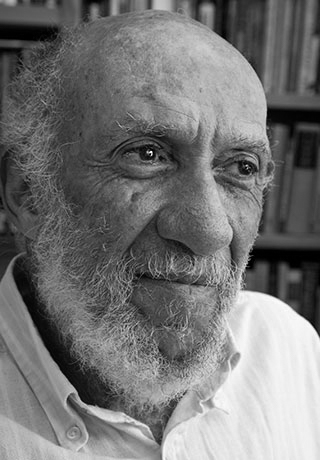

Professor Falk became an adviser to TFF when it was established in 1985.

Share

Leave a Reply

Your email address will not be published. Required fields are marked *

Related Posts

“En dag som berättigar till fest”, utropade den London-baserade al-Quds al-Arabi efter FN:s eldupphörresolution, “eftersom detta är första gången som Israel accepterar ett FN-beslut från en position som besegrad och inte som segrare”. Att ett arabisk-israeliskt krig för en gångs skull slutat med arabisk seger, är en helt dominerade åsikt i arabiska medier. Al-Quds al-Arabi tillåter sig att drömma om att det israeliska nederlaget skall leda till massflykt från Israel. Men i nästa andetag påminner tidningen om att Israel aldrig brukar genomföra sina internationella åtaganden och varnar för att förlorarna, liksom tidigare, kan hämnas genom att provocera fram inbördeskrig i Libanon. Med tanke på de otaliga massmediala vittnesmålen om det libanesiska folkets eniga motståndskraft förefaller risken för inre stridigheter i det sargade landet just nu liten. Men visst kan man urskilja nyansskillnader i libanesiska tidningar. Vänsterorganet al-Safir uppfattar FN-resolutionen som en komplott i syfte att rädda Israel från ännu större...
A friendly quarrel while we agree that the US sanctions are a weapon of mass destruction and kill more people than wars do. And that we must talk much more about sanctions than we have so far. Jan Oberg, TFF director March 16, 2026 John Mearsheimer recently stated that U.S. sanctions murdered around 38 million people between 1971 and 2021 – see the video below. It is a dramatic figure, and it has spread quickly because it captures, in one sentence, the enormous human cost of modern sanctions. I share his concern about the destructive effects of economic coercion. But the specific number he cites — and the way he attributes it — deserves a friendly academic clarification. The figure comes from a 2023 Lancet Global Health article estimating the mortality effects of unilateral U.S. and EU sanctions over the past half‑century. This is the first point where Mearsheimer’s shorthand diverges from the text: the study...
Jan Oberg May 15, 2026 Go to this Fox News page and scroll the whole way down: President Donald Trump tells the world that his meeting with President Xi Jinping yielded a lot of very concrete political and economic results – of course, only where the Chinese side, according to him, agreed with him. He does not mention the Taiwan issue, but Secretary of State, Marco Rubio, says that it did not feature prominently in their talks and that the US policy on Taiwan has not changed. Then go to China Daily – or Global Times – and you will see that for the Chinese it is framework, principles, structure of cooperation etc. that matters – all embedded in the overall idea of “constructive bilateral relationship of strategic stability.” Nowhere is any concrete agreement or deal – all that Trump refers to – mentioned. At the general level, this gives you insights into the very different social...

Recent Articles

“En dag som berättigar till fest”, utropade den London-baserade al-Quds al-Arabi efter FN:s eldupphörresolution, “eftersom detta är första gången som Israel accepterar ett FN-beslut från en position som besegrad och inte som segrare”. Att ett arabisk-israeliskt krig för en gångs skull slutat med arabisk seger, är en helt dominerade åsikt i arabiska medier. Al-Quds al-Arabi tillåter sig att drömma om att det israeliska nederlaget skall leda till massflykt från Israel. Men i nästa andetag påminner tidningen om att Israel aldrig brukar genomföra sina internationella åtaganden och varnar för att förlorarna, liksom tidigare, kan hämnas genom att provocera fram inbördeskrig i Libanon. Med tanke på de otaliga massmediala vittnesmålen om det libanesiska folkets eniga motståndskraft förefaller risken för inre stridigheter i det sargade landet just nu liten. Men visst kan man urskilja nyansskillnader i libanesiska tidningar. Vänsterorganet al-Safir uppfattar FN-resolutionen som en komplott i syfte att rädda Israel från ännu större...
Greenland – the world’s largest island, a continent of its own with only 57.000 inhabitants. I visited it for the first time in May 2005. I flew across the inland ice to Nuuk, the tiny capital with some 14.000 inhabitants. I was overwhelmed by the pride and kindness of everyone I met as well as by the unique natural beauty. Unfortunately, due to weather conditions during my ten-day stay I could get nowhere else but Nuuk. Fortunately, however, among those I met was Gitte Arvegaard, a Danish lawyer and negotiator employed by the local government, Greenland Home Rule. She turned out to be an enthusiastic photographer with a lot of pictures taken during various trips around Greenland. So this Greeland series is the result of our cooperative effort. We both hope you enjoy it and are stimulated to visit Greenland – about which you may read more here. Finally, if you want to...
 Jan Oberg’s storyof how he met Sir Paul Liverpool – where else to meet Paul McCartney? Paul’s old class mate and TFF Associate, Jonathan Power introduced me to Paul McCartney in Liverpool at an informal reception. It was held at what used to be their school, now the Liverpool Institute for Performing Arts and we were there to celebrate that Jonathan had written Amnesty International’s 40th Anniversary book. This happy event for “righting wrongs and writing songs” gave me an opportunity to meet Paul and tell him about TFF and get straight to the matter: would he consider making a donation in support of our work for peace? While I was probably the only one with such a wish that day, I was certainly not the only one who wanted to shake hands and talk with him. In the last minutes before Paul was to leave, Jonathan brought us together and we got about three...

TFF on Substack

Discover more from TFF Transnational Foundation & Jan Oberg.

Most Popular

“En dag som berättigar till fest”, utropade den London-baserade al-Quds al-Arabi efter FN:s eldupphörresolution, “eftersom detta är första gången som Israel accepterar ett FN-beslut från en position som besegrad och inte som segrare”. Att ett arabisk-israeliskt krig för en gångs skull slutat med arabisk seger, är en helt dominerade åsikt i arabiska medier. Al-Quds al-Arabi tillåter sig att drömma om att det israeliska nederlaget skall leda till massflykt från Israel. Men i nästa andetag påminner tidningen om att Israel aldrig brukar genomföra sina internationella åtaganden och varnar för att förlorarna, liksom tidigare, kan hämnas genom att provocera fram inbördeskrig i Libanon. Med tanke på de otaliga massmediala vittnesmålen om det libanesiska folkets eniga motståndskraft förefaller risken för inre stridigheter i det sargade landet just nu liten. Men visst kan man urskilja nyansskillnader i libanesiska tidningar. Vänsterorganet al-Safir uppfattar FN-resolutionen som en komplott i syfte att rädda Israel från ännu större...
Greenland – the world’s largest island, a continent of its own with only 57.000 inhabitants. I visited it for the first time in May 2005. I flew across the inland ice to Nuuk, the tiny capital with some 14.000 inhabitants. I was overwhelmed by the pride and kindness of everyone I met as well as by the unique natural beauty. Unfortunately, due to weather conditions during my ten-day stay I could get nowhere else but Nuuk. Fortunately, however, among those I met was Gitte Arvegaard, a Danish lawyer and negotiator employed by the local government, Greenland Home Rule. She turned out to be an enthusiastic photographer with a lot of pictures taken during various trips around Greenland. So this Greeland series is the result of our cooperative effort. We both hope you enjoy it and are stimulated to visit Greenland – about which you may read more here. Finally, if you want to...
 Jan Oberg’s storyof how he met Sir Paul Liverpool – where else to meet Paul McCartney? Paul’s old class mate and TFF Associate, Jonathan Power introduced me to Paul McCartney in Liverpool at an informal reception. It was held at what used to be their school, now the Liverpool Institute for Performing Arts and we were there to celebrate that Jonathan had written Amnesty International’s 40th Anniversary book. This happy event for “righting wrongs and writing songs” gave me an opportunity to meet Paul and tell him about TFF and get straight to the matter: would he consider making a donation in support of our work for peace? While I was probably the only one with such a wish that day, I was certainly not the only one who wanted to shake hands and talk with him. In the last minutes before Paul was to leave, Jonathan brought us together and we got about three...
Read More
Imagen-thumbnail-The-Transnational-1
“En dag som berättigar till fest”, utropade den London-baserade al-Quds al-Arabi efter FN:s eldupphörresolution, “eftersom detta är första gången som Israel accepterar ett FN-beslut från en position som besegrad och inte som segrare”. Att ett arabisk-israeliskt krig för en gångs skull slutat med arabisk seger, är en helt dominerade åsikt i arabiska medier. Al-Quds al-Arabi tillåter sig att drömma om att det israeliska nederlaget skall leda till massflykt från Israel. Men i nästa andetag påminner tidningen om att Israel aldrig brukar genomföra sina internationella åtaganden och varnar för att förlorarna, liksom tidigare, kan hämnas genom att provocera fram inbördeskrig i Libanon. Med tanke på de otaliga massmediala vittnesmålen om det libanesiska folkets eniga motståndskraft förefaller risken för inre stridigheter i det sargade landet just nu liten. Men visst kan man urskilja nyansskillnader i libanesiska tidningar. Vänsterorganet al-Safir uppfattar FN-resolutionen som en komplott i syfte att rädda Israel från ännu större...
Greenland – the world’s largest island, a continent of its own with only 57.000 inhabitants. I visited it for the first time in May 2005. I flew across the inland ice to Nuuk, the tiny capital with some 14.000 inhabitants. I was overwhelmed by the pride and kindness of everyone I met as well as by the unique natural beauty. Unfortunately, due to weather conditions during my ten-day stay I could get nowhere else but Nuuk. Fortunately, however, among those I met was Gitte Arvegaard, a Danish lawyer and negotiator employed by the local government, Greenland Home Rule. She turned out to be an enthusiastic photographer with a lot of pictures taken during various trips around Greenland. So this Greeland series is the result of our cooperative effort. We both hope you enjoy it and are stimulated to visit Greenland – about which you may read more here. Finally, if you want to...
p_mccartney_poem
 Jan Oberg’s storyof how he met Sir Paul Liverpool – where else to meet Paul McCartney? Paul’s old class mate and TFF Associate, Jonathan Power introduced me to Paul McCartney in Liverpool at an informal reception. It was held at what used to be their school, now the Liverpool Institute for Performing Arts and we were there to celebrate that Jonathan had written Amnesty International’s 40th Anniversary book. This happy event for “righting wrongs and writing songs” gave me an opportunity to meet Paul and tell him about TFF and get straight to the matter: would he consider making a donation in support of our work for peace? While I was probably the only one with such a wish that day, I was certainly not the only one who wanted to shake hands and talk with him. In the last minutes before Paul was to leave, Jonathan brought us together and we got about three...
Logo-Transnational
1942James Paul McCartney is born in Liverpool on June 18th. 1956Paul writes his first song, I Lost My Little Girl. 1957Paul meets John Lennon at St. Peter’s Church Fete, Woolton, Liverpool. He joins his first group, The Quarrymen and performs in his first gig at The New Clubmoor Hall, Liverpool, on October 18th. 1960Formation of The Beatles, who play residencies in Hamburg and at The Cavern in Liverpool. 1961First Beatles recordings issued in Germany, as the backing group for Tony Sheridan. 1962The first Beatles Parlophone recording, Love Me Do, reaches number 17 in the British charts. 1963The birth of Beatlemania. Please Please Me gives the group their first British Number 1. She Loves You cements their success. Please Please Me and With The Beatles albums released. 1964First triumphant American tour. The Beatles perform at the Royal Command Performance and release their first film, A Hard Day’s Night. Their single I...
Logo-Transnational
  Back to the series “Bujumbura, Burundi”
By JONATHAN POWER August 16, 2000 LONDON – Remember the summer of ’98? In the sweltering, torpid heat of a Roman august, charged with exhaust fumes, the international community gave its overwhelming approval to the establishment of an International Criminal Court that will enable those accused of “crimes against humanity” to be tried and, if convicted, sentenced. Only seven nations opposed or abstained from the motion, including Israel, China, India and the U.S.A. where the Pentagon had successfully waged bureaucratic guerrilla war to undermine the initially sympathetic stance of President Bill Clinton. Two years on we can now see what an epochal event that was. In a the stroke of 120 pens it changed the climate on political thuggery. After numerous half-starts and false starts ever since the Nuremberg and Tokyo trials that convicted the war criminals of the Second World War, the world at last had agreed en masse a common...

