
We shouldn’t have to beg Mark Zuckerberg to respect democracy

By Dean Baker

Last month George Soros had a New York Times column arguing that Mark Zuckerberg should not be running Facebook. (Does the NYT reserve space on its opinion page for billionaires?) The gist of Soros’ piece is that Zuckerberg has made a deal with Trump. He will allow all manner of outrageous lies to be spread on Facebook to benefit Trump’s re-election campaign. In exchange, Trump will defend Zuckerberg from efforts to regulate Facebook.

Originally posted in Counterpunch.org on February 18, 2020, here

Soros is of course right. Zuckerberg has said that Facebook will not attempt to verify the accuracy of the political ads that it runs. This is a green light for any sleazebag to push the most outrageous claims that they want in order to further the election of their favoured candidate.

This will almost certainly benefit Donald Trump’s re-election since the one area where he can legitimately take credit is in pushing outlandish lies. No one has pushed more lies more effectively than Donald Trump. The free rein promised by Zuckerberg is a re-election campaign contribution of enormous value.

While Soros is right on the substance of the issue, he is wrong to focus on the personality of Mark Zuckerberg. It would be good if we had a responsible forward-thinking person, who cared about the future of democracy, running Facebook, but that is not the normal course of things in a capitalist economy.

Businesses are run to make money. And, the bottom line here is that Facebook stands to make much more money spreading outlandish lies that help Trump’s campaign, than screening ads for their veracity.

In this context, we should not be surprised that Facebook is taking the lie-spreading route. The problem is not that Zuckerberg is acting like a normal businessperson, the problem is that we made the lie-spreading route profitable.

In this respect, it is worth pointing out that we don’t have the same problem with other media outlets. We don’t have to beg CNN, the New York Times, and other major news outlets to not take ads that they know to be false. They won’t do it, perhaps in part out of principle, but also because they could be sued for libel if they spread claims that were false and damaging.

For example, if I wanted to take out an ad asserting that Donald Trump is a rapist (which is likely true), most major news outlets would refuse to run it. Donald Trump could not only sue me for libel, he could also sue any news outlet that carried the ad. If I could not show that the claim was true, the news outlet that published the ad could be forced to pay substantial damages. For this reason, traditional news outlets do try to screen political ads for accuracy, and will not run an ad that they know to be false.

Facebook does not feel the same need to protect against libel because a law passed by Congress exempts it from the same sort of liability faced by traditional media outlets. Section 230 of the 1996 Communications Decency Act, protects Internet intermediaries from the liability rules that apply to traditional media outlets.

The logic that was used to justify this provision is that Internet intermediaries should be treated the same way as common carriers, like a phone company or the mail service. A common carrier does not have control over the content it carries, nor does it profit from specific content, except insofar as it increases demand for its service.

This was arguably an accurate description of Internet intermediaries in the early years of the web. For example, we would not have expected AOL to be responsible for whatever people chose to post in its chatrooms. But the web in general, and Facebook in particular, have evolved hugely in the years since Section 230 was put into law.

Facebook has complete control over the content. It allows people to pay to have their posts sent to as many people as they choose. It allows them to target the recipients, based on location, age, education, gender, and any number of other characteristics.

It is very hard to see how an outlet like CNN or the NYT can be held responsible for spreading libellous material, but Facebook should be exempt.

Whether or not Section 230 made sense in 1996, it clearly does not in era of Facebook. In effect, it gives Facebook, and other Internet outlets, a special privilege that is not available to their broadcast or print competitors.

Of course, Zuckerberg will claim that it is not possible for Facebook to monitor the hundreds of millions of items that get posted every day. But the standard need not be that Facebook prevents libellous material from being posted. Rather, Facebook can be required to remove libellous material after it has been called to its attention. Furthermore, since Facebook’s system allows it to know exactly who has opened a post, it can be required to send a correction to anyone who originally received the libellous material.

Zuckerberg has also argued that they cannot be responsible for preventing false material from being spread through Facebook because they shouldn’t be in the position of determining what is true. Determining truth may seem hard for Zuckerberg, but this is precisely what every traditional media outlet does all the time, both when deciding on editorial content and when making decisions about accepting ads.

If Zuckerberg’s team is that much less competent than those at traditional media outlets they can look to hire competent people away from these other outlets.

There really is nothing terribly complicated about Facebook’s situation, nor any grand questions of freedom of speech and freedom of the press that don’t come up all the time with traditional media. The basic story is that Facebook is now gaming a provision of a quarter-century-old law to pretend it is a common carrier when that is clearly not the case.

If Facebook wants to be treated like a common carrier, then it should become one. That would mean not profiting from ads and boosted posts. It would also mean not selling personal information from its users. If it wants to be a common carrier then it can simply allow people to post as they please and not try to profit from the content or personal information.

However, this is obviously not Facebook in its current form. Facebook is no more a common carrier than any major media outlet. As such it has to be subject to the same rules as other media outlets. That will require much more spending to police its network for false and libellous information, which will mean that Facebook will be much less profitable and Mark Zuckerberg will be much less rich.

But that is Mr Zuckerberg’s problem. We should not be in the position of begging Zuckerberg to do the right thing as the CEO of Facebook or hoping that a more socially responsible person takes over the company.

The law must be adjusted to take away Facebook’s special status. It is a media outlet and it is long past time that it be treated like one.

If you enjoyed this article…

[paypal-donation]
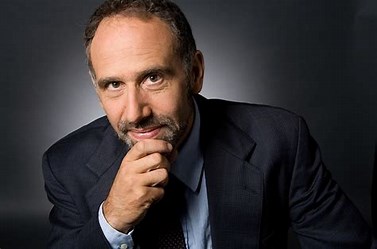
Dean Baker is senior economist at the Center for Economic and Policy Research in Washington, DC. He is frequently cited in economics reporting in major media outlets, including the New York Times, Washington Post, CNN, CNBC, and National Public Radio. He writes a weekly column for the Guardian Unlimited (UK), the Huffington Post, TruthOut, and his blog, Beat the Press, features commentary on economic reporting. His analyses have appeared in many major publications, including the Atlantic Monthly, the Washington Post, the London Financial Times, and the New York Daily News. He received his Ph.D in economics from the University of Michigan.

Recommended reading

Mark Zuckerberg apologized. Now he has to fix Facebook for real

Mark Zuckerberg takes on his Facebook Frankenstein Monster

Stephen Gottlieb: Zuckerberg, Facebook and the responsibility of publishers

Share

Leave a Reply

Your email address will not be published. Required fields are marked *

Related Posts

  Back to the series “Bujumbura, Burundi”
A friendly quarrel while we agree that the US sanctions are a weapon of mass destruction and kill more people than wars do. And that we must talk much more about sanctions than we have so far. Jan Oberg, TFF director March 16, 2026 John Mearsheimer recently stated that U.S. sanctions murdered around 38 million people between 1971 and 2021 – see the video below. It is a dramatic figure, and it has spread quickly because it captures, in one sentence, the enormous human cost of modern sanctions. I share his concern about the destructive effects of economic coercion. But the specific number he cites — and the way he attributes it — deserves a friendly academic clarification. The figure comes from a 2023 Lancet Global Health article estimating the mortality effects of unilateral U.S. and EU sanctions over the past half‑century. This is the first point where Mearsheimer’s shorthand diverges from the text: the study...
Lena Petrova of “World Affairs In Context” with more than half a million subscribers on YouTube wanted to explore what a peace researcher like me has to say about, among other things, the First and the Second Cold War and why eethics has disappeared from politics. I am particularly happy about this conversation that also yielded an amazing number of very appreciative comments on YouTube. No doubt, people are longing for alternatives, including peace perspectives.

Recent Articles

“En dag som berättigar till fest”, utropade den London-baserade al-Quds al-Arabi efter FN:s eldupphörresolution, “eftersom detta är första gången som Israel accepterar ett FN-beslut från en position som besegrad och inte som segrare”. Att ett arabisk-israeliskt krig för en gångs skull slutat med arabisk seger, är en helt dominerade åsikt i arabiska medier. Al-Quds al-Arabi tillåter sig att drömma om att det israeliska nederlaget skall leda till massflykt från Israel. Men i nästa andetag påminner tidningen om att Israel aldrig brukar genomföra sina internationella åtaganden och varnar för att förlorarna, liksom tidigare, kan hämnas genom att provocera fram inbördeskrig i Libanon. Med tanke på de otaliga massmediala vittnesmålen om det libanesiska folkets eniga motståndskraft förefaller risken för inre stridigheter i det sargade landet just nu liten. Men visst kan man urskilja nyansskillnader i libanesiska tidningar. Vänsterorganet al-Safir uppfattar FN-resolutionen som en komplott i syfte att rädda Israel från ännu större...
Greenland – the world’s largest island, a continent of its own with only 57.000 inhabitants. I visited it for the first time in May 2005. I flew across the inland ice to Nuuk, the tiny capital with some 14.000 inhabitants. I was overwhelmed by the pride and kindness of everyone I met as well as by the unique natural beauty. Unfortunately, due to weather conditions during my ten-day stay I could get nowhere else but Nuuk. Fortunately, however, among those I met was Gitte Arvegaard, a Danish lawyer and negotiator employed by the local government, Greenland Home Rule. She turned out to be an enthusiastic photographer with a lot of pictures taken during various trips around Greenland. So this Greeland series is the result of our cooperative effort. We both hope you enjoy it and are stimulated to visit Greenland – about which you may read more here. Finally, if you want to...
 Jan Oberg’s storyof how he met Sir Paul Liverpool – where else to meet Paul McCartney? Paul’s old class mate and TFF Associate, Jonathan Power introduced me to Paul McCartney in Liverpool at an informal reception. It was held at what used to be their school, now the Liverpool Institute for Performing Arts and we were there to celebrate that Jonathan had written Amnesty International’s 40th Anniversary book. This happy event for “righting wrongs and writing songs” gave me an opportunity to meet Paul and tell him about TFF and get straight to the matter: would he consider making a donation in support of our work for peace? While I was probably the only one with such a wish that day, I was certainly not the only one who wanted to shake hands and talk with him. In the last minutes before Paul was to leave, Jonathan brought us together and we got about three...

TFF on Substack

Discover more from TFF Transnational Foundation & Jan Oberg.

Most Popular

“En dag som berättigar till fest”, utropade den London-baserade al-Quds al-Arabi efter FN:s eldupphörresolution, “eftersom detta är första gången som Israel accepterar ett FN-beslut från en position som besegrad och inte som segrare”. Att ett arabisk-israeliskt krig för en gångs skull slutat med arabisk seger, är en helt dominerade åsikt i arabiska medier. Al-Quds al-Arabi tillåter sig att drömma om att det israeliska nederlaget skall leda till massflykt från Israel. Men i nästa andetag påminner tidningen om att Israel aldrig brukar genomföra sina internationella åtaganden och varnar för att förlorarna, liksom tidigare, kan hämnas genom att provocera fram inbördeskrig i Libanon. Med tanke på de otaliga massmediala vittnesmålen om det libanesiska folkets eniga motståndskraft förefaller risken för inre stridigheter i det sargade landet just nu liten. Men visst kan man urskilja nyansskillnader i libanesiska tidningar. Vänsterorganet al-Safir uppfattar FN-resolutionen som en komplott i syfte att rädda Israel från ännu större...
Greenland – the world’s largest island, a continent of its own with only 57.000 inhabitants. I visited it for the first time in May 2005. I flew across the inland ice to Nuuk, the tiny capital with some 14.000 inhabitants. I was overwhelmed by the pride and kindness of everyone I met as well as by the unique natural beauty. Unfortunately, due to weather conditions during my ten-day stay I could get nowhere else but Nuuk. Fortunately, however, among those I met was Gitte Arvegaard, a Danish lawyer and negotiator employed by the local government, Greenland Home Rule. She turned out to be an enthusiastic photographer with a lot of pictures taken during various trips around Greenland. So this Greeland series is the result of our cooperative effort. We both hope you enjoy it and are stimulated to visit Greenland – about which you may read more here. Finally, if you want to...
 Jan Oberg’s storyof how he met Sir Paul Liverpool – where else to meet Paul McCartney? Paul’s old class mate and TFF Associate, Jonathan Power introduced me to Paul McCartney in Liverpool at an informal reception. It was held at what used to be their school, now the Liverpool Institute for Performing Arts and we were there to celebrate that Jonathan had written Amnesty International’s 40th Anniversary book. This happy event for “righting wrongs and writing songs” gave me an opportunity to meet Paul and tell him about TFF and get straight to the matter: would he consider making a donation in support of our work for peace? While I was probably the only one with such a wish that day, I was certainly not the only one who wanted to shake hands and talk with him. In the last minutes before Paul was to leave, Jonathan brought us together and we got about three...
Read More
Imagen-thumbnail-The-Transnational-1
“En dag som berättigar till fest”, utropade den London-baserade al-Quds al-Arabi efter FN:s eldupphörresolution, “eftersom detta är första gången som Israel accepterar ett FN-beslut från en position som besegrad och inte som segrare”. Att ett arabisk-israeliskt krig för en gångs skull slutat med arabisk seger, är en helt dominerade åsikt i arabiska medier. Al-Quds al-Arabi tillåter sig att drömma om att det israeliska nederlaget skall leda till massflykt från Israel. Men i nästa andetag påminner tidningen om att Israel aldrig brukar genomföra sina internationella åtaganden och varnar för att förlorarna, liksom tidigare, kan hämnas genom att provocera fram inbördeskrig i Libanon. Med tanke på de otaliga massmediala vittnesmålen om det libanesiska folkets eniga motståndskraft förefaller risken för inre stridigheter i det sargade landet just nu liten. Men visst kan man urskilja nyansskillnader i libanesiska tidningar. Vänsterorganet al-Safir uppfattar FN-resolutionen som en komplott i syfte att rädda Israel från ännu större...
Greenland – the world’s largest island, a continent of its own with only 57.000 inhabitants. I visited it for the first time in May 2005. I flew across the inland ice to Nuuk, the tiny capital with some 14.000 inhabitants. I was overwhelmed by the pride and kindness of everyone I met as well as by the unique natural beauty. Unfortunately, due to weather conditions during my ten-day stay I could get nowhere else but Nuuk. Fortunately, however, among those I met was Gitte Arvegaard, a Danish lawyer and negotiator employed by the local government, Greenland Home Rule. She turned out to be an enthusiastic photographer with a lot of pictures taken during various trips around Greenland. So this Greeland series is the result of our cooperative effort. We both hope you enjoy it and are stimulated to visit Greenland – about which you may read more here. Finally, if you want to...
p_mccartney_poem
 Jan Oberg’s storyof how he met Sir Paul Liverpool – where else to meet Paul McCartney? Paul’s old class mate and TFF Associate, Jonathan Power introduced me to Paul McCartney in Liverpool at an informal reception. It was held at what used to be their school, now the Liverpool Institute for Performing Arts and we were there to celebrate that Jonathan had written Amnesty International’s 40th Anniversary book. This happy event for “righting wrongs and writing songs” gave me an opportunity to meet Paul and tell him about TFF and get straight to the matter: would he consider making a donation in support of our work for peace? While I was probably the only one with such a wish that day, I was certainly not the only one who wanted to shake hands and talk with him. In the last minutes before Paul was to leave, Jonathan brought us together and we got about three...
Logo-Transnational
1942James Paul McCartney is born in Liverpool on June 18th. 1956Paul writes his first song, I Lost My Little Girl. 1957Paul meets John Lennon at St. Peter’s Church Fete, Woolton, Liverpool. He joins his first group, The Quarrymen and performs in his first gig at The New Clubmoor Hall, Liverpool, on October 18th. 1960Formation of The Beatles, who play residencies in Hamburg and at The Cavern in Liverpool. 1961First Beatles recordings issued in Germany, as the backing group for Tony Sheridan. 1962The first Beatles Parlophone recording, Love Me Do, reaches number 17 in the British charts. 1963The birth of Beatlemania. Please Please Me gives the group their first British Number 1. She Loves You cements their success. Please Please Me and With The Beatles albums released. 1964First triumphant American tour. The Beatles perform at the Royal Command Performance and release their first film, A Hard Day’s Night. Their single I...
Logo-Transnational
  Back to the series “Bujumbura, Burundi”
By JONATHAN POWER August 16, 2000 LONDON – Remember the summer of ’98? In the sweltering, torpid heat of a Roman august, charged with exhaust fumes, the international community gave its overwhelming approval to the establishment of an International Criminal Court that will enable those accused of “crimes against humanity” to be tried and, if convicted, sentenced. Only seven nations opposed or abstained from the motion, including Israel, China, India and the U.S.A. where the Pentagon had successfully waged bureaucratic guerrilla war to undermine the initially sympathetic stance of President Bill Clinton. Two years on we can now see what an epochal event that was. In a the stroke of 120 pens it changed the climate on political thuggery. After numerous half-starts and false starts ever since the Nuremberg and Tokyo trials that convicted the war criminals of the Second World War, the world at last had agreed en masse a common...

