
War on Gaza: Western powers never believed in a rules-based order

Students of world politics have long understood that when it comes to the strategic interests of leading states, international law is marginalised unless it is useful in waging a propaganda war against adversaries. 

Indeed, the United Nations was designed in ways that recognised this feature of international political life. Otherwise, giving the winners of World War II a right of veto would make no sense. 

Such an exemption from international law was also evident at the war crimes trials held in Nuremberg and Tokyo after World War II, at which only the crimes of the losers were scrutinised for legal accountability, and obvious crimes of the victors – such as the indiscriminate bombing of Dresden and the atomic bomb attacks on Hiroshima and Nagasaki – were not prosecuted. 

To this day, for understandable reasons, many in Japan believe the use of weapons of mass destruction against the civilian population of these two cities constituted genocide.

At the same time, the victorious democracies after 1945 seemed genuinely committed to building a world order that was stable, protective of human rights, and respectful of the sovereign rights of weaker states. Of course, the Cold War interfered with such idealistic plans, paralysed the UN in peace and security settings, and downplayed adherence to international law to a significant degree.

This article is re-posted from The Middle East Eye, April 12, 2024

With the end of the Cold War, epitomised by the fall of the Berlin Wall and the implosion of the Soviet Union, it seemed that the values of liberal democracy – including respect for international law and global procedures – would be promoted and responsibly fill the geopolitical vacuum caused by the disappearance of the Soviet Union, which left the United States as the sole surviving superpower. 

But this was not to be. The US invested heavily in the post-Cold War world order, but it did so mainly by relying on its military and economic power, aiming to shape a future built around markets, alliances and militarism. It overlooked opportunities to strengthen the UN and achieve nuclear disarmament, and ways to combine geopolitical status with a sustainable, law-grounded conception of international politics. 

These lost opportunities to enhance the world order by merging strategic interests with a law-oriented foreign policy were never seriously considered by Washington think tanks or foreign policy elites, as domestic militarism was too deeply rooted in the economy, political culture and security consensus of the militarised bureaucracy. 

The aftermath of the Cold War led to an era of geopolitical unilateralism, including giving tangible support to special allies, such as Israel, Taiwan and Ukraine, no matter how deeply they challenged international law and evaded peaceful settlement procedures.

The rise of autocratic China, combining domestic violations of human rights and rapid ascendancy to superpower status, posed a challenge to the preferred centralism of the US-led Nato and market-driven vision of the future. 

In 2021, with the advent of the Biden-Blinken leadership in foreign policy, China was sternly lectured to conform to “a rules-based international order”, which Beijing was accused of violating in its treatment of Tibetans and the Uyghur minority, its encouragement of repressive policies in Hong Kong, and its menacing threat to Taiwanese independence. 

It seemed strange that these “rules” were never connected by Secretary of State Antony Blinken with international law or UN authority. This call for governance by rules seemed more a reassertion of US geopolitical primacy, without constraining Washington’s foreign policy behaviour. 

Then came the February 2022 Russian attack on Ukraine, which was definitively a violation of the legal prohibition of aggression, one of the few legal principles of world order that has been generally adhered to by geopolitical actors since 1945, and is supported by most states, as the UN General Assembly has confirmed by overwhelmingly condemning Russian aggression. 

Washington, as the self-proclaimed leader of an alliance of democratic states, seemed to offer the world at least generalised respect for the most fundamental rules of international law, despite its own blurring of such legal red lines through the wars in Kosovo (1999) and Iraq (2003). But their somewhat plausible legal pretexts muted opposition from governments, the UN and public opinion, although in the case of Iraq millions protested against the US-led invasion. 

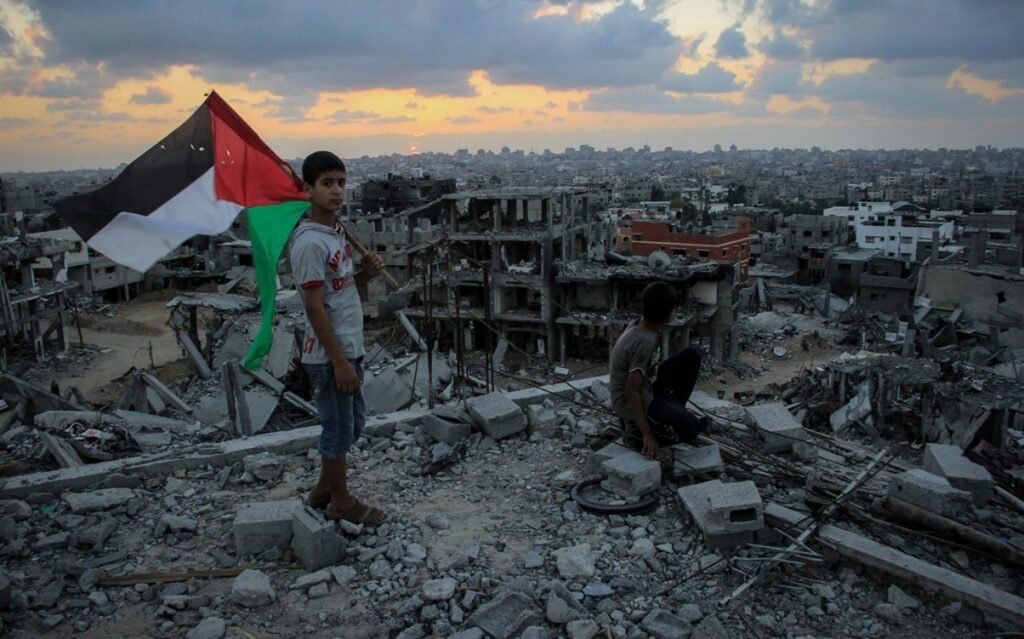
That global public response 20 years ago has only been surpassed by reactions to Israel’s long record of abuse against the Palestinian people, brought to a genocidal climax during these past six months of violence in Gaza.

Of all the red lines, none was more widely acknowledged than “genocide”, despite it being often difficult to establish legally in the midst of ethnic conflicts or wartime combat. Genocide is clearly proscribed in international law and by diplomatic pressures, which have mounted as the Israeli onslaught has persisted, public outrage has intensified, and the complicity of the West has continued unabated. 

The pre-Gaza normative authority of the label of genocide was so great that former US President Bill Clinton in 1994 prohibited the use of the word in official discourse, fearing that terming the slaughter in Rwanda a “genocide” would create irresistible pressures on the US to act to stop the mass killing. 

Serbia’s mid-1990s policies of ethnic cleansing in the Bosnian War were challenged in the International Court of Justice (ICJ) as genocide, but the problems of establishing intent proved too great. Most recently, Myanmar’s repression of Rohingya Muslims was widely considered to be genocide, leading to a challenge by Gambia at the ICJ, with the case still pending. 

For years, Israel successfully invoked the Holocaust to obscure Israel’s own atrocity-laden process of coercive tactics seeking the maximum dispossession and expulsion of the indigenous majority of Palestinians in the process of establishing Israel in 1948 and occupying East Jerusalem, the West Bank and Gaza since the 1967 war. 

It deflected the hostile global chorus opposing its occupation policies as expressions of “antisemitism”, and even now meets criticism of its practices with the specious argument that it could not be guilty of genocide, as it was itself the victim of the largest genocide of all time – a contention recalling WH Auden’s famous line in a poem, “those to whom evil is done do evil in return”.

How, then, can we understand this willingness of former western colonial powers to keep providing various levels of support to Israel while it carries out, in real time, the most transparent genocide in all of human history? 

This killing process has shockingly been justified by the dehumanising language employed by Israel’s top leaders, including Prime Minister Benjamin Netanyahu and Defence Minister Yoav Gallant. For six months, the indiscriminate and disproportionate violence has devastated the 2.3 million Palestinian civilians living in Gaza, destroying their already impoverished habitat. Genocide serves as a coercive instrument to induce mass forced expulsion, enacting the settler ethos of “leave or die”.

The Netanyahu coalition government that took office in Israel in January 2023 was regarded, even in the West, as the most “extremist” leadership in all of Israel’s history. 

What made it extreme – aside from cabinet positions for leaders of the Jewish Power party (Itamar Ben Gvir) and Religious Zionism (Bezalel Smotrich) – was the immediate green-lighting of settler violence in the occupied West Bank, the erasure of any Palestinian political entity on a map of “the new Middle East” unfurled by Netanyahu at the UN, and above all, a thinly disguised resolve to complete the Zionist project by incorporating the West Bank and possibly Gaza into “Greater Israel”. 

Several months after this government took office came the 7 October Hamas attack. The Israeli onslaught followed, culminating in authoritative international pronouncements suggesting that Israel was guilty of genocide. The ICJ in January ruled that it was “plausible” Israel had committed acts of genocide in Gaza, with the court voting 15-2 to order the state to take all possible measures to stop such acts.

More conclusively, in March, a meticulous report from the UN special rapporteur on the occupied Palestinian territories found “reasonable grounds to believe that the threshold indicating Israel’s commission of genocide is met”. 

Although Israel’s leaders from the outset made no effort to hide their genocidal intentions, and the imagery of nightly TV and social media made this genocide palpable to the eyes and ears of the world, it strangely did not move the world’s liberal democracies to adjust their policies. 

Above all, the US held fast. It vetoed a series of ceasefire resolutions at the UN Security Council, called the ICJ genocide case “meritless”, and dismissed the analytically impressive genocide report of the distinguished UN special rapporteur, Francesca Albanese, as the work of an antisemite, all while pushing for congressional approval of increased military aid (bombs and munitions) to Israel, alongside continued unflagging diplomatic support in international venues. 

The US government finally toned down this unconditional posture only after it became clear that it was hurting President Joe Biden’s 2024 re-election prospects, and after the furious backlash that followed the attack this month on a World Central Kitchen convoy, which killed seven aid workers (six of whom were westerners) tasked with bringing food to starving Palestinians.

This caused a media uproar in the West so great that it prompted Netanyahu to make a rare apology. This tragic incident also validated the suspicion that the killing of innocent Europeans has much greater political resonance in the West than the killing of thousands of innocent Palestinians, including hospitalised patients and staff.

When it comes to Israel, the US has long been a choiceless democracy in which two political parties compete by boasting of their superior pro-Israel credentials

How do we explain this shameful complicity with Israel, and this total rejection of international law, in the face of such a transparent and cruel genocide? If the US is prepared to exonerate Israel from genocide, the crime of crimes, in this blatant manner, it sends a message to the world that even under the most horrifying circumstances, geopolitical affinities take precedence over law and morality – even for liberal democracies. 

There are other factors that have contributed to this dark turn in global policy, including the dehumanisation of the Palestinian people for decades by assuming the whole population of Gaza is tainted by Hamas; the Orientalist view that Palestinians and all Arab Muslims are somehow sub-human; crude pressures brought in the US by the Israel lobby; and a lingering guilty conscience in Europe, especially Germany.

Perhaps most profoundly, yet least visibly, we are witnessing a wider clash of “civilisations”, with the former European colonial powers and their settler-colonial derivatives on one side (with the exception of Spain), and on the other, Islamic societies and movements, in addition to many former colonial states – along the lines of Samuel Huntington’s 1990s prophesy of “the West against the rest”.

When it comes to Israel, the US has long been a choiceless democracy in which two political parties compete by boasting of their superior pro-Israel credentials. This will end only when at least one of the parties embraces responsible statecraft, based on respect for international law and the authority of the UN. 

In the meantime, dark clouds will hover over the planet in a menacing fashion, and the cruel victimisation of the Palestinian people will persist until new horizons of hope become visible.
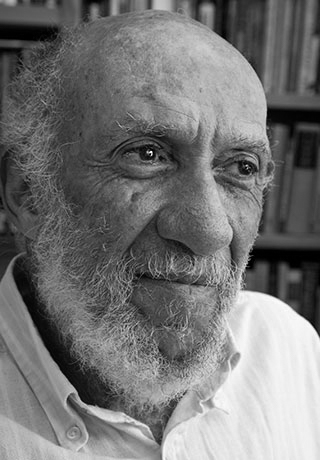



Professor Falk became an adviser to TFF when it was established in 1985.

Share

Leave a Reply

Your email address will not be published. Required fields are marked *

Related Posts

Jan Oberg May 15, 2026 Go to this Fox News page and scroll the whole way down: President Donald Trump tells the world that his meeting with President Xi Jinping yielded a lot of very concrete political and economic results – of course, only where the Chinese side, according to him, agreed with him. He does not mention the Taiwan issue, but Secretary of State, Marco Rubio, says that it did not feature prominently in their talks and that the US policy on Taiwan has not changed. Then go to China Daily – or Global Times – and you will see that for the Chinese it is framework, principles, structure of cooperation etc. that matters – all embedded in the overall idea of “constructive bilateral relationship of strategic stability.” Nowhere is any concrete agreement or deal – all that Trump refers to – mentioned. At the general level, this gives you insights into the very different social...
The MIMAC – Military-Industrial-Media-Academic Complex – drives the world’s rampant militarism and wars without end. Here is a short reflection of how it works against all interests of humanity. #5 deals with why there is no real enemy or threat images/analysis. It’s all ex-post constructions. And, btw, theTFF Peace Pulse is now on Rumble.
Jan Oberg, TFF director April 28, 2026 In this third TFF Peace Pulse, I make the important distinction between the violence and the conflict that violence is a symptom of. If you want peace, focus on the underlying conflict because that is the key to resolution, peacemaking, and a better future for the parties. The West is obsessed with violence, just look around you – and 90+ per cent of the public debate is about military issues and other violence – totally wasted for peace. These Peace Pulses will only be published here a few times. You will also not find them on YouTube and Vimeo because both platforms have blocked TFF and me; you know, peace is dangerous these days. Most TFF’s videos since 2007 are now on Rumble.

Recent Articles

“En dag som berättigar till fest”, utropade den London-baserade al-Quds al-Arabi efter FN:s eldupphörresolution, “eftersom detta är första gången som Israel accepterar ett FN-beslut från en position som besegrad och inte som segrare”. Att ett arabisk-israeliskt krig för en gångs skull slutat med arabisk seger, är en helt dominerade åsikt i arabiska medier. Al-Quds al-Arabi tillåter sig att drömma om att det israeliska nederlaget skall leda till massflykt från Israel. Men i nästa andetag påminner tidningen om att Israel aldrig brukar genomföra sina internationella åtaganden och varnar för att förlorarna, liksom tidigare, kan hämnas genom att provocera fram inbördeskrig i Libanon. Med tanke på de otaliga massmediala vittnesmålen om det libanesiska folkets eniga motståndskraft förefaller risken för inre stridigheter i det sargade landet just nu liten. Men visst kan man urskilja nyansskillnader i libanesiska tidningar. Vänsterorganet al-Safir uppfattar FN-resolutionen som en komplott i syfte att rädda Israel från ännu större...
Greenland – the world’s largest island, a continent of its own with only 57.000 inhabitants. I visited it for the first time in May 2005. I flew across the inland ice to Nuuk, the tiny capital with some 14.000 inhabitants. I was overwhelmed by the pride and kindness of everyone I met as well as by the unique natural beauty. Unfortunately, due to weather conditions during my ten-day stay I could get nowhere else but Nuuk. Fortunately, however, among those I met was Gitte Arvegaard, a Danish lawyer and negotiator employed by the local government, Greenland Home Rule. She turned out to be an enthusiastic photographer with a lot of pictures taken during various trips around Greenland. So this Greeland series is the result of our cooperative effort. We both hope you enjoy it and are stimulated to visit Greenland – about which you may read more here. Finally, if you want to...
 Jan Oberg’s storyof how he met Sir Paul Liverpool – where else to meet Paul McCartney? Paul’s old class mate and TFF Associate, Jonathan Power introduced me to Paul McCartney in Liverpool at an informal reception. It was held at what used to be their school, now the Liverpool Institute for Performing Arts and we were there to celebrate that Jonathan had written Amnesty International’s 40th Anniversary book. This happy event for “righting wrongs and writing songs” gave me an opportunity to meet Paul and tell him about TFF and get straight to the matter: would he consider making a donation in support of our work for peace? While I was probably the only one with such a wish that day, I was certainly not the only one who wanted to shake hands and talk with him. In the last minutes before Paul was to leave, Jonathan brought us together and we got about three...

TFF on Substack

Discover more from TFF Transnational Foundation & Jan Oberg.

Most Popular

“En dag som berättigar till fest”, utropade den London-baserade al-Quds al-Arabi efter FN:s eldupphörresolution, “eftersom detta är första gången som Israel accepterar ett FN-beslut från en position som besegrad och inte som segrare”. Att ett arabisk-israeliskt krig för en gångs skull slutat med arabisk seger, är en helt dominerade åsikt i arabiska medier. Al-Quds al-Arabi tillåter sig att drömma om att det israeliska nederlaget skall leda till massflykt från Israel. Men i nästa andetag påminner tidningen om att Israel aldrig brukar genomföra sina internationella åtaganden och varnar för att förlorarna, liksom tidigare, kan hämnas genom att provocera fram inbördeskrig i Libanon. Med tanke på de otaliga massmediala vittnesmålen om det libanesiska folkets eniga motståndskraft förefaller risken för inre stridigheter i det sargade landet just nu liten. Men visst kan man urskilja nyansskillnader i libanesiska tidningar. Vänsterorganet al-Safir uppfattar FN-resolutionen som en komplott i syfte att rädda Israel från ännu större...
Greenland – the world’s largest island, a continent of its own with only 57.000 inhabitants. I visited it for the first time in May 2005. I flew across the inland ice to Nuuk, the tiny capital with some 14.000 inhabitants. I was overwhelmed by the pride and kindness of everyone I met as well as by the unique natural beauty. Unfortunately, due to weather conditions during my ten-day stay I could get nowhere else but Nuuk. Fortunately, however, among those I met was Gitte Arvegaard, a Danish lawyer and negotiator employed by the local government, Greenland Home Rule. She turned out to be an enthusiastic photographer with a lot of pictures taken during various trips around Greenland. So this Greeland series is the result of our cooperative effort. We both hope you enjoy it and are stimulated to visit Greenland – about which you may read more here. Finally, if you want to...
 Jan Oberg’s storyof how he met Sir Paul Liverpool – where else to meet Paul McCartney? Paul’s old class mate and TFF Associate, Jonathan Power introduced me to Paul McCartney in Liverpool at an informal reception. It was held at what used to be their school, now the Liverpool Institute for Performing Arts and we were there to celebrate that Jonathan had written Amnesty International’s 40th Anniversary book. This happy event for “righting wrongs and writing songs” gave me an opportunity to meet Paul and tell him about TFF and get straight to the matter: would he consider making a donation in support of our work for peace? While I was probably the only one with such a wish that day, I was certainly not the only one who wanted to shake hands and talk with him. In the last minutes before Paul was to leave, Jonathan brought us together and we got about three...
Read More
Imagen-thumbnail-The-Transnational-1
“En dag som berättigar till fest”, utropade den London-baserade al-Quds al-Arabi efter FN:s eldupphörresolution, “eftersom detta är första gången som Israel accepterar ett FN-beslut från en position som besegrad och inte som segrare”. Att ett arabisk-israeliskt krig för en gångs skull slutat med arabisk seger, är en helt dominerade åsikt i arabiska medier. Al-Quds al-Arabi tillåter sig att drömma om att det israeliska nederlaget skall leda till massflykt från Israel. Men i nästa andetag påminner tidningen om att Israel aldrig brukar genomföra sina internationella åtaganden och varnar för att förlorarna, liksom tidigare, kan hämnas genom att provocera fram inbördeskrig i Libanon. Med tanke på de otaliga massmediala vittnesmålen om det libanesiska folkets eniga motståndskraft förefaller risken för inre stridigheter i det sargade landet just nu liten. Men visst kan man urskilja nyansskillnader i libanesiska tidningar. Vänsterorganet al-Safir uppfattar FN-resolutionen som en komplott i syfte att rädda Israel från ännu större...
Greenland – the world’s largest island, a continent of its own with only 57.000 inhabitants. I visited it for the first time in May 2005. I flew across the inland ice to Nuuk, the tiny capital with some 14.000 inhabitants. I was overwhelmed by the pride and kindness of everyone I met as well as by the unique natural beauty. Unfortunately, due to weather conditions during my ten-day stay I could get nowhere else but Nuuk. Fortunately, however, among those I met was Gitte Arvegaard, a Danish lawyer and negotiator employed by the local government, Greenland Home Rule. She turned out to be an enthusiastic photographer with a lot of pictures taken during various trips around Greenland. So this Greeland series is the result of our cooperative effort. We both hope you enjoy it and are stimulated to visit Greenland – about which you may read more here. Finally, if you want to...
p_mccartney_poem
 Jan Oberg’s storyof how he met Sir Paul Liverpool – where else to meet Paul McCartney? Paul’s old class mate and TFF Associate, Jonathan Power introduced me to Paul McCartney in Liverpool at an informal reception. It was held at what used to be their school, now the Liverpool Institute for Performing Arts and we were there to celebrate that Jonathan had written Amnesty International’s 40th Anniversary book. This happy event for “righting wrongs and writing songs” gave me an opportunity to meet Paul and tell him about TFF and get straight to the matter: would he consider making a donation in support of our work for peace? While I was probably the only one with such a wish that day, I was certainly not the only one who wanted to shake hands and talk with him. In the last minutes before Paul was to leave, Jonathan brought us together and we got about three...
Logo-Transnational
1942James Paul McCartney is born in Liverpool on June 18th. 1956Paul writes his first song, I Lost My Little Girl. 1957Paul meets John Lennon at St. Peter’s Church Fete, Woolton, Liverpool. He joins his first group, The Quarrymen and performs in his first gig at The New Clubmoor Hall, Liverpool, on October 18th. 1960Formation of The Beatles, who play residencies in Hamburg and at The Cavern in Liverpool. 1961First Beatles recordings issued in Germany, as the backing group for Tony Sheridan. 1962The first Beatles Parlophone recording, Love Me Do, reaches number 17 in the British charts. 1963The birth of Beatlemania. Please Please Me gives the group their first British Number 1. She Loves You cements their success. Please Please Me and With The Beatles albums released. 1964First triumphant American tour. The Beatles perform at the Royal Command Performance and release their first film, A Hard Day’s Night. Their single I...
Logo-Transnational
  Back to the series “Bujumbura, Burundi”
By JONATHAN POWER August 16, 2000 LONDON – Remember the summer of ’98? In the sweltering, torpid heat of a Roman august, charged with exhaust fumes, the international community gave its overwhelming approval to the establishment of an International Criminal Court that will enable those accused of “crimes against humanity” to be tried and, if convicted, sentenced. Only seven nations opposed or abstained from the motion, including Israel, China, India and the U.S.A. where the Pentagon had successfully waged bureaucratic guerrilla war to undermine the initially sympathetic stance of President Bill Clinton. Two years on we can now see what an epochal event that was. In a the stroke of 120 pens it changed the climate on political thuggery. After numerous half-starts and false starts ever since the Nuremberg and Tokyo trials that convicted the war criminals of the Second World War, the world at last had agreed en masse a common...

