
Towards a Gandhian geopolitics: A feasible utopia?

There has been serious confusion associated with the widespread embrace of ‘soft power’ as a preferred form of diplomacy for the 21st century. Joseph Nye introduced and popularized the concept, and later it was adopted and applied in a myriad of settings that are often contradictory from the perspective of international law and morality.

I write in the belief that soft power as a force multiplier for imperial geopolitics is to be viewed with the greatest suspicion, but as an alternative to militarism and violence is to be valued and adopted as a potential political project that could turn out to be the first feasible utopia of the 21st century.

Significantly, Nye first introduced the concept of soft power in Bound to Lead, published in 1990, reaffirming confidence in the United States as the self-anointed leader of the world for the foreseeable future based on its military and economic prowess, as well as due to its claimed status as an exemplary democracy and the global outreach of its popular culture from jeans to Michael Jackson.

Nye has been a consistent advocate of what Michael Ignatieff christened as ‘empire lite’ a decade or so ago, and Nye’s invocation of soft power is essentially calling our attention to a cluster of instruments useful in projecting American influence throughout the world, and in his view under utilized. Although less so, perhaps, since the advent of drones.

It should be appreciated that Nye’s influential career as a prominent Harvard specialist in international relations was climaxed in the 1990s by serving the government in Washington both as Chair of the National Intelligence Council, making policy recommendations on foreign policy issues to the American president, and as Assistant Secretary of Defense for International Security Affairs during the Clinton presidency.

He is an unabashed charter member of and valuable apologist for the American foreign policy establishment in its current embodiment, although the policies of the Bush presidency often displeased him.

The idea of soft power was unveiled for the benefit of the American establishment in Nye’s 1996 Foreign Affairs article, “America’s Information Edge,” appropriately written in collaboration with Admiral William Owens, a leading navy planner who rose to be Vice Chairman of the Joint Chiefs of Staff. The main argument of the article was the need to realize the revolutionary relevance of mastering the technologies of information if the American global domination project was to be successful in the years ahead.

This emphasis on the role of information and networking was also certain to lead to a ‘revolution in military technology.’ Soft power was not, as the words seem to suggest, a turn away from imperial geopolitics in the aftermath of the Cold War, but rather the opposite. It was more in the spirit of a geopolitical cookbook on how to remain in control globally despite a rapidly changing political and technological environment. The recommended soft power breakthrough can be summarized as the recognition of the role to be played by non-military forms of global influence and capabilities in reinforcing and complementing the mandate of hard power.

The final section of the Nye/Owens article is aptly title “The Coming American Century,” insisting that the famous claim made a generation earlier by Time publisher, Henry Luce, that the 20th century was ‘the American century,’ would turn out to be a gross understatement when it came to describing the 21st century.

Their expectation is that America will be more dominant internationally in the emerging future, thanks mainly to this superiority in information technology, anticipating that if their views are adopted by robust military applications of soft power it will have a huge foreign policy payoff for the country: “The beauty of information as a power resource is that, while it can enhance the effectiveness of raw military power, it ineluctably democratizes societies.”

This unabashed avowal of imperial goals is actually the main thesis of the article, perhaps most graphically expressed in the following words – “The United States can increase the effectiveness of its military forces and make the world safe for soft power, America’s inherent comparative advantage.”

As the glove fits the hand, soft power complements hard power within the wider enterprise of transforming the world in America’s image, as well as embodying the ideal version of America’s sense of self.

Nye/Owens acknowledge a major caveat rather parenthetically by admitting that their strategy will not work if America continues much longer to be perceived unfavorably abroad as a national abode of drugs, crime, violence, fiscal irresponsibility, family breakdown, political gridlock.

They make a rather empty and apolitical plea to restore “a healthy democracy” at home as a prelude to the heavy lifting of democratizing the world, but they do not pretend medical knowledge of how national health might be restored, offering no prescriptions. And now sixteen years after their article appeared, it would seem that the Burmese adage applies: “disease unknown, cure unknown.”

There is much that I would object to about this line of advocacy that waves the banner of soft power so triumphantly. First of all, the idea of using power of any kind to democratize other sovereign states is an imperial undertaking at its core, and completely disregards the post-colonial ethos of self-determination widely affirmed as the inalienable right of all peoples.

This right of self-determination is given pride of place in common Article 1 of the two major international human rights covenants. The Nye/Owens assumption that ‘democracy’ means ‘made in the USA’ is an ideological claim that seems increasingly questionable given the reality of political life in America. This is the case even if the country somehow miraculously heeds the Nye/Owens call to restore national health to its democracy.

Is it open to doubt as to whether an elective plutocracy, which America has surely become, can qualify as the sort of democracy that merits being exported abroad. And since the 9/11 attacks the corporatizing of democratic space has been complemented by a series of governmental encroachments on traditional liberties in the name of ‘homeland security.’

While it might have seemed unproblematic in 1996 for Nye/Owens to write about planting the seeds of American democracy throughout the world, by 2012 such a project has become nothing less than diabolical. The best the world can hope for at this point is not a somewhat less aggressive version of soft power geopolitics but an American turn toward passivity, what used to be called ‘isolationism,’ and was perhaps briefly abortively reborn by the Obama posture during the 2011 Libyan intervention of ‘leading from behind,’ as if that is leading at all.

Of course, such a realistic retreat begets the fury of the Republicans who seem to have not lost any of their appetite for the red meat of military adventures despite a string of defeats and their constant wailing about the fiscal deficit. When it comes to militarism their firepower is directed at the alleged defeatism and softness of American foreign policy in the hands of a Democratic president.

There is a second sense of soft power that I advocate, which is in its most maximal form, represents the extension of Gandhian principles to the practice of diplomacy. A weaker form of Gandhian geopolitics may seem more consistent with the world as it is, restricting the role of hard power to self-defense as strictly limited in the UN Charter and to UN humanitarian interventions in exceptional circumstances of genocidal behavior or the repeated commission of crimes against humanity. In such instances uses of hard power would remain under the operational control of the UN Security Council, and enacted by a UN Peace Force especially trained in conflict resolution to minimize recourse to violence.

If we decide to respect the politics of self-determination (as the preferred alternative to military intervention) then we need to be prepared to accept the prospect of some tragic struggles for control of national space. Geopolitical passivity, as validated by international law, needs to be recognized as an essential political virtue in this century.

Such an imperative also mandates reliance on the greater wisdom of collective procedures subject to constitutional constraints as a necessary adjustment to the realities of a globalizing world, and offers an alternative to unilateralist and oligarchic claims (‘coalitions of the willing’) to act in defiance of law and world public opinion.

Such an empowerment of ‘the global community’ may go awry on some occasions but it seems a far preferable risk than continuing to entrust world peace and security to the untender mercies of global and regional hegemonic sovereign states even should their domestic democratic credentials are in good order, which happens not to be the case.

There is no doubt that I would like to live in a borderless soft power world that was consistently attentive to human suffering, protective of the global commons, and subject to the discipline of global constitutional democracy. As global conditions now confirm, such a benign fantasy lacks political traction at present, and is thus an irresponsible worldview from the perspective of humane problem solving.

The most we can currently hope for is a more moderate regime of global governance presided over by sovereign states that exhibits a greater sense of responsibility toward the well-being of the peoples of the world, identifies and works to correct dysfunction and corruption, and is thus less swayed by the reigning plutocracy that now sets global policy.

Such moderate global governance, while far from the desired Gandhian model would at least become more respectful of international law and responsive to transnational movements dedicated to human rights and the preservation of the global commons.

Nye’s soft power geopolitics provides a roadmap for those comfortable with currents hierarchies of dominance and privilege, while even the minimal version of a nonviolent and non-imperial alternative could help humanity greatly in the deepening struggle to find a world order path that leads to peace, justice, and development.
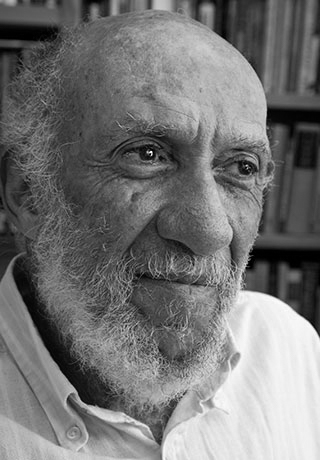

Professor Falk became an adviser to TFF when it was established in 1985.

Share

Leave a Reply

Your email address will not be published. Required fields are marked *

Related Posts

“En dag som berättigar till fest”, utropade den London-baserade al-Quds al-Arabi efter FN:s eldupphörresolution, “eftersom detta är första gången som Israel accepterar ett FN-beslut från en position som besegrad och inte som segrare”. Att ett arabisk-israeliskt krig för en gångs skull slutat med arabisk seger, är en helt dominerade åsikt i arabiska medier. Al-Quds al-Arabi tillåter sig att drömma om att det israeliska nederlaget skall leda till massflykt från Israel. Men i nästa andetag påminner tidningen om att Israel aldrig brukar genomföra sina internationella åtaganden och varnar för att förlorarna, liksom tidigare, kan hämnas genom att provocera fram inbördeskrig i Libanon. Med tanke på de otaliga massmediala vittnesmålen om det libanesiska folkets eniga motståndskraft förefaller risken för inre stridigheter i det sargade landet just nu liten. Men visst kan man urskilja nyansskillnader i libanesiska tidningar. Vänsterorganet al-Safir uppfattar FN-resolutionen som en komplott i syfte att rädda Israel från ännu större...
Lena Petrova of “World Affairs In Context” with more than half a million subscribers on YouTube wanted to explore what a peace researcher like me has to say about, among other things, the First and the Second Cold War and why eethics has disappeared from politics. I am particularly happy about this conversation that also yielded an amazing number of very appreciative comments on YouTube. No doubt, people are longing for alternatives, including peace perspectives.
Jan Oberg, TFF director April 28, 2026 In this third TFF Peace Pulse, I make the important distinction between the violence and the conflict that violence is a symptom of. If you want peace, focus on the underlying conflict because that is the key to resolution, peacemaking, and a better future for the parties. The West is obsessed with violence, just look around you – and 90+ per cent of the public debate is about military issues and other violence – totally wasted for peace. These Peace Pulses will only be published here a few times. You will also not find them on YouTube and Vimeo because both platforms have blocked TFF and me; you know, peace is dangerous these days. Most TFF’s videos since 2007 are now on Rumble.

Recent Articles

“En dag som berättigar till fest”, utropade den London-baserade al-Quds al-Arabi efter FN:s eldupphörresolution, “eftersom detta är första gången som Israel accepterar ett FN-beslut från en position som besegrad och inte som segrare”. Att ett arabisk-israeliskt krig för en gångs skull slutat med arabisk seger, är en helt dominerade åsikt i arabiska medier. Al-Quds al-Arabi tillåter sig att drömma om att det israeliska nederlaget skall leda till massflykt från Israel. Men i nästa andetag påminner tidningen om att Israel aldrig brukar genomföra sina internationella åtaganden och varnar för att förlorarna, liksom tidigare, kan hämnas genom att provocera fram inbördeskrig i Libanon. Med tanke på de otaliga massmediala vittnesmålen om det libanesiska folkets eniga motståndskraft förefaller risken för inre stridigheter i det sargade landet just nu liten. Men visst kan man urskilja nyansskillnader i libanesiska tidningar. Vänsterorganet al-Safir uppfattar FN-resolutionen som en komplott i syfte att rädda Israel från ännu större...
Greenland – the world’s largest island, a continent of its own with only 57.000 inhabitants. I visited it for the first time in May 2005. I flew across the inland ice to Nuuk, the tiny capital with some 14.000 inhabitants. I was overwhelmed by the pride and kindness of everyone I met as well as by the unique natural beauty. Unfortunately, due to weather conditions during my ten-day stay I could get nowhere else but Nuuk. Fortunately, however, among those I met was Gitte Arvegaard, a Danish lawyer and negotiator employed by the local government, Greenland Home Rule. She turned out to be an enthusiastic photographer with a lot of pictures taken during various trips around Greenland. So this Greeland series is the result of our cooperative effort. We both hope you enjoy it and are stimulated to visit Greenland – about which you may read more here. Finally, if you want to...
 Jan Oberg’s storyof how he met Sir Paul Liverpool – where else to meet Paul McCartney? Paul’s old class mate and TFF Associate, Jonathan Power introduced me to Paul McCartney in Liverpool at an informal reception. It was held at what used to be their school, now the Liverpool Institute for Performing Arts and we were there to celebrate that Jonathan had written Amnesty International’s 40th Anniversary book. This happy event for “righting wrongs and writing songs” gave me an opportunity to meet Paul and tell him about TFF and get straight to the matter: would he consider making a donation in support of our work for peace? While I was probably the only one with such a wish that day, I was certainly not the only one who wanted to shake hands and talk with him. In the last minutes before Paul was to leave, Jonathan brought us together and we got about three...

TFF on Substack

Discover more from TFF Transnational Foundation & Jan Oberg.

Most Popular

“En dag som berättigar till fest”, utropade den London-baserade al-Quds al-Arabi efter FN:s eldupphörresolution, “eftersom detta är första gången som Israel accepterar ett FN-beslut från en position som besegrad och inte som segrare”. Att ett arabisk-israeliskt krig för en gångs skull slutat med arabisk seger, är en helt dominerade åsikt i arabiska medier. Al-Quds al-Arabi tillåter sig att drömma om att det israeliska nederlaget skall leda till massflykt från Israel. Men i nästa andetag påminner tidningen om att Israel aldrig brukar genomföra sina internationella åtaganden och varnar för att förlorarna, liksom tidigare, kan hämnas genom att provocera fram inbördeskrig i Libanon. Med tanke på de otaliga massmediala vittnesmålen om det libanesiska folkets eniga motståndskraft förefaller risken för inre stridigheter i det sargade landet just nu liten. Men visst kan man urskilja nyansskillnader i libanesiska tidningar. Vänsterorganet al-Safir uppfattar FN-resolutionen som en komplott i syfte att rädda Israel från ännu större...
Greenland – the world’s largest island, a continent of its own with only 57.000 inhabitants. I visited it for the first time in May 2005. I flew across the inland ice to Nuuk, the tiny capital with some 14.000 inhabitants. I was overwhelmed by the pride and kindness of everyone I met as well as by the unique natural beauty. Unfortunately, due to weather conditions during my ten-day stay I could get nowhere else but Nuuk. Fortunately, however, among those I met was Gitte Arvegaard, a Danish lawyer and negotiator employed by the local government, Greenland Home Rule. She turned out to be an enthusiastic photographer with a lot of pictures taken during various trips around Greenland. So this Greeland series is the result of our cooperative effort. We both hope you enjoy it and are stimulated to visit Greenland – about which you may read more here. Finally, if you want to...
 Jan Oberg’s storyof how he met Sir Paul Liverpool – where else to meet Paul McCartney? Paul’s old class mate and TFF Associate, Jonathan Power introduced me to Paul McCartney in Liverpool at an informal reception. It was held at what used to be their school, now the Liverpool Institute for Performing Arts and we were there to celebrate that Jonathan had written Amnesty International’s 40th Anniversary book. This happy event for “righting wrongs and writing songs” gave me an opportunity to meet Paul and tell him about TFF and get straight to the matter: would he consider making a donation in support of our work for peace? While I was probably the only one with such a wish that day, I was certainly not the only one who wanted to shake hands and talk with him. In the last minutes before Paul was to leave, Jonathan brought us together and we got about three...
Read More
Imagen-thumbnail-The-Transnational-1
“En dag som berättigar till fest”, utropade den London-baserade al-Quds al-Arabi efter FN:s eldupphörresolution, “eftersom detta är första gången som Israel accepterar ett FN-beslut från en position som besegrad och inte som segrare”. Att ett arabisk-israeliskt krig för en gångs skull slutat med arabisk seger, är en helt dominerade åsikt i arabiska medier. Al-Quds al-Arabi tillåter sig att drömma om att det israeliska nederlaget skall leda till massflykt från Israel. Men i nästa andetag påminner tidningen om att Israel aldrig brukar genomföra sina internationella åtaganden och varnar för att förlorarna, liksom tidigare, kan hämnas genom att provocera fram inbördeskrig i Libanon. Med tanke på de otaliga massmediala vittnesmålen om det libanesiska folkets eniga motståndskraft förefaller risken för inre stridigheter i det sargade landet just nu liten. Men visst kan man urskilja nyansskillnader i libanesiska tidningar. Vänsterorganet al-Safir uppfattar FN-resolutionen som en komplott i syfte att rädda Israel från ännu större...
Greenland – the world’s largest island, a continent of its own with only 57.000 inhabitants. I visited it for the first time in May 2005. I flew across the inland ice to Nuuk, the tiny capital with some 14.000 inhabitants. I was overwhelmed by the pride and kindness of everyone I met as well as by the unique natural beauty. Unfortunately, due to weather conditions during my ten-day stay I could get nowhere else but Nuuk. Fortunately, however, among those I met was Gitte Arvegaard, a Danish lawyer and negotiator employed by the local government, Greenland Home Rule. She turned out to be an enthusiastic photographer with a lot of pictures taken during various trips around Greenland. So this Greeland series is the result of our cooperative effort. We both hope you enjoy it and are stimulated to visit Greenland – about which you may read more here. Finally, if you want to...
p_mccartney_poem
 Jan Oberg’s storyof how he met Sir Paul Liverpool – where else to meet Paul McCartney? Paul’s old class mate and TFF Associate, Jonathan Power introduced me to Paul McCartney in Liverpool at an informal reception. It was held at what used to be their school, now the Liverpool Institute for Performing Arts and we were there to celebrate that Jonathan had written Amnesty International’s 40th Anniversary book. This happy event for “righting wrongs and writing songs” gave me an opportunity to meet Paul and tell him about TFF and get straight to the matter: would he consider making a donation in support of our work for peace? While I was probably the only one with such a wish that day, I was certainly not the only one who wanted to shake hands and talk with him. In the last minutes before Paul was to leave, Jonathan brought us together and we got about three...
Logo-Transnational
1942James Paul McCartney is born in Liverpool on June 18th. 1956Paul writes his first song, I Lost My Little Girl. 1957Paul meets John Lennon at St. Peter’s Church Fete, Woolton, Liverpool. He joins his first group, The Quarrymen and performs in his first gig at The New Clubmoor Hall, Liverpool, on October 18th. 1960Formation of The Beatles, who play residencies in Hamburg and at The Cavern in Liverpool. 1961First Beatles recordings issued in Germany, as the backing group for Tony Sheridan. 1962The first Beatles Parlophone recording, Love Me Do, reaches number 17 in the British charts. 1963The birth of Beatlemania. Please Please Me gives the group their first British Number 1. She Loves You cements their success. Please Please Me and With The Beatles albums released. 1964First triumphant American tour. The Beatles perform at the Royal Command Performance and release their first film, A Hard Day’s Night. Their single I...
Logo-Transnational
  Back to the series “Bujumbura, Burundi”
By JONATHAN POWER August 16, 2000 LONDON – Remember the summer of ’98? In the sweltering, torpid heat of a Roman august, charged with exhaust fumes, the international community gave its overwhelming approval to the establishment of an International Criminal Court that will enable those accused of “crimes against humanity” to be tried and, if convicted, sentenced. Only seven nations opposed or abstained from the motion, including Israel, China, India and the U.S.A. where the Pentagon had successfully waged bureaucratic guerrilla war to undermine the initially sympathetic stance of President Bill Clinton. Two years on we can now see what an epochal event that was. In a the stroke of 120 pens it changed the climate on political thuggery. After numerous half-starts and false starts ever since the Nuremberg and Tokyo trials that convicted the war criminals of the Second World War, the world at last had agreed en masse a common...

