
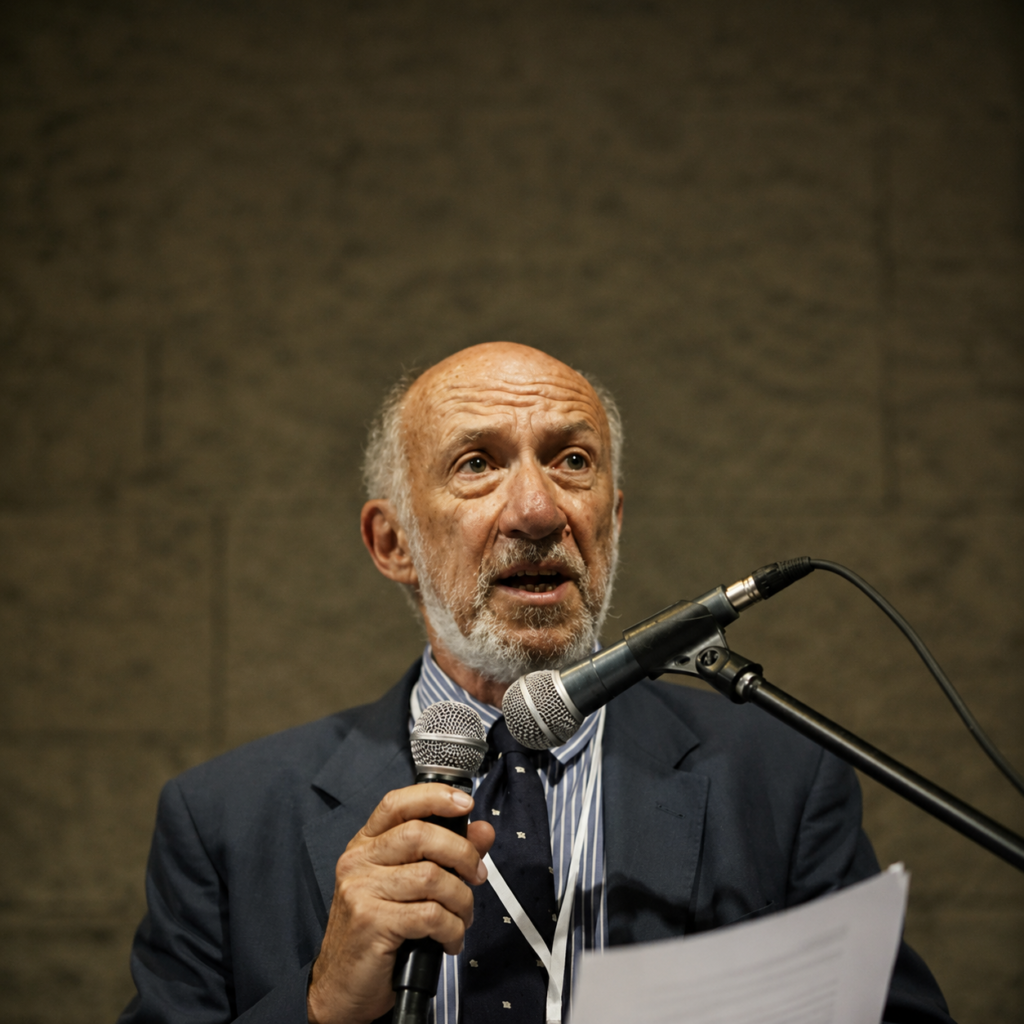
The Westgate Mall massacre: Reflections

The carefully planned attack by al-Shabaab on civilians in Nairobi’s Westgate Mall carried the pathology of rage and the logic of fanaticism to unspeakable extremes. Imagine deciding on the life or death of any person, but particularly a child, by whether or not they could name the mother of Mohammed or recite a verse from the Koran.

Islamic fanaticism should be condemned with the moral fervor appropriate to such a violation of the most fundamental norms of respect for innocence and human dignity. To gun down at random whoever happened to be shopping at Westgate Mall on the fateful day of September 21st is to carry political violence beyond a point of no return.

Of course, even fanatics have a certain logic of justification that makes their acts congruent with a warped morality. In this instance, the al-Shabab case rests on a vengeful response to the participation of the Kenyan army units in a multinational military operation of the African Union in neighboring Somalia. This AU operation, reinforced by U.S. drone attacks and special forces, has led to the severe weakening of al-Shabab’s political influence in Somalia, provoking an evident sense of desperation and acute resentment, as well as a tactic of making those that interfere in Somalia’s internal politics bear some adverse spillover effects.

But if such an explanation is expected to excuse the demonic actions at Westgate, in any but equally depraved pockets of alienated consciousness, it is deeply mistaken. What may be most frightening, perhaps, in this whole set of circumstances is the degree to which Western counter-insurgency specialists have stepped forward to pronounce the Westgate Mall massacre a ‘success’ from terrorist or extremist perspectives, and likely to generate al-Shabab recruits among the large Somalia minorities living in Nairobi and in some parts of the United States.

As is common with such anguishing events, there are some ironies present. The catastrophe occurred in Kenya on the day set aside globally as The International Day of Peace. Even stranger, Osama Bin Laden has been openly critical of the excessive harshness toward Muslims of the current al-Shabab emir, Ahmed Abdi Godane. Some commentators have speculated that this explains why there was such an effort to spare Muslims who were in the Westgate Mall at the time of the attack. In other earlier al-Shabab vicious attacks in Somalia and Uganda (2010), such distinctions were not made, with Muslims and non-Muslims alike being victims of attacks.

It was a disturbing synchronicity that on the following day outside an Anglican Church in Peshawar, Pakistan, two suicide bombers detonated explosives that killed more than 80 persons as they were leaving the church after religious services. An extremist organization in Pakistan, TTP Jundullah, shamelessly claimed responsibility, offering an unabashedly fanatic jusitification: “They are enemies of Islam. Therefore we target them. We will continue the attacks on non-Muslims in Pakistan.”

Contained in such a statement is the absolutism of a jihadist mandate to eliminate infidels combined with an ultra nationalist insistence that non-Muslims and foreigners in Pakistan are sentenced to death, and should leave the country if they wish to survive. There is in the background a furious response of outsiders, whether from Kenya, Ethipia, and Uganda, or further afield, from the United States, as seeking to deny to Somalia the outcome of an internal struggle, and thus in effect encroaching upon the inalienable right of self-determination inhering in the people of Somalia. Even so, there in no way to excuse such crimes against humanity, but given the kind of belief systems that occupy the minds of fanatics, we can expect more such appalling incidents.

Fanaticism carried to these extremes poisons human relations, whether it rests its belief structure on secular foundations as was the case with the Nazis or rests its claims on a religious creed. It is no more helpful to blame religion, as such, for the Westgate Massacre than it would be to insist that godless secularism was responsible for the rise of Hitler or depredations of Stalinism.

What we can say with confidence is that there is a genocidal danger associated with any belief system that claims truth solely for itself and treats those who do not accept the claim as utterly unworthy, if not outright evil. What happens when such a pattern is situated at the extremes of political consciousness is a disposition toward massacre and genocide, with terrorism being the fanatic’s form of ‘just war.’

We live at a time when such patterns of horrifying behavior seem mainly, although by no means exclusively, associated with Islamic extremism. Such pathologic behavior must be resisted and repudiated in every way possible, but without worsening the situation by blaming a specific religion or religion in general as responsible for recourse to fanaticism.

The West needs only to recall the Inquisition, the Crusades, and many decades of barbaric religious wars to realize its own susceptibility to the siren calls of the fanatics, which seem almost irresistible in periods of societal crisis. The virus of fanaticism lies dormant in the body politic of every society and can find consoling support by twisting the meaning and practical relevance of religious scripture. Explaining the fanatic by deploring Islam and its adherents multiplies the challenges facing society rather than mitigates them by situating the source of the problem.

Islamophobia as a response to 9/11 or to these awful incidents in Kenya and Pakistan pours vinegar on wounds experienced by Muslims and non-Muslims alike, and yet it seems an inevitable reflex, which if carried to its own limit by opportunists leads to a mimicry of the originating fanaticism. In its moralizing rationalizations for violence against the innocent, the purported anti-fanatic operates in the same milieu of alienated consciousness as the fanatic. The one resembles the other in mentality and deed, although the fanatic is more likely to be sincere than the anti-fanatic who often acts out of ambition rather than belief.

There is some reason to feel that fanaticism of this kind is largely a product of monotheistic religion and thought, specifically ideas of dualism separating good and evil, and the insistence that the human mind has access to ‘the truth’ that is applicable to social and political relations. In this regard, the philosophic and religious traditions of the East do not seem, at first glance, to nurture such fanatical mentalities as emerge in the West: there is a rejection of dualism and a general acceptance of the view that there are a variety of ways to find fulfillment and salvation, and no single truth that is universally applicable.

Nevertheless, communal, religious, ethnic, class, and political tensions can and do generate habitual genocidal behavior. Tragically, the land of Gandhi is also the land of Gujurat, where genocidal surges of violence against Muslims have occurred repeatedly, with a major outbreak in 2002. Hindu nationalism in its extreme enactments is as capable of fanatic politics as are extremist exponents of political Islam. There are also distinctions to be drawn within the Hindu tradition between those who support and those who repudiate the Indian caste distinctions carried to their own inborn extremes in ideas and practices associated with ‘untouchability’ and ‘bride burning.’

Even Buddhism, the religion that is most admired for its valuing of compassion, can be lured into the situational camps of fanaticism as was clearly evident in the final stages of the holy war carried to genocidal extremes in Sri Lanka or in the persecution of the Rohingya Muslim minorities in Myanmar, especially in Rakhine state.

In other words, culture and political tensions can give rise to radical forms of denial of species identity as the essential imperative of people living together in peace and equity.

There are three dimensions of these perfect moral storms that manifest themselves in various forms of fanaticism:

(1) the fragmentations of identity so as to elevate the status of the fragment in such a way as to denigrate the whole, that is, the shared human identity is overridden by the alleged superiority of the fragmentary identity as Muslim, Hindu, Christian, Nazi, Communist, and so on;

(2) the truth claims made on behalf of a particular belief system, whether religious or secular, which is posited in absolutist terms that leaves no political space for any celebration of diversity or even tolerance of the other; it is bio-politically acceptable to have faith in the ‘truth’ and correctness of a given path as a matter of personal choice so long as the same opportunities for faith are accorded to others;

(3) the failure to be sensitive to the commonalities associated with the bio-political primacy of humanness; it is only a sense of shared humanity that can endow the people of the planet with the political will to respond effectively to such global challenges as climate change and weaponry of mass destruction upon which depends the collective survival and wellbeing of the species.
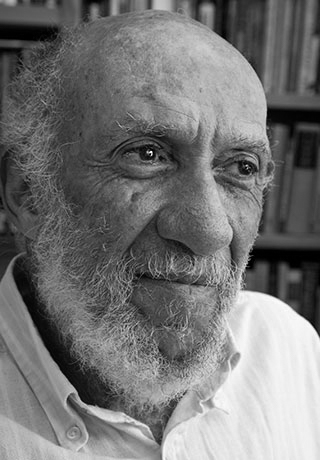

Professor Falk became an adviser to TFF when it was established in 1985.

Share

Leave a Reply

Your email address will not be published. Required fields are marked *

Related Posts

Jan Oberg, TFF director April 28, 2026 In this third TFF Peace Pulse, I make the important distinction between the violence and the conflict that violence is a symptom of. If you want peace, focus on the underlying conflict because that is the key to resolution, peacemaking, and a better future for the parties. The West is obsessed with violence, just look around you – and 90+ per cent of the public debate is about military issues and other violence – totally wasted for peace. These Peace Pulses will only be published here a few times. You will also not find them on YouTube and Vimeo because both platforms have blocked TFF and me; you know, peace is dangerous these days. Most TFF’s videos since 2007 are now on Rumble.
In contrast to most, we’ll bring alternatives, solutions, hope and strategies for a better future. Times are dangerous, yes, but that only intensifies the need for constructive thinking and action! Jan Oberg, TFF director April 13, 2026 The new TFF Peace Pulse uses video messages in a new way: Max 3-5-minute-long comments, ideas or perhaps mini-lectures, all about peace – positive peace. We launch them today on April 13, 2026 with a carefully crafted visual aesthetic fitting the content. We hope to publish them regularly from now on. We launch Peace Pulse (PP) – for a number of reasons. The world is in chaos, and there are countless reasons to feel concerned, frustrated, even angry. The atmosphere is saturated with doom and gloom, with negative energy and rear‑mirror thinking, while vision, imagination, alternatives, strategies and genuine future‑mindedness remain in short supply. And without them, we simply can’t save the world. Looking at problems from a hundred angles will...
PART II — Publishing Peace in a System That Prioritises Militarism Jan Oberg, TFF director April 10, 2026 How TFF Maintains a Daily Voice in a Digital World Built for Noise This article is part of the series “TFF at 40″ and it invites you to learn about Four Decades of Publishing Peace. It takes a look at how a small, people‑financed peace foundation has communicated across four generations of technology — from wax stencils and fax machines to mass email and Substack — and why TFF continues to publish every single day in a system that rewards noise, conflict, and militarism. ◆ What it means to publish peace every single day in a digital system built for 24/7 news and other noise, confrontation, and militarism. How TFF’s independence, continuity, and global readership defy algorithms, donor cycles, and Western media censorhip — and why the Majority World keeps listening. When the...

Recent Articles

Jan Oberg May 15, 2026 Go to this Fox News page and scroll the whole way down: President Donald Trump tells the world that his meeting with President Xi Jinping yielded a lot of very concrete political and economic results – of course, only where the Chinese side, according to him, agreed with him. He does not mention the Taiwan issue, but Secretary of State, Marco Rubio, says that it did not feature prominently in their talks and that the US policy on Taiwan has not changed. Then go to China Daily – or Global Times – and you will see that for the Chinese it is framework, principles, structure of cooperation etc. that matters – all embedded in the overall idea of “constructive bilateral relationship of strategic stability.” Nowhere is any concrete agreement or deal – all that Trump refers to – mentioned. At the general level, this gives you insights into the very different social...
Lena Petrova of “World Affairs In Context” with more than half a million subscribers on YouTube wanted to explore what a peace researcher like me has to say about, among other things, the First and the Second Cold War and why eethics has disappeared from politics. I am particularly happy about this conversation that also yielded an amazing number of very appreciative comments on YouTube. No doubt, people are longing for alternatives, including peace perspectives.
The MIMAC – Military-Industrial-Media-Academic Complex – drives the world’s rampant militarism and wars without end. Here is a short reflection of how it works against all interests of humanity. #5 deals with why there is no real enemy or threat images/analysis. It’s all ex-post constructions. And, btw, theTFF Peace Pulse is now on Rumble.

TFF on Substack

Discover more from TFF Transnational Foundation & Jan Oberg.

Most Popular

Jan Oberg May 15, 2026 Go to this Fox News page and scroll the whole way down: President Donald Trump tells the world that his meeting with President Xi Jinping yielded a lot of very concrete political and economic results – of course, only where the Chinese side, according to him, agreed with him. He does not mention the Taiwan issue, but Secretary of State, Marco Rubio, says that it did not feature prominently in their talks and that the US policy on Taiwan has not changed. Then go to China Daily – or Global Times – and you will see that for the Chinese it is framework, principles, structure of cooperation etc. that matters – all embedded in the overall idea of “constructive bilateral relationship of strategic stability.” Nowhere is any concrete agreement or deal – all that Trump refers to – mentioned. At the general level, this gives you insights into the very different social...
Lena Petrova of “World Affairs In Context” with more than half a million subscribers on YouTube wanted to explore what a peace researcher like me has to say about, among other things, the First and the Second Cold War and why eethics has disappeared from politics. I am particularly happy about this conversation that also yielded an amazing number of very appreciative comments on YouTube. No doubt, people are longing for alternatives, including peace perspectives.
The MIMAC – Military-Industrial-Media-Academic Complex – drives the world’s rampant militarism and wars without end. Here is a short reflection of how it works against all interests of humanity. #5 deals with why there is no real enemy or threat images/analysis. It’s all ex-post constructions. And, btw, theTFF Peace Pulse is now on Rumble.
Read More
Screenshot-2026-05-15-103534
Jan Oberg May 15, 2026 Go to this Fox News page and scroll the whole way down: President Donald Trump tells the world that his meeting with President Xi Jinping yielded a lot of very concrete political and economic results – of course, only where the Chinese side, according to him, agreed with him. He does not mention the Taiwan issue, but Secretary of State, Marco Rubio, says that it did not feature prominently in their talks and that the US policy on Taiwan has not changed. Then go to China Daily – or Global Times – and you will see that for the Chinese it is framework, principles, structure of cooperation etc. that matters – all embedded in the overall idea of “constructive bilateral relationship of strategic stability.” Nowhere is any concrete agreement or deal – all that Trump refers to – mentioned. At the general level, this gives you insights into the very different social...
Screenshot-2026-05-12-104023
Lena Petrova of “World Affairs In Context” with more than half a million subscribers on YouTube wanted to explore what a peace researcher like me has to say about, among other things, the First and the Second Cold War and why eethics has disappeared from politics. I am particularly happy about this conversation that also yielded an amazing number of very appreciative comments on YouTube. No doubt, people are longing for alternatives, including peace perspectives.
Screenshot-2026-04-13-154551 (2)
The MIMAC – Military-Industrial-Media-Academic Complex – drives the world’s rampant militarism and wars without end. Here is a short reflection of how it works against all interests of humanity. #5 deals with why there is no real enemy or threat images/analysis. It’s all ex-post constructions. And, btw, theTFF Peace Pulse is now on Rumble.
Screenshot-2026-04-13-154551 (1)
Jan Oberg, TFF director April 28, 2026 In this third TFF Peace Pulse, I make the important distinction between the violence and the conflict that violence is a symptom of. If you want peace, focus on the underlying conflict because that is the key to resolution, peacemaking, and a better future for the parties. The West is obsessed with violence, just look around you – and 90+ per cent of the public debate is about military issues and other violence – totally wasted for peace. These Peace Pulses will only be published here a few times. You will also not find them on YouTube and Vimeo because both platforms have blocked TFF and me; you know, peace is dangerous these days. Most TFF’s videos since 2007 are now on Rumble.
Screenshot-2026-04-13-154551
In contrast to most, we’ll bring alternatives, solutions, hope and strategies for a better future. Times are dangerous, yes, but that only intensifies the need for constructive thinking and action! Jan Oberg, TFF director April 13, 2026 The new TFF Peace Pulse uses video messages in a new way: Max 3-5-minute-long comments, ideas or perhaps mini-lectures, all about peace – positive peace. We launch them today on April 13, 2026 with a carefully crafted visual aesthetic fitting the content. We hope to publish them regularly from now on. We launch Peace Pulse (PP) – for a number of reasons. The world is in chaos, and there are countless reasons to feel concerned, frustrated, even angry. The atmosphere is saturated with doom and gloom, with negative energy and rear‑mirror thinking, while vision, imagination, alternatives, strategies and genuine future‑mindedness remain in short supply. And without them, we simply can’t save the world. Looking at problems from a hundred angles will...
IMG_5165 (1)
PART II — Publishing Peace in a System That Prioritises Militarism Jan Oberg, TFF director April 10, 2026 How TFF Maintains a Daily Voice in a Digital World Built for Noise This article is part of the series “TFF at 40″ and it invites you to learn about Four Decades of Publishing Peace. It takes a look at how a small, people‑financed peace foundation has communicated across four generations of technology — from wax stencils and fax machines to mass email and Substack — and why TFF continues to publish every single day in a system that rewards noise, conflict, and militarism. ◆ What it means to publish peace every single day in a digital system built for 24/7 news and other noise, confrontation, and militarism. How TFF’s independence, continuity, and global readership defy algorithms, donor cycles, and Western media censorhip — and why the Majority World keeps listening. When the...

