
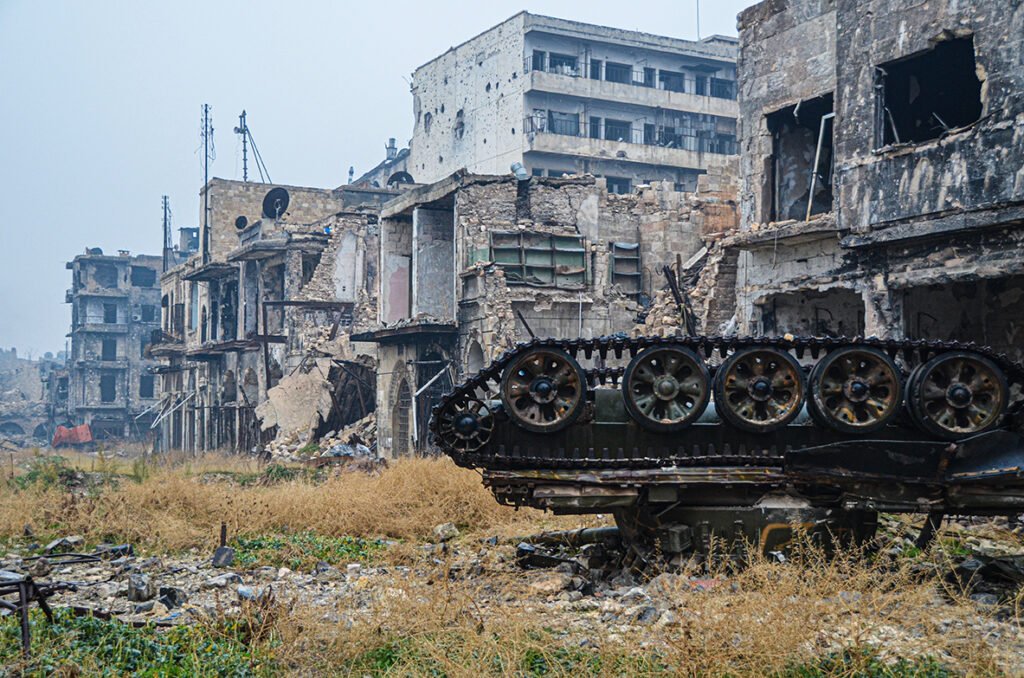
The ecological impact of militarism

Against the Institution of War

– announcing the publication of the book, The Ecological Impact of Militarism

As we start the 21st century and the new millennium, our scientific and technological civilization seems to be entering a period of crisis. Today, for the first time in history, science has given to humans the possibility of a life of comfort, free from hunger and cold, and free from the constant threat of infectious disease. At the same time, science has given us the power to destroy civilization through thermonuclear war, as well as the power to make our planet uninhabitable through pollution and overpopulation. The question of which of these alternatives we choose is a matter of life or death to ourselves and our children.

The crisis of civilization, which we face today, has been produced by the rapidity with which science and technology have developed. Our institutions and ideas adjust too slowly to the change. The great challenge which history has given to our generation is the task of building new international political structures, which will be in harmony with modern technology. At the same time, we must develop a new global ethic, which will replace our narrow loyalties by loyalty to humanity as a whole.

In the long run, because of the enormously destructive weapons, which have been produced through the misuse of science, the survival of civilization can only be insured if we are able to abolish the institution of war.

Because the world spends 1.8 trillion dollars each year on armaments, it follows that very many people make their living from war. This is the reason why it is correct to speak of war as a social institution, and also the reason why war persists, although everyone realizes that it is the cause of much of the suffering that inflicts humanity. We know that war is madness, but it persists. We know that it threatens the future survival of our species, but it persists, entrenched in the attitudes of historians, newspaper editors and television producers, entrenched in the methods by which politicians finance their campaigns, and entrenched in the financial power of arms manufacturers, entrenched also in the ponderous and costly hardware of war, the fleets of warships, bombers, tanks, nuclear missiles and so on.

Science cannot claim to be guiltless: In Eisenhower’s farewell address, he warned of the increasing power of the military-industrial complex, a threat to a democratic society. If he were making the same speech today, he might speak of the industrial-military-scientific complex. Since Hiroshima, we have known that new knowledge is not always good. There is a grave danger that nuclear weapons will soon proliferate to such an extent that they will be available to terrorists and even to the Mafia. Chemical and biological weapons also constitute a grave threat.

Besides a humane, democratic and just framework of international law and governance, we urgently need a new global ethic, – an ethic where loyalty to family, community and nation will be supplemented by a strong sense of the brotherhood of all humans, regardless of race, religion or nationality. Schiller expressed this feeling in his “Ode to Joy”, the text of Beethoven’s Ninth Symphony. Hearing Beethoven’s music and Schiller’s words, most of us experience an emotion of resonance and unity with its message: All humans are brothers and sisters – not just some – all! It is almost a national anthem of humanity. The feelings which the music and words provoke are similar to patriotism, but broader. It is this sense of a universal human family, which we need to cultivate in education, in the mass media, and in religion.

No Warming, No War: How Militarism Fuels the Climate Crisis

Here is a quotation from an article by Lorah Steichen and Lindsay Koshgarian:

“In this report, we’ll lay out how militarism and the climate crisis are deeply intertwined and mutually reinforcing. The military itself, we explain, is a huge polluter – and is often deployed to sustain the very extractive industries that destabilize our climate. This climate chaos, in turn, leads to massive displacement, militarized borders, and the prospect of further conflict.”

“True climate solutions, we argue, must have antimilitarism at their core.”

“In the face of both COVID-19 and the climate crisis, we urgently need to shift from a culture of war to a culture of care. Funnelling trillions into the military to wage endless wars and project military dominance has prevented us from investing in true security and cooperation. If we don’t transform our society and the way we confront crises, we will face even more unjust and inhumane realities in a climate-changed future.”

Rebuilding after the pandemic

The COVID-19 pandemic has thrown light on the shortcomings of our militaristic concept of security. Our military establishments could not protect us from the virus. Indeed, even without the pandemic, our “defense departments” do not really defend us. This is most obvious when we think of a nuclear war, in which hundreds of millions of innocent civilians might be killed. At present, civilians are hostages in the power struggles of politicians.

When we rebuild the world after the pandemic, it must not merely be “back to normal”. The old normal was part of the problem. We must build a new world in which the climate emergency is addressed, and rapid action is taken to prevent it.

The Green New Deal, in which jobs are created producing urgently-needed renewable energy infrastructure, offers the best model for the new world that we want. Those who say that there is not enough money to finance the Green New Deal, forget the unimaginable amounts of money wasted, or worse than wasted, on militarism. We must divert this vast river of money from its present evil use, to the constructive task of saving our planet from the existential threat of catastrophic climate change.

A new freely downloadable book

I would like to announce the publication of a new book, which discusses the ecological damage produced by militarism. The book may be downloaded free of charge and circulated from the following link:

The Ecological Impact of Militarism

You’ll find sevral other articles and book announcements of John Scales Avery – and amazingly prolific author – here on The Transnational. But they are also listed in two other places which you will find interesting – also beyond his works:

The Eqbal Ahmed Center for Public Education

The Wall Street International Magazine

The author and TFF hope that you will circulate the links in this article to friends and contacts who might be interested in constructive analyses of the global problems and their solution.


Share

Leave a Reply

Your email address will not be published. Required fields are marked *

Related Posts

The MIMAC – Military-Industrial-Media-Academic Complex – drives the world’s rampant militarism and wars without end. Here is a short reflection of how it works against all interests of humanity. #5 deals with why there is no real enemy or threat images/analysis. It’s all ex-post constructions. And, btw, theTFF Peace Pulse is now on Rumble.
Jan Oberg, TFF director April 28, 2026 In this third TFF Peace Pulse, I make the important distinction between the violence and the conflict that violence is a symptom of. If you want peace, focus on the underlying conflict because that is the key to resolution, peacemaking, and a better future for the parties. The West is obsessed with violence, just look around you – and 90+ per cent of the public debate is about military issues and other violence – totally wasted for peace. These Peace Pulses will only be published here a few times. You will also not find them on YouTube and Vimeo because both platforms have blocked TFF and me; you know, peace is dangerous these days. Most TFF’s videos since 2007 are now on Rumble.
In contrast to most, we’ll bring alternatives, solutions, hope and strategies for a better future. Times are dangerous, yes, but that only intensifies the need for constructive thinking and action! Jan Oberg, TFF director April 13, 2026 The new TFF Peace Pulse uses video messages in a new way: Max 3-5-minute-long comments, ideas or perhaps mini-lectures, all about peace – positive peace. We launch them today on April 13, 2026 with a carefully crafted visual aesthetic fitting the content. We hope to publish them regularly from now on. We launch Peace Pulse (PP) – for a number of reasons. The world is in chaos, and there are countless reasons to feel concerned, frustrated, even angry. The atmosphere is saturated with doom and gloom, with negative energy and rear‑mirror thinking, while vision, imagination, alternatives, strategies and genuine future‑mindedness remain in short supply. And without them, we simply can’t save the world. Looking at problems from a hundred angles will...

Recent Articles

“En dag som berättigar till fest”, utropade den London-baserade al-Quds al-Arabi efter FN:s eldupphörresolution, “eftersom detta är första gången som Israel accepterar ett FN-beslut från en position som besegrad och inte som segrare”. Att ett arabisk-israeliskt krig för en gångs skull slutat med arabisk seger, är en helt dominerade åsikt i arabiska medier. Al-Quds al-Arabi tillåter sig att drömma om att det israeliska nederlaget skall leda till massflykt från Israel. Men i nästa andetag påminner tidningen om att Israel aldrig brukar genomföra sina internationella åtaganden och varnar för att förlorarna, liksom tidigare, kan hämnas genom att provocera fram inbördeskrig i Libanon. Med tanke på de otaliga massmediala vittnesmålen om det libanesiska folkets eniga motståndskraft förefaller risken för inre stridigheter i det sargade landet just nu liten. Men visst kan man urskilja nyansskillnader i libanesiska tidningar. Vänsterorganet al-Safir uppfattar FN-resolutionen som en komplott i syfte att rädda Israel från ännu större...
Greenland – the world’s largest island, a continent of its own with only 57.000 inhabitants. I visited it for the first time in May 2005. I flew across the inland ice to Nuuk, the tiny capital with some 14.000 inhabitants. I was overwhelmed by the pride and kindness of everyone I met as well as by the unique natural beauty. Unfortunately, due to weather conditions during my ten-day stay I could get nowhere else but Nuuk. Fortunately, however, among those I met was Gitte Arvegaard, a Danish lawyer and negotiator employed by the local government, Greenland Home Rule. She turned out to be an enthusiastic photographer with a lot of pictures taken during various trips around Greenland. So this Greeland series is the result of our cooperative effort. We both hope you enjoy it and are stimulated to visit Greenland – about which you may read more here. Finally, if you want to...
 Jan Oberg’s storyof how he met Sir Paul Liverpool – where else to meet Paul McCartney? Paul’s old class mate and TFF Associate, Jonathan Power introduced me to Paul McCartney in Liverpool at an informal reception. It was held at what used to be their school, now the Liverpool Institute for Performing Arts and we were there to celebrate that Jonathan had written Amnesty International’s 40th Anniversary book. This happy event for “righting wrongs and writing songs” gave me an opportunity to meet Paul and tell him about TFF and get straight to the matter: would he consider making a donation in support of our work for peace? While I was probably the only one with such a wish that day, I was certainly not the only one who wanted to shake hands and talk with him. In the last minutes before Paul was to leave, Jonathan brought us together and we got about three...

TFF on Substack

Discover more from TFF Transnational Foundation & Jan Oberg.

Most Popular

“En dag som berättigar till fest”, utropade den London-baserade al-Quds al-Arabi efter FN:s eldupphörresolution, “eftersom detta är första gången som Israel accepterar ett FN-beslut från en position som besegrad och inte som segrare”. Att ett arabisk-israeliskt krig för en gångs skull slutat med arabisk seger, är en helt dominerade åsikt i arabiska medier. Al-Quds al-Arabi tillåter sig att drömma om att det israeliska nederlaget skall leda till massflykt från Israel. Men i nästa andetag påminner tidningen om att Israel aldrig brukar genomföra sina internationella åtaganden och varnar för att förlorarna, liksom tidigare, kan hämnas genom att provocera fram inbördeskrig i Libanon. Med tanke på de otaliga massmediala vittnesmålen om det libanesiska folkets eniga motståndskraft förefaller risken för inre stridigheter i det sargade landet just nu liten. Men visst kan man urskilja nyansskillnader i libanesiska tidningar. Vänsterorganet al-Safir uppfattar FN-resolutionen som en komplott i syfte att rädda Israel från ännu större...
Greenland – the world’s largest island, a continent of its own with only 57.000 inhabitants. I visited it for the first time in May 2005. I flew across the inland ice to Nuuk, the tiny capital with some 14.000 inhabitants. I was overwhelmed by the pride and kindness of everyone I met as well as by the unique natural beauty. Unfortunately, due to weather conditions during my ten-day stay I could get nowhere else but Nuuk. Fortunately, however, among those I met was Gitte Arvegaard, a Danish lawyer and negotiator employed by the local government, Greenland Home Rule. She turned out to be an enthusiastic photographer with a lot of pictures taken during various trips around Greenland. So this Greeland series is the result of our cooperative effort. We both hope you enjoy it and are stimulated to visit Greenland – about which you may read more here. Finally, if you want to...
 Jan Oberg’s storyof how he met Sir Paul Liverpool – where else to meet Paul McCartney? Paul’s old class mate and TFF Associate, Jonathan Power introduced me to Paul McCartney in Liverpool at an informal reception. It was held at what used to be their school, now the Liverpool Institute for Performing Arts and we were there to celebrate that Jonathan had written Amnesty International’s 40th Anniversary book. This happy event for “righting wrongs and writing songs” gave me an opportunity to meet Paul and tell him about TFF and get straight to the matter: would he consider making a donation in support of our work for peace? While I was probably the only one with such a wish that day, I was certainly not the only one who wanted to shake hands and talk with him. In the last minutes before Paul was to leave, Jonathan brought us together and we got about three...
Read More
Imagen-thumbnail-The-Transnational-1
“En dag som berättigar till fest”, utropade den London-baserade al-Quds al-Arabi efter FN:s eldupphörresolution, “eftersom detta är första gången som Israel accepterar ett FN-beslut från en position som besegrad och inte som segrare”. Att ett arabisk-israeliskt krig för en gångs skull slutat med arabisk seger, är en helt dominerade åsikt i arabiska medier. Al-Quds al-Arabi tillåter sig att drömma om att det israeliska nederlaget skall leda till massflykt från Israel. Men i nästa andetag påminner tidningen om att Israel aldrig brukar genomföra sina internationella åtaganden och varnar för att förlorarna, liksom tidigare, kan hämnas genom att provocera fram inbördeskrig i Libanon. Med tanke på de otaliga massmediala vittnesmålen om det libanesiska folkets eniga motståndskraft förefaller risken för inre stridigheter i det sargade landet just nu liten. Men visst kan man urskilja nyansskillnader i libanesiska tidningar. Vänsterorganet al-Safir uppfattar FN-resolutionen som en komplott i syfte att rädda Israel från ännu större...
Greenland – the world’s largest island, a continent of its own with only 57.000 inhabitants. I visited it for the first time in May 2005. I flew across the inland ice to Nuuk, the tiny capital with some 14.000 inhabitants. I was overwhelmed by the pride and kindness of everyone I met as well as by the unique natural beauty. Unfortunately, due to weather conditions during my ten-day stay I could get nowhere else but Nuuk. Fortunately, however, among those I met was Gitte Arvegaard, a Danish lawyer and negotiator employed by the local government, Greenland Home Rule. She turned out to be an enthusiastic photographer with a lot of pictures taken during various trips around Greenland. So this Greeland series is the result of our cooperative effort. We both hope you enjoy it and are stimulated to visit Greenland – about which you may read more here. Finally, if you want to...
p_mccartney_poem
 Jan Oberg’s storyof how he met Sir Paul Liverpool – where else to meet Paul McCartney? Paul’s old class mate and TFF Associate, Jonathan Power introduced me to Paul McCartney in Liverpool at an informal reception. It was held at what used to be their school, now the Liverpool Institute for Performing Arts and we were there to celebrate that Jonathan had written Amnesty International’s 40th Anniversary book. This happy event for “righting wrongs and writing songs” gave me an opportunity to meet Paul and tell him about TFF and get straight to the matter: would he consider making a donation in support of our work for peace? While I was probably the only one with such a wish that day, I was certainly not the only one who wanted to shake hands and talk with him. In the last minutes before Paul was to leave, Jonathan brought us together and we got about three...
Logo-Transnational
1942James Paul McCartney is born in Liverpool on June 18th. 1956Paul writes his first song, I Lost My Little Girl. 1957Paul meets John Lennon at St. Peter’s Church Fete, Woolton, Liverpool. He joins his first group, The Quarrymen and performs in his first gig at The New Clubmoor Hall, Liverpool, on October 18th. 1960Formation of The Beatles, who play residencies in Hamburg and at The Cavern in Liverpool. 1961First Beatles recordings issued in Germany, as the backing group for Tony Sheridan. 1962The first Beatles Parlophone recording, Love Me Do, reaches number 17 in the British charts. 1963The birth of Beatlemania. Please Please Me gives the group their first British Number 1. She Loves You cements their success. Please Please Me and With The Beatles albums released. 1964First triumphant American tour. The Beatles perform at the Royal Command Performance and release their first film, A Hard Day’s Night. Their single I...
Logo-Transnational
  Back to the series “Bujumbura, Burundi”
By JONATHAN POWER August 16, 2000 LONDON – Remember the summer of ’98? In the sweltering, torpid heat of a Roman august, charged with exhaust fumes, the international community gave its overwhelming approval to the establishment of an International Criminal Court that will enable those accused of “crimes against humanity” to be tried and, if convicted, sentenced. Only seven nations opposed or abstained from the motion, including Israel, China, India and the U.S.A. where the Pentagon had successfully waged bureaucratic guerrilla war to undermine the initially sympathetic stance of President Bill Clinton. Two years on we can now see what an epochal event that was. In a the stroke of 120 pens it changed the climate on political thuggery. After numerous half-starts and false starts ever since the Nuremberg and Tokyo trials that convicted the war criminals of the Second World War, the world at last had agreed en masse a common...

