
Thanks to Trump an irrelevant EU Army is now being discussed. There are better alternatives


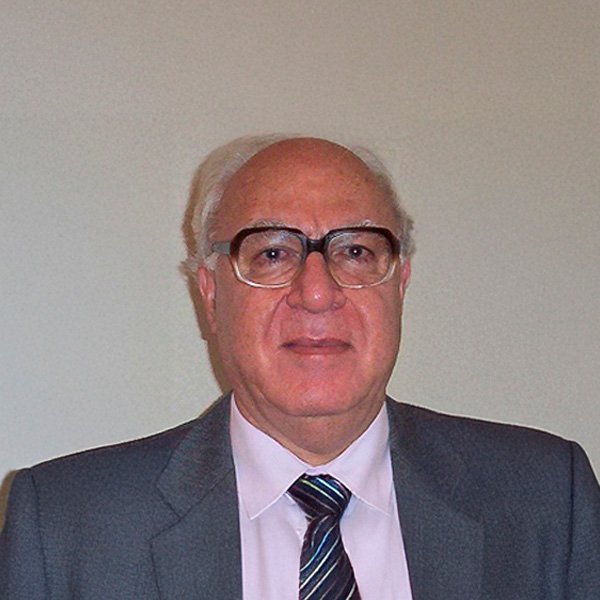
By Farhang Jahanpour, TFF Board

Professor Farhang Jahanpour, part-time tutor on Middle Eastern affairs in the Department of Continuing Education, University of Oxford, and a member of Kellogg College says that the main reason for the idea of forming a joint European army “has been President Trump’s unilateral and ultra-nationalist approach that puts America first and, by implication, ignores the interests of other countries and tries to impose his views on them.”

Former Senior Research Scholar at Harvard adds that “He seems to have no concept of a multipolar world and he wishes to rule other countries like a global hegemon, in the same way, that he is trying to establish an imperial presidency at home.”

Following is the full text of the interview:

Q: The idea of forming a joint European army is not a new idea, but in recent days, with the comments of French President Emmanuel Macron and German Chancellor Angela Merkel and the reaction of Trump, it has assumed a new dimension. What are the reasons for the progress of this project by countries such as France and Germany?

A: The main reason for the European unease about the latest developments has been President Trump’s unilateral and ultra-nationalist approach that puts America first and, by implication, ignores the interests of other countries and tries to impose his views on them. He seems to have no concept of a multipolar world and he wishes to rule other countries like a global hegemon, in the same way, that he is trying to establish an imperial presidency at home. However, most countries of the world are reacting to that arrogant attitude and want to move towards a multipolar world based on the rule of law and respect for international treaties.

Trump has withdrawn the United States from the landmark Paris Climate Accord that, in view of the rapid pace of global warming, many countries take very seriously. He withdrew the United States from the nuclear agreement with Iran, despite the fact that it was the result of two years of intense negotiations between seven countries, and was unanimously approved by the EU and the Security Council Resolution 2231.

In defiance of UN resolutions, Trump moved the U.S. Embassy in Israel to Jerusalem, despite the fact that various international agreements have seen Jerusalem either as an international city or as the capital of a future Palestinian state.

Trump has withdrawn America from a number of other important international agreements and organizations, including UNESCO, the Trans-Pacific Partnership, the UN Human Rights Council, etc.

However, his latest withdrawal from the Intermediate-Range Nuclear Forces Treaty (INF), which prohibited the United States and Russia from possessing, producing or deploying medium-range ground-based cruise missiles, has particularly alarmed the European countries that see it as a very dangerous and provocative move.

Trump withdrew from that treaty without any consultation either with the NATO allies or with Russia. “We’re going to terminate the agreement and we’re going to pull out,” Trump told reporters on October 20 during a campaign stop in Nevada. This is not the way that a law-abiding country should deal with international treaties or with its allies.

Gorbachev who signed that agreement jointly with President Reagan told Russia’s Interfax News Agency: “Getting rid of the treaty is a mistake… All the agreements aimed at nuclear disarmament and limitation of nuclear arms must be preserved to save life on Earth.”

Meanwhile, German Foreign Minister Heiko Maas said Washington should consider the consequences of pulling out of that international treaty, which he described as “an important pillar of our European security architecture.”

Europe has been America’s loyal ally since the Second World War, but many Europeans have come to the conclusion that America, especially under Trump, is not treating them as allies, but as vassals. They also don’t like the unnecessary conflicts that Trump is inciting against Iran, Russia, China and others, and his unilateral sanctions on a number of countries, as well as putting pressure on U.S. allies to obey U.S. diktats and do the same.

Recently, reacting to some of the arrogant and interfering stances of the U.S. ambassador to Germany, the former German Chancellor Gerhard Schroeder told Die Welt: “When I look at the actions of the U.S. ambassador in Germany, I get the impression that he sees himself more as an occupation officer than as an ambassador of the United States in a sovereign state.” He also criticized U.S. trade policy, saying that Germany “cannot put up with being treated like an occupied country”.

Trump may be unhappy with the decision of the European countries to form a European Army but, above all, he should blame himself for this state of affairs.


Q: Speaking to the “Europe 1” radio, French President Emmanuel Macron called for the formation of a real European military to counter Russia’s threats and also independence from the USA. In the interview, the French president said: “We have to defend ourselves against Russia, China, and the even USA.” Why does France now name the United States alongside China and Russia as a threat?

A: Because the United States is making excessive demands on its allies, without taking into account their long-term interests. During the Cold War, the United States formed a number of military alliances in different parts of the world to contain the former Soviet Union. They included NATO in Europe, CENTO in the Middle East and SEATO in South East Asia.

Those alliances boosted the status of the United States as the so-called “leader of the free world” and as the leading country in the capitalist camp. The members of those alliances were required to contribute to the cost of running those organizations allegedly to guarantee their collective security, but also to bolster the position of the United States as one of the two superpowers.

With the collapse of the Soviet Union and the dismantlement of the Warsaw Pact, NATO should have been dismantled.

In fact, Gorbachev was promised by President George H. W. Bush and his Secretary of State James Baker that if he dismantled the Soviet Union and agreed with the unification of Germany, NATO would not encroach upon former Soviet territory. However, contrary to those promises, America has brought most of the former Soviet Republics into NATO and has pushed its forces right up to the borders of Russia.

Not content with that, American governments have called on NATO members to spend 2% of their GDPs on NATO, and of course, purchase American weapons in order to maintain the compatibility of all their weapons. President Trump does not realize that NATO’s main function has been to bolster the US’s superpower status, and has complained that NATO members do not pull their weight and has demanded that all NATO members increase their contribution to 3% of their GDP.

This has forced many Europeans to question the role of NATO in their security.

This is why as the German Chancellor Angela Merkel, speaking to MEPs in Strasbourg on 13 November, said: “The time when we can rely on others has passed. We have to take our fate into our own hands if we want to defend our community.”


Q: Ursula von der Leyen, the German defense minister, recently said that the founding of the European Army and its future activities could not only increase the security of European countries but also solve international crises. If the joint European army carried out missions outside Europe in addition to missions inside Europe, Is this not a parallel with NATO?

A: I don’t believe that most European countries would like to dismantle NATO for the time being, but they simply wish to have more say about their own defense and to be able to act more independently.

So, while they wish to strengthen their defense forces and also act more in harmony with the rest of the EU members, they will stay within NATO. But it can be said that in time a European force would act in parallel with NATO.


Q: Trump has opposed the plan and in response to French President Macron’s remarks called the formation of this army offensive. Due to Trump’s reaction and his renewed appeal to Europeans to give more money to NATO, can these disputes threaten NATO’s future?

A: As I said earlier, I believe that with the collapse of the Warsaw Pact and the Soviet Union, NATO is obsolete. Instead of spending these insane amounts of money on warfare, the time has come to look for more peaceful means to ensure global security.

A recent study has shown that since 2001, the United States alone has spent $5.9 trillion on wars and that it has been in a state of constant wars, sometimes waged through contractors. So, President Eisenhower’s prediction about a military-industrial complex has been almost completely fulfilled.

The continuation of the present insane course will not only create a great deal of devastation and loss of life, it may even lead to a global conflagration, which might spell the end of human civilization.

Therefore, instead of forming a new military force, the greatest contribution that the Europeans can make is to wage a determined campaign to establish world peace through dialog and negotiation. The ideals of the United Nations were certainly very noble, but sadly many of them have remained unfulfilled.

What we need now is a re-invigorated United Nations, an end to militarism and a new Human Rights Charter for all the people of the world, not the privileged few.

The conflict between Europe and Russia has been artificially intensified in order to sell more arms. Many Europeans see Russia as a member of the European family of nations, and China and India as the two rising powers are also more interested in trade and economic development than in war and conflict. Europe can play a historic role by dismantling NATO, putting an end to militarism and starting a new world order.

Originally published by the Tehran Times here

Share

Leave a Reply

Your email address will not be published. Required fields are marked *

Related Posts

Jan Oberg May 15, 2026 Go to this Fox News page and scroll the whole way down: President Donald Trump tells the world that his meeting with President Xi Jinping yielded a lot of very concrete political and economic results – of course, only where the Chinese side, according to him, agreed with him. He does not mention the Taiwan issue, but Secretary of State, Marco Rubio, says that it did not feature prominently in their talks and that the US policy on Taiwan has not changed. Then go to China Daily – or Global Times – and you will see that for the Chinese it is framework, principles, structure of cooperation etc. that matters – all embedded in the overall idea of “constructive bilateral relationship of strategic stability.” Nowhere is any concrete agreement or deal – all that Trump refers to – mentioned. At the general level, this gives you insights into the very different social...
The MIMAC – Military-Industrial-Media-Academic Complex – drives the world’s rampant militarism and wars without end. Here is a short reflection of how it works against all interests of humanity. #5 deals with why there is no real enemy or threat images/analysis. It’s all ex-post constructions. And, btw, theTFF Peace Pulse is now on Rumble.
Jan Oberg, TFF director April 28, 2026 In this third TFF Peace Pulse, I make the important distinction between the violence and the conflict that violence is a symptom of. If you want peace, focus on the underlying conflict because that is the key to resolution, peacemaking, and a better future for the parties. The West is obsessed with violence, just look around you – and 90+ per cent of the public debate is about military issues and other violence – totally wasted for peace. These Peace Pulses will only be published here a few times. You will also not find them on YouTube and Vimeo because both platforms have blocked TFF and me; you know, peace is dangerous these days. Most TFF’s videos since 2007 are now on Rumble.

Recent Articles

Jan Oberg May 15, 2026 Go to this Fox News page and scroll the whole way down: President Donald Trump tells the world that his meeting with President Xi Jinping yielded a lot of very concrete political and economic results – of course, only where the Chinese side, according to him, agreed with him. He does not mention the Taiwan issue, but Secretary of State, Marco Rubio, says that it did not feature prominently in their talks and that the US policy on Taiwan has not changed. Then go to China Daily – or Global Times – and you will see that for the Chinese it is framework, principles, structure of cooperation etc. that matters – all embedded in the overall idea of “constructive bilateral relationship of strategic stability.” Nowhere is any concrete agreement or deal – all that Trump refers to – mentioned. At the general level, this gives you insights into the very different social...
Lena Petrova of “World Affairs In Context” with more than half a million subscribers on YouTube wanted to explore what a peace researcher like me has to say about, among other things, the First and the Second Cold War and why eethics has disappeared from politics. I am particularly happy about this conversation that also yielded an amazing number of very appreciative comments on YouTube. No doubt, people are longing for alternatives, including peace perspectives.
The MIMAC – Military-Industrial-Media-Academic Complex – drives the world’s rampant militarism and wars without end. Here is a short reflection of how it works against all interests of humanity. #5 deals with why there is no real enemy or threat images/analysis. It’s all ex-post constructions. And, btw, theTFF Peace Pulse is now on Rumble.

TFF on Substack

Discover more from TFF Transnational Foundation & Jan Oberg.

Most Popular

Jan Oberg May 15, 2026 Go to this Fox News page and scroll the whole way down: President Donald Trump tells the world that his meeting with President Xi Jinping yielded a lot of very concrete political and economic results – of course, only where the Chinese side, according to him, agreed with him. He does not mention the Taiwan issue, but Secretary of State, Marco Rubio, says that it did not feature prominently in their talks and that the US policy on Taiwan has not changed. Then go to China Daily – or Global Times – and you will see that for the Chinese it is framework, principles, structure of cooperation etc. that matters – all embedded in the overall idea of “constructive bilateral relationship of strategic stability.” Nowhere is any concrete agreement or deal – all that Trump refers to – mentioned. At the general level, this gives you insights into the very different social...
Lena Petrova of “World Affairs In Context” with more than half a million subscribers on YouTube wanted to explore what a peace researcher like me has to say about, among other things, the First and the Second Cold War and why eethics has disappeared from politics. I am particularly happy about this conversation that also yielded an amazing number of very appreciative comments on YouTube. No doubt, people are longing for alternatives, including peace perspectives.
The MIMAC – Military-Industrial-Media-Academic Complex – drives the world’s rampant militarism and wars without end. Here is a short reflection of how it works against all interests of humanity. #5 deals with why there is no real enemy or threat images/analysis. It’s all ex-post constructions. And, btw, theTFF Peace Pulse is now on Rumble.
Read More
Screenshot-2026-05-15-103534
Jan Oberg May 15, 2026 Go to this Fox News page and scroll the whole way down: President Donald Trump tells the world that his meeting with President Xi Jinping yielded a lot of very concrete political and economic results – of course, only where the Chinese side, according to him, agreed with him. He does not mention the Taiwan issue, but Secretary of State, Marco Rubio, says that it did not feature prominently in their talks and that the US policy on Taiwan has not changed. Then go to China Daily – or Global Times – and you will see that for the Chinese it is framework, principles, structure of cooperation etc. that matters – all embedded in the overall idea of “constructive bilateral relationship of strategic stability.” Nowhere is any concrete agreement or deal – all that Trump refers to – mentioned. At the general level, this gives you insights into the very different social...
Screenshot-2026-05-12-104023
Lena Petrova of “World Affairs In Context” with more than half a million subscribers on YouTube wanted to explore what a peace researcher like me has to say about, among other things, the First and the Second Cold War and why eethics has disappeared from politics. I am particularly happy about this conversation that also yielded an amazing number of very appreciative comments on YouTube. No doubt, people are longing for alternatives, including peace perspectives.
Screenshot-2026-04-13-154551 (2)
The MIMAC – Military-Industrial-Media-Academic Complex – drives the world’s rampant militarism and wars without end. Here is a short reflection of how it works against all interests of humanity. #5 deals with why there is no real enemy or threat images/analysis. It’s all ex-post constructions. And, btw, theTFF Peace Pulse is now on Rumble.
Screenshot-2026-04-13-154551 (1)
Jan Oberg, TFF director April 28, 2026 In this third TFF Peace Pulse, I make the important distinction between the violence and the conflict that violence is a symptom of. If you want peace, focus on the underlying conflict because that is the key to resolution, peacemaking, and a better future for the parties. The West is obsessed with violence, just look around you – and 90+ per cent of the public debate is about military issues and other violence – totally wasted for peace. These Peace Pulses will only be published here a few times. You will also not find them on YouTube and Vimeo because both platforms have blocked TFF and me; you know, peace is dangerous these days. Most TFF’s videos since 2007 are now on Rumble.
Screenshot-2026-04-13-154551
In contrast to most, we’ll bring alternatives, solutions, hope and strategies for a better future. Times are dangerous, yes, but that only intensifies the need for constructive thinking and action! Jan Oberg, TFF director April 13, 2026 The new TFF Peace Pulse uses video messages in a new way: Max 3-5-minute-long comments, ideas or perhaps mini-lectures, all about peace – positive peace. We launch them today on April 13, 2026 with a carefully crafted visual aesthetic fitting the content. We hope to publish them regularly from now on. We launch Peace Pulse (PP) – for a number of reasons. The world is in chaos, and there are countless reasons to feel concerned, frustrated, even angry. The atmosphere is saturated with doom and gloom, with negative energy and rear‑mirror thinking, while vision, imagination, alternatives, strategies and genuine future‑mindedness remain in short supply. And without them, we simply can’t save the world. Looking at problems from a hundred angles will...
IMG_5165 (1)
PART II — Publishing Peace in a System That Prioritises Militarism Jan Oberg, TFF director April 10, 2026 How TFF Maintains a Daily Voice in a Digital World Built for Noise This article is part of the series “TFF at 40″ and it invites you to learn about Four Decades of Publishing Peace. It takes a look at how a small, people‑financed peace foundation has communicated across four generations of technology — from wax stencils and fax machines to mass email and Substack — and why TFF continues to publish every single day in a system that rewards noise, conflict, and militarism. ◆ What it means to publish peace every single day in a digital system built for 24/7 news and other noise, confrontation, and militarism. How TFF’s independence, continuity, and global readership defy algorithms, donor cycles, and Western media censorhip — and why the Majority World keeps listening. When the...

