
TFF PressInfo: Crimea - The referendum, the mote and the beam

/10/janoberg.jpg”>

Lund, Sweden March 16, 2014

Of course it is illegal and of course it will be rigged, that referendum in Crimea today. And of course it is a ploy and comes only in the wake of Russia’s (read Putin’s) unprovoked aggression, used as a pretext to build a new Greater Russia.

That is, if you browse the mainstream Western media the last week and on this Sunday morning.

Referendum means referring an issue back to the people. It is – or should be – an important instrument in democracies. And it’s a much better instrument than war and other violence to settle complex conflicts.

Generally, citizens-decided conflict-resolution is likely to last longer and help healing wounds of the past than any type of solution imposed by outside actors.

In Switzerland citizens go and vote on all kinds of issues on many a Sunday throughout the year. Sweden has used it to decide about nuclear energy, Denmark about EU membership and – in 1920 – to solve the conflicts in Schleswig-Holstein and define the future border between Germany and Denmark. Referendums, binding as well as non-binding, are an accepted instrument in many countries.

Why did the West not use referendums?

The West likes to pride itself of its type of democracy whenever and wherever it can. But it doesn’t use the referendum instrument that often.

About 25 years ago it decided that it was good conflict-resolution to divide Yugoslavia into six republics; foolishly it used the old administrative borders and elevated them to international borders (the purpose behind that: you could then define the Yugoslav People’s Army’s presence in Croatia and Slovenia as ”international aggression by Serbia”) instead of asking people to which republic they preferred to belong.

In a few days it is 15 years ago NATO bombed Kosovo and Serbia to ”liberate” Kosovo and make it an independent – predictably failed – state. Fifteen years later, one wonders what better situation a negotiated solution ending with a referendum could have produced. No referendum there either.

Or take the Dayton Accords from 1995 for Bosnia-Hercegovina. No one in the democratic West bothered to ask the 4,3 million people living there (arund 33% Serbs, 45% Muslims/Bosniaks and 17% Croats) whether they would like to live under those Accords.

Further, Dayton was signed in the US, the Bosnian constitution written by US lawyers and the agreement signed by three presidents none of whom were representing anybody in Bosnia at the time of signing. Not exactly a democratic peace. And it should be clear today that it is not going to work in the future either.

Or take the issue of nuclear weapons. No nuclear weapon state has ever asked its citizens whether they want want their country to possess nuclear weapons which, logically, also make them potential targets of somebody else’s nukes. All opinion surveys in the nuclear powers tell us that there is no majority anywhere for the nuclear weapon status.

And how few of the new Eastern members of NATO and the EU have had a referendum on membership?

So, even in democracies the belief that ”we know what is best for you” often stands in the way of more intelligent, democratic conflict-resolution, i.e. better and more sustainable solutions to complex conflicts.

This is dangerous: How did it come to this?

Crimea is an extremely sensitive conflict spot and has been for centuries. In my view, there is more than a 50% risk that the situation we see today in Ukraine may lead to something like Yugoslavia in the 1990s.

Conflicts and violence – even the threat of it – as well as sanctions have their own dynamics and there is always a risk that they spin out of control – if people don’t stop and think but continue tit-for-tat escalation.

Why has it come to this? There are many reasons but let me mention these:

► The US and the EU have meddled in Ukraine’s internal affairs in a way that they would never accept Russian neo-cons, finance institutions and NGOs would in their own countries and are, thus, significantly co-responsible for the mess.

► The US and the EU lack politicians and they lack advisers who understand the larger scheme of things. They invest in spin doctors and PR companies instead of in knowledge-based expertise. It should have been obvious to a historically minded Western security and foreign policy elite that Ukraine is not a place to fish in extremely troubled waters and not expect a harsh reaction.

► Putin sees a golden opportunity to play tough in the light of the history of the end of the Cold War, the dissolution of the Soviet Union and the Warsaw Pact saying in effect: This far and no longer! To be or act surprised at that speaks volumes of ignorance, propaganda, or both.

The triumphalist US/NATO/EU expansion policies since 1989 would boomerang at some point – and that point is Ukraine, Ukraine meaning ”border” (like Krajina in Croatia).

Wiser politicians of the past: Common security

Whether we like it or not, the US and the EU have handed Russia and Putin a point or two on a silver plate.

Wiser politicians like Willy Brandt, Olof Palme, Urho Kekkonen, or Nelson Mandela knew that we need peace first and then a policy to secure it (not the other way around) and that that again means moderation, prudence and search for common interests rather than provocatively promoting yourself.

The reduction in intellectualism and moderation of foreign and security policy elites worries me at least as much as Russia’s response to US/NATO/EU the-winner-takes-it-all policies.

Hopefully the referendum may defuse tension

And, so, let’s rather hope that the referendum in Crimea could be a means to diffuse the tension. The rest of Ukraine has its own deeply worrying conflict- and violence-prone factors looming.

But they don’t have to blow up like Pakrac, Western Slavonia in Yugoslavia were the first shot was fired in what became a terrible war. And remember that war was preceded by a similar fishing in troubled waters as we have seen in Ukraine.

Are political decision-makers and media able to learn from contemporary history this time or will Yugoslavia be repeated?

Perhaps a Christian West should remind itself – and take serious – of the Gospel of Matthew 1-5:

”And why beholdest thou the mote that is in thy brother’s eye, but considerest not the beam that is in thine own eye?”

The mutual blaming in Moscow, Brussels and Washington of ”the other” should be seen as little but psychological projections of their own dark sides (beams) of which they must be subconsciously aware.

We will get nowhere but to hell with tit-for-tat, judgementalism and self-righterousness. Both Russia and the West should, instead, take steps in the direction of democratic peace-making: refer issues back to people themselves but – and that is important beyond words – stop influencing or buying them on the way to the ballot box.
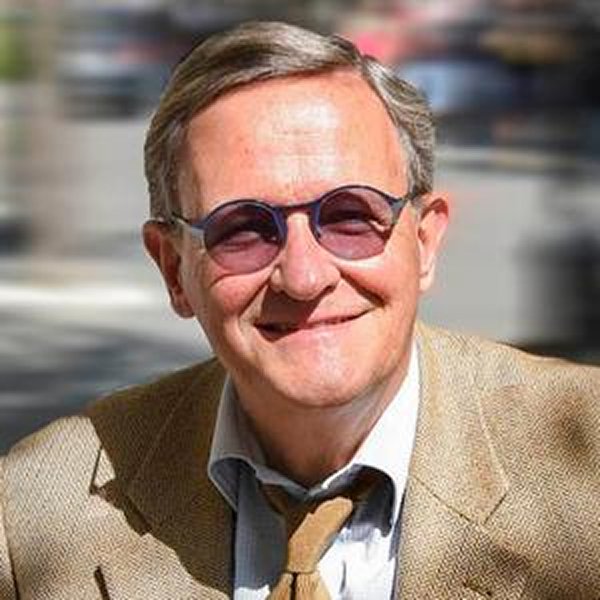

Peace & future researcher + ‌Art Photographer

Share

Leave a Reply

Your email address will not be published. Required fields are marked *

Related Posts

“En dag som berättigar till fest”, utropade den London-baserade al-Quds al-Arabi efter FN:s eldupphörresolution, “eftersom detta är första gången som Israel accepterar ett FN-beslut från en position som besegrad och inte som segrare”. Att ett arabisk-israeliskt krig för en gångs skull slutat med arabisk seger, är en helt dominerade åsikt i arabiska medier. Al-Quds al-Arabi tillåter sig att drömma om att det israeliska nederlaget skall leda till massflykt från Israel. Men i nästa andetag påminner tidningen om att Israel aldrig brukar genomföra sina internationella åtaganden och varnar för att förlorarna, liksom tidigare, kan hämnas genom att provocera fram inbördeskrig i Libanon. Med tanke på de otaliga massmediala vittnesmålen om det libanesiska folkets eniga motståndskraft förefaller risken för inre stridigheter i det sargade landet just nu liten. Men visst kan man urskilja nyansskillnader i libanesiska tidningar. Vänsterorganet al-Safir uppfattar FN-resolutionen som en komplott i syfte att rädda Israel från ännu större...
A friendly quarrel while we agree that the US sanctions are a weapon of mass destruction and kill more people than wars do. And that we must talk much more about sanctions than we have so far. Jan Oberg, TFF director March 16, 2026 John Mearsheimer recently stated that U.S. sanctions murdered around 38 million people between 1971 and 2021 – see the video below. It is a dramatic figure, and it has spread quickly because it captures, in one sentence, the enormous human cost of modern sanctions. I share his concern about the destructive effects of economic coercion. But the specific number he cites — and the way he attributes it — deserves a friendly academic clarification. The figure comes from a 2023 Lancet Global Health article estimating the mortality effects of unilateral U.S. and EU sanctions over the past half‑century. This is the first point where Mearsheimer’s shorthand diverges from the text: the study...
Lena Petrova of “World Affairs In Context” with more than half a million subscribers on YouTube wanted to explore what a peace researcher like me has to say about, among other things, the First and the Second Cold War and why eethics has disappeared from politics. I am particularly happy about this conversation that also yielded an amazing number of very appreciative comments on YouTube. No doubt, people are longing for alternatives, including peace perspectives.

Recent Articles

“En dag som berättigar till fest”, utropade den London-baserade al-Quds al-Arabi efter FN:s eldupphörresolution, “eftersom detta är första gången som Israel accepterar ett FN-beslut från en position som besegrad och inte som segrare”. Att ett arabisk-israeliskt krig för en gångs skull slutat med arabisk seger, är en helt dominerade åsikt i arabiska medier. Al-Quds al-Arabi tillåter sig att drömma om att det israeliska nederlaget skall leda till massflykt från Israel. Men i nästa andetag påminner tidningen om att Israel aldrig brukar genomföra sina internationella åtaganden och varnar för att förlorarna, liksom tidigare, kan hämnas genom att provocera fram inbördeskrig i Libanon. Med tanke på de otaliga massmediala vittnesmålen om det libanesiska folkets eniga motståndskraft förefaller risken för inre stridigheter i det sargade landet just nu liten. Men visst kan man urskilja nyansskillnader i libanesiska tidningar. Vänsterorganet al-Safir uppfattar FN-resolutionen som en komplott i syfte att rädda Israel från ännu större...
Greenland – the world’s largest island, a continent of its own with only 57.000 inhabitants. I visited it for the first time in May 2005. I flew across the inland ice to Nuuk, the tiny capital with some 14.000 inhabitants. I was overwhelmed by the pride and kindness of everyone I met as well as by the unique natural beauty. Unfortunately, due to weather conditions during my ten-day stay I could get nowhere else but Nuuk. Fortunately, however, among those I met was Gitte Arvegaard, a Danish lawyer and negotiator employed by the local government, Greenland Home Rule. She turned out to be an enthusiastic photographer with a lot of pictures taken during various trips around Greenland. So this Greeland series is the result of our cooperative effort. We both hope you enjoy it and are stimulated to visit Greenland – about which you may read more here. Finally, if you want to...
 Jan Oberg’s storyof how he met Sir Paul Liverpool – where else to meet Paul McCartney? Paul’s old class mate and TFF Associate, Jonathan Power introduced me to Paul McCartney in Liverpool at an informal reception. It was held at what used to be their school, now the Liverpool Institute for Performing Arts and we were there to celebrate that Jonathan had written Amnesty International’s 40th Anniversary book. This happy event for “righting wrongs and writing songs” gave me an opportunity to meet Paul and tell him about TFF and get straight to the matter: would he consider making a donation in support of our work for peace? While I was probably the only one with such a wish that day, I was certainly not the only one who wanted to shake hands and talk with him. In the last minutes before Paul was to leave, Jonathan brought us together and we got about three...

TFF on Substack

Discover more from TFF Transnational Foundation & Jan Oberg.

Most Popular

“En dag som berättigar till fest”, utropade den London-baserade al-Quds al-Arabi efter FN:s eldupphörresolution, “eftersom detta är första gången som Israel accepterar ett FN-beslut från en position som besegrad och inte som segrare”. Att ett arabisk-israeliskt krig för en gångs skull slutat med arabisk seger, är en helt dominerade åsikt i arabiska medier. Al-Quds al-Arabi tillåter sig att drömma om att det israeliska nederlaget skall leda till massflykt från Israel. Men i nästa andetag påminner tidningen om att Israel aldrig brukar genomföra sina internationella åtaganden och varnar för att förlorarna, liksom tidigare, kan hämnas genom att provocera fram inbördeskrig i Libanon. Med tanke på de otaliga massmediala vittnesmålen om det libanesiska folkets eniga motståndskraft förefaller risken för inre stridigheter i det sargade landet just nu liten. Men visst kan man urskilja nyansskillnader i libanesiska tidningar. Vänsterorganet al-Safir uppfattar FN-resolutionen som en komplott i syfte att rädda Israel från ännu större...
Greenland – the world’s largest island, a continent of its own with only 57.000 inhabitants. I visited it for the first time in May 2005. I flew across the inland ice to Nuuk, the tiny capital with some 14.000 inhabitants. I was overwhelmed by the pride and kindness of everyone I met as well as by the unique natural beauty. Unfortunately, due to weather conditions during my ten-day stay I could get nowhere else but Nuuk. Fortunately, however, among those I met was Gitte Arvegaard, a Danish lawyer and negotiator employed by the local government, Greenland Home Rule. She turned out to be an enthusiastic photographer with a lot of pictures taken during various trips around Greenland. So this Greeland series is the result of our cooperative effort. We both hope you enjoy it and are stimulated to visit Greenland – about which you may read more here. Finally, if you want to...
 Jan Oberg’s storyof how he met Sir Paul Liverpool – where else to meet Paul McCartney? Paul’s old class mate and TFF Associate, Jonathan Power introduced me to Paul McCartney in Liverpool at an informal reception. It was held at what used to be their school, now the Liverpool Institute for Performing Arts and we were there to celebrate that Jonathan had written Amnesty International’s 40th Anniversary book. This happy event for “righting wrongs and writing songs” gave me an opportunity to meet Paul and tell him about TFF and get straight to the matter: would he consider making a donation in support of our work for peace? While I was probably the only one with such a wish that day, I was certainly not the only one who wanted to shake hands and talk with him. In the last minutes before Paul was to leave, Jonathan brought us together and we got about three...
Read More
Imagen-thumbnail-The-Transnational-1
“En dag som berättigar till fest”, utropade den London-baserade al-Quds al-Arabi efter FN:s eldupphörresolution, “eftersom detta är första gången som Israel accepterar ett FN-beslut från en position som besegrad och inte som segrare”. Att ett arabisk-israeliskt krig för en gångs skull slutat med arabisk seger, är en helt dominerade åsikt i arabiska medier. Al-Quds al-Arabi tillåter sig att drömma om att det israeliska nederlaget skall leda till massflykt från Israel. Men i nästa andetag påminner tidningen om att Israel aldrig brukar genomföra sina internationella åtaganden och varnar för att förlorarna, liksom tidigare, kan hämnas genom att provocera fram inbördeskrig i Libanon. Med tanke på de otaliga massmediala vittnesmålen om det libanesiska folkets eniga motståndskraft förefaller risken för inre stridigheter i det sargade landet just nu liten. Men visst kan man urskilja nyansskillnader i libanesiska tidningar. Vänsterorganet al-Safir uppfattar FN-resolutionen som en komplott i syfte att rädda Israel från ännu större...
Greenland – the world’s largest island, a continent of its own with only 57.000 inhabitants. I visited it for the first time in May 2005. I flew across the inland ice to Nuuk, the tiny capital with some 14.000 inhabitants. I was overwhelmed by the pride and kindness of everyone I met as well as by the unique natural beauty. Unfortunately, due to weather conditions during my ten-day stay I could get nowhere else but Nuuk. Fortunately, however, among those I met was Gitte Arvegaard, a Danish lawyer and negotiator employed by the local government, Greenland Home Rule. She turned out to be an enthusiastic photographer with a lot of pictures taken during various trips around Greenland. So this Greeland series is the result of our cooperative effort. We both hope you enjoy it and are stimulated to visit Greenland – about which you may read more here. Finally, if you want to...
p_mccartney_poem
 Jan Oberg’s storyof how he met Sir Paul Liverpool – where else to meet Paul McCartney? Paul’s old class mate and TFF Associate, Jonathan Power introduced me to Paul McCartney in Liverpool at an informal reception. It was held at what used to be their school, now the Liverpool Institute for Performing Arts and we were there to celebrate that Jonathan had written Amnesty International’s 40th Anniversary book. This happy event for “righting wrongs and writing songs” gave me an opportunity to meet Paul and tell him about TFF and get straight to the matter: would he consider making a donation in support of our work for peace? While I was probably the only one with such a wish that day, I was certainly not the only one who wanted to shake hands and talk with him. In the last minutes before Paul was to leave, Jonathan brought us together and we got about three...
Logo-Transnational
1942James Paul McCartney is born in Liverpool on June 18th. 1956Paul writes his first song, I Lost My Little Girl. 1957Paul meets John Lennon at St. Peter’s Church Fete, Woolton, Liverpool. He joins his first group, The Quarrymen and performs in his first gig at The New Clubmoor Hall, Liverpool, on October 18th. 1960Formation of The Beatles, who play residencies in Hamburg and at The Cavern in Liverpool. 1961First Beatles recordings issued in Germany, as the backing group for Tony Sheridan. 1962The first Beatles Parlophone recording, Love Me Do, reaches number 17 in the British charts. 1963The birth of Beatlemania. Please Please Me gives the group their first British Number 1. She Loves You cements their success. Please Please Me and With The Beatles albums released. 1964First triumphant American tour. The Beatles perform at the Royal Command Performance and release their first film, A Hard Day’s Night. Their single I...
Logo-Transnational
  Back to the series “Bujumbura, Burundi”
By JONATHAN POWER August 16, 2000 LONDON – Remember the summer of ’98? In the sweltering, torpid heat of a Roman august, charged with exhaust fumes, the international community gave its overwhelming approval to the establishment of an International Criminal Court that will enable those accused of “crimes against humanity” to be tried and, if convicted, sentenced. Only seven nations opposed or abstained from the motion, including Israel, China, India and the U.S.A. where the Pentagon had successfully waged bureaucratic guerrilla war to undermine the initially sympathetic stance of President Bill Clinton. Two years on we can now see what an epochal event that was. In a the stroke of 120 pens it changed the climate on political thuggery. After numerous half-starts and false starts ever since the Nuremberg and Tokyo trials that convicted the war criminals of the Second World War, the world at last had agreed en masse a common...

