
Russia is bitter about the West

When I was in Moscow three weeks ago, I was briefing myself for an interview with the Soviet Union’s last president, Mikhail Gorbachev. As it happened he had to cancel it as he went into hospital for tests.

One of the American academics I always read is Gordon Hahn, an ex fellow of the highly regarded Centre for Strategic and International  Studies. He wrote that American policy towards Russia is a runaway train without rails, driven by a troubling confluence of hubristic ideological influences and bureaucratized sectorial interests.

I would add to that Republican members of the Senate who have allowed President Donald Trump small room to manoeuvre on Russian issues, even though there are some indications that he’d like to make peace with Russia.
 
I also re-read what President Bill Clinton’s secretary of defence, William Perry, has said on a number of occasions: “The US is as much to blame for the state of US-Russian relations. It began when I was secretary of defence…….If you look back over a period of 20 years and put the scoreboard together there are at least as many American mistakes as there were Russian.”
 
Perry has also reminded us of forgotten history – that the expansion of NATO, initiated by Clinton and continued by his three successors was the start of the downfall of US-Russia relations.

Perry has pointed out that prior to that relations were going well, including four joint military exercises between NATO and Russia.
 
All this seems to be forgotten by most and conveniently overlooked by those who know, like the National Security Advisor, John Bolton.
 
The myth-makers, which includes a large part of what former Barack Obama’s foreign policy advisor, Ben Rhodes, calls “The Blob” i.e. the informal but effective caucus of congressmen, business, academics and journalists, dominate the field.

One of the false conclusions they push is that NATO expansion had nothing to do with the making of the Ukrainian crisis.
 
Ukraine is the running sore that gives most Russians the most pain. They feel the US and the European Union in trying to entice Ukraine, a centrepiece in the Soviet Union, westward, was resurrecting what Russia has always feared, encirclement.

They also remember Victoria Nuland, the assistant secretary of state, circulating in the crowds protesting against the Russian-supported, democratically elected, president, Viktor Yanukovych, handing out cookies.

Wasn’t this a symbol of Washington’s intervention in the political affairs of a sovereign state?
 
It was NATO expansion that happened despite earlier assurances given to Gorbachev that was the basis of Russian fears. If Russia did overreact by arming anti-government militias in eastern Ukraine and taking over Crimea, home of its Black Sea Fleet, it was understandable.

No issue is given more support in Russia today, even among those who admit international law was broken.
 
If NATO countries want to make progress in restoring relations with Moscow, they must remove the sanctions imposed because of these events.
 
Russian public opinion is quite sensible I’ve found in my interviewing over the last few years. There’s no other issue on the horizon, people say, that would push Russia to intervene.

Mainstream opinion shows no interest in doing anything unsettling on its western flank. Russia’s relations with the ex-Soviet states to the south are good.

In the East is China which the West seems to be pushing closer to Russia. This is totally counterproductive as was shown last week when presidents Xi Jinping and Vladimir Putin agreed that Huawei would construct Russia’s 5G telephone connectivity equipment. This will overshadow America’s own system. 
 
Putin has a long list of other American-initiated actions which have hurt Russia. Perhaps most important was George W. Bush’s decision to abrogate the Anti-Ballistic Missile Treaty signed in 1972. This agreement, by making the US and Russia more vulnerable to a nuclear attack, was meant to reinforce deterrence.

Bush wanted it cancelled so the US could press ahead with a threatening land-based missile defence system, thus lowering the threshold for nuclear war.
 
Trump has added to Russian fears by announcing the US is going to develop “more useable” low-yield nuclear weapons, suitable for war fighting unlike present day missiles which could destroy half the world.

This he links, for the first time in America’s post Korean War history, to the US considering nuclear strikes in response to non-nuclear threats.
 
Since the Cold War’s end the US regards every part of the planet to be a region of its interests. It has an active military presence in 147 countries. The US has a potential military capacity some 19 times that of Russia.

This is not the way to create a peaceful world.
 
Washington must be pushed to regain the sense of balance it had at the end of the Cold War during the presidency of George H.W. Bush. He saw it all clearly.
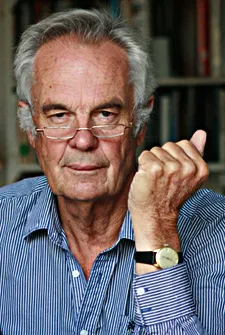

Foreign affairs columnist, film-maker and author

Share

Leave a Reply

Your email address will not be published. Required fields are marked *

Related Posts

Jan Oberg May 15, 2026 Go to this Fox News page and scroll the whole way down: President Donald Trump tells the world that his meeting with President Xi Jinping yielded a lot of very concrete political and economic results – of course, only where the Chinese side, according to him, agreed with him. He does not mention the Taiwan issue, but Secretary of State, Marco Rubio, says that it did not feature prominently in their talks and that the US policy on Taiwan has not changed. Then go to China Daily – or Global Times – and you will see that for the Chinese it is framework, principles, structure of cooperation etc. that matters – all embedded in the overall idea of “constructive bilateral relationship of strategic stability.” Nowhere is any concrete agreement or deal – all that Trump refers to – mentioned. At the general level, this gives you insights into the very different social...
The MIMAC – Military-Industrial-Media-Academic Complex – drives the world’s rampant militarism and wars without end. Here is a short reflection of how it works against all interests of humanity. #5 deals with why there is no real enemy or threat images/analysis. It’s all ex-post constructions. And, btw, theTFF Peace Pulse is now on Rumble.
Jan Oberg, TFF director April 28, 2026 In this third TFF Peace Pulse, I make the important distinction between the violence and the conflict that violence is a symptom of. If you want peace, focus on the underlying conflict because that is the key to resolution, peacemaking, and a better future for the parties. The West is obsessed with violence, just look around you – and 90+ per cent of the public debate is about military issues and other violence – totally wasted for peace. These Peace Pulses will only be published here a few times. You will also not find them on YouTube and Vimeo because both platforms have blocked TFF and me; you know, peace is dangerous these days. Most TFF’s videos since 2007 are now on Rumble.

Recent Articles

Jan Oberg May 15, 2026 Go to this Fox News page and scroll the whole way down: President Donald Trump tells the world that his meeting with President Xi Jinping yielded a lot of very concrete political and economic results – of course, only where the Chinese side, according to him, agreed with him. He does not mention the Taiwan issue, but Secretary of State, Marco Rubio, says that it did not feature prominently in their talks and that the US policy on Taiwan has not changed. Then go to China Daily – or Global Times – and you will see that for the Chinese it is framework, principles, structure of cooperation etc. that matters – all embedded in the overall idea of “constructive bilateral relationship of strategic stability.” Nowhere is any concrete agreement or deal – all that Trump refers to – mentioned. At the general level, this gives you insights into the very different social...
Lena Petrova of “World Affairs In Context” with more than half a million subscribers on YouTube wanted to explore what a peace researcher like me has to say about, among other things, the First and the Second Cold War and why eethics has disappeared from politics. I am particularly happy about this conversation that also yielded an amazing number of very appreciative comments on YouTube. No doubt, people are longing for alternatives, including peace perspectives.
The MIMAC – Military-Industrial-Media-Academic Complex – drives the world’s rampant militarism and wars without end. Here is a short reflection of how it works against all interests of humanity. #5 deals with why there is no real enemy or threat images/analysis. It’s all ex-post constructions. And, btw, theTFF Peace Pulse is now on Rumble.

TFF on Substack

Discover more from TFF Transnational Foundation & Jan Oberg.

Most Popular

Jan Oberg May 15, 2026 Go to this Fox News page and scroll the whole way down: President Donald Trump tells the world that his meeting with President Xi Jinping yielded a lot of very concrete political and economic results – of course, only where the Chinese side, according to him, agreed with him. He does not mention the Taiwan issue, but Secretary of State, Marco Rubio, says that it did not feature prominently in their talks and that the US policy on Taiwan has not changed. Then go to China Daily – or Global Times – and you will see that for the Chinese it is framework, principles, structure of cooperation etc. that matters – all embedded in the overall idea of “constructive bilateral relationship of strategic stability.” Nowhere is any concrete agreement or deal – all that Trump refers to – mentioned. At the general level, this gives you insights into the very different social...
Lena Petrova of “World Affairs In Context” with more than half a million subscribers on YouTube wanted to explore what a peace researcher like me has to say about, among other things, the First and the Second Cold War and why eethics has disappeared from politics. I am particularly happy about this conversation that also yielded an amazing number of very appreciative comments on YouTube. No doubt, people are longing for alternatives, including peace perspectives.
The MIMAC – Military-Industrial-Media-Academic Complex – drives the world’s rampant militarism and wars without end. Here is a short reflection of how it works against all interests of humanity. #5 deals with why there is no real enemy or threat images/analysis. It’s all ex-post constructions. And, btw, theTFF Peace Pulse is now on Rumble.
Read More
Screenshot-2026-05-15-103534
Jan Oberg May 15, 2026 Go to this Fox News page and scroll the whole way down: President Donald Trump tells the world that his meeting with President Xi Jinping yielded a lot of very concrete political and economic results – of course, only where the Chinese side, according to him, agreed with him. He does not mention the Taiwan issue, but Secretary of State, Marco Rubio, says that it did not feature prominently in their talks and that the US policy on Taiwan has not changed. Then go to China Daily – or Global Times – and you will see that for the Chinese it is framework, principles, structure of cooperation etc. that matters – all embedded in the overall idea of “constructive bilateral relationship of strategic stability.” Nowhere is any concrete agreement or deal – all that Trump refers to – mentioned. At the general level, this gives you insights into the very different social...
Screenshot-2026-05-12-104023
Lena Petrova of “World Affairs In Context” with more than half a million subscribers on YouTube wanted to explore what a peace researcher like me has to say about, among other things, the First and the Second Cold War and why eethics has disappeared from politics. I am particularly happy about this conversation that also yielded an amazing number of very appreciative comments on YouTube. No doubt, people are longing for alternatives, including peace perspectives.
Screenshot-2026-04-13-154551 (2)
The MIMAC – Military-Industrial-Media-Academic Complex – drives the world’s rampant militarism and wars without end. Here is a short reflection of how it works against all interests of humanity. #5 deals with why there is no real enemy or threat images/analysis. It’s all ex-post constructions. And, btw, theTFF Peace Pulse is now on Rumble.
Screenshot-2026-04-13-154551 (1)
Jan Oberg, TFF director April 28, 2026 In this third TFF Peace Pulse, I make the important distinction between the violence and the conflict that violence is a symptom of. If you want peace, focus on the underlying conflict because that is the key to resolution, peacemaking, and a better future for the parties. The West is obsessed with violence, just look around you – and 90+ per cent of the public debate is about military issues and other violence – totally wasted for peace. These Peace Pulses will only be published here a few times. You will also not find them on YouTube and Vimeo because both platforms have blocked TFF and me; you know, peace is dangerous these days. Most TFF’s videos since 2007 are now on Rumble.
Screenshot-2026-04-13-154551
In contrast to most, we’ll bring alternatives, solutions, hope and strategies for a better future. Times are dangerous, yes, but that only intensifies the need for constructive thinking and action! Jan Oberg, TFF director April 13, 2026 The new TFF Peace Pulse uses video messages in a new way: Max 3-5-minute-long comments, ideas or perhaps mini-lectures, all about peace – positive peace. We launch them today on April 13, 2026 with a carefully crafted visual aesthetic fitting the content. We hope to publish them regularly from now on. We launch Peace Pulse (PP) – for a number of reasons. The world is in chaos, and there are countless reasons to feel concerned, frustrated, even angry. The atmosphere is saturated with doom and gloom, with negative energy and rear‑mirror thinking, while vision, imagination, alternatives, strategies and genuine future‑mindedness remain in short supply. And without them, we simply can’t save the world. Looking at problems from a hundred angles will...
IMG_5165 (1)
PART II — Publishing Peace in a System That Prioritises Militarism Jan Oberg, TFF director April 10, 2026 How TFF Maintains a Daily Voice in a Digital World Built for Noise This article is part of the series “TFF at 40″ and it invites you to learn about Four Decades of Publishing Peace. It takes a look at how a small, people‑financed peace foundation has communicated across four generations of technology — from wax stencils and fax machines to mass email and Substack — and why TFF continues to publish every single day in a system that rewards noise, conflict, and militarism. ◆ What it means to publish peace every single day in a digital system built for 24/7 news and other noise, confrontation, and militarism. How TFF’s independence, continuity, and global readership defy algorithms, donor cycles, and Western media censorhip — and why the Majority World keeps listening. When the...

