
Required Reading on Palestine

Andrew Ross’s Stone Men: The Palestinians Who Built Israel, Verso, 2019.

On May 10th Andrew Ross came to University of California, Santa Barbara for a discussion of his extraordinary book, Stone Men, offering the audience a lively presentation enlivened by a Powerpoint array of informative pictures. I took part in a conversation with Andrew that was held prior to giving the small, yet intense, audience an opportunity to participate with questions.

Andrew expressed the most startling aspect of Stone Men in these words:“..it would be no exaggeration to say that the ‘stone men’ of Palestine have built every state in the region except their own.” (3)

Originally published on May 13th, 2019 on Richard Falk’s blog here

His very readable text mainly adopts a somewhat narrower focus, concentrating its efforts on the particular role of Palestinian workers and the rich stone quarries of Palestine in the physical evolution of the Israeli state, not only establishing its architectural identity, but also shaping relations between Arab and Jewish workers and labor unions.

Furthermore, he analyses the contradictions that emerged between the market drive for profits by the Israeli private sector and the Zionist willingness to sacrifice profits and construction quality to achieve racial purity, which meant maximal Jewishness.

Reading Andrew’s book was for me quite a humbling encounter. Despite having immersed myself in the literature and politics of the Palestinian struggle for the past two decades, I was almost totally unaware of how revealingly relevant to the underlying struggle was this story of the physical building of urban Israel.

This focus provides a parallel and persuasive confirmation of my contention that the ‘original sin’ of Zionism is to establish a Jewish state in a non-Jewish society. It is the original sin because it leads from the earliest Zionist conceptions more than a century ago of a Jewish homeland to the ethnic cleansing of the Nakba, the resistance of the Palestinian people, their repression, the dependence on apartheid methods and structures to control resistance and establish Israeli security.

Andrew’s explorations of the way that this reality is concretely expressed in the building of Israel with Palestinian stones (the most valuable resource of the country aside from water) and Palestinian labor skilled over generations in the craft of stone masonry is not only a grim tale of exploitation and domination characteristic of settler colonialism, but in this case more than most colonial ventures, explicates the Zionist effort to displace the indigenous identity of the country with their own imported brand of coercive displacement or ethnic cleansing and biblical entitlement. 

In other words, just as Palestinian stone and water no longer belong to the Palestinian people neither does even the history nor identity of the place.

This interaction of displacement and resistance was accentuated and made especially severe due to four linked characteristics: first, Zionism was swimming against the anti-colonial tide of twentieth century history by their project to impose a democratic Jewish state on a non-Jewish societal reality; secondly, such political background also stimulated and sustained Palestinian resistance as an ongoing battleground of anti-colonialism, reinforced by the global legitimacy of its nationalist aspirations.

Thirdly, such legitimate resistance, especially in the face of Israeli apartheid and crimes against humanity, has given rise to a global solidarity movement; and fourthly, this entire dynamic is deformed by the continued geopolitical reinforcement of the Zionist Project, especially by the United States, carried to a surrealistic extreme by the Trump presidency.

I especially appreciated Andrew’s avoidance of the tendency of American liberals to treat the two sides in a language of false symmetry. Obama was a master of such rhetoric, characteristically declaring that both sides share blame for the failure to find a peaceful solution and that real peace will depend on painful concessions by both sides.

This kind of languages falsifies and deliberately ignores the essential a-symmetry of the relationship between Israeli Jews and Palestinians, which as indicated, is an apartheid state premised on inequality and the subjugation of the Palestinian people as a whole.

It follows from this that the fundamental first step toward a sustainable peace must come from Israel, which in this instance would require the renunciation of apartheid and the dismantling of its structures.

Only on the basis of the existential equality of the two peoples does a sustainable peace based on diplomacy and negotiations become a plausible possibility. This is what happened in South Africa, and incidentally, in a manner that was unexpected by both the experts and the citizenry of the country.

I was also impressed by the refreshing transparency of Andrew’s scholarly profile, a quality that is in short supply in the academic literature. Such transparency assumes the properties of what I would label as ‘partisan objectivity.’ This contrasts with standard academic writing that hides the author’s point of view behind a veil of detached rhetoric.

Andrew makes clear his solidarity with the Palestinian struggle for peace-with-justice as dependent upon the establishment of a democratic secular state, which is a controversial observational standpoint. Such a standpoint implicitly means the end of the Zionist insistence on the identity of post-mandate of Palestine as a Jewish state, which according to the Basic Law enacted by the Knesset in 2018 reserves the right of self-determination exclusively for the Jewish people.

This enactment not only reinforces the contention that Israel is guilty of the international crime of apartheid, and as well pushes the logic of Palestinian displacement (Nakba) a step closer to its outer limit.

In presenting this narrative of how Israel was built over the decades, Andrew presents a range of Palestinian and Israeli voices that give an objective account of perceptions and experience with the author largely limiting his role to recording, listening,  and describing. but this author is also a knowing and feeling subject, and this reality is acknowledged, not suppressed. I regard this as a significant achievement, and a model for the rest of us to follow.

Among the most moving aspects of the book is the exposure of the deep personal and interpersonal conflicts faced by virtually all Palestinians. To earn a living many Palestinians work in the settlements or obtain work permits to take construction jobs across the green line.

Such individuals feel fortunate to have these opportunities to earn a living wage, yet this good fortune creates severe tensions within self, family, and community. To survive materially, Palestinian males must often be complicit in Israeli expansionism and apartheid policies.

Such a situation confronts individuals with a terrible dilemma of choosing between complicity and criminality, either giving priority to day to day imperatives of survival or to direct participation in the resistance.

Several Palestinian interviewees relate their own experience of throwing stones as a youngster only to later becoming a  worker at an Israeli settlement so as to fulfil responsibilities as a family provider. This is never an easy path for a Palestinian, given the humiliation and acute insecurities that inevitably arise.  Some Palestinians, interviewed in the book, convey their adjustment to the realities of the occupation as in constant flux, being compliant for the sake of paid work, and being oppositional when opportunities arise.

It is against this background that I recommend Stone Men so highly. Not only is the argument, the abundant photos, and the evidence gathered impressive and interesting, but the methodology is an exemplary instance of ethnographic studies, relying on copious empirical observation and numerous interviews with Palestinians and Israelis to explain the realities in their own voices.

Ross has a gift for quotation that further conveys his underlying, irrefutable message. In this sense the book practices what it preaches – empowerment of people, the inalienable entitlement of a rooted presence in national space, the fabric of injustice as described by those most victimized, and the anti-colonial mentality that can be repressed but not extinguished.

My final assessment: No matter how much you think you know about Palestine, you do not know enough until you have read this book.

Editorial note
To the original article has been added subheadings, italicization and photos by Severine Renard, all to enhance readability. No change of content.
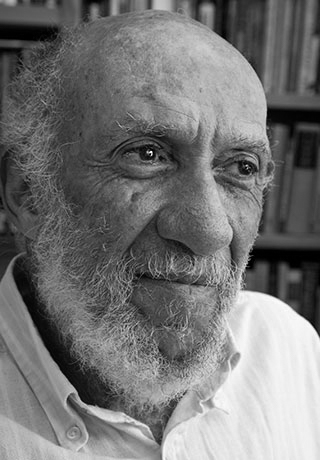

Professor Falk became an adviser to TFF when it was established in 1985.

Share

Leave a Reply

Your email address will not be published. Required fields are marked *

Related Posts

Lena Petrova of “World Affairs In Context” with more than half a million subscribers on YouTube wanted to explore what a peace researcher like me has to say about, among other things, the First and the Second Cold War and why eethics has disappeared from politics. I am particularly happy about this conversation that also yielded an amazing number of very appreciative comments on YouTube. No doubt, people are longing for alternatives, including peace perspectives.
The MIMAC – Military-Industrial-Media-Academic Complex – drives the world’s rampant militarism and wars without end. Here is a short reflection of how it works against all interests of humanity. #5 deals with why there is no real enemy or threat images/analysis. It’s all ex-post constructions. And, btw, theTFF Peace Pulse is now on Rumble.
In contrast to most, we’ll bring alternatives, solutions, hope and strategies for a better future. Times are dangerous, yes, but that only intensifies the need for constructive thinking and action! Jan Oberg, TFF director April 13, 2026 The new TFF Peace Pulse uses video messages in a new way: Max 3-5-minute-long comments, ideas or perhaps mini-lectures, all about peace – positive peace. We launch them today on April 13, 2026 with a carefully crafted visual aesthetic fitting the content. We hope to publish them regularly from now on. We launch Peace Pulse (PP) – for a number of reasons. The world is in chaos, and there are countless reasons to feel concerned, frustrated, even angry. The atmosphere is saturated with doom and gloom, with negative energy and rear‑mirror thinking, while vision, imagination, alternatives, strategies and genuine future‑mindedness remain in short supply. And without them, we simply can’t save the world. Looking at problems from a hundred angles will...

Recent Articles

Jan Oberg May 15, 2026 Go to this Fox News page and scroll the whole way down: President Donald Trump tells the world that his meeting with President Xi Jinping yielded a lot of very concrete political and economic results – of course, only where the Chinese side, according to him, agreed with him. He does not mention the Taiwan issue, but Secretary of State, Marco Rubio, says that it did not feature prominently in their talks and that the US policy on Taiwan has not changed. Then go to China Daily – or Global Times – and you will see that for the Chinese it is framework, principles, structure of cooperation etc. that matters – all embedded in the overall idea of “constructive bilateral relationship of strategic stability.” Nowhere is any concrete agreement or deal – all that Trump refers to – mentioned. At the general level, this gives you insights into the very different social...
Lena Petrova of “World Affairs In Context” with more than half a million subscribers on YouTube wanted to explore what a peace researcher like me has to say about, among other things, the First and the Second Cold War and why eethics has disappeared from politics. I am particularly happy about this conversation that also yielded an amazing number of very appreciative comments on YouTube. No doubt, people are longing for alternatives, including peace perspectives.
The MIMAC – Military-Industrial-Media-Academic Complex – drives the world’s rampant militarism and wars without end. Here is a short reflection of how it works against all interests of humanity. #5 deals with why there is no real enemy or threat images/analysis. It’s all ex-post constructions. And, btw, theTFF Peace Pulse is now on Rumble.

TFF on Substack

Discover more from TFF Transnational Foundation & Jan Oberg.

Most Popular

Jan Oberg May 15, 2026 Go to this Fox News page and scroll the whole way down: President Donald Trump tells the world that his meeting with President Xi Jinping yielded a lot of very concrete political and economic results – of course, only where the Chinese side, according to him, agreed with him. He does not mention the Taiwan issue, but Secretary of State, Marco Rubio, says that it did not feature prominently in their talks and that the US policy on Taiwan has not changed. Then go to China Daily – or Global Times – and you will see that for the Chinese it is framework, principles, structure of cooperation etc. that matters – all embedded in the overall idea of “constructive bilateral relationship of strategic stability.” Nowhere is any concrete agreement or deal – all that Trump refers to – mentioned. At the general level, this gives you insights into the very different social...
Lena Petrova of “World Affairs In Context” with more than half a million subscribers on YouTube wanted to explore what a peace researcher like me has to say about, among other things, the First and the Second Cold War and why eethics has disappeared from politics. I am particularly happy about this conversation that also yielded an amazing number of very appreciative comments on YouTube. No doubt, people are longing for alternatives, including peace perspectives.
The MIMAC – Military-Industrial-Media-Academic Complex – drives the world’s rampant militarism and wars without end. Here is a short reflection of how it works against all interests of humanity. #5 deals with why there is no real enemy or threat images/analysis. It’s all ex-post constructions. And, btw, theTFF Peace Pulse is now on Rumble.
Read More
Screenshot-2026-05-15-103534
Jan Oberg May 15, 2026 Go to this Fox News page and scroll the whole way down: President Donald Trump tells the world that his meeting with President Xi Jinping yielded a lot of very concrete political and economic results – of course, only where the Chinese side, according to him, agreed with him. He does not mention the Taiwan issue, but Secretary of State, Marco Rubio, says that it did not feature prominently in their talks and that the US policy on Taiwan has not changed. Then go to China Daily – or Global Times – and you will see that for the Chinese it is framework, principles, structure of cooperation etc. that matters – all embedded in the overall idea of “constructive bilateral relationship of strategic stability.” Nowhere is any concrete agreement or deal – all that Trump refers to – mentioned. At the general level, this gives you insights into the very different social...
Screenshot-2026-05-12-104023
Lena Petrova of “World Affairs In Context” with more than half a million subscribers on YouTube wanted to explore what a peace researcher like me has to say about, among other things, the First and the Second Cold War and why eethics has disappeared from politics. I am particularly happy about this conversation that also yielded an amazing number of very appreciative comments on YouTube. No doubt, people are longing for alternatives, including peace perspectives.
Screenshot-2026-04-13-154551 (2)
The MIMAC – Military-Industrial-Media-Academic Complex – drives the world’s rampant militarism and wars without end. Here is a short reflection of how it works against all interests of humanity. #5 deals with why there is no real enemy or threat images/analysis. It’s all ex-post constructions. And, btw, theTFF Peace Pulse is now on Rumble.
Screenshot-2026-04-13-154551 (1)
Jan Oberg, TFF director April 28, 2026 In this third TFF Peace Pulse, I make the important distinction between the violence and the conflict that violence is a symptom of. If you want peace, focus on the underlying conflict because that is the key to resolution, peacemaking, and a better future for the parties. The West is obsessed with violence, just look around you – and 90+ per cent of the public debate is about military issues and other violence – totally wasted for peace. These Peace Pulses will only be published here a few times. You will also not find them on YouTube and Vimeo because both platforms have blocked TFF and me; you know, peace is dangerous these days. Most TFF’s videos since 2007 are now on Rumble.
Screenshot-2026-04-13-154551
In contrast to most, we’ll bring alternatives, solutions, hope and strategies for a better future. Times are dangerous, yes, but that only intensifies the need for constructive thinking and action! Jan Oberg, TFF director April 13, 2026 The new TFF Peace Pulse uses video messages in a new way: Max 3-5-minute-long comments, ideas or perhaps mini-lectures, all about peace – positive peace. We launch them today on April 13, 2026 with a carefully crafted visual aesthetic fitting the content. We hope to publish them regularly from now on. We launch Peace Pulse (PP) – for a number of reasons. The world is in chaos, and there are countless reasons to feel concerned, frustrated, even angry. The atmosphere is saturated with doom and gloom, with negative energy and rear‑mirror thinking, while vision, imagination, alternatives, strategies and genuine future‑mindedness remain in short supply. And without them, we simply can’t save the world. Looking at problems from a hundred angles will...
IMG_5165 (1)
PART II — Publishing Peace in a System That Prioritises Militarism Jan Oberg, TFF director April 10, 2026 How TFF Maintains a Daily Voice in a Digital World Built for Noise This article is part of the series “TFF at 40″ and it invites you to learn about Four Decades of Publishing Peace. It takes a look at how a small, people‑financed peace foundation has communicated across four generations of technology — from wax stencils and fax machines to mass email and Substack — and why TFF continues to publish every single day in a system that rewards noise, conflict, and militarism. ◆ What it means to publish peace every single day in a digital system built for 24/7 news and other noise, confrontation, and militarism. How TFF’s independence, continuity, and global readership defy algorithms, donor cycles, and Western media censorhip — and why the Majority World keeps listening. When the...

