

Photo by Cherry Laithang on Unsplash
August 3, 2023
“This is an extraordinary time full of vital, transformative movements that could not be foreseen. It’s also a nightmarish time. Full engagement requires the ability to perceive both.”
“There is no love of life without despair of life,” wrote Albert Camus — a man who in the midst of World War II, perhaps the darkest period in human history, saw grounds for luminous hope and issued a remarkable clarion call for humanity to rise to its highest potential on those grounds. It was his way of honoring the same duality that artist Maira Kalman would capture nearly a century later in her marvelous meditation on the pursuit of happiness, where she observed: “We hope. We despair. We hope. We despair. That is what governs us. We have a bipolar system.” In my own reflections on hope, cynicism, and the stories we tell ourselves, I’ve considered the necessity of these two poles working in concert. Indeed, the stories we tell ourselves about these poles matter.
Originally published at The Marginalian
The stories we tell ourselves about our public past shape how we interpret and respond to and show up for the present. The stories we tell ourselves about our private pasts shape how we come to see our personhood and who we ultimately become. The thin line between agency and victimhood is drawn in how we tell those stories.
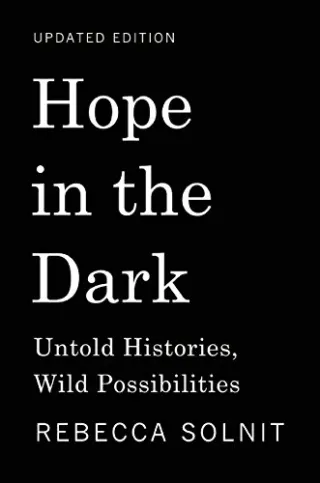
The language in which we tell ourselves these stories matters tremendously, too, and no writer has weighed the complexities of sustaining hope in our times of readily available despair more thoughtfully and beautifully, nor with greater nuance, than Rebecca Solnit does in Hope in the Dark: Untold Histories, Wild Possibilities (public library).

Expanding upon her previous writings on hope, Solnit writes in the foreword to the 2016 edition of this foundational text of modern civic engagement:
Hope is a gift you don’t have to surrender, a power you don’t have to throw away. And though hope can be an act of defiance, defiance isn’t enough reason to hope. But there are good reasons.
Solnit — one of the most singular, civically significant, and poetically potent voices of our time, emanating echoes of Virginia Woolf’s luminous prose and Adrienne Rich’s unflinching political conviction — originally wrote these essays in 2003, six weeks after the start of Iraq war, in an effort to speak “directly to the inner life of the politics of the moment, to the emotions and preconceptions that underlie our political positions and engagements.”
Although the specific conditions of the day may have shifted, their undergirding causes and far-reaching consequences have only gained in relevance and urgency in the dozen years since. This slim book of tremendous potency is therefore, today more than ever, an indispensable ally to every thinking, feeling, civically conscious human being. Solnit looks back on this seemingly distant past as she peers forward into the near future:
The moment passed long ago, but despair, defeatism, cynicism, and the amnesia and assumptions from which they often arise have not dispersed, even as the most wildly, unimaginably magnificent things came to pass. There is a lot of evidence for the defense… Progressive, populist, and grassroots constituencies have had many victories.
Popular power has continued to be a profound force for change. And the changes we’ve undergone, both wonderful and terrible, are astonishing.[…]This is an extraordinary time full of vital, transformative movements that could not be foreseen. It’s also a nightmarish time. Full engagement requires the ability to perceive both.
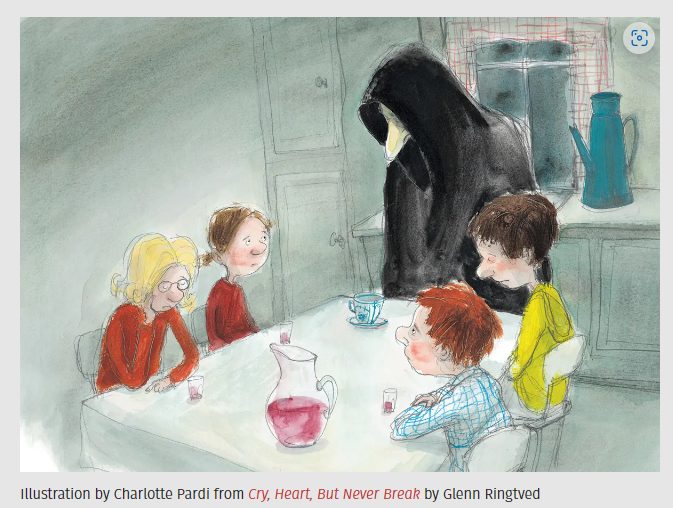
With an eye to such disheartening developments as climate change, growing income inequality, and the rise of Silicon Valley as a dehumanizing global superpower of automation, Solnit invites us to be equally present for the counterpoint:
Hope doesn’t mean denying these realities. It means facing them and addressing them by remembering what else the twenty-first century has brought, including the movements, heroes, and shifts in consciousness that address these things now.
Enumerating Edward Snowden, marriage equality, and Black Lives Matter among those, she adds:
This has been a truly remarkable decade for movement-building, social change, and deep, profound shifts in ideas, perspective, and frameworks for broad parts of the population (and, of course, backlashes against all those things).
With great care, Solnit — whose mind remains the sharpest instrument of nuance I’ve encountered — maps the uneven terrain of our grounds for hope:
It’s important to say what hope is not: it is not the belief that everything was, is, or will be fine. The evidence is all around us of tremendous suffering and tremendous destruction. The hope I’m interested in is about broad perspectives with specific possibilities, ones that invite or demand that we act.
It’s also not a sunny everything-is-getting-better narrative, though it may be a counter to the everything-is-getting-worse narrative. You could call it an account of complexities and uncertainties, with openings.
Solnit’s conception of hope reminds me of the great existential psychiatrist Irvin D. Yalom’s conception of meaning: “The search for meaning, much like the search for pleasure,” he wrote, “must be conducted obliquely.” That is, it must take place in the thrilling and terrifying terra incognita that lies between where we are and where we wish to go, ultimately shaping where we do go.
Solnit herself has written memorably about how we find ourselves by getting lost, and finding hope seems to necessitate a similar surrender to uncertainty. She captures this idea beautifully:
Hope locates itself in the premises that we don’t know what will happen and that in the spaciousness of uncertainty is room to act. When you recognize uncertainty, you recognize that you may be able to influence the outcomes — you alone or you in concert with a few dozen or several million others.
Hope is an embrace of the unknown and the unknowable, an alternative to the certainty of both optimists and pessimists. Optimists think it will all be fine without our involvement; pessimists take the opposite position; both excuse themselves from acting.
It’s the belief that what we do matters even though how and when it may matter, who and what it may impact, are not things we can know beforehand. We may not, in fact, know them afterward either, but they matter all the same, and history is full of people whose influence was most powerful after they were gone.
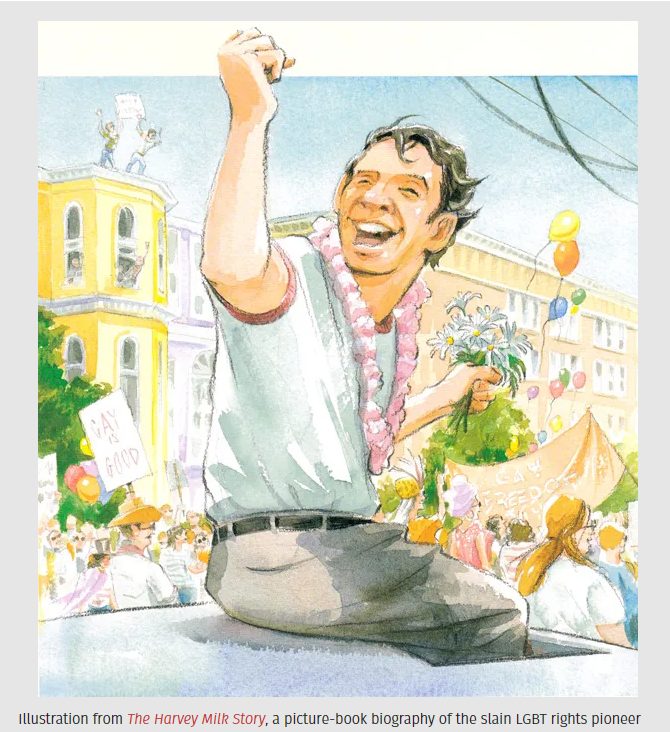
Amid a 24-hour news cycle that nurses us on the illusion of immediacy, this recognition of incremental progress and the long gestational period of consequences — something at the heart of every major scientific revolution that has changed our world — is perhaps our most essential yet most endangered wellspring of hope. Solnit reminds us, for instance, that women’s struggle for the right to vote took seven decades:
For a time people liked to announce that feminism had failed, as though the project of overturning millennia of social arrangements should achieve its final victories in a few decades, or as though it had stopped. Feminism is just starting, and its manifestations matter in rural Himalayan villages, not just first-world cities.
She considers one particularly prominent example of this cumulative cataclysm — the Arab Spring, “an extraordinary example of how unpredictable change is and how potent popular power can be,” the full meaning of and conclusions from which we are yet to draw. Although our cultural lore traces the spark of the Arab Spring to the moment Mohamed Bouazizi set himself on fire in an act of protest, Solnit traces the unnoticed accretion of tinder across space and time:
You can tell the genesis story of the Arab Spring other ways. The quiet organizing going on in the shadows beforehand matters. So does the comic book about Martin Luther King and civil disobedience that was translated into Arabic and widely distributed in Egypt shortly before the Arab Spring. You can tell of King’s civil disobedience tactics being inspired by Gandhi’s tactics, and Gandhi’s inspired by Tolstoy and the radical acts of noncooperation and sabotage of British women suffragists. So the threads of ideas weave around the world and through the decades and centuries.
In a brilliant counterpoint to Malcolm Gladwell’s notoriously short-sighted view of social change, Solnit sprouts a mycological metaphor for this imperceptible, incremental buildup of influence and momentum:
After a rain mushrooms appear on the surface of the earth as if from nowhere. Many do so from a sometimes vast underground fungus that remains invisible and largely unknown. What we call mushrooms mycologists call the fruiting body of the larger, less visible fungus. Uprisings and revolutions are often considered to be spontaneous, but less visible long-term organizing and groundwork — or underground work — often laid the foundation.
Changes in ideas and values also result from work done by writers, scholars, public intellectuals, social activists, and participants in social media. It seems insignificant or peripheral until very different outcomes emerge from transformed assumptions about who and what matters, who should be heard and believed, who has rights. Ideas at first considered outrageous or ridiculous or extreme gradually become what people think they’ve always believed.
How the transformation happened is rarely remembered, in part because it’s compromising: it recalls the mainstream when the mainstream was, say, rabidly homophobic or racist in a way it no longer is; and it recalls that power comes from the shadows and the margins, that our hope is in the dark around the edges, not the limelight of center stage. Our hope and often our power.[…]Change is rarely straightforward… Sometimes it’s as complex as chaos theory and as slow as evolution. Even things that seem to happen suddenly arise from deep roots in the past or from long-dormant seeds.

And yet Solnit’s most salient point deals with what comes after the revolutionary change — with the notion of victory not as a destination but as a starting point for recommitment and continual nourishment of our fledgling ideals:
A victory doesn’t mean that everything is now going to be nice forever and we can therefore all go lounge around until the end of time. Some activists are afraid that if we acknowledge victory, people will give up the struggle. I’ve long been more afraid that people will give up and go home or never get started in the first place if they think no victory is possible or fail to recognize the victories already achieved. Marriage equality is not the end of homophobia, but it’s something to celebrate. A victory is a milestone on the road, evidence that sometimes we win, and encouragement to keep going, not to stop.
Solnit examines this notion more closely in one of the original essays from the book, titled “Changing the Imagination of Change” — a meditation of even more acute timeliness today, more than a decade later, in which she writes:
Americans are good at responding to crisis and then going home to let another crisis brew both because we imagine that the finality of death can be achieved in life — it’s called happily ever after in personal life, saved in politics — and because we tend to think political engagement is something for emergencies rather than, as people in many other countries (and Americans at other times) have imagined it, as a part and even a pleasure of everyday life. The problem seldom goes home.[…]Going home seems to be a way to abandon victories when they’re still delicate, still in need of protection and encouragement. Human babies are helpless at birth, and so perhaps are victories before they’ve been consolidated into the culture’s sense of how things should be. I wonder sometimes what would happen if victory was imagined not just as the elimination of evil but the establishment of good — if, after American slavery had been abolished, Reconstruction’s promises of economic justice had been enforced by the abolitionists, or, similarly, if the end of apartheid had been seen as meaning instituting economic justice as well (or, as some South Africans put it, ending economic apartheid).
It’s always too soon to go home. Most of the great victories continue to unfold, unfinished in the sense that they are not yet fully realized, but also in the sense that they continue to spread influence. A phenomenon like the civil rights movement creates a vocabulary and a toolbox for social change used around the globe, so that its effects far outstrip its goals and specific achievements — and failures.
Invoking James Baldwin’s famous proclamation that “not everything that is faced can be changed, but nothing can be changed until it is faced,” Solnit writes:
It’s important to emphasize that hope is only a beginning; it’s not a substitute for action, only a basis for it.
What often obscures our view of hope, she argues, is a kind of collective amnesia that lets us forget just how far we’ve come as we grow despondent over how far we have yet to go. She writes:
Amnesia leads to despair in many ways. The status quo would like you to believe it is immutable, inevitable, and invulnerable, and lack of memory of a dynamically changing world reinforces this view. In other words, when you don’t know how much things have changed, you don’t see that they are changing or that they can change.
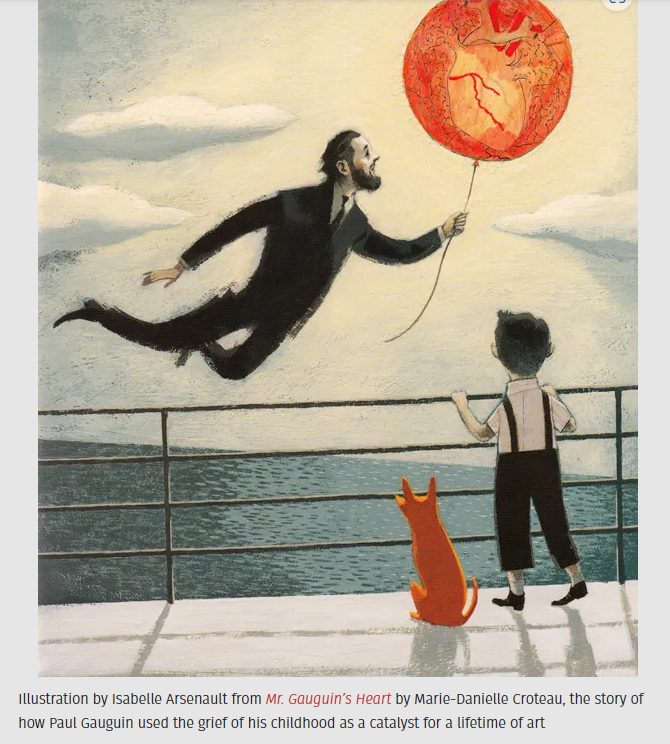
This lack of a long view is perpetuated by the media, whose raw material — the very notion of “news” — divorces us from the continuity of life and keeps us fixated on the current moment in artificial isolate. Meanwhile, Solnit argues in a poignant parallel, such amnesia poisons and paralyzes our collective conscience by the same mechanism that depression poisons and paralyzes the private psyche — we come to believe that the acute pain of the present is all that will ever be and cease to believe that things will look up. She writes:
There’s a public equivalent to private depression, a sense that the nation or the society rather than the individual is stuck. Things don’t always change for the better, but they change, and we can play a role in that change if we act. Which is where hope comes in, and memory, the collective memory we call history.
A dedicated rower, Solnit ends with the perfect metaphor:
You row forward looking back, and telling this history is part of helping people navigate toward the future. We need a litany, a rosary, a sutra, a mantra, a war chant for our victories. The past is set in daylight, and it can become a torch we can carry into the night that is the future.
Hope in the Dark is a robust anchor of intelligent idealism amid our tumultuous era of disorienting defeatism — a vitalizing exploration of how we can withstand the marketable temptations of false hope and easy despair. Complement it with Camus on how to ennoble our minds in dark times and Viktor Frankl on why idealism is the best realism, then revisit Solnit on the rewards of walking, what reading does for the human spirit, and how modern noncommunication is changing our experience of time, solitude, and communion.
Originally published at The Marginalian
Please support TFF – one of the few truly independent, people-supported – think-tanks left.


